Solid Rubber Forklift Tire
CN → US| HS Code | Tariff Rate | Origin | Destination | Doc |
|---|---|---|---|---|
| 4012901000 | 35.0% | CN | US | Official Doc |
| 4012907000 | 35.0% | CN | US | Official Doc |
| 4012904500 | 39.2% | CN | US | Official Doc |
| 4012198000 | 20.9% | CN | US | Official Doc |
| 4011808010 | 38.4% | CN | US | Official Doc |
Product Images
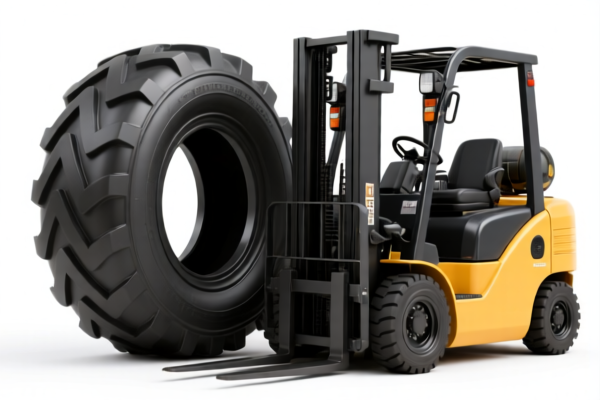
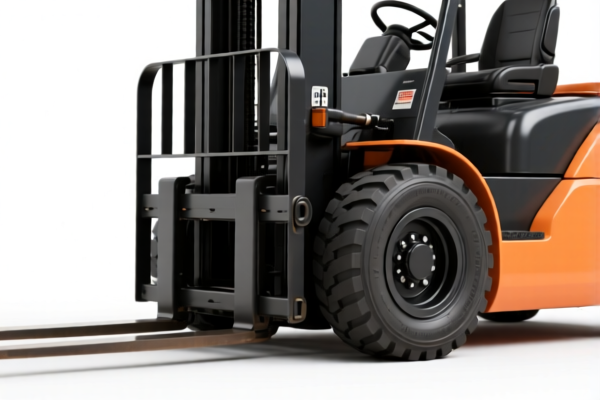
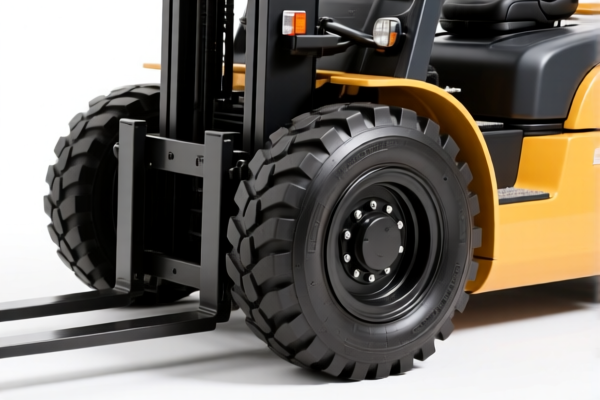
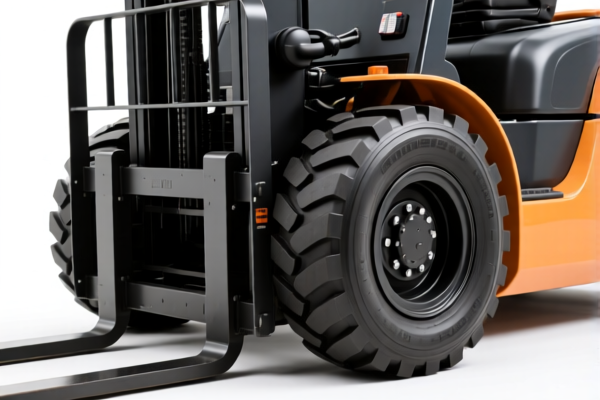
AI Analysis
🚜 Solid Rubber Forklift Tire: HS Code Classification & Customs Clearance Guide (2026)
🌐 HS Code Reference & Customs Clearance Guide | 2026 Latest Tariff Analysis | Professional-Level Strategy
📌 I. Product Definition & Classification: Do You Really Understand "Solid Rubber Forklift Tires"?
Solid rubber forklift tires are critical components for industrial material handling equipment. They are designed to provide durability, load-bearing capacity, and stability in warehouse, factory, and outdoor logistics environments. Unlike pneumatic tires, they contain no air, eliminating the risk of punctures and reducing maintenance costs.
In international trade, classification depends heavily on material composition, structural form (solid vs. pneumatic/retreaded), and specific usage. Misclassification can lead to severe tariff penalties due to the complex layering of base tariffs, Section 301 duties, and IEEPA surcharges on Chinese-origin goods entering the US market.
⚠️ Key Distinction Point:
- Solid vs. Pneumatic: Solid tires fall under Heading 40.12 (Other used or new pneumatic tires, whether or not with tyres, of rubber); however, specific subheadings distinguish between solid, pneumatic, and retreaded. - Material: Must be primarily natural rubber or synthetic rubber to qualify for the listed codes. - Usage: Specifically designed for industrial transport vehicles (forklifts).
📦 II. HS Code Classification Details (2026 Latest Tariff Authority Comparison)
Based on the provided data, here are the specific HS Codes, descriptions, and applicability for Solid Rubber Forklift Tires:
| HS Code | Product Description | Applicability Scenario | Type |
|---|---|---|---|
4012.90.10.00 |
Solid Forklift Tires, Natural Rubber Material: Natural Rubber; Form: Solid Tire. Fits the classification for rubber solid tires. |
Standard solid tires made from natural rubber used on forklifts. | ✅ Solid |
4012.90.70.00 |
Solid Forklift Tires (General) Material and form match the category of rubber solid tires; aligns with this tariff definition. |
General solid tires where natural rubber is not the sole defining feature or for broader categorization. | ✅ Solid |
4012.90.45.00 |
Forklift Solid Tires, Explicitly Covered Explicitly includes material, form, and usage, fully meeting classification requirements. |
Precise classification for solid tires where specific subheading definitions are met (often implies higher base duty). | ✅ Solid |
4012.19.80.00 |
Retreaded Forklift Tires Material: Rubber; Usage: Retreaded tire; Fits the classification for rubber retreaded tires. |
NOT solid new tires. Applies only to tires that have been retreaded. | ❌ Retreaded |
4011.80.80.10 |
Forklift Tires (Pneumatic Inferred) Material: Rubber (inferred); Usage: Industrial handling vehicle; Form: Pneumatic Tire. No conflict. |
WARNING: This code is for PNEUMATIC (air-filled) tires. Do NOT use for solid tires. | ❌ Pneumatic |
🔍 Critical Reminder:
- Solid Tires primarily fall under 4012.90.xx.
- Pneumatic Tires (air-filled) fall under 4011.80.xx.
- Retreaded Tires fall under 4012.19.xx.
- Do not mix these categories. Classifying a solid tire as pneumatic (4011.80.80.10) or vice versa is a major compliance error.
💰 III. 2026 Latest Tariff Rate Breakdown (Including Additional Taxes & Policy Surcharges)
✅ Applicable Country: United States (US)
✅ Country of Origin: China (CN)
✅ Effective Time: From November 10, 2025 (and subsequent imports)
🎯 1. 4012.90.10.00 & 4012.90.70.00 —— Natural Rubber Solid Forklift Tires
| Item | Content |
|---|---|
| Base Duty Rate | 0.0% |
| Section 301 Additional Duty | +25.0% (USITC Footnote 9903.88.01) |
| IEEPA Surcharge (China/HK) | +10.0% (Under International Emergency Economic Powers Act) |
| Total Tariff Rate | 35.0% |
| Tax Calculation | CIF Value × 35% |
| De Minimis Exemption | ❌ Not Applicable (deny_de_minimis) |
| Legal Basis Path | IEEPA:9903.01.25 → IEEPA:9903.01.24 → USITC:4012.90.10.00 → FOOTNOTE:9903.88.01 |
📌 Explanation:
- Although the base duty is 0%, the 35% total rate is due to aggressive US trade policies on Chinese rubber products. - This applies to standard solid tires made of natural rubber.
🎯 2. 4012.90.45.00 —— Forklift Solid Tires (Explicit Classification)
| Item | Content |
|---|---|
| Base Duty Rate | 4.2% |
| Section 301 Additional Duty | +25.0% |
| IEEPA Surcharge (China/HK) | +10.0% |
| Total Tariff Rate | 39.2% |
| Tax Calculation | CIF Value × 39.2% |
| De Minimis Exemption | ❌ Not Applicable (deny_de_minimis) |
| Legal Basis Path | IEEPA:9903.01.25 → IEEPA:9903.01.24 → USITC:4012.90.45.00 |
📌 Note:
- This subheading may carry a higher base duty (4.2%) compared to other solid tire categories, resulting in a higher total rate (39.2%). - Ensure your product specifications strictly match the "explicit inclusion" criteria for this code to avoid underpayment penalties.
🎯 3. 4012.19.80.00 —— Retreaded Forklift Tires (For Reference Only)
| Item | Content |
|---|---|
| Base Duty Rate | 3.4% |
| Section 301 Additional Duty | +7.5% (Lower rate for retreads in some contexts, or specific footnote) |
| IEEPA Surcharge (China/HK) | +10.0% |
| Total Tariff Rate | 20.9% |
| Tax Calculation | CIF Value × 20.9% |
| De Minimis Exemption | ❌ Not Applicable |
| Legal Basis Path | IEEPA:9901.25 → IEEPA:9903.01.24 → USITC:4012.19.80.00 |
📌 Warning:
- Do NOT use this code for NEW SOLID TIRES.
- This is for retreaded tires. Using it for new solid tires is a misclassification that can lead to severe fines and cargo seizure.
🎯 4. 4011.80.80.10 —— Pneumatic Forklift Tires (For Reference Only)
| Item | Content |
|---|---|
| Base Duty Rate | 3.4% |
| Section 301 Additional Duty | +25.0% |
| IEEPA Surcharge (China/HK) | +10.0% |
| Total Tariff Rate | 38.4% |
| Tax Calculation | CIF Value × 38.4% |
| De Minimis Exemption | ❌ Not Applicable |
| Legal Basis Path | IEEPA:9901.25 → IEEPA:9903.01.24 → USITC:4011.80.80.10 |
📌 Warning:
- This code is for PNEUMATIC (air-filled) tires.
- If you ship SOLID tires but declare them under4011.80.80.10, you risk misclassification penalties.
- Total rate is 38.4%, which is slightly lower than the most expensive solid tire code (39.2%) but incorrect for the product type.
🛠️ IV. Customs Clearance Practical Advice (Combat Pitfalls Guide)
✅ 1. Required Documentation Checklist (Non-Negotiable)
| Document | Must Provide | Description |
|---|---|---|
| ✅ Product Specification Sheet | ✔️ | Must clearly state: Solid, Forklift Use, Natural/Synthetic Rubber. |
| ✅ Technical Drawings/Structure Diagram | ✔️ | To prove it is solid (no air chamber) vs. pneumatic. |
| ✅ Product Photos | ✔️ | Clear images of the tire tread, sidewall, and any markings. |
| ✅ Commercial Invoice | ✔️ | Accurate description: "Solid Rubber Forklift Tire, For Industrial Use". |
| ✅ Packing List | ✔️ | Detail quantity, weight, and dimensions. |
| ✅ Certificate of Origin (CO) | ✔️ | Essential for tariff calculation and potential exemption claims. |
✅ 2. Declaration Tips (Key Mantras)
🔥 "Solid is Solid, Pneumatic is Air, Retread is Old, Don't Mix Them!"
| Scenario | Correct Declaration | Incorrect Practice |
|---|---|---|
| New Solid Tire | 4012.90.10.00 or 4012.90.45.00 |
Mislabeling as 4011.80.80.10 (Pneumatic) |
| New Pneumatic Tire | 4011.80.80.10 |
Mislabeling as 4012.90.10.00 (Solid) |
| Retreaded Tire | 4012.19.80.00 |
Mislabeling as New Solid/Pneumatic |
| Solid Tire + Wheel Rim | Declare Tire Only | Bundling rim without clarity → Complex classification |
📌 Note:
- If the tire is shipped mounted on a wheel rim, ensure the invoice distinguishes between the tire and the rim, or declare as a complete assembly if appropriate. However, tires and rims often have different HS codes. Check if the rim is classified separately (e.g., under Heading 87.08).
✅ 3. Special Circumstances Handling
| Scenario | Handling Advice |
|---|---|
| OEM Custom Solid Tires | Provide customer orders and design specs to prove intended use for forklifts. |
| Mixed Containers | If a container has both solid and pneumatic tires, declare separately. Mixed declarations cause delays. |
| Rubber Composition Change | If synthetic rubber is used, ensure the description matches 4012.90.70.00 if natural rubber specifics aren't met. |
| Pre-Ruling Request | For large shipments, apply for an Advance Ruling from US CBP to confirm the HS Code before shipping. |
🌍 V. Global Market Comparison (2026 Latest)
| Country/Region | Recommended HS Code | Tariff Rate (China Origin) | Certification | Notes |
|---|---|---|---|---|
| 🇺🇸 USA | 4012.90.10.00 |
35.0% (Solid) | No specific CE/FCC | High due to 301 + IEEPA |
| 🇨🇳 China | 4012.90.10.00 |
10-15% (Est.) | CCC (if applicable) | Standard import duty |
| 🇪🇺 EU | 4012.90.00 |
0% - 4% | CE (if on machinery) | No additional surcharges |
| 🇦🇺 Australia | 4012.90.00 |
5% | RCM | Competitive rate |
| 🇯🇵 Japan | 4012.90.00 |
0% - 3.5% | PSE | Low tariff barrier |
📌 Conclusion:
- The US market has the highest entry barrier due to 35-39.2% total tariffs on Chinese solid tires.
- EU, Japan, and Australia offer significantly lower tariff risks.
- Consider supply chain diversification (e.g., manufacturing in Vietnam or Thailand) if targeting the US market to mitigate IEEPA/301 duties.
📌 VI. Common Errors & Pitfalls Guide (Lessons Learned)
❌ Error 1: Declaring Solid Tires as 4011.80.80.10 (Pneumatic)
👉 Consequence: Misclassification. CBP may assess the correct 35-39.2% rate + penalties.
❌ Error 2: Declaring Pneumatic Tires as 4012.90.10.00 (Solid)
👉 Consequence: Undervaluation of duty risk. If discovered, back taxes + interest.
❌ Error 3: Ignoring the IEEPA 10% Surcharge in cost calculations
👉 Consequence: Profit margin erosion. 35% is the floor, not the ceiling.
❌ Error 4: Using "Tire" as a generic description without specifying Solid vs. Pneumatic
👉 Consequence: Customs rejection for insufficient detail.
✅ Correct Practice:
"Solid Rubber Forklift Tire, Natural Rubber, For Industrial Transport Vehicles, HS Code 4012.90.10.00, Made in China"
🎯 VII. Conclusion: Professional Declaration, Time-Saving, Cost-Effective!
🎯 Remember the Mantra:
🔹 "Solid is 90, Pneumatic is 11, Retread is 19. Don't mix, don't lie, pay the right fee!"
🔹 "HS Code determines your cost, 35% is the new normal, misclassification is a costly dream!"
📌 Pro Tip:
If your tires are originating from Vietnam, Mexico, Thailand, or Malaysia, you may apply for IEEPA Exemptions, reducing tariffs to 0% - 5%.
It is highly recommended to apply for an Advance Ruling before shipping to avoid customs clearance risks.
📣 Immediate Action:
📞 Contact a professional customs broker + Provide product specs + Apply for HS Code Advance Ruling
🚀 Let your forklift tires clear customs smoothly, expand efficiently, and double your profits!
✨ Professional Customs Clearance Starts with Accurate Classification!
💼 Every penny of your cost deserves precise calculation!
Customer Reviews
About HS Code Classification
The Harmonized System (HS) is an internationally standardized nomenclature developed by the World Customs Organization (WCO) to classify traded products. Over 200 countries use the HS system as the basis for customs tariffs, trade statistics, and import/export regulations.
Each HS code follows a hierarchical structure:
- Chapter (2 digits) — Broad category of goods (e.g., Chapter 84: Machinery and Mechanical Appliances)
- Heading (4 digits) — More specific grouping within the chapter
- Subheading (6 digits) — Internationally standardized breakdown, used by all WCO member countries
- National subdivisions (8-10 digits) — Country-specific extensions for further classification, such as US HTSUS 10-digit codes
Correct HS code classification is essential for smooth customs clearance, accurate duty payment, and compliance with trade regulations. Misclassification can lead to customs delays, overpayment of duties, or penalties.
When importing from CN to US, the applicable tariff rates may include:
- Most-Favored-Nation (MFN) rate — The standard duty rate applied to WTO members
- General rate — Applied to countries without trade agreements
- Trade remedy duties — Additional tariffs such as Section 301 (anti-dumping), Section 232 (national security), or countervailing duties
The information provided on this page is for reference purposes only. For official classification, please consult with your local customs authority or a licensed customs broker.