Solid Wood Edge Glued Board
CN → US| HS Code | Tariff Rate | Origin | Destination | Doc |
|---|---|---|---|---|
| 4418999195 | 38.2% | CN | US | Official Doc |
| 4412599500 | 35.0% | CN | US | Official Doc |
| 4418919195 | 38.2% | CN | US | Official Doc |
| 4412525100 | 35.0% | CN | US | Official Doc |
| 4407110001 | 35.0% | CN | US | Official Doc |
Product Images
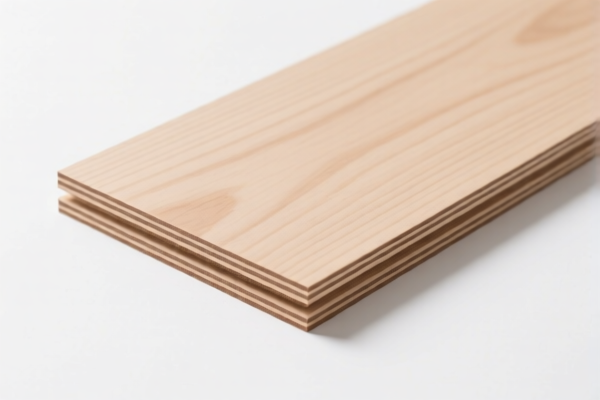
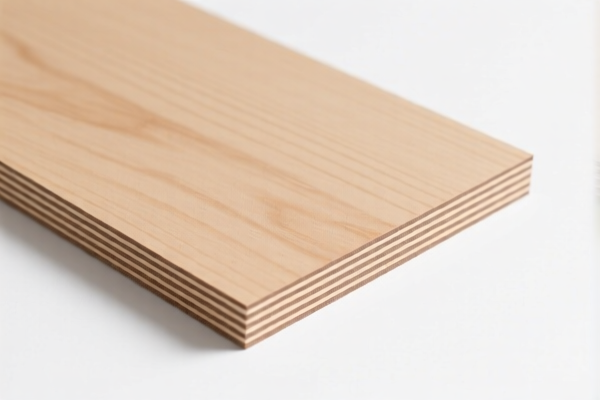
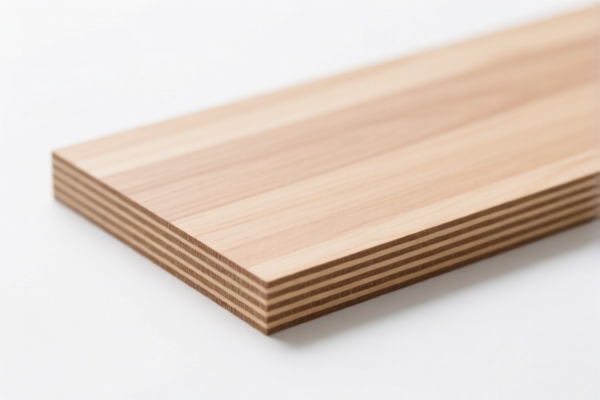
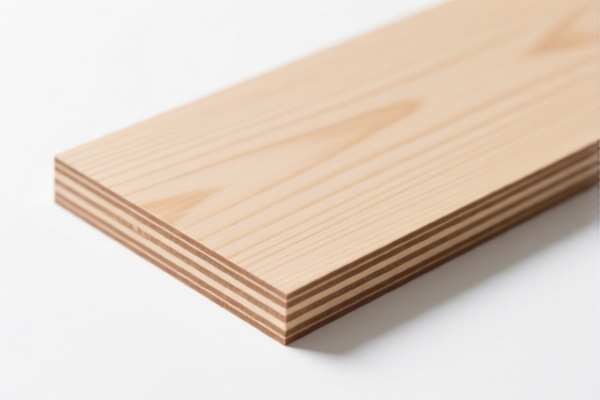
AI Analysis
🪵 Solid Wood Edge Glued Board (Seamless Wood Board)
🌐 HS Code Reference & Customs Clearance Guide | 2026 Latest Tariff Analysis | Professional Clearance Strategy
📌 1. Product Definition & Classification: Do You Really Understand "Edge Glued Board"?
Solid Wood Edge Glued Board (often referred to as Seamless Wood Board or Finger Joint Board) is a versatile engineering wood product used extensively in furniture manufacturing, interior decoration, and cabinetry. In international trade, its classification depends heavily on its structural form, material composition, and processing depth.
Generally, it is categorized into two main types based on HS Code logic:
- Type A: Structural Layered Wood (Plywood/Engineered Wood)
If the board is formed by gluing layers of wood veneer or strips with perpendicular grain directions, it falls under Chapter 44, Heading 4412 (Plywood, Veneered Panels and Similar Laminated Wood). - Type B: Construction Wood Products (Millwork)
If the board is made by joining solid wood blocks or strips end-to-end or edge-to-edge without complex layering, it is classified as Wooden Construction Articles under Chapter 44, Heading 4418 (Builders’ Joinery and Carpentry).
⚠️ Key Distinction Point:
- If the structure involves lamination (layers) or is specifically defined as "laminated wood" in national notes → 4412 Series
- If the structure is solid wood blocks/strip joinery for construction/building purposes → 4418 Series
- Material Inference: Most edge-glued boards are made from non-coniferous wood (hardwood) or mixed species, but some may be pine/coniferous. This affects the specific sub-heading.
📦 2. HS Code Classification Details (2026 Latest Tariff Authority Comparison)
| HS Code | Product Description | Applicable Scenario | Material/Structure Logic |
|---|---|---|---|
4418.99.91.95 |
Other builders' carpentry and joinery (Other) | General seamless wood boards used in building structures; material matches "Other" wooden construction articles. | Material: Wood. Form: Building wooden products, board category. Consistent with "Other wooden construction articles". |
4412.59.95.00 |
Other plywood, veneered panels and similar laminated wood (Other) | Boards classified as a form of laminated wood; wooden material, fits the classification features of laminated wood structures under this code. | Material: Wood. Form: Laminated wood structure. |
4418.91.91.95 |
Other builders' joinery and carpentry (Other) | Wooden board components within wooden building millwork; fits the material and form characteristics under the "Other" category. | Material: Wood. Form: Wooden building millwork parts. |
4412.52.51.00 |
Other plywood, veneered panels and similar laminated wood (Other) | Laminated wood products often using mixed non-coniferous/coniferous materials; fits the "Other" category material inference principle. | Material: Mixed or specific wood types. Form: Laminated wood products. |
4407.11.00.01 |
Wood sawn or chipped lengthwise, sliced or peeled, shaved or peeled, planed, sanded, tongue-grooved, tongued-and-grooved, rebated, chamfered, V-jointed, centre V-jointed, scalloped, moulded or similar, of coniferous wood | The edge-gluing process aligns with the code requirements; boards match the longitudinal sawing/slicing form of wood; material inferred as coniferous/coniferous wood (e.g., Pine). | Material: Coniferous/Softwood (e.g., Pine). Process: Edge-gluing/sawing alignment. |
🔍 Important Reminder:
- 4412 Codes apply if the product is deemed "Laminated Wood" (layered structure).
- 4418 Codes apply if the product is deemed "Builders’ Joinery/Carpentry" (solid wood joinery for construction).
- 4407 Code is rare for finished "boards" but may apply if it is considered processed timber of coniferous wood before final assembly into larger structures.
💰 3. 2026 Latest Tariff Rate Breakdown (Including Additional Taxes & Policy Surcharges)
✅ Applicable Country: United States (US)
✅ Country of Origin: China (CN)
✅ Effective Date: From November 10, 2025 (including subsequent imports)
🎯 1. 4418.99.91.95 & 4418.91.91.95 —— Builders’ Joinery and Carpentry (Other)
| Item | Content |
|---|---|
| Base Tariff | 3.2% (ad valorem) |
| Section 301 Additional Duty | +25.0% |
| Section 122 Duty (IEEPA) | +10.0% (Against Chinese/HK products, effective Nov 10, 2025) |
| Total Tariff Rate | 38.2% |
| Tax Calculation | CIF Value × 38.2% |
| De Minimis Eligibility | ❌ Not Eligible (deny_de_minimis) |
| Legal Basis Path | Section 122: 10% → Section 301: 25% → Base: 3.2% |
📌 Explanation:
- These codes fall under "Wooden Construction Products."
- The 3.2% base duty is standard for many wood products.
- The 25% Section 301 tariff is the primary trade barrier.
- The 10% Section 122 is the new additional levy.
- Total: 38.2%. This is a significant cost factor for wooden furniture components.
🎯 2. 4412.59.95.00 & 4412.52.51.00 —— Laminated Wood / Plywood
| Item | Content |
|---|---|
| Base Tariff | 0.0% (ad valorem) |
| Section 301 Additional Duty | +25.0% |
| Section 122 Duty (IEEPA) | +10.0% |
| Total Tariff Rate | 35.0% |
| Tax Calculation | CIF Value × 35.0% |
| De Minimis Eligibility | ❌ Not Eligible (deny_de_minimis) |
| Legal Basis Path | Section 122: 10% → Section 301: 25% → Base: 0.0% |
📌 Note:
- These codes benefit from a 0% base tariff due to their classification as "Plywood/Laminated Wood."
- However, the 25% Section 301 and 10% Section 122 still apply fully.
- Total: 35.0%. This is 3.2% lower than the 4418 category, making it potentially more cost-effective if the product structure qualifies.
🎯 3. 4407.11.00.01 —— Coniferous Wood (Pine/Spruce/Fir etc.)
| Item | Content |
|---|---|
| Base Tariff | 0.0% (ad valorem) |
| Section 301 Additional Duty | +25.0% |
| Section 122 Duty (IEEPA) | +10.0% |
| Total Tariff Rate | 35.0% |
| Tax Calculation | CIF Value × 35.0% |
| De Minimis Eligibility | ❌ Not Eligible (deny_de_minimis) |
| Legal Basis Path | Section 122: 10% → Section 301: 25% → Base: 0.0% |
📌 Special Case:
- If the edge-glued board is made entirely of coniferous wood (e.g., Pine) and is processed in a way that fits the "sawn/planed" description of Heading 4407, it may qualify for this code.
- Total: 35.0%. Same as 4412, but requires strict material proof (coniferous).
🛠️ 4. Customs Clearance Practical Advice (Battle-Tested Pitfall Avoidance Guide)
✅ 1. Required Documentation Checklist (None Can Be Missing)
| Document | Mandatory | Description |
|---|---|---|
| ✅ Product Specification Sheet | ✔️ | Must include dimensions, species (pine/hardwood), glue type, moisture content, density. |
| ✅ Technical Diagram/Structure Photo | ✔️ | Critical to distinguish between "Laminated" (4412) and "Joined Block" (4418). |
| ✅ Product Photos (Clear Label) | ✔️ | Show cross-section to verify layer/block structure. |
| ✅ Commercial Invoice | ✔️ | Clearly state "Solid Wood Edge Glued Board" or "Seamless Wood Board." |
| ✅ Packing List | ✔️ | Specify gross/net weight, number of layers/blocks if known. |
| ✅ Material Declaration | ✔️ | Confirm origin of wood (e.g., "Made from Chinese Pine"). |
✅ 2. Declaration Strategy (Key Mantras)
🔥 "Structure Determines Code, Material Determines Base, Avoid Splitting, Declare Accurately!"
| Situation | Correct Declaration | Wrong Practice |
|---|---|---|
| Laminated Structure | 4412.59.95.00 or 4412.52.51.00 |
Misdeclaring as "Construction Wood" → Higher potential scrutiny if structure is clearly laminated. |
| Solid Block Joinery | 4418.99.91.95 or 4418.91.91.95 |
Misdeclaring as "Plywood" → Rejection if no layers are visible. |
| Coniferous Material | 4407.11.00.01 (if applicable) |
Misdeclaring species → Customs may reclassify and charge higher base duty or audit. |
| Mixed Wood Types | Default to 4412 or 4418 |
Ambiguous material declaration → Delays. |
📌 Key Tip:
- If the board is made by gluing strips edge-to-end to form a long board, it is often 4418.
- If the board is made by gluing layers (veneer or solid wood plies) with alternating grain, it is 4412.
- Do not split shipments to avoid duties; customs will see through it.
✅ 3. Special Handling Scenarios
| Scenario | Handling Advice |
|---|---|
| Furniture Components | If sold as pre-cut parts for cabinets, ensure they are clearly "unassembly" components. |
| Moisture Content | Declare moisture content (usually 8-12%). Excess moisture can lead to fungal issues and rejection. |
| Formaldehyde Emissions | Provide CARB Phase 2 or TSCA Title VI compliance documents. High emissions can block entry. |
| Pine vs. Hardwood | Clearly specify wood species. Pine (4407) has 0% base duty; Hardwood (4412/4418) may have 3.2%. |
🌍 5. Global Market Clearance Comparison (2026 Latest)
| Country/Region | Recommended HS Code | Tariff (China Origin) | Certification Required | Notes |
|---|---|---|---|---|
| 🇺🇸 USA | 4412.59.95.00 or 4418.99.91.95 |
35.0% - 38.2% | CARB/TSCA Compliance | High Tariff. Section 122 + 301 apply. |
| 🇨🇳 China | 4412.59.95.00 or 4418.99.91.95 |
0% - 5% | FSC/PEFC (Optional) | Domestic trade benefits from low tariffs. |
| 🇪🇺 EU | 4412 or 4418 |
0% (If FSC Certified) | FSC/PEFC + Timber Regulation | Low Tariff with sustainability certification. |
| 🇬🇧 UK | 4412 or 4418 |
0% - 5% | FSC/PEFC + UKCA | Similar to EU post-Brexit. |
| 🇨🇦 Canada | 4412 or 4418 |
0% (CUSMA Eligible) | None | Preferential if manufactured in CUSMA region. |
📌 Conclusion:
- USA is the only major market with high additional tariffs (35-38.2%) for Chinese wooden products.
- EU and Canada offer near-zero tariffs if sustainability/certification criteria are met.
- Cost Management: For US exports, consider sourcing from non-China origins (e.g., Vietnam, Mexico) if possible, or negotiate price absorption.
📌 6. Common Mistakes & Pitfalls (Blood-Teaching Lessons)
❌ Mistake 1: Declaring "Plywood" when it is actually "Edge-Glued Solid Wood Blocks"
👉 Consequence: Customs may reject the declaration if cross-sections show no layering, leading to misclassification penalties.
❌ Mistake 2: Ignoring the "Section 122" 10% Surcharge
👉 Consequence: Underpayment of duty. The 10% is mandatory for Chinese-origin wood products entering the US from Nov 2025.
❌ Mistake 3: Not specifying Wood Species
👉 Consequence: If Pine is claimed but hardwood is found, base duty changes from 0% to 3.2%, plus audit risks.
❌ Mistake 4: Using "Wooden Board" as a generic name
👉 Consequence: Vague description leads to customs delays and potential reclassification to higher-duty items.
✅ Correct Approach:
"Edge-Glued Solid Wood Board, Pine, 18mm, FSC Certified, For Furniture Assembly, HS 4418.99.91.95"
🎯 7. Conclusion: Precision Declaration Saves Money!
🎯 Remember Mantra:
🔹 "Laminated? Go 4412. Joined Block? Go 4418. Coniferous? Go 4407."
🔹 "35% is Low, 38.2% is High. Declare Structure, Not Just Name."
🔹 "Section 122 is Here to Stay. Plan Your Tariff, Plan Your Profit."
📌 Pro Tip:
If your board is certified FSC/PEFC, you may qualify for lower base duties in EU/UK markets. For the US market, no tariff exemption exists for certification, so focus on accurate structural declaration to avoid penalties.
📣 Immediate Action:
📞 Contact Your Customs Broker + Provide Cross-Section Photos + Apply for Advance Ruling if shipment volume is high.
🚀 Let Your Wood Products Cross Borders Smoothly, Efficiently, and Profitably!
✨ Professional Clearance Starts with Precise Classification!
💼 Every Percent of Tariff Matters to Your Bottom Line!
Customer Reviews
About HS Code Classification
The Harmonized System (HS) is an internationally standardized nomenclature developed by the World Customs Organization (WCO) to classify traded products. Over 200 countries use the HS system as the basis for customs tariffs, trade statistics, and import/export regulations.
Each HS code follows a hierarchical structure:
- Chapter (2 digits) — Broad category of goods (e.g., Chapter 84: Machinery and Mechanical Appliances)
- Heading (4 digits) — More specific grouping within the chapter
- Subheading (6 digits) — Internationally standardized breakdown, used by all WCO member countries
- National subdivisions (8-10 digits) — Country-specific extensions for further classification, such as US HTSUS 10-digit codes
Correct HS code classification is essential for smooth customs clearance, accurate duty payment, and compliance with trade regulations. Misclassification can lead to customs delays, overpayment of duties, or penalties.
When importing from CN to US, the applicable tariff rates may include:
- Most-Favored-Nation (MFN) rate — The standard duty rate applied to WTO members
- General rate — Applied to countries without trade agreements
- Trade remedy duties — Additional tariffs such as Section 301 (anti-dumping), Section 232 (national security), or countervailing duties
The information provided on this page is for reference purposes only. For official classification, please consult with your local customs authority or a licensed customs broker.