Soluble Glyphosate Herbicide
CN → US| HS Code | Tariff Rate | Origin | Destination | Doc |
|---|---|---|---|---|
| 3808931500 | 41.5% | CN | US | Official Doc |
| 3808935020 | 40.0% | CN | US | Official Doc |
| 3808935040 | 40.0% | CN | US | Official Doc |
| 3824840000 | 41.5% | CN | US | Official Doc |
| 3824991100 | 35.0% | CN | US | Official Doc |
Product Images
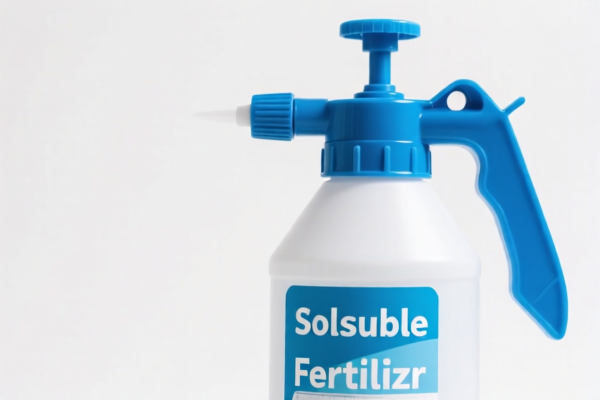
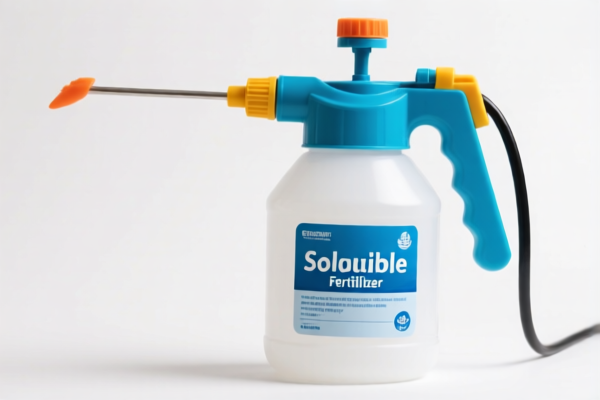
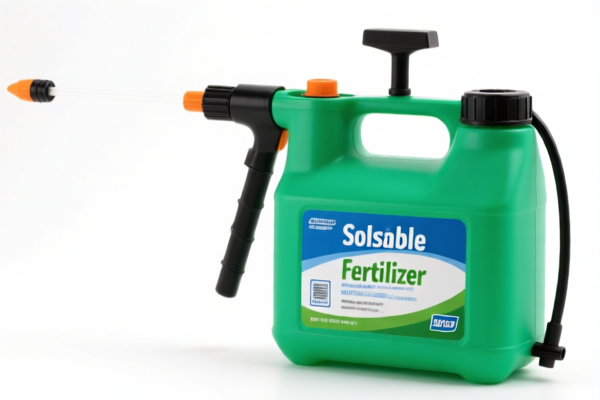
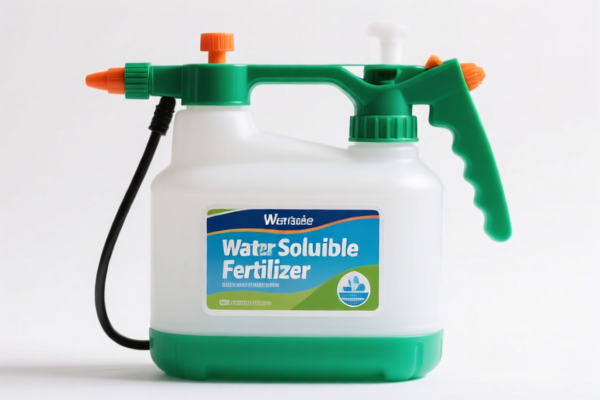
AI Analysis
🌿 Soluble Glyphosate Herbicide (除草剂:水溶性草甘膦制剂)
🌐 HS Code Reference & Customs Clearance Guide | 2026 Latest Tariff Analysis | Professional Clearance Strategy
📌 I. Product Definition & Classification: What Exactly Is "Soluble Glyphosate"?
Glyphosate (N-(phosphonomethyl)glycine) is the world’s most widely used active ingredient in herbicides, known for its broad-spectrum weed-killing capabilities. In international trade, the classification depends strictly on two factors: 1. Physical Form: Is it a pure chemical powder or a formulated mixture? ("Soluble" implies a mixture/formulation). 2. Chemical Structure: Does it contain aromatic structures (benzene rings) or is it aliphatic (linear carbon chain)?
⚠️ Key Distinction for Classification:
- Pure Glyphosate (Powder/Crystal) is typically classified under 2931.00 (Phosphonic acids).
- Formulated Herbicides (Liquid/Concentrate) containing Glyphosate are classified under 3808 (Insecticides, Rodenticides, Fungicides, etc.).
- Crucial Sub-division: The 8-digit HS code varies based on whether the Glyphosate is aromatic (rare in pure form, but possible in derivatives) or aliphatic/water-soluble.
📦 II. HS Code Classification Details (2026 Latest Tariff Authority Comparison)
Based on the specific attributes of "Soluble Glyphosate Herbicide," here are the precise HS codes and tax implications derived from the reference data:
| HS Code | Product Description | Applicable Scenario | Key Chemical Attribute |
|---|---|---|---|
3808.93.15.00 |
Herbicidal preparations, containing aromatic structure glyphosate | Formulations where Glyphosate is part of an aromatic compound structure | ✅ Contains Aromatic Structure |
3808.93.50.20 |
Water-soluble preparations of N-(phosphonomethyl)glycine | Standard commercial soluble powder/granule formulations | ✅ Core Ingredient: N-(phosphonomethyl)glycine |
3808.93.50.40 |
Water-soluble chemical preparations for herbicidal use | General water-soluble herbicide formulations | ✅ Implies Water-Soluble Nature |
3824.84.00.00 |
Chemical preparations for industrial use (e.g., defoamers) | Non-specific chemical mixtures not strictly defined as pesticide but compatible | ❌ Non-Pesticide Specific (Fallback) |
3824.99.11.00 |
Other chemical preparations for industrial use | Broad category for chemical mixtures | ❌ General Chemical Fallback |
🔍 Critical Insight:
- Most standard Glyphosate Herbicides fall under 3808.93 (Pesticides).
- The choice between3808.93.15.00and3808.93.50.xxdepends on the chemical formulation specifics.
- If the product is a standard agricultural herbicide, 3808 codes are the primary target.3824codes are less likely unless the product is misclassified or lacks specific pesticide labeling.
💰 III. 2026 Latest Tariff Rate Breakdown (Including Surtaxes & Policy Add-ons)
✅ Applicable Country: United States (US)
✅ Origin: China (CN)
✅ Effective Time: Post-November 2025 (Current Trade Climate)
🎯 1. 3808.93.15.00 – Herbicide (Aromatic Glyphosate Structure)
| Item | Content |
|---|---|
| Base Duty | 6.5% (Ad Valorem) |
| Section 301 Surtax | +25.0% |
| Section 122 Tariff | +10.0% (Specific bilateral/trade agreement surcharge) |
| Total Effective Rate | 41.5% |
| Tax Calculation | CIF Value × 41.5% |
| De Minimis Exemption | ❌ Not Eligible (High threshold for pesticides) |
| Legal Basis Path | HTSUS:3808.93.15.00 → USITC Footnote → Section 301 → Section 122 |
📌 Explanation:
- The 6.5% base duty is the standard MFN rate for other pesticides.
- The +25% is the standard Section 301 tariff on Chinese chemicals.
- The +10% is an additional policy surcharge (Section 122), bringing the total to 41.5%.
- This is a HIGH tariff bracket. Importers must account for nearly half the CIF value in duties.
🎯 2. 3808.93.50.20 – Water-Soluble Glyphosate Preparation
| Item | Content |
|---|---|
| Base Duty | 5.0% (Ad Valorem) |
| Section 301 Surtax | +25.0% |
| Section 122 Tariff | +10.0% |
| Total Effective Rate | 40.0% |
| Tax Calculation | CIF Value × 40.0% |
| De Minimis Exemption | ❌ Not Eligible |
| Legal Basis Path | HTSUS:3808.93.50.20 → USITC Footnote → Section 301 → Section 122 |
📌 Explanation:
- Slightly lower base duty (5.0%) compared to the aromatic variant.
- However, with surcharges, the total remains 40.0%.
- This code is highly specific to N-(phosphonomethyl)glycine (the IUPAC name for Glyphosate) in water-soluble form.
🎯 3. 3808.93.50.40 – Water-Soluble Herbicidal Preparation
| Item | Content |
|---|---|
| Base Duty | 5.0% |
| Section 301 Surtax | +25.0% |
| Section 122 Tariff | +10.0% |
| Total Effective Rate | 40.0% |
| Tax Calculation | CIF Value × 40.0% |
| De Minimis Exemption | ❌ Not Eligible |
| Legal Basis Path | HTSUS:3808.93.50.40 → USITC Footnote → Section 301 → Section 122 |
📌 Explanation:
- Similar to3808.93.50.20, but focuses on the water-soluble characteristic rather than the specific chemical name.
- Use this if the product is a generic water-soluble herbicide blend containing Glyphosate but not explicitly labeled by chemical name.
🎯 4. 3824.84.00.00 – Industrial Chemical Preparation (Fallback)
| Item | Content |
|---|---|
| Base Duty | 6.5% |
| Section 301 Surtax | +25.0% |
| Section 122 Tariff | +10.0% |
| Total Effective Rate | 41.5% |
| Tax Calculation | CIF Value × 41.5% |
| De Minimis Exemption | ❌ Not Eligible |
| Legal Basis Path | HTSUS:3824.84.00.00 → Section 301 → Section 122 |
📌 Warning:
- Misclassifying a pesticide as a general chemical can lead to severe penalties from CBP (Customs and Border Protection).
- While the tax rate is similar (41.5%), the regulatory risk is extremely high due to EPA (Environmental Protection Agency) requirements for pesticides.
🎯 5. 3824.99.11.00 – Other Industrial Chemical Preparation (Fallback)
| Item | Content |
|---|---|
| Base Duty | 0.0% |
| Section 301 Surtax | +25.0% |
| Section 122 Tariff | +10.0% |
| Total Effective Rate | 35.0% |
| Tax Calculation | CIF Value × 35.0% |
| De Minimis Exemption | ❌ Not Eligible |
| Legal Basis Path | HTSUS:3824.99.11.00 → Section 301 → Section 122 |
📌 Note:
- Lower base duty (0%) makes the total effective rate 35.0%.
- However, this classification is incorrect for a product explicitly labeled as "Herbicide." Using this code invites audits, back-taxes, and seizure of goods. Only use if the product is not a pesticide by regulatory definition.
🛠️ IV. Customs Clearance Practical Advice (Pitfall Avoidance Guide)
✅ 1. Required Documentation Checklist (Mandatory)
| Document | Must Provide | Notes |
|---|---|---|
| ✅ Product Specification Sheet | ✔️ | Must list exact % of Glyphosate (active ingredient) and inert ingredients. |
| ✅ EPA Registration Number | ✔️ | Critical! In the US, all herbicides must be EPA-registered. Provide the EPA Reg. No. |
| ✅ Safety Data Sheet (SDS) | ✔️ | Must comply with OSHA HazCom standards. |
| ✅ Product Label Image | ✔️ | Show the "Signal Word" (e.g., "Caution," "Warning," "Danger") and "Use Description." |
| ✅ Commercial Invoice | ✔️ | Clearly state "Glyphosate Herbicide - Water Soluble" and HS Code. |
| ✅ Certificate of Origin (CO) | ✔️ | Required for origin determination and surcharge application. |
✅ 2. Declaration Best Practices (Key Mnemonic)
🔥 "Active Ingredient First, EPA Number Always, Formulation Specific, Avoid Fallback Risks!"
| Scenario | Correct Declaration | Error to Avoid |
|---|---|---|
| Standard Glyphosate Herbicide | 3808.93.50.20 (if N-(phosphonomethyl)glycine specified) |
Declaring as 2931.00 (Pure Chemical) → Smuggling Risk |
| Generic Herbicide Blend | 3808.93.50.40 |
Declaring as 3824.99 → Penalty for Misclassification |
| Non-Agricultural Use | Verify if it's truly industrial (e.g., pool algaecide) | Mislabeling agricultural herbicide as industrial → EPA Violation |
| Mixed Package | Declare whole kit as Herbicide | Splitting kit into parts → Complexity & Delay |
✅ 3. Special Circumstances Handling
| Situation | Handling Advice |
|---|---|
| OEM Private Label | Provide brand authorization + EPA registration of the brand owner. |
| Liquid vs. Powder | Both fall under 3808. Ensure "Water-Soluble" is declared to match 3808.93.50.xx. |
| EPA Exempt | If it’s a "Minimum Risk Pesticide" (e.g., essential oils), it may be exempt from registration but still needs correct HS code. |
| Pre-Clearance | Strongly Recommended. Apply for an Advance Ruling from CBP to confirm the exact 8-digit code. |
🌍 V. Global Market Comparison for Glyphosate Herbicide (2026)
| Country/Region | Recommended HS Code | Duty Rate | Certification Requirements | Remarks |
|---|---|---|---|---|
| 🇺🇸 USA | 3808.93.50.20 |
40.0% (incl. surcharges) | EPA Registration (Mandatory) | High tariff, strict EPA enforcement. |
| 🇨🇳 China | 3808.30.00.00 |
~5-10% | China EPA Registration | Lower tariffs, domestic production is huge. |
| 🇪🇺 EU | 3808.93 |
~6.5% | EFSA Approval + CLP Labeling | Stricter environmental bans in some member states. |
| 🇧🇷 Brazil | 3808.93 |
~14-16% | IBAMA Registration | Largest import market for Glyphosate. |
| 🇯🇵 Japan | 3808.93 |
~5-10% | MAFF Registration | Strict MRL (Maximum Residue Limit) checks. |
📌 Conclusion:
- USA is the most challenging market due to 40%+ effective tariffs and EPA regulatory barriers.
- China and Brazil are major producers/consumers with lower trade barriers.
- Exporting to the US requires rigorous compliance with both CBP (Tariffs) and EPA (Safety/Registration).
📌 VI. Common Mistakes & Pitfall Guide (Lessons Learned)
❌ Mistake 1: Declaring Glyphosate as 2931.00 (Pure Chemical) when it's a Formulated Herbicide.
👉 Consequence: CBP will reclassify to 3808, leading to retroactive duty payments + penalties.
❌ Mistake 2: Failing to provide an EPA Registration Number.
👉 Consequence: Seizure of goods by FDA/CBP. You cannot import unregistered pesticides into the US.
❌ Mistake 3: Using 3824 codes to avoid higher 3808 rates.
👉 Consequence: If labeled as "Herbicide," it’s a pesticide by definition. Misclassification fraud risks.
✅ Correct Practice:
"Glyphosate Herbicide, Water Soluble, 41% Active Ingredient, EPA Reg. No. XXXXX-XXX, Formulated for Agricultural Use"
🎯 VII. Conclusion: Professional Clearance, Save Costs, Ensure Compliance!
🎯 Remember the Mnemonic:
🔹 "EPA Number First, 3808 is Key, 40% Duty is Reality, Avoid Fallbacks for Safety!"
🔹 "HS Code decides the duty, Tariff surcharge adds 35%, Misclassification costs everything!"
📌 Pro Tip:
If your Glyphosate herbicide is originating from Vietnam, Thailand, or Mexico, you may qualify for IEEPA Exemptions or FTZ (Free Trade Zone) benefits, reducing the effective rate significantly.
Strongly Advise:
📞 Contact a licensed customs broker.
📄 Submit product label and SDS for HS Code Pre-Ruling.
🚀 Ensure EPA Registration is valid before shipping.
✨ Professional clearance starts with precise classification!
💼 Every dollar of duty is a profit margin—calculate it precisely!
Customer Reviews
About HS Code Classification
The Harmonized System (HS) is an internationally standardized nomenclature developed by the World Customs Organization (WCO) to classify traded products. Over 200 countries use the HS system as the basis for customs tariffs, trade statistics, and import/export regulations.
Each HS code follows a hierarchical structure:
- Chapter (2 digits) — Broad category of goods (e.g., Chapter 84: Machinery and Mechanical Appliances)
- Heading (4 digits) — More specific grouping within the chapter
- Subheading (6 digits) — Internationally standardized breakdown, used by all WCO member countries
- National subdivisions (8-10 digits) — Country-specific extensions for further classification, such as US HTSUS 10-digit codes
Correct HS code classification is essential for smooth customs clearance, accurate duty payment, and compliance with trade regulations. Misclassification can lead to customs delays, overpayment of duties, or penalties.
When importing from CN to US, the applicable tariff rates may include:
- Most-Favored-Nation (MFN) rate — The standard duty rate applied to WTO members
- General rate — Applied to countries without trade agreements
- Trade remedy duties — Additional tariffs such as Section 301 (anti-dumping), Section 232 (national security), or countervailing duties
The information provided on this page is for reference purposes only. For official classification, please consult with your local customs authority or a licensed customs broker.