Solution Polymerized Styrene Butadiene Rubber
CN → US| HS Code | Tariff Rate | Origin | Destination | Doc |
|---|---|---|---|---|
| 4002190016 | 35.0% | CN | US | Official Doc |
| 4002190014 | 35.0% | CN | US | Official Doc |
Product Images
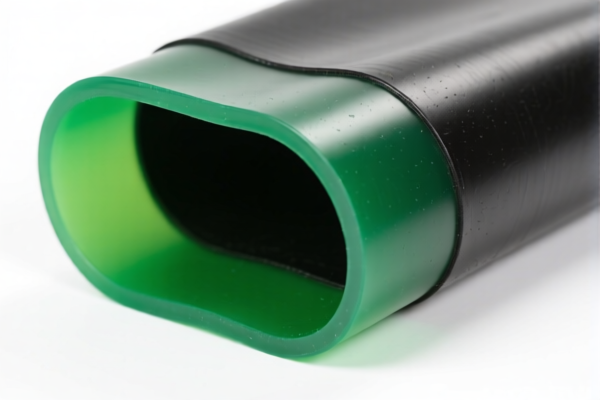
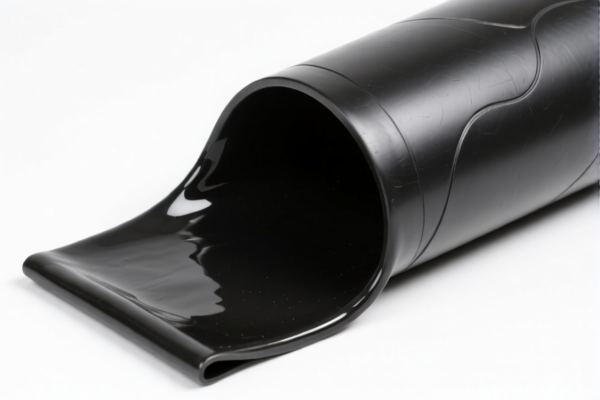
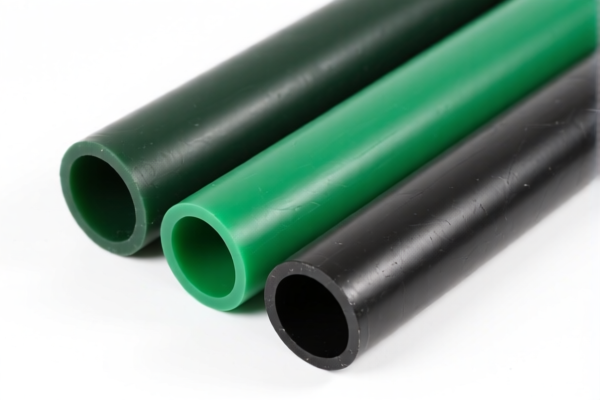
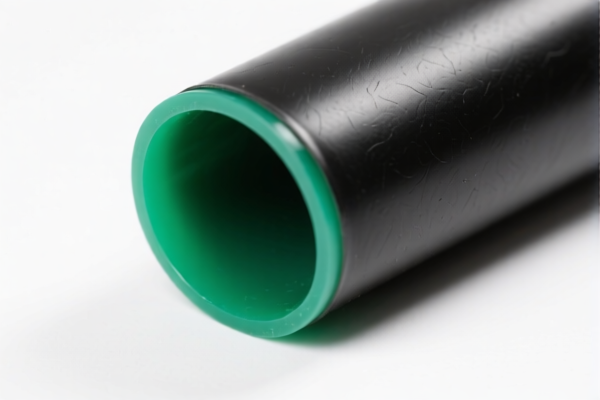
AI Analysis
🧪 Solution Polymerized Styrene-Butadiene Rubber (S-SBR)
🌐 HS Code Reference & Customs Clearance Guide | 2026 Latest Tariff Analysis | Professional Strategy
📌 I. Product Definition & Classification: What Exactly is S-SBR?
Styrene-Butadiene Rubber (SBR) produced by solution polymerization (S-SBR) is a critical synthetic rubber widely used in the automotive industry (tires, belts, hoses), footwear, and adhesives. Unlike emulsion polymerized SBR (E-SBR), S-SBR offers superior control over molecular structure, resulting in better abrasion resistance, lower heat build-up, and improved wet grip.
In international trade, classification depends strictly on: 1. Production Method: Solution Polymerization (S-SBR) vs. Emulsion (E-SBR). 2. Styrene Content: Must be 50% or less by weight of the dry polymer. 3. Physical Form: Bales, granules, crumbs, or powders.
⚠️ Key Distinction:
- If it is S-SGR (Solution) and in bales → 4002.19.00.16
- If it is S-SBR (Solution) in granules/crumbs/powders → 4002.19.00.14
- If it is E-SBR (Emulsion) → Different HS Code (not covered in this specific DATA snippet)
📦 II. HS Code Classification Details (2026 Latest Tariff Authority Comparison)
Based on the provided data, we analyze two specific sub-categories under HS Heading 4002.19.00 (SBR with ≤50% styrene):
| HS Code | Product Description | Physical Form | Polymerization Method |
|---|---|---|---|
4002.19.00.16 |
Styrene-butadiene rubber produced by solution polymerization | Bales | S-SBR |
4002.19.00.14 |
Styrene-butadiene-styrene block copolymers (SBS) produced by solution polymerization | Granules, Crumbs, or Powders | S-SBR / Thermoplastic Elastomers |
🔍 Critical Reminder:
- 4002.19.00.16 is specifically for S-SBR in Bales. This is the standard form for bulk industrial rubber trade. - 4002.19.00.14 covers SBS (Styrene-Butadiene-Styrene block copolymers), which are often grouped with S-SBR in this context but are technically thermoplastic elastomers (TPE). If your product is granular/crumb-like, verify if it is pure S-SBR or SBS. Pure S-SBR in granules might fall under general "Other" categories if not specifically listed as SBS, but the data explicitly links.14to SBS. Note: Ensure your product specification sheet clearly distinguishes between S-SBR (elastomer) and SBS (thermoplastic).
💰 III. 2026 Latest Tariff Rate Detailed Explanation
✅ Applicable Country: United States (US)
✅ Origin: China (CN) (Assumed based on typical "Additional Duty" context in examples, but please verify)
✅ Effective Date: Current 2026 Tariff Schedule
🎯 1. 4002.19.00.16 — S-SBR in Bales
| Item | Content |
|---|---|
| Base Tariff Rate | 0.0% |
| Additional Duty | 0.0% |
| Total Tax Rate | 0.0% |
| Tax Detail | Base Tariff: 0.0%, Additional Tariff: 0.0% |
| Calculation Basis | CIF Value × 0% = $0 Tax |
| De Minimis Eligibility | N/A (Generally applies to bulk cargo, not de minimis shipments) |
| Legal Basis Path | HTSUS 4002.19.00.16 |
📌 Explanation:
- This code benefits from a zero-duty status. - There are no additional Section 301 or IEEPA tariffs applied to this specific subheading in the provided data. - Advantage: Significant cost saving compared to other rubber products.
🎯 2. 4002.19.00.14 — SBS Copolymers (Granules/Crumbs/Powders)
| Item | Content |
|---|---|
| Base Tariff Rate | 0.0% |
| Additional Duty | +25.0% |
| Total Tax Rate | 25.0% |
| Tax Detail | Base Tariff: 0.0%, Additional Tariff: 25.0% |
| Calculation Basis | CIF Value × 25% |
| De Minimis Eligibility | ❌ Not Eligible (High tariff rate usually excludes de minimis) |
| Legal Basis Path | HTSUS 4002.19.00.14 |
📌 Explanation:
- While the base rate is 0%, the 25% Additional Duty is likely due to Section 301 Trade Actions against Chinese imports. - This applies specifically to SBS (Styrene-Butadiene-Styrene block copolymers) in granular form. - Risk: If your product is S-SBR but declared as SBS to avoid the 0% bale rate, customs may challenge the classification. Ensure chemical structure matches.
🛠️ IV. Customs Clearance Practical Advice (Real-World Pitfall Guide)
✅ 1. Documentation Checklist (Non-Negotiable)
| Document | Must Provide | Explanation |
|---|---|---|
| ✅ Product Specification Sheet | ✔️ | Must explicitly state: "Solution Polymerized", Styrene Content % (must be ≤50%), and Physical Form (Bales vs. Granules). |
| ✅ Certificate of Analysis (COA) | ✔️ | Lab results proving polymerization method and styrene ratio. |
| ✅ Bill of Lading / Air Waybill | ✔️ | Clear description: "Synthetic Rubber, S-SBR, in Bales." |
| ✅ Commercial Invoice | ✔️ | Value must reflect CIF (Cost, Insurance, Freight). |
| ✅ Is it SBS or S-SBR? | ✔️ | CRITICAL: Confirm if the product is a block copolymer (SBS) or random copolymer (S-SBR). They have different HS codes. |
✅ 2. Classification Strategy (Key Mnemonics)
🔥 “Form Dictates Code: Bales = .16, Granules/SBS = .14”
| Scenario | Correct HS Code | Tax Rate | Action |
|---|---|---|---|
| S-SBR in Bales | 4002.19.00.16 |
0.0% | ✅ Declare as "S-SBR, Solution Polymerized, in Bales" |
| SBS in Granules | 4002.19.00.14 |
25.0% | ✅ Declare as "SBS Block Copolymer, Granules" |
| E-SBR (Emulsion) | Not in Data | Unknown | ❌ Do NOT use these codes; use appropriate E-SBR codes (e.g., 4002.11/19.00) |
| S-SBR in Granules | Check Data | Ambiguous | ⚠️ If not SBS, verify if it falls under "Other" in 4002.19.00. If data only lists SBS for granules, consult a customs broker to avoid misclassification. |
✅ 3. Special Situation Handling
| Situation | Handling Advice |
|---|---|
| Mixed Bales | If bales contain both S-SBR and other rubbers, ensure the dominant characteristic is S-SBR (≤50% styrene) to qualify for .16. |
| SBS vs. S-SBR Confusion | SBS is a thermoplastic elastomer (can be melted); S-SBR is a vulcanizable rubber. Provide TGA/DSC test reports to distinguish. |
| Low Styrene Content | If styrene >50%, it does NOT fall under 4002.19.00. It falls under 4002.39.00 (Styrene content >50%). Tax rates may differ! |
🌍 V. Global Market Comparison (2026 Overview)
| Country/Region | Recommended HS Code | Base Tariff | Additional Duty | Total Tax | Notes |
|---|---|---|---|---|---|
| 🇺🇸 USA | 4002.19.00.16 |
0.0% | 0.0% | 0.0% | Favorable for S-SBR in Bales |
| 🇺🇸 USA | 4002.19.00.14 |
0.0% | 25.0% | 25.0% | High cost for SBS granules |
| 🇨🇳 China | 4002.19.00.16 |
Varies | Varies | Varies | Import duties apply, check FTA |
| 🇪🇺 EU | 4002.19.00 |
6.5% | 0.0% | 6.5% | EU does not have Section 301 tariffs |
| 🇯🇵 Japan | 4002.19.00 |
3.2% | 0.0% | 3.2% | Generally lower duties |
📌 Conclusion:
- USA offers 0% duty for S-SBR in bales (.16), making it highly competitive. - SBS granules (.14) face a 25% penalty in the US, likely due to trade tensions. - E-SBR is not covered here; ensure you are not mixing up production methods.
📌 VI. Common Mistakes & Pitfalls (Blood Lessons)
❌ Mistake 1: Declaring SBS granules as S-SBR bales to avoid 25% tax.
👉 Consequence: Customs audit fails due to physical form mismatch (granules vs. bales) → Seizure + Heavy Fines.
❌ Mistake 2: Ignoring Styrene Content >50%.
👉 Consequence: Misclassification from 4002.19 (≤50%) to 4002.39 (>50%) → Back Taxes + Penalties.
❌ Mistake 3: Confusing S-SBR with E-SBR.
👉 Consequence: E-SBR has different tax implications. If your product is emulsion-based, using S-SBR codes is fraud/misdeclaration.
✅ Correct Declaration Example:
"Synthetic Rubber, Styrene-Butadiene Rubber (SBR), Solution Polymerized, Containing 20% Styrene by Weight, in Bales, HS Code: 4002.19.00.16"
🎯 VII. Conclusion: Precision Classification Saves Money!
🎯 Remember:
🔹 "Bales = 0% Tax (Code .16)"
🔹 "Granules/SBS = 25% Tax (Code .14)"
🔹 "Styrene ≤50% is Mandatory"
📌 Pro Tip:
Always request a Certificate of Analysis from your supplier that explicitly states:
1. Polymerization Method: Solution
2. Styrene Weight %: ≤50%
3. Physical Form: Bales (for .16) or Granules (for .14)
✨ Professional Customs Clearance Starts with Accurate Classification!
💼 Zero Duty on Bales? Don’t Miss It!
Customer Reviews
About HS Code Classification
The Harmonized System (HS) is an internationally standardized nomenclature developed by the World Customs Organization (WCO) to classify traded products. Over 200 countries use the HS system as the basis for customs tariffs, trade statistics, and import/export regulations.
Each HS code follows a hierarchical structure:
- Chapter (2 digits) — Broad category of goods (e.g., Chapter 84: Machinery and Mechanical Appliances)
- Heading (4 digits) — More specific grouping within the chapter
- Subheading (6 digits) — Internationally standardized breakdown, used by all WCO member countries
- National subdivisions (8-10 digits) — Country-specific extensions for further classification, such as US HTSUS 10-digit codes
Correct HS code classification is essential for smooth customs clearance, accurate duty payment, and compliance with trade regulations. Misclassification can lead to customs delays, overpayment of duties, or penalties.
When importing from CN to US, the applicable tariff rates may include:
- Most-Favored-Nation (MFN) rate — The standard duty rate applied to WTO members
- General rate — Applied to countries without trade agreements
- Trade remedy duties — Additional tariffs such as Section 301 (anti-dumping), Section 232 (national security), or countervailing duties
The information provided on this page is for reference purposes only. For official classification, please consult with your local customs authority or a licensed customs broker.