Solution Styrene Butadiene Rubber
CN → US| HS Code | Tariff Rate | Origin | Destination | Doc |
|---|---|---|---|---|
| 4002910000 | 35.0% | CN | US | Official Doc |
| 4002110000 | 35.0% | CN | US | Official Doc |
| 4002510000 | 35.0% | CN | US | Official Doc |
| 4005910000 | 35.0% | CN | US | Official Doc |
| 4008210000 | 35.0% | CN | US | Official Doc |
Product Images
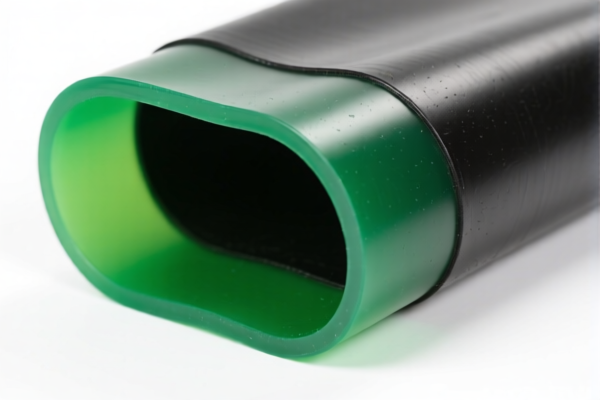
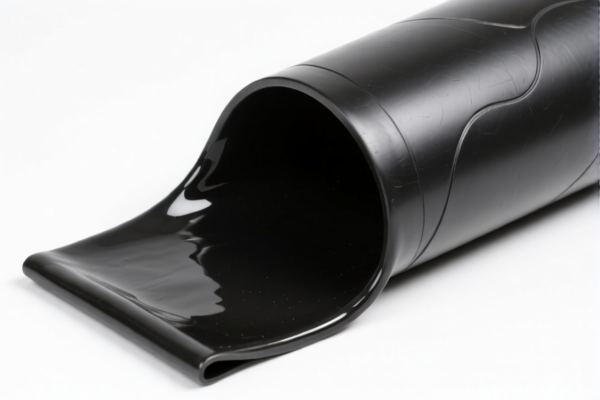
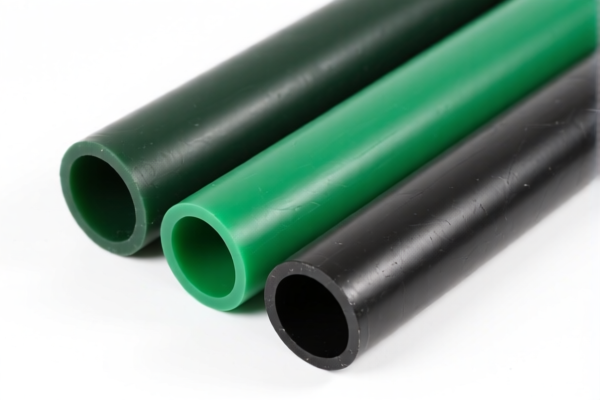
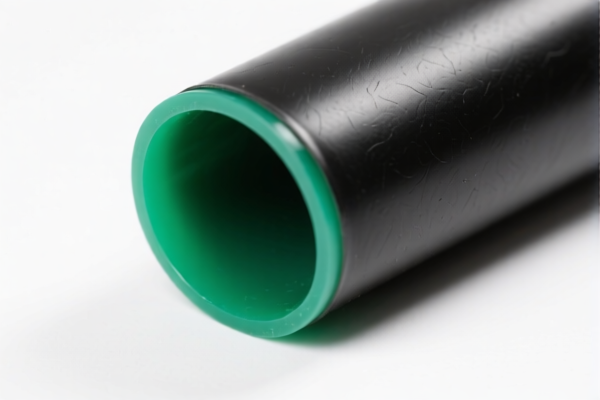
AI Analysis
🧪 Solution Styrene Butadiene Rubber (S-SBR)
🌐 HS Code Reference & Customs Clearance Guide | 2026 Latest Tariff Analysis | Professional Clearance Strategy
📌 1. Product Definition & Classification: What is "Solution Styrene Butadiene Rubber"?
Solution Styrene Butadiene Rubber (S-SBR) is a synthetic rubber produced via solution polymerization. Unlike emulsion SBR (E-SBR), S-SBR offers superior control over molecular structure, leading to better abrasion resistance, lower rolling resistance, and improved wet grip in tires.
In international trade, S-SBR is primarily classified based on its physical state (Liquid/Emulsion vs. Solid/Pieces) and processing stage (Unvulcanized vs. Vulcanized). The following HS Codes cover the main import scenarios for S-SBR from China to the US under current trade restrictions.
⚠️ Key Distinction:
- Liquid/Emulsion Form: Classified under Chapter 40 heading 4002 (Latex).
- Solid/Formulated Blocks: Classified under Chapter 40 heading 4005 (Unvulcanized rubber) or 4008 (Vulcanized rubber sheets/particles).
📦 2. HS Code Classification Details (2026 Latest Tariff Cross-Reference)
| HS Code | Product Description | Application Scenario | Physical State |
|---|---|---|---|
4002.91.00.00 |
Solution Styrene Butadiene Rubber in emulsion or latex form | Liquid S-SBR, rubber latex, raw material for coatings/adhesives | ✅ Liquid/Emulsion |
4002.11.00.00 |
Styrene-Butadiene Rubber (SBR) in emulsion or latex form | General SBR emulsion, closely related to solution SBR in trade classification | ✅ Liquid/Emulsion |
4002.51.00.00 |
Acrylonitrile-Butadiene Rubber (NBR) in emulsion or latex form | Note: Included for logical similarity; NBR is often grouped with SBR in latex forms | ✅ Liquid/Emulsion |
4005.91.00.00 |
Unvulcanized Styrene-Butadiene Rubber in other forms (e.g., granules, flakes) | Solid S-SBR blocks, unvulcanized compounded rubber, tire raw materials | ✅ Solid (Unvulcanized) |
4008.21.00.00 |
Vulcanized Styrene-Butadiene Rubber in sheets, strips, or shapes | Vulcanized rubber sheets, non-foam rubber plates, finished rubber components | ✅ Solid (Vulcanized) |
🔍 Critical Note:
- Emulsion/Latex S-SBR falls under4002.xx.xx.
- Solid Unvulcanized S-SBR (e.g., crumb rubber, blocks) falls under4005.xx.xx.
- Vulcanized S-SBR (processed into sheets/belts) falls under4008.xx.xx.
- Misclassification Risk: Declaring solid rubber as latex (or vice versa) will lead to customs delays and potential penalties.
💰 3. 2026 Latest Tariff Rate Breakdown (Including Additional Duties & Policy Surcharges)
✅ Applicable Country: United States (US)
✅ Country of Origin: China (CN)
✅ Effective Date: From November 10, 2025 (and subsequent imports)
🎯 1. 4002.91.00.00 & 4002.11.00.00 —— SBR in Emulsion/Latex Form
| Item | Detail |
|---|---|
| Base Tariff Rate | 0% (ad valorem) |
| Section 301/USITC Surcharge | +25% (Section 301 duties on Chinese goods) |
| Section 122/IEEPA Surcharge | +10% (Specific trade restrictions/surcharge on Chinese rubber products) |
| Total Tariff Rate | 35.0% |
| Tax Calculation | CIF Value × 35% |
| De Minimis Exemption Eligible? | ❌ No (deny_de_minimis) |
| Legal Basis Path | USITC:4002.11.00.00 → Section 301 Footnote → IEEPA:9903.01.24 |
📌 Explanation:
- The 25% is the standard Section 301 tariff on many Chinese chemical products.
- The 10% is an additional surcharge often applied under Section 122 or specific IEEPA directives targeting Chinese rubber and polymer imports.
- Total 35% applies to both emulsion and latex forms of S-SBR.
🎯 2. 4005.91.00.00 —— Unvulcanized Solid SBR (Blocks/Granules)
| Item | Detail |
|---|---|
| Base Tariff Rate | 0% (ad valorem) |
| Section 301/USITC Surcharge | +25% |
| Section 122/IEEPA Surcharge | +10% |
| Total Tariff Rate | 35.0% |
| Tax Calculation | CIF Value × 35% |
| De Minimis Exemption Eligible? | ❌ No (deny_de_minimis) |
| Legal Basis Path | USITC:4005.91.00.00 → Section 301 Footnote → IEEPA:9903.01.24 |
📌 Note:
- Solid unvulcanized SBR is equally subject to the 35% total tariff.
- Whether imported as liquid latex or solid blocks, the tax burden remains consistent for Chinese-origin S-SBR.
🎯 3. 4008.21.00.00 —— Vulcanized SBR (Sheets/Strips)
| Item | Detail |
|---|---|
| Base Tariff Rate | 0% (ad valorem) |
| Section 301/USITC Surcharge | +25% |
| Section 122/IEEPA Surcharge | +10% |
| Total Tariff Rate | 35.0% |
| Tax Calculation | CIF Value × 35% |
| De Minimis Exemption Eligible? | ❌ No (deny_de_minimis) |
| Legal Basis Path | USITC:4008.21.00.00 → Section 301 Footnote → IEEPA:9903.01.24 |
📌 Note:
- Even if the rubber is vulcanized (processed into sheets or non-foam strips), the 35% rate applies.
- Do not assume "processed goods" are exempt; synthetic rubber products from China face high tariffs across all physical states.
🛠️ 4. Customs Clearance Practical Advice (Real-World Pitfall Guide)
✅ 1. Required Documentation Checklist (Mandatory)
| Document | Must Provide | Explanation |
|---|---|---|
| ✅ Technical Data Sheet (TDS) | ✔️ | Specifies polymerization type (Solution vs. Emulsion), styrene content, and physical state. |
| ✅ Certificate of Analysis (COA) | ✔️ | Confirms chemical composition, moisture content, and plasticity. |
| ✅ Product Photos (Raw & Packaged) | ✔️ | Clearly shows if it’s liquid (drums/bulk) or solid (blocks/granules). |
| ✅ Commercial Invoice | ✔️ | Must explicitly state "Styrene Butadiene Rubber (S-SBR)" and HS Code. |
| ✅ Packaging List | ✔️ | Details net/gross weight, palletization, and drum counts. |
| ✅ Country of Origin Certificate | ✔️ | Essential for determining tariff applicability (China = 35%). |
✅ 2. Declaration Tips (Key Mnemonic)
🔥 "State Determines Code, Latex is 4002, Solid is 4005/4008, 35% is the Law!"
| Scenario | Correct Declaration | Wrong Action |
|---|---|---|
| Liquid S-SBR (Latex) | 4002.91.00.00 or 4002.11.00.00 |
Misdeclare as solid rubber → Customs scrutiny |
| Solid S-SBR Blocks | 4005.91.00.00 |
Misdeclare as latex → Valuation errors |
| Vulcanized Sheets | 4008.21.00.00 |
Misdeclare as unvulcanized → Tariff miscalculation |
| Mixed Shipments | Separate Line Items | Combine liquid and solid → Declaration rejection |
✅ 3. Special Case Handling
| Scenario | Handling Advice |
|---|---|
| S-SBR with Fillers | If compounded with carbon black or oils, it may still fall under 4005.91.00.00, but technical data must confirm it remains "unvulcanized rubber." |
| Re-export from 3rd Country | If re-exported from Vietnam/Mexico, do not claim preferential origin unless fully processed. Chinese origin persists, so 35% applies. |
| Small Sample Shipments | No De Minimis exemption. Even small samples incur 35% duty. Factor this into R&D costs. |
🌍 5. Global Market Comparison (2026 Latest)
| Country/Region | Recommended HS Code | Tariff (China Origin) | Certification | Remarks |
|---|---|---|---|---|
| 🇺🇸 USA | 4002.xx.xx / 4005.xx.xx |
35% | No specific EPA/REACH | High tariff barrier; S-SBR is critical for US tire industry. |
| 🇨🇳 China | 4002.xx.xx / 4005.xx.xx |
0% (Export) | N/A | Major producer; exports face no Chinese export tax. |
| 🇪🇺 EU | 4002.xx.xx / 4005.xx.xx |
~5-6% | REACH Compliance | Lower tariffs than US, but REACH registration required. |
| 🇯🇵 Japan | 4002.xx.xx / 4005.xx.xx |
~0-5% | JIS Standard | Preferential tariffs may apply under JETPA if origin criteria met. |
📌 Conclusion:
- The US market is the most expensive for Chinese S-SBR due to the 35% combined tariff.
- Suppliers in China should consider supply chain diversification (e.g., sourcing from Malaysia, Indonesia) to mitigate US tariffs, though global S-SBR capacity is concentrated in Asia.
📌 6. Common Errors & Pitfall Guide (Lessons Learned)
❌ Error 1: Declaring "Synthetic Rubber" generically without specifying S-SBR or NBR.
👉 Consequence: Customs may assign a higher duty code or delay shipment for clarification.
❌ Error 2: Confusing Solution SBR with Emulsion SBR in documentation.
👉 Consequence: While tax rates are similar, technical discrepancies can lead to misdeclaration penalties.
❌ Error 3: Assuming De Minimis ($800) exemption applies to S-SBR.
👉 Consequence: No De Minimis exemption for Chinese rubber products. All shipments, regardless of value, are subject to 35% duty.
❌ Error 4: Failing to distinguish between Unvulcanized and Vulcanized forms.
👉 Consequence: Wrong HS Code (4005 vs 4008) leads to incorrect tariff application and potential audits.
✅ Correct Practice:
"Styrene-Butadiene Rubber (Solution Polymerization), Unvulcanized, Granular Form, HS 4005.91.00.00, Origin: China, CIF Value: $X, Duty: 35%."
🎯 7. Conclusion: Professional Declaration, Cost Control, Efficiency!
🎯 Remember the Mnemonic:
🔹 "Latex is 4002, Solid is 4005, 35% is the Price, No De Minimis, Declare Precisely!"
🔹 "HS Code decides duty, 35% is fixed, Misdeclaration costs more!"
📌 Pro Tip:
If your S-SBR is originally produced in China but substantially transformed in a third country (e.g., compounded into compounds in Vietnam), you may qualify for a lower US tariff. However, simple repacking or mixing does not change origin.
Recommendation: Obtain an Advance Ruling (Ruling Letter) from CBP before large-scale shipments to confirm the HS Code and duty rate.
📣 Immediate Action:
📞 Contact a licensed customs broker + Provide TDS/COA + Apply for CBP Advance Ruling
🚀 Ensure your Styrene Butadiene Rubber clears customs smoothly, avoiding costly delays and penalties!
✨ Professional Clearance Starts with Accurate Classification!
💼 Every Percent of Duty Counts – Optimize Your Supply Chain Today!
Customer Reviews
About HS Code Classification
The Harmonized System (HS) is an internationally standardized nomenclature developed by the World Customs Organization (WCO) to classify traded products. Over 200 countries use the HS system as the basis for customs tariffs, trade statistics, and import/export regulations.
Each HS code follows a hierarchical structure:
- Chapter (2 digits) — Broad category of goods (e.g., Chapter 84: Machinery and Mechanical Appliances)
- Heading (4 digits) — More specific grouping within the chapter
- Subheading (6 digits) — Internationally standardized breakdown, used by all WCO member countries
- National subdivisions (8-10 digits) — Country-specific extensions for further classification, such as US HTSUS 10-digit codes
Correct HS code classification is essential for smooth customs clearance, accurate duty payment, and compliance with trade regulations. Misclassification can lead to customs delays, overpayment of duties, or penalties.
When importing from CN to US, the applicable tariff rates may include:
- Most-Favored-Nation (MFN) rate — The standard duty rate applied to WTO members
- General rate — Applied to countries without trade agreements
- Trade remedy duties — Additional tariffs such as Section 301 (anti-dumping), Section 232 (national security), or countervailing duties
The information provided on this page is for reference purposes only. For official classification, please consult with your local customs authority or a licensed customs broker.