Sorbitol Industrial Grade
CN → US| HS Code | Tariff Rate | Origin | Destination | Doc |
|---|---|---|---|---|
| 2905494000 | 40.5% | CN | US | Official Doc |
| 2905440000 | 22.4% | CN | US | Official Doc |
| 3824600000 | 22.4% | CN | US | Official Doc |
Product Images
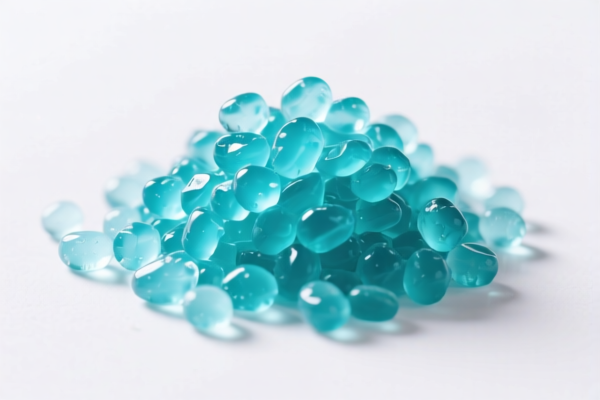

AI Analysis
🧪 Sorbitol, Industrial Grade: HS Code Classification & Customs Clearance Guide
🌐 HS Code Reference & Customs Strategy | 2026 Latest Tariff Breakdown | Professional Compliance Strategy
📌 Part 1: Product Definition & Classification: Do You Really Understand "Sorbitol"?
Sorbitol is a sugar alcohol derived from glucose, widely used in the chemical, food, and pharmaceutical industries. In international trade, Industrial Grade Sorbitol is treated as a chemical raw material, not a food or cosmetic ingredient. Its classification depends on its specific chemical structure and industrial application.
⚠️ Key Distinction Points:
- If the product is specifically D-Sorbitol (a pure stereoisomer) →归入 2905.44.00.00
- If the product is general industrial sorbitol (including mixtures or less pure forms) →归入 2905.49.40.00 or 3824.60.00.00 (depending on preparation)
- Critical Note: Industrial grade implies it is not for direct human consumption, which affects duty rates and regulatory requirements.
📦 Part 2: HS Code Classification Details (2026 Latest Tariff Authority Comparison)
Based on the provided data, there are three possible HS Codes for Industrial Grade Sorbitol. Each has distinct tax implications.
| HS Code | Product Description | Summary from Data | Total Tax Rate | Tax Detail Breakdown |
|---|---|---|---|---|
2905.49.40.00 |
Sorbitol (Other polyols) | Sorbitol belongs to sugar-derived polyols; industrial grade fits the attribute of chemical raw materials. | 40.5% | Base Tariff: 5.5% Additional Tariff: 25.0% Section 301 Tariff: 10% |
2905.44.00.00 |
Sorbitol (D-Sorbitol) | Product name explicitly includes Sorbitol; material is completely consistent with D-Sorbitol; industrial grade fits chemical raw material attributes. | 22.4% | Base Tariff: 4.9% Additional Tariff: 7.5% Section 301 Tariff: 10% |
3824.60.00.00 |
Prepared Binders / Chemical Preparations | Sorbitol is consistent with the core substance; industrial grade fits the usage attribute of chemical industrial products and preparations. | 22.4% | Base Tariff: 4.9% Additional Tariff: 7.5% Section 301 Tariff: 10% |
🔍 Key Reminder:
-2905.49.40.00has the highest tax burden (40.5%). This is the default for "other sorbitols" not specifically identified as D-Sorbitol.
-2905.44.00.00and3824.60.00.00have a lower tax burden (22.4%). These apply if the product can be clearly identified as D-Sorbitol or used as a chemical preparation/binder.
- Choice Strategy: If you can prove the product is D-Sorbitol, choose2905.44.00.00to save 18.1% in tariffs. If it is a preparation/mixture,3824.60.00.00is also favorable.
💰 Part 3: 2026 Latest Tariff Rate Breakdown (Including Surcharges & Policy Add-ons)
✅ Applicable Country: United States (US)
✅ Origin: China (CN)
✅ Effective Date: 2025/2026 (Current US-China Trade Regulations)
🎯 1. 2905.49.40.00 —— Sorbitol, Other (High Tax Scenario)
| Item | Content |
|---|---|
| Base Tariff | 5.5% |
| Section 301 Tariff | +25.0% (USITC Footnote: High-duty list) |
| Additional 301 Tariff | +10% (Further Section 301 measures) |
| Total Tax Rate | 40.5% |
| Tax Calculation | CIF Value × 40.5% |
| De Minimis Exemption | ❌ Not Eligible (Section 301 duties apply regardless of value) |
| Legal Basis Path | USITC:2905.49.40.00 → FOOTNOTE:301-High-Duty |
📌 Explanation:
- The 25% tariff is the core Section 301 duty for Chinese-origin chemicals.
- The 10% additional tariff is another layer of US trade action.
- Total 40.5% is a significant cost driver. Companies must consider supply chain adjustments or reclassification if possible.
🎯 2. 2905.44.00.00 —— Sorbitol, D-Sorbitol (Optimized Tax Scenario)
| Item | Content |
|---|---|
| Base Tariff | 4.9% |
| Section 301 Tariff | +7.5% (Lower duty list) |
| Additional 301 Tariff | +10% |
| Total Tax Rate | 22.4% |
| Tax Calculation | CIF Value × 22.4% |
| De Minimis Exemption | ❌ Not Eligible |
| Legal Basis Path | USITC:2905.44.00.00 → FOOTNOTE:301-Lower-Duty |
📌 Note:
- This code applies if the product is pure D-Sorbitol.
- Savings: Compared to2905.49.40.00, this saves 18.1% in total tariffs.
- Proof Required: Certificate of Analysis (CoA) showing D-Sorbitol purity and structure.
🎯 3. 3824.60.00.00 —— Chemical Preparations (Optimized Tax Scenario)
| Item | Content |
|---|---|
| Base Tariff | 4.9% |
| Section 301 Tariff | +7.5% |
| Additional 301 Tariff | +10% |
| Total Tax Rate | 22.4% |
| Tax Calculation | CIF Value × 22.4% |
| De Minimis Exemption | ❌ Not Eligible |
| Legal Basis Path | USITC:3824.60.00.00 → FOOTNOTE:301-Lower-Duty |
📌 Note:
- This code applies if the sorbitol is prepared with other chemicals or used as a binding agent in industrial processes.
- Suitability: Check if your product is a "preparation" rather than a pure chemical. If so, this is a valid and cost-effective classification.
🛠️ Part 4: Customs Clearance Practical Advice (Real-World Pitfall Avoidance)
✅ 1. Required Documentation Checklist
| Document | Required | Description |
|---|---|---|
| ✅ Product Specification Sheet | ✔️ | Must specify "Industrial Grade," purity, and chemical structure (D-Sorbitol vs. other isomers). |
| ✅ Certificate of Analysis (CoA) | ✔️ | Crucial for proving D-Sorbitol identity to qualify for 2905.44.00.00. |
| ✅ Commercial Invoice | ✔️ | Clearly state "Sorbitol, Industrial Grade" or "D-Sorbitol, Industrial Grade." |
| ✅ Packing List | ✔️ | Detail net/gross weight, packaging type (drums, bags). |
| ✅ Supply Chain Documentation | ✔️ | Bill of Lading, Origin Certificate (China). |
✅ 2. Declaration Tips (Key Rules)
🔥 "Pure D-Sorbitol saves tax; Industrial grade must be precise!"
| Scenario | Correct Declaration | Incorrect Action |
|---|---|---|
| Pure D-Sorbitol | 2905.44.00.00 (22.4%) |
Misdeclaring as 2905.49.40.00 → 40.5% |
| General Sorbitol Mixture | 2905.49.40.00 (40.5%) |
Misdeclaring as 2905.44.00.00 → Audit Risk |
| Sorbitol-based Preparation | 3824.60.00.00 (22.4%) |
Misdeclaring as pure chemical → Compliance Issue |
| Food-Grade Sorbitol | Different Code (Not in Data) | Using Industrial Grade Code → Regulatory Violation |
✅ 3. Special Case Handling
| Case | Handling Advice |
|---|---|
| OEM Custom Sorbitol | Provide client order + CoA to prove D-Sorbitol status for lower tax. |
| Mixed Isomers | If not pure D-Sorbitol, use 2905.49.40.00. Do not force 2905.44.00.00. |
| Chemical Preparation | If sorbitol is mixed with binders/additives, use 3824.60.00.00. |
| Origin Documentation | Ensure Certificate of Origin clearly states China. No preferential treatment for China-origin goods under current tariffs. |
🌍 Part 5: Global Market Comparison (2026 Latest)
| Country/Region | Recommended HS Code | Tariff | Certification | Note |
|---|---|---|---|---|
| 🇺🇸 USA | 2905.44.00.00 / 3824.60.00.00 |
22.4% (if D-Sorbitol/Prep) | None for Industrial | 2905.49.40.00 is 40.5% |
| 🇨🇳 China | 2905.44.00.00 / 2905.49.40.00 |
4.9%-5.5% | None | No Section 301 |
| 🇪🇺 EU | 2905.44.00 / 2905.49.00 |
0% | REACH Registration | No Section 301 |
| 🇦🇺 Australia | 2905.44.00 / 2905.49.00 |
4.0%-5.0% | None | Low tariff environment |
| 🇯🇵 Japan | 2905.44.00 / 2905.49.00 |
0% | None | FTA benefits if applicable |
📌 Conclusion:
- USA is the highest-cost market due to Section 301 tariffs.
- EU, Australia, Japan have 0%-5% tariffs, making them more attractive for export.
- Strategy for US: Prove D-Sorbitol status to drop from 40.5% to 22.4%.
📌 Part 6: Common Errors & Pitfall Avoidance (Lessons Learned)
❌ Error 1: Declaring general sorbitol as D-Sorbitol without proof
👉 Consequence: Customs audit, back taxes + penalties.
✅ Fix: Provide CoA showing >98% D-Sorbitol purity.
❌ Error 2: Using 3824.60.00.00 for pure sorbitol
👉 Consequence: Misclassification penalty.
✅ Fix: Only use 3824.60.00.00 if it is a preparation/mixture.
❌ Error 3: Ignoring Section 301 Tariffs
👉 Consequence: Unexpected 40.5% bill.
✅ Fix: Plan for 22.4% or 40.5% in cost models.
🎯 Part 7: Conclusion: Professional Declaration, Cost Optimization!
🎯 Key Takeaways:
🔹 "D-Sorbitol saves 18.1%! Prove it with CoA!"
🔹 "Industrial Grade = Chemical Raw Material, not Food."
🔹 "USA Tariffs are High: 22.4% (Optimized) vs. 40.5% (Default)."
📌 Pro Tip:
If your product is D-Sorbitol, ensure your Certificate of Analysis and Commercial Invoice explicitly state "D-Sorbitol, Industrial Grade" to qualify for
2905.44.00.00(22.4%).
For US Imports, consider Advance Ruling from CBP to confirm classification and avoid delays.
📣 Immediate Action:
📞 Contact a Customs Broker + Provide CoA + Declare Precise HS Code
🚀 Minimize Tariff Burden, Ensure Smooth Clearance!
✨ Precision in Classification, Savings in Every Shipment!
💼 Your Cost Efficiency Starts with the Right HS Code!
Customer Reviews
About HS Code Classification
The Harmonized System (HS) is an internationally standardized nomenclature developed by the World Customs Organization (WCO) to classify traded products. Over 200 countries use the HS system as the basis for customs tariffs, trade statistics, and import/export regulations.
Each HS code follows a hierarchical structure:
- Chapter (2 digits) — Broad category of goods (e.g., Chapter 84: Machinery and Mechanical Appliances)
- Heading (4 digits) — More specific grouping within the chapter
- Subheading (6 digits) — Internationally standardized breakdown, used by all WCO member countries
- National subdivisions (8-10 digits) — Country-specific extensions for further classification, such as US HTSUS 10-digit codes
Correct HS code classification is essential for smooth customs clearance, accurate duty payment, and compliance with trade regulations. Misclassification can lead to customs delays, overpayment of duties, or penalties.
When importing from CN to US, the applicable tariff rates may include:
- Most-Favored-Nation (MFN) rate — The standard duty rate applied to WTO members
- General rate — Applied to countries without trade agreements
- Trade remedy duties — Additional tariffs such as Section 301 (anti-dumping), Section 232 (national security), or countervailing duties
The information provided on this page is for reference purposes only. For official classification, please consult with your local customs authority or a licensed customs broker.