Sorbitol Preservative Mixture
CN → US| HS Code | Tariff Rate | Origin | Destination | Doc |
|---|---|---|---|---|
| 3824600000 | 22.4% | CN | US | Official Doc |
| 3824999330 | 40.0% | CN | US | Official Doc |
Product Images


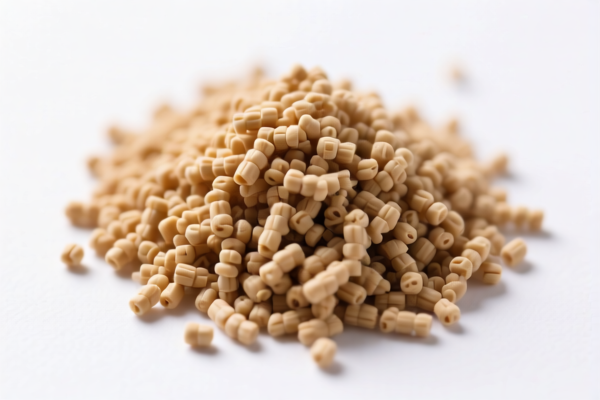
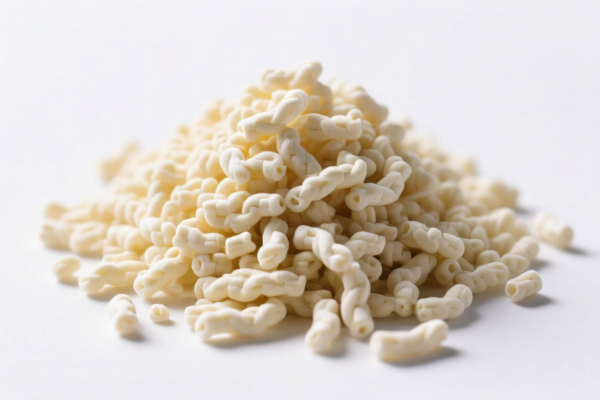
AI Analysis
🏭 Sorbitol Preservative Mixture
(Prepared Binders for Foundry Molds or Cores; Chemical Mixtures)
🌐 HS Code Reference & Customs Clearance Guide | 2026 Latest Tariff Analysis | Professional Clearance Strategy
📌 I. Product Definition & Classification: What is this "Mixture"?
This product is identified as a "Sorbitol Preservative Mixture" or more accurately, a Prepared Binder for Foundry Molds/Cores containing Sorbitol. In international trade, chemical mixtures and prepared binders are strictly regulated under Chapter 38 of the Harmonized System (HS).
The classification depends entirely on the primary function and composition of the mixture: 1. Primary Function as Binder: If the mixture is specifically formulated and used as a binding agent for sand molds or cores in metal casting (foundry), it falls under HS 3824.60. 2. General Chemical Mixture: If it is a generic mixture of alcohols (including sorbitol) not specifically designed as a foundry binder, it falls under HS 3824.99 (Other chemical products).
⚠️ Critical Distinction:
- If the product is explicitly marketed and used as a foundry binder → HS 3824.60.00.00
- If it is a generic alcohol mixture without specific foundry application claims → HS 3824.99.93.30
- Sorbitol itself is a sugar alcohol. If it is "other than that of subheading 2905.44" (pure sorbitol), it may be classified as a mixture in Chapter 38.
📦 II. HS Code Classification Details (2026 Latest Tariff Authority)
Based on the provided data, two primary HS Codes are relevant. The correct choice depends on the product's intended use and technical specification.
| HS Code | Product Description | Applicability | Key Classification Criteria |
|---|---|---|---|
3824.60.00.00 |
Prepared binders for foundry molds or cores Sorbitol (other than subheading 2905.44) |
Foundry Industry Used in metal casting for molding cores. |
✅ Yes: Specifically designed as a binder. ✅ Chemical: Contains sorbitol but is a "prepared product." |
3824.99.93.30 |
Other chemical products and preparations Other: Mixtures of acyclic, monohydric, unsubstituted alcohols: Other |
General Chemical Use Non-binder applications, solvents, or general mixtures. |
❌ No Foundry Use: Not specified as a binder. ✅ Mixture: Classified as a general alcohol mixture. |
🔍 Key Reminder:
-3824.60.00.00is the preferred classification if the product is explicitly a binder for foundry molds. It has a lower tariff burden (12.4% vs 30.0%).
-3824.99.93.30is a fallback classification for general chemical mixtures that do not meet the specific definition of "prepared binders."
- Misclassification Risk: Declaring a foundry binder as a "general chemical mixture" to avoid higher tariffs is illegal and can lead to severe penalties, audits, and shipment delays.
💰 III. 2026 Latest Tariff Rate Breakdown (Including Additional Duties)
✅ Applicable Country: USA (US)
✅ Origin: China (CN)
✅ Effective Date: 2025/2026 Current Rules
🎯 1. 3824.60.00.00 – Prepared Binders for Foundry Molds or Cores
| Item | Details |
|---|---|
| Base Tariff | 4.9% (ad valorem) |
| Section 301 Additional Tariff | +7.5% (List 4B / Exclusions may apply, but standard rate assumed) |
| Total Tariff | 12.4% |
| Tax Calculation | CIF Value × 12.4% |
| De Minimis Eligibility | ❌ Not Eligible (Valued items > $800 are subject to duty) |
| Legal Reference Path | HTSUS: 3824.60.00.00 → USITC: 301 Tariff Rate |
📌 Explanation:
- This is the most favorable classification if the product qualifies as a "prepared binder."
- The 12.4% total rate is significantly lower than the alternative.
- Compliance Tip: Ensure your invoice and product description explicitly state "Prepared Binder for Foundry Molds/Cores" to justify this classification.
🎯 2. 3824.99.93.30 – Other Chemical Products (Mixture of Alcohols)
| Item | Details |
|---|---|
| Base Tariff | 5.0% (ad valorem) |
| Section 301 Additional Tariff | +25.0% (List 4A/B or general higher tier) |
| Total Tariff | 30.0% |
| Tax Calculation | CIF Value × 30.0% |
| De Minimis Eligibility | ❌ Not Eligible |
| Legal Reference Path | HTSUS: 3824.99.93.30 → USITC: 301 Tariff Rate |
📌 Explanation:
- This classification carries a much higher tax burden (30.0%).
- It applies if the product is not specifically designed as a foundry binder.
- Risk: If Customs determines the product is actually a foundry binder but you declared it as a general chemical mixture, you will face back taxes, penalties, and potential seizure.
🛠️ IV. Customs Clearance Practical Advice (Real-World Pitfall Guide)
✅ 1. Required Documentation Checklist (Non-Negotiable)
| Document | Required? | Description |
|---|---|---|
| ✅ Product Specification Sheet | ✔️ | Must detail: Chemical composition, primary function (binder vs. solvent), and intended use. |
| ✅ Safety Data Sheet (SDS) | ✔️ | Section 1 (Identification) and Section 3 (Composition) must align with HS classification. |
| ✅ Commercial Invoice | ✔️ | Clear description: "Sorbitol-based Prepared Binder for Foundry Molds" (for 3824.60) OR "Chemical Mixture of Alcohols" (for 3824.99). |
| ✅ Certificate of Analysis (COA) | ✔️ | To prove sorbitol content and purity, especially if claiming "other than 2905.44." |
| ✅ Bill of Lading / Packing List | ✔️ | Standard shipping documents. |
✅ 2. Declaration Strategy (Key Principles)
🔥 "Function Defines Code: Binder = 3824.60; Mixture = 3824.99"
| Scenario | Correct Declaration | Wrong Declaration | Consequence |
|---|---|---|---|
| Product is a Foundry Binder | 3824.60.00.00 |
3824.99.93.30 |
Under-declaration: Back taxes + 30% penalty. |
| Product is a General Chemical | 3824.99.93.30 |
3824.60.00.00 |
Over-classification: Minor inconvenience, but no penalty. However, if not a binder, 3824.60 may be rejected by Customs for lack of "foundry" evidence. |
| Sorbitol is Main Ingredient | Must state: "Sorbitol-containing binder" | "Pure Sorbitol" | Misclassification: Pure Sorbitol (2905.44) has different rates. "Other than 2905.44" means it's a mixture/preparation. |
✅ 3. Special Considerations
| Case | Recommendation |
|---|---|
| OEM Custom Binder | Provide a letter from the buyer stating the product is specifically formulated for their foundry molds. This strengthens the case for 3824.60.00.00. |
| Mixed Use | If the product can be used as both a binder and a solvent, declare it as the binder (3824.60.00.00) only if it is primarily used as such. Otherwise, use 3824.99.93.30. |
| Pure Sorbitol | If the product is >95% pure sorbitol, it may fall under 2905.44 (Sorbitol other than...), which has different tariffs. However, the data provided explicitly states "Other than subheading 2905.44," implying it is a mixture or preparation. Do not misdeclare. |
🌍 V. Global Market Comparison (2026)
| Market | Recommended HS Code | Est. Total Tariff (China Origin) | Notes |
|---|---|---|---|
| 🇺🇸 USA | 3824.60.00.00 |
12.4% | Lower rate due to specific binder classification. |
| 🇺🇸 USA | 3824.99.93.30 |
30.0% | Higher rate due to general chemical classification. |
| 🇨🇳 China | 3824.60.00.00 |
Varies | Check local HS for import into China (if re-exporting). |
| 🇪🇺 EU | 3824.60 |
~3.5% | Generally lower base rates; no Section 301 equivalent. |
| 🇬🇧 UK | 3824.60 |
~3.5% | Post-Brexit tariff schedules apply. |
📌 Conclusion:
- USA has the most complex tariff structure due to Section 301 duties.
- Correct classification is critical to avoid a 17.6% differential (30.0% - 12.4%).
- Proactive declaration with technical documentation is the best way to ensure3824.60.00.00is accepted.
📌 VI. Common Errors & Pitfalls (Blood Lessons)
❌ Error 1: Declaring "Sorbitol Mixture" as a simple chemical without mentioning its foundry binder function.
👉 Result: Customs may default to 3824.99.93.30 → 30% Tariff.
❌ Error 2: Claiming the product is "Pure Sorbitol" (2905.44) when it is a mixture.
👉 Result: Seizure of goods for false declaration. The data explicitly excludes 2905.44.
❌ Error 3: Not providing SDS or Specification Sheets.
👉 Result: Customs cannot verify the "binder" function → Audit & Delay.
✅ Correct Practice:
"Sorbitol-Based Prepared Binder for Foundry Molds and Cores, Chemical Mixture, SDS Attached, Function: Binding Agent"
🎯 VII. Conclusion: Professional Declaration for Cost Savings
🎯 Key Takeaway:
🔹 "Binder = 12.4%; Mixture = 30.0%. Prove the Binder!"
🔹 "If it binds sand, it's 3824.60. If it's just a chemical, it's 3824.99."
🔹 "Documentation is your shield against high tariffs."
📌 Pro Tip:
If you are unsure whether your product qualifies as a "prepared binder," submit a Binding Ruling Request to US Customs and Border Protection (CBP) before shipment. This provides legal certainty and protects you from audits.
📣 Immediate Action:
📞 Consult a licensed customs broker.
📄 Prepare detailed technical specifications highlighting binder functionality.
🚀 Save 17.6% in tariffs by choosing the right HS Code!
✨ Professional clearance starts with precise classification!
💼 Your profit margin depends on accurate tariff codes!
Customer Reviews
About HS Code Classification
The Harmonized System (HS) is an internationally standardized nomenclature developed by the World Customs Organization (WCO) to classify traded products. Over 200 countries use the HS system as the basis for customs tariffs, trade statistics, and import/export regulations.
Each HS code follows a hierarchical structure:
- Chapter (2 digits) — Broad category of goods (e.g., Chapter 84: Machinery and Mechanical Appliances)
- Heading (4 digits) — More specific grouping within the chapter
- Subheading (6 digits) — Internationally standardized breakdown, used by all WCO member countries
- National subdivisions (8-10 digits) — Country-specific extensions for further classification, such as US HTSUS 10-digit codes
Correct HS code classification is essential for smooth customs clearance, accurate duty payment, and compliance with trade regulations. Misclassification can lead to customs delays, overpayment of duties, or penalties.
When importing from CN to US, the applicable tariff rates may include:
- Most-Favored-Nation (MFN) rate — The standard duty rate applied to WTO members
- General rate — Applied to countries without trade agreements
- Trade remedy duties — Additional tariffs such as Section 301 (anti-dumping), Section 232 (national security), or countervailing duties
The information provided on this page is for reference purposes only. For official classification, please consult with your local customs authority or a licensed customs broker.