Sorting, Screening, Separating, Cleaning, Mixing, or Kneading Machinery
CN → US| HS Code | Tariff Rate | Origin | Destination | Doc |
|---|---|---|---|---|
| 8479820040 | 35.0% | CN | US | Official Doc |
| 8479820080 | 35.0% | CN | US | Official Doc |
| 8479820080 | 35.0% | CN | US | Official Doc |
| 8509400025 | 14.2% | CN | US | Official Doc |
| 8438100010 | 17.5% | CN | US | Official Doc |
Product Images
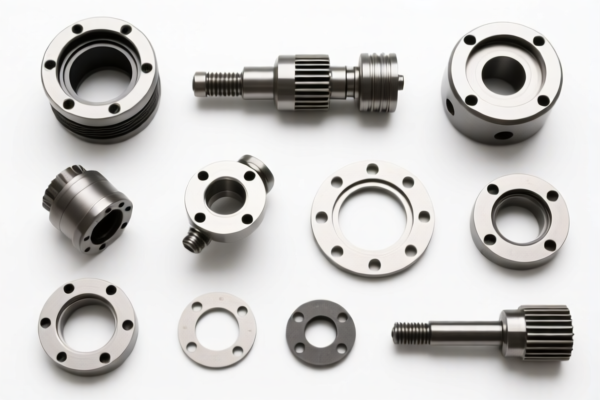
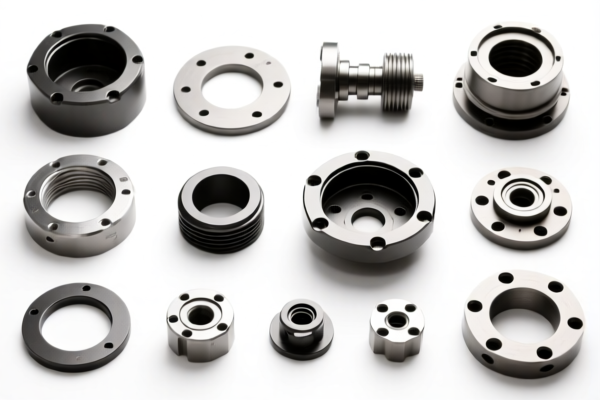
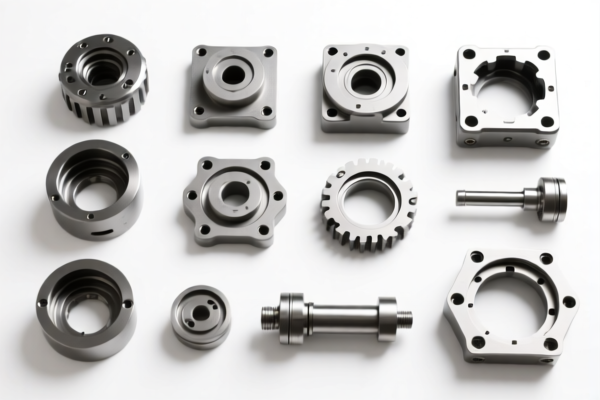
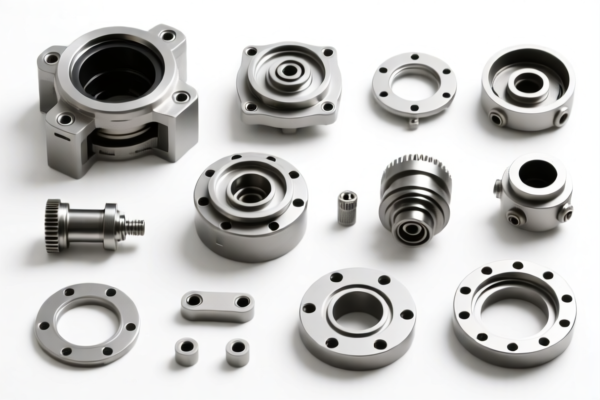
AI Analysis
🏭 Sorting, Screening, Separating, Cleaning, Mixing, or Kneading Machinery
🌐 HS Code Reference & Customs Clearance Guide | 2026 Latest Tariff Analysis | Professional Clearance Strategy
📌 I. Product Definition & Classification: Do You Truly Understand “Industrial Processing Machinery”?
Machinery for sorting, screening, separating, cleaning, mixing, or kneading is the backbone of industrial production, spanning food processing, chemical manufacturing, mining, and pharmaceuticals. In international trade, these machines are broadly categorized under Chapter 84 (Nuclear reactors, boilers, machinery and mechanical appliances).
The key distinction lies in the specific application and technical function: * General Industrial Machinery (HS 8479): Machines designed for general-purpose mixing, kneading, or processing materials that do not fit into more specific food/beverage processing categories. * Household/Small Appliances (HS 8509): Electrically powered, typically smaller-scale mixing or blending appliances intended for domestic use. * Food Processing Specifics (HS 8438): Machinery specifically designed for preparing or working food, such as bread-making or beverage processing, which may overlap with general machinery but has dedicated headings.
⚠️ Key Distinction Point:
- If the machine is for general industrial mixing/kneading (e.g., plastic, rubber, concrete, or non-food chemical mixers) → HS 8479.82
- If the machine is a household blender/mixer → HS 8509.40
- If the machine is specifically for food preparation (e.g., dough kneading for bread) → HS 8438.10
📦 II. HS Code Classification Details (2026 Latest Tariff Authority Comparison)
| HS Code | Product Description | Application Scenario | Material/Conflict Check |
|---|---|---|---|
8479.82.00.40 |
Machines for mixing, kneading, or blending (General) | Industrial mixers, concrete mixers, plastic kneaders | ✅ No material conflict; function matches "mixing/kneading" |
8479.82.00.80 |
Other machines for mixing, kneading, blending, crushing, grinding, screening, homogenizing, emulsifying | Versatile industrial processors; no specific food restriction | ✅ No material conflict; function matches broad processing |
8509.40.00.25 |
Household blenders/mixers (Electric) | Kitchen blenders, immersion blenders, small food processors | ✅ No material conflict; function matches "blending" |
8438.10.00.10 |
Machinery for the preparation of bread, biscuits, cakes, pastry or pasta products | Bread mixers, dough kneaders, pasta making lines | ✅ No material/shape conflict; function matches food prep |
8509.40.00.15 |
Household blenders/mixers (Electric) | Standard household blenders for fruits, vegetables, etc. | ✅ No material conflict; function matches "blenders" |
🔍 Key Reminder:
- HS 8479 covers industrial-grade machines. If the machine is large, heavy-duty, or used in a factory setting, it likely falls here. - HS 8509 is strictly for household appliances. If it has a motor under a certain wattage and is sold for home use, it goes here. - HS 8438 is for food-specific machinery. If the machine is exclusively for bread/dough, it may be classified here rather than general mixing machinery.
💰 III. 2026 Latest Tariff Rate Details (Including Additional Taxes & Policy Surcharges)
✅ Applicable Country: United States (US)
✅ Origin: China (CN)
✅ Effective Date: November 10, 2025 (for subsequent imports)
🎯 1. 8479.82.00.40 & 8479.82.00.80 —— General Industrial Mixing/Kneading Machinery
| Item | Content |
|---|---|
| Base Tariff | 0.0% (ad valorem) |
| USITC Additional Tax | +25.0% (Under USITC Footnote 9903.88.01) |
| IEEPA Additional Tax | +10.0% (Targeting China/Hong Kong products, effective Nov 10, 2025) |
| Total Tariff Rate | 35.0% |
| Tax Calculation | CIF Value × 35% |
| De Minimis Exemption Available? | ❌ No (deny_de_minimis) |
| Legal Basis Path | IEEPA:9903.01.25 → IEEPA:9903.01.24 → USITC:8479.82.00.40/80 → FOOTNOTE:9903.88.01 |
📌 Explanation:
- The 25% USITC tax is applied under the Section 301 investigation results; - The 10% IEEPA tax is a new surcharge under the International Emergency Economic Powers Act; - Total 35% is a high tariff, requiring careful cost calculation for industrial equipment imports.
🎯 2. 8509.40.00.25 & 8509.40.00.15 —— Household Blenders/Mixers
| Item | Content |
|---|---|
| Base Tariff | 4.2% (ad valorem) |
| USITC Additional Tax | 0.0% |
| IEEPA Additional Tax | +10.0% |
| Total Tariff Rate | 14.2% |
| Tax Calculation | CIF Value × 14.2% |
| De Minimis Exemption Available? | ❌ No (deny_de_minimis) |
| Legal Basis Path | IEEPA:9903.01.25 → USITC:8509.40.00.25/15 |
📌 Note:
- Unlike industrial machinery, household blenders have a base tariff of 4.2%; - The 10% IEEPA surcharge still applies; - Total 14.2% is significantly lower than industrial machines, but still substantial due to the IEEPA rule.
🎯 3. 8438.10.00.10 —— Bread Making Machinery
| Item | Content |
|---|---|
| Base Tariff | 0.0% (ad valorem) |
| USITC Additional Tax | +7.5% |
| IEEPA Additional Tax | +10.0% |
| Total Tariff Rate | 17.5% |
| Tax Calculation | CIF Value × 17.5% |
| De Minimis Exemption Available? | ❌ No (deny_de_minimis) |
| Legal Basis Path | IEEPA:9903.01.25 → USITC:8438.10.00.10 |
📌 Note:
- Specific food machinery like bread mixers has a base tariff of 0%; - The USITC additional tax is 7.5% (lower than the 25% for general machinery); - The 10% IEEPA surcharge applies; - Total 17.5% makes this category more cost-effective than general industrial mixers.
🛠️ IV. Customs Clearance Practical Advice (Combat Pitfall Avoidance Guide)
✅ 1. Required Documentation Checklist (None Can Be Missing)
| Material | Required | Description |
|---|---|---|
| ✅ Product Specification Sheet | ✔️ | Dimensions, power, voltage, capacity, mixing speed |
| ✅ Circuit/Structure Diagram | ✔️ | To determine if it’s household or industrial grade |
| ✅ Product Photos (with Nameplate) | ✔️ | Clear model number, brand, input/output parameters |
| ✅ Third-Party Test Report | ✔️ | UL, CE, RoHS, NSF (for food contact parts) |
| ✅ Commercial Invoice | ✔️ | Must specify exact function: e.g., "Industrial Mixer" vs. "Household Blender" |
| ✅ Certificate of Origin (CO) | ✔️ | For preferential tariff claims if not China-origin |
| ✅ Packing List | ✔️ | Clarify relationship between main unit and accessories |
✅ 2. Declaration Techniques (Key Mantras)
🔥 "Industrial vs. Household, Food-Specific vs. General, Name Precision Saves Taxes!"
| Scenario | Correct Declaration | Wrong Action |
|---|---|---|
| Large industrial mixer (plastic/concrete) | 8479.82.00.40 or 8479.82.00.80 |
Misdeclare as household blender → 14.2% (but risk of penalty) |
| Household kitchen blender | 8509.40.00.25 or 8509.40.00.15 |
Misdeclare as industrial → 35% |
| Bread/dough mixer for bakery | 8438.10.00.10 |
Misdeclare as general mixer → 35% |
| General food processor (non-bread) | 8479.82.00.80 |
Misdeclare as 8438 → Potential correction |
✅ 3. Special Case Handling
| Scenario | Handling Advice |
|---|---|
| OEM Industrial Mixers | Provide client order + design drawings; avoid being labeled as "non-standard" |
| Machines with Food Contact Parts | Provide NSF or FDA compliance documents if claiming 8438 |
| Multi-Function Machines | Declare based on primary function; if mixed, choose the heading with lower tax if legitimate |
| Household Appliance for Commercial Use | If bought by a business but designed for home use, still 8509; if industrial grade, 8479 |
🌍 V. Global Major Markets Clearance Comparison (2026 Latest)
| Country/Region | Recommended HS Code | Tariff (China Origin) | Certification Requirements | Notes |
|---|---|---|---|---|
| 🇺🇸 USA | 8479.82.00.40/80 |
35% | UL, NSF (if food) | High tariff due to IEEPA + USITC |
| 🇺🇸 USA | 8509.40.00.15/25 |
14.2% | UL, FCC | Lower base rate, but IEEPA still applies |
| 🇨🇳 China | 8479.82.00.40 |
0% | CCC (if applicable) | No additional tariffs for domestic |
| 🇪🇺 EU | 8479.82.00.40 |
0% (if CE) | CE, RoHS | No additional surcharges |
| 🇦🇺 Australia | 8479.82.00.40 |
5% | RCM | No additional surcharges |
📌 Conclusion:
- The US is the most expensive market for Chinese-origin machinery due to IEEPA 10% + USITC 25%/7.5%; - Household blenders are cheaper (14.2%) but still impacted by IEEPA; - Bread machinery offers a middle ground (17.5%) with lower USITC surcharge.
📌 VI. Common Mistakes & Pitfall Avoidance Guide (Blood & Tears Lessons)
❌ Mistake 1: Declaring an industrial mixer as a household blender
👉 Consequence: Tariff drops to 14.2%, but if caught, penalties + retroactive taxes + possible seizure.
❌ Mistake 2: Declaring a bread mixer as general industrial mixer
👉 Consequence: Tariff jumps from 17.5% to 35% → Overpayment of nearly double!
❌ Mistake 3: Using vague terms like "Mixer" without specifying function
👉 Consequence: Customs cannot determine HS Code → Delay in clearance + additional fees.
❌ Mistake 4: Ignoring the IEEPA 10% surcharge
👉 Consequence: Underestimating landed cost by 10% → Profit margin erosion.
✅ Correct Practice:
"Industrial Dough Kneader, Bread Making Machine, 50kg Capacity, 3-Phase Power, Model XYZ, NSF Certified, for Bakery Use"
🎯 VII. Conclusion: Precise Classification, Save Time, Reduce Costs!
🎯 Remember the Mantra:
🔹 "Industrial 35, Household 14.2, Bread 17.5, Name it right, tax stays light!"
🔹 "HS Code decides your fate, 10% IEEPA is always there, declare accurately, save thousands!"
📌 Tips:
If your machinery originates from Vietnam, Mexico, Thailand, or Malaysia, you may qualify for IEEPA exemption, reducing tariffs to 0%~5%;
It is recommended to apply for an Advance Ruling before shipment to avoid clearance risks.
📣 Take Action Now:
📞 Contact a professional customs broker + Provide product photos + Apply for HS Code Advance Ruling
🚀 Let your machinery pass customs smoothly, export efficiently, and boost profits!
✨ Professional clearance starts with accurate classification!
💼 Every cent of your cost deserves precise calculation!
Customer Reviews
About HS Code Classification
The Harmonized System (HS) is an internationally standardized nomenclature developed by the World Customs Organization (WCO) to classify traded products. Over 200 countries use the HS system as the basis for customs tariffs, trade statistics, and import/export regulations.
Each HS code follows a hierarchical structure:
- Chapter (2 digits) — Broad category of goods (e.g., Chapter 84: Machinery and Mechanical Appliances)
- Heading (4 digits) — More specific grouping within the chapter
- Subheading (6 digits) — Internationally standardized breakdown, used by all WCO member countries
- National subdivisions (8-10 digits) — Country-specific extensions for further classification, such as US HTSUS 10-digit codes
Correct HS code classification is essential for smooth customs clearance, accurate duty payment, and compliance with trade regulations. Misclassification can lead to customs delays, overpayment of duties, or penalties.
When importing from CN to US, the applicable tariff rates may include:
- Most-Favored-Nation (MFN) rate — The standard duty rate applied to WTO members
- General rate — Applied to countries without trade agreements
- Trade remedy duties — Additional tariffs such as Section 301 (anti-dumping), Section 232 (national security), or countervailing duties
The information provided on this page is for reference purposes only. For official classification, please consult with your local customs authority or a licensed customs broker.