Sound Insulation Board
CN → US| HS Code | Tariff Rate | Origin | Destination | Doc |
|---|---|---|---|---|
| 7326908688 | 87.9% | CN | US | Official Doc |
| 4016996050 | 37.5% | CN | US | Official Doc |
| 4016993000 | 35.0% | CN | US | Official Doc |
| 3921110000 | 40.3% | CN | US | Official Doc |
| 3925900000 | 40.3% | CN | US | Official Doc |
Product Images
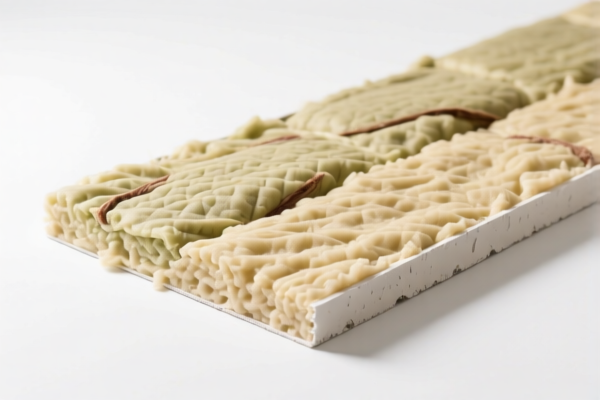
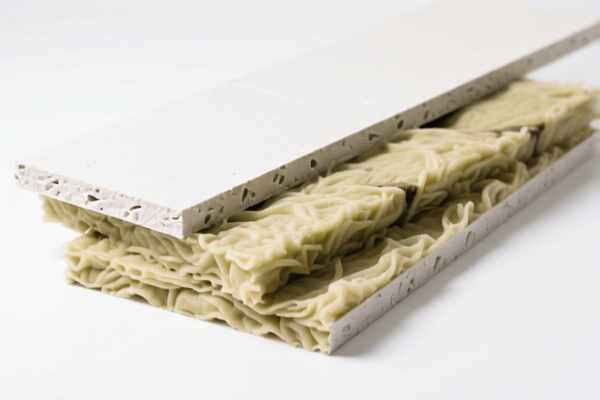
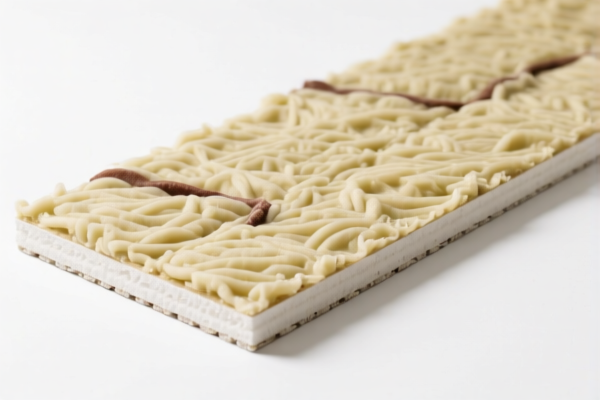
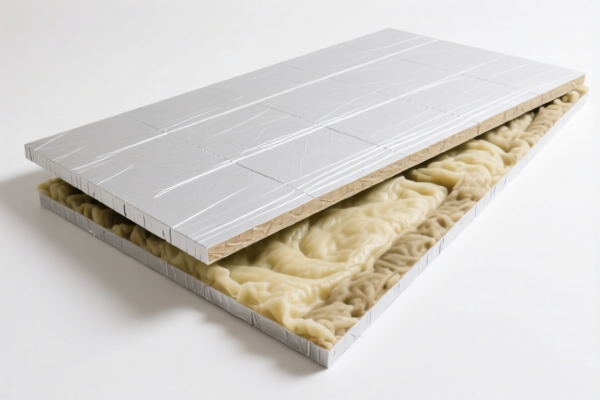
AI Analysis
🏗️ Sound Insulation Board (隔音板)
🌐 HS Code Reference & Customs Clearance Guide | 2026 Latest Tariff Analysis | Professional Strategy
📌 I. Product Definition & Classification: What Exactly is a "Sound Insulation Board"?
Sound insulation boards are critical components in construction, industrial noise control, and acoustic engineering. However, in international trade, they are not classified under a single HS Code. The classification depends entirely on the material composition and physical form.
Misclassification is the #1 cause of customs delays and unexpected tax liabilities. Below is the breakdown based on the provided data, covering Metal, Rubber, and Plastic (Foam) variants.
⚠️ Key Distinction:
- If it is Metal/Iron based → It is a "Miscellaneous Manufacture of Iron/Steel" (HS 7326).
- If it is Rubber based (Sulfurized/Natural) → It is a "Rubber Article" (HS 4016).
- If it is Plastic/Polymer based (Foamed/Honeycomb) → It is a "Plastic Article" (HS 3921 or 3925).
📦 II. HS Code Classification Details (2026 Tariff Book Authority)
| HS Code | Product Description | Material & Form | Key Identification Feature |
|---|---|---|---|
| 7326.90.86.88 | Other articles of iron or steel, not elsewhere specified | Iron/Steel plate | Metal rigidity, ferrous material, non-specific listing |
| 4016.99.60.50 | Other articles of vulcanized rubber, other than hard rubber | Sulfurized Rubber board | Soft/flexible rubber feel, vulcanized process |
| 4016.99.30.00 | Other articles of natural rubber, other than hard rubber | Natural Rubber board | Natural rubber source, vulcanized plate form |
| 3921.11.00.00 | Other plates, sheets, film, foil & strip of polymers of styrene | Expanded Polystyrene (EPS) | Lightweight, foam structure, honeycomb/cellular |
| 3925.90.00.00 | Other builders' ware of plastics | Plastic board | General plastic construction component |
🔍 Critical Note:
- Metal boards are often confused with other steel articles but fall under "Other" if not specific. - Rubber boards are distinguished by whether they are sulfurized (synthetic) or natural. - Foam boards are strictly polymers (Styrene) or general plastics (Builders' ware).
💰 III. 2026 Latest Tariff Rate Breakdown (Including Surtaxes & Policy Add-ons)
✅ Applicable Country: United States (US)
✅ Origin: China (CN)
✅ Effective Time: Current rates apply (Section 301 + IEEPA Add-ons included)
🎯 1. 7326.90.86.88 – Metal Sound Insulation Board (Iron/Steel)
| Item | Content |
|---|---|
| Base Tariff | 2.9% |
| Section 301 Surcharge | +25.0% |
| Section 301 (122 Clause) Steel/Aluminum | +10.0% |
| Total Tax Rate | 87.9% |
| Calculation | CIF Value × 87.9% |
| De Minimis Exemption | ❌ NOT Eligible (High risk of audit) |
📌 Explanation:
- This is the highest tax bracket among the options. - The "122 Clause" refers to specific steel/aluminum tariffs (often linked to Section 232 or specific trade acts). - Total burden: ~88% makes importing steel-based acoustic panels extremely expensive.
🎯 2. 4016.99.60.50 – Rubber Sound Insulation Board (Sulfurized)
| Item | Content |
|---|---|
| Base Tariff | 2.5% |
| Section 301 Surcharge | +25.0% |
| Section 301 (122 Clause) | +10.0% |
| Total Tax Rate | 37.5% |
| Calculation | CIF Value × 37.5% |
| De Minimis Exemption | ❌ NOT Eligible |
📌 Explanation:
- Rubber is less heavily taxed than steel but still carries significant Section 301 penalties. - Distinguish from natural rubber (lower base rate).
🎯 3. 4016.99.30.00 – Rubber Sound Insulation Board (Natural)
| Item | Content |
|---|---|
| Base Tariff | 0.0% |
| Section 301 Surcharge | +25.0% |
| Section 301 (122 Clause) | +10.0% |
| Total Tax Rate | 35.0% |
| Calculation | CIF Value × 35.0% |
| De Minimis Exemption | ❌ NOT Eligible |
📌 Explanation:
- Lowest base rate (0%) among all options. - Even with surcharges, this is cheaper than sulfurized rubber (37.5%) and significantly cheaper than steel (87.9%). - Strategy: If possible, source or blend with natural rubber to reduce base duty.
🎯 4. 3921.11.00.00 – Sound Insulation Board (Expanded Polystyrene)
| Item | Content |
|---|---|
| Base Tariff | 5.3% |
| Section 301 Surcharge | +25.0% |
| Section 301 (122 Clause) | +10.0% |
| Total Tax Rate | 40.3% |
| Calculation | CIF Value × 40.3% |
| De Minimis Exemption | ❌ NOT Eligible |
📌 Explanation:
- EPS foam is a polymer of styrene. - Higher base rate (5.3%) than rubber, but same surcharges.
🎯 5. 3925.90.00.00 – Sound Insulation Board (General Plastic/Builder's Ware)
| Item | Content |
|---|---|
| Base Tariff | 5.3% |
| Section 301 Surcharge | +25.0% |
| Section 301 (122 Clause) | +10.0% |
| Total Tax Rate | 40.3% |
| Calculation | CIF Value × 40.3% |
| De Minimis Exemption | ❌ NOT Eligible |
📌 Explanation:
- Classified as "Builders' Ware of Plastics." - Same tax burden as EPS foam.
🛠️ IV. Customs Clearance Practical Advice (Pitfall Avoidance Guide)
✅ 1. Preparation Checklist (Must-Have Documents)
| Document | Required | Explanation |
|---|---|---|
| Product Spec Sheet | ✔️ | Must clearly state Material Composition (e.g., "90% Natural Rubber, 10% Carbon Black"). |
| Material Safety Data Sheet (MSDS) | ✔️ | Critical for chemical/plastic products to prove safety and composition. |
| Product Photos | ✔️ | Show texture, cross-section (to prove foam vs. solid), and labeling. |
| Commercial Invoice | ✔️ | Description must match HS Code exactly (e.g., do not write "Steel Plate" for rubber). |
| Country of Origin Certificate | ✔️ | To verify China origin and apply correct surcharges. |
| Declaration of Non-Preferential Origin | ✔️ | If applicable, to confirm no third-country processing that might change origin. |
✅ 2. Declaration Strategy (Key Mantra)
🔥 “Material Defines Code, Description Matches Tax!”
| Scenario | Correct Declaration | Wrong Practice | Result |
|---|---|---|---|
| Steel Acoustic Panel | 7326.90.86.88 |
Declared as "Soundproofing Material" (Vague) | High risk of reclassification & 87.9% tax |
| Rubber Sheet | 4016.99.30.00 (Natural) |
Declared as "Plastic Foam" | Underpayment of tax → Penalty |
| Foam Board | 3921.11.00.00 |
Declared as "Steel" | Overpayment of tax (87.9% vs 40.3%) |
| Mixed Material | Split Declaration | Combined into one line item | Customs may split & tax all at highest rate |
📌 Pro Tip:
- If the board is composite (e.g., steel frame + rubber core), declare as the principal material or split the shipment if components are separate. - Do NOT use generic terms like "Sound Insulator" in the customs description. Use specific material names (e.g., "Vulcanized Rubber Board").
✅ 3. Special Cases
| Situation | Handling Advice |
|---|---|
| OEM Custom Shapes | Provide CAD drawings to prove it’s not a standard structural steel beam. |
| Foam Board with Aluminum Foil Layer | Still likely 3921 or 3925 if plastic is principal material, but may trigger inspection. |
| Recycled Rubber | Must declare as such; may have different base rates or environmental regulations. |
🌍 V. Global Market Comparison (2026 Outlook)
| Country/Region | Recommended HS Code | Est. Tariff (China Origin) | Notes |
|---|---|---|---|
| 🇺🇸 USA | Varies by Material | 35% - 87.9% | High Section 301 + IEEPA surcharges. |
| 🇨🇳 China | Varies by Material | 0% - 5% | Import duty is low; focus on VAT. |
| 🇪🇺 EU | Varies by Material | 0% - 6% | No Section 301; CBAM may apply to steel. |
| 🇬🇧 UK | Varies by Material | 0% - 6% | Post-Brexit tariffs similar to EU. |
| 🇯🇵 Japan | Varies by Material | 0% - 4.6% | EPA benefits may apply if rules of origin met. |
📌 Conclusion:
- USA is the most challenging market due to high additive tariffs. - Steel (7326) is the most expensive to import due to 87.9% total rate. - Natural Rubber (4016.99.30.00) is the most cost-effective option (35.0%). - Consider supply chain diversification (e.g., sourcing from Vietnam/Mexico) if targeting the US market to avoid surcharges.
📌 VI. Common Mistakes & Pitfalls (Lessons Learned)
❌ Mistake 1: Using "Soundproofing Material" as the description.
👉 Consequence: Customs cannot determine the HS code → Delay + Inspection + Potential Rejection.
❌ Mistake 2: Confusing "Steel Mesh" with "Steel Plate".
👉 Consequence: Incorrect HS code → Backdated taxes + Penalties.
❌ Mistake 3: Ignoring the "122 Clause" for Steel/Aluminum.
👉 Consequence: Underpaying by 10% → Audit Trigger + Interest.
❌ Mistake 4: Declaring Foam as "Rubber".
👉 Consequence: Mismatch with physical inspection → Confiscation or Fine.
✅ Correct Practice:
"Sound Insulation Board, 10mm thick, composed of 100% Natural Sulfurized Rubber, Size 2x2m, Model XYZ"
🎯 VII. Conclusion: Precision Classification, Cost Savings
🎯 Remember:
🔹 "Material is King: Steel is 88%, Rubber is 35%, Foam is 40%."
🔹 "Section 301 is the Killer: Always add 25% + 10% for China origin."
🔹 "Vague Descriptions = High Taxes: Be Specific!"
📌 Tip:
If your sound insulation boards are originating from non-China countries (e.g., Malaysia, Thailand), check for USMCA or FTZ benefits to potentially avoid Section 301 surcharges.
Apply for Advance Ruling to lock in the correct HS code and tax rate.
📣 Immediate Action:
📞 Consult a licensed customs broker + Provide Material Certificates + Request HS Code Advance Ruling
🚀 Optimize your supply chain, clear customs smoothly, and maximize profit margins!
✨ Professional Clearance Starts with Accurate Classification!
💼 Every cent of tax saved is pure profit!
Customer Reviews
About HS Code Classification
The Harmonized System (HS) is an internationally standardized nomenclature developed by the World Customs Organization (WCO) to classify traded products. Over 200 countries use the HS system as the basis for customs tariffs, trade statistics, and import/export regulations.
Each HS code follows a hierarchical structure:
- Chapter (2 digits) — Broad category of goods (e.g., Chapter 84: Machinery and Mechanical Appliances)
- Heading (4 digits) — More specific grouping within the chapter
- Subheading (6 digits) — Internationally standardized breakdown, used by all WCO member countries
- National subdivisions (8-10 digits) — Country-specific extensions for further classification, such as US HTSUS 10-digit codes
Correct HS code classification is essential for smooth customs clearance, accurate duty payment, and compliance with trade regulations. Misclassification can lead to customs delays, overpayment of duties, or penalties.
When importing from CN to US, the applicable tariff rates may include:
- Most-Favored-Nation (MFN) rate — The standard duty rate applied to WTO members
- General rate — Applied to countries without trade agreements
- Trade remedy duties — Additional tariffs such as Section 301 (anti-dumping), Section 232 (national security), or countervailing duties
The information provided on this page is for reference purposes only. For official classification, please consult with your local customs authority or a licensed customs broker.