Soup Bowl
CN → US| HS Code | Tariff Rate | Origin | Destination | Doc |
|---|---|---|---|---|
| 6911108010 | 38.3% | CN | US | Official Doc |
| 6909195095 | 39.0% | CN | US | Official Doc |
| 6912003550 | 19.8% | CN | US | Official Doc |
| 6911103550 | 43.5% | CN | US | Official Doc |
| 6912003950 | 14.5% | CN | US | Official Doc |
Product Images
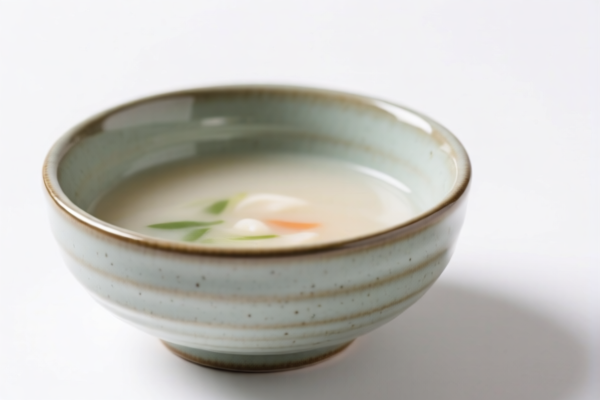
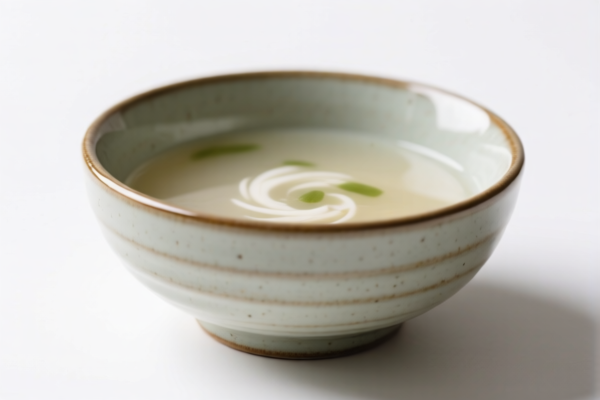
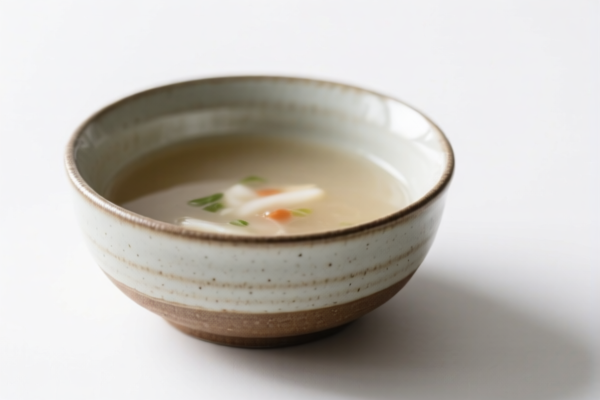

AI Analysis
🥣 Soup Bowls: Precision Classification & US Customs Clearance Guide | 2026 Tax Rate Breakdown
🌐 HS Code Reference & Customs Clearance Guide | 2026 Latest Harmonized Tariff Schedule | Strategic Import Strategies
📌 1. Product Definition: What Exactly Is a "Soup Bowl"?
In international trade, a "soup bowl" is not just a shape; it is defined by its material composition and primary use. Misclassification here leads to massive tax disparities (from 14.5% to 43.5%).
There are two main categories for ceramic soup bowls: * Porcelain (Ceramic): High-fired, white, translucent, high hardness. Generally falls under Heading 6911. * Earthenware/Stoneware (Non-Porcelain): Lower firing temperature, opaque, often colorful/decorative. Generally falls under Heading 6912.
⚠️ Critical Distinction: * If the bowl is White, Translucent, and High-Quality Ceramic → It is Porcelain (6911). * If the bowl is Opaque, Colored, or Rougher Texture → It is Earthenware/Other Ceramic (6912). * LABORATORY USE? If the bowl is specialized glass/ceramic for lab analysis, it goes to 6909.
📦 2. HS Code Classification Matrix (2026 US Tariff Schedule)
Below are the specific HS Codes provided in the data, ranked by total tax burden.
| HS Code | Material/Type | Primary Use | Total Tax Rate | Key Characteristics |
|---|---|---|---|---|
| 6912.00.39.50 | Other Ceramic (Non-Porcelain) | Tableware / Kitchenware | 14.5% | ✅ Lowest Tax. "Catch-all" category for non-porcelain ceramic tableware. |
| 6912.00.35.50 | Non-Porcelain Ceramic | Tableware / Kitchenware | 19.8% | Standard earthenware or stoneware bowls. |
| 6909.19.50.95 | Laboratory Ceramic | Lab/Technical Use | 39.0% | ❌ High Tax. Only for specialized technical/lab vessels, not dining. |
| 6911.10.80.10 | Porcelain | Food Contact / Tableware | 38.3% | High-quality white porcelain. Note: Includes 7.5% Section 301 duty. |
| 6911.10.35.50 | Porcelain | Tableware / Kitchenware | 43.5% | ❌ Highest Tax. Standard porcelain tableware with high base duty. |
🔍 Analysis: * Why is 6912.00.39.50 so cheap (14.5%)? Because it is a "catch-all" for non-porcelain ceramics with lower base duties (4.5%) and 0% Section 301 duty. * Why is 6911.10.35.50 so expensive (43.5%)? High base duty (26%) + Section 301 duty (7.5%) + Section 122 duty (10%).
💰 3. Detailed Tariff Breakdown & Legal Basis
✅ Jurisdiction: United States (US) ✅ Origin: China (CN) ✅ Effective Date: Current 2026 Rates
🎯 Category A: The Budget-Friendly Choice (Earthenware/Other Ceramic)
HS Code: 6912.00.39.50 (Other Ceramic Tableware) & 6912.00.35.50
| Tax Component | Rate | Legal/Policy Basis |
|---|---|---|
| Base Duty | 4.5% - 9.8% | Standard MFN Rate for Ceramic Tableware |
| Section 301 Duty | 0.0% | ✅ EXEMPT. Non-porcelain ceramics often escape the 7.5% - 25% tariffs depending on specific subheading nuances. |
| Section 122 Duty | 10.0% | 🇨🇳 China-Specific Penalty (Lifted from 122 to 10% in recent updates for some categories, or retained depending on specific trade action). Note: Data shows 10% applies to all. |
| TOTAL EFFECTIVE RATE | 14.5% - 19.8% | Significant Savings vs. Porcelain |
📌 Explanation: * Section 122 Duty: This is a specific penalty tariff applied to Chinese goods, currently set at 10% across the board in this dataset. * Savings: Choosing
6912.00.39.50over6911.10.35.50saves you 29% on duties. On a $10,000 shipment, that’s $2,900 saved.
🎯 Category B: The Premium Porcelain Choice (High Cost)
HS Code: 6911.10.80.10 & 6911.10.35.50
| Tax Component | Rate | Legal/Policy Basis |
|---|---|---|
| Base Duty | 20.8% - 26.0% | Higher base rate for high-grade porcelain |
| Section 301 Duty | 7.5% | 🇨🇳 China Section 301 Tariff (List 4A) |
| Section 122 Duty | 10.0% | 🇨🇳 China-Specific Penalty |
| TOTAL EFFECTIVE RATE | 38.3% - 43.5% | High Cost |
📌 Explanation: * Base Duty: Porcelain attracts a higher base duty (20-26%) than earthenware (4-9%). * Section 301: Unlike some ceramics, these specific porcelain subheadings are subject to the 7.5% Section 301 tariff. * No Exemption: No duty-free allowances apply here.
🎯 Category C: The Laboratory Trap
HS Code: 6909.19.50.95
| Tax Component | Rate | Legal/Policy Basis |
|---|---|---|
| Base Duty | 4.0% | Low base for technical glass/ceramic |
| Section 301 Duty | 25.0% | 🇨🇳 High Penalty (Likely List 3 or 4B) |
| Section 122 Duty | 10.0% | 🇨🇳 China-Specific Penalty |
| TOTAL EFFECTIVE RATE | 39.0% | Avoid for Dining |
📌 Warning: * Do NOT classify dining soup bowls as laboratory equipment. Customs will reject this as "Misuse of Heading 6909." * Even if accurate, the 25% Section 301 duty makes this more expensive than standard porcelain tableware.
🛠️ 4. Customs Clearance Strategy & Risk Mitigation
✅ 1. Documentation Requirements (Must-Haves)
| Document | Purpose | Tip |
|---|---|---|
| Commercial Invoice | Declare Value & Origin | Must clearly state "Ceramic Soup Bowl" + Material (Porcelain vs. Earthenware). |
| Product Description | Prevent Re-classification | Use precise terms: "Earthenware Tableware, Glazed, 200ml" vs. "White Porcelain Tableware." |
| Material Certificate | Prove Non-Porcelain | If claiming 6912 (14.5%), provide a statement that the item is NOT porcelain (e.g., opaque, lower firing temp). |
| Labeling | Country of Origin | Must say "Made in China" on the bowl or packaging. |
✅ 2. Classification Strategy: How to Save Money?
🔥 STRATEGY: If your bowl is not high-gloss white porcelain, classify it under 6912!
| Scenario | Recommended HS Code | Tax Rate | Why? |
|---|---|---|---|
| White, Translucent, Fine China | 6911.10.35.50 |
43.5% | No choice. It is clearly porcelain. |
| White, Opaque, Standard China | 6911.10.80.10 |
38.3% | Slightly better than 43.5%, but still high. |
| Colored, Patterned, Stone-like | 6912.00.35.50 |
19.8% | Save ~20% vs. Porcelain. |
| Generic Ceramic, Uncertain | 6912.00.39.50 |
14.5% | ✅ Best Option. Use if there is any doubt it is not high-grade porcelain. |
✅ 3. Common Customs Errors & Pitfalls
❌ Error 1: Calling "Earthenware" "Porcelain" * Consequence: You pay 43.5% instead of 14.5%. * Fix: Audit your material specs. If it's not translucent, it's likely not porcelain.
❌ Error 2: Using "Laboratory" Code for Kitchenware
* Consequence: Customs audit, potential penalties for misdeclaration, plus you pay 39% anyway.
* Fix: Only use 6909 for beakers, crucibles, or technical apparatus.
❌ Error 3: Ignoring Section 122 Duty * Consequence: Underpayment of 10%. * Fix: Always add 10% to your Landed Cost calculation for Chinese ceramic goods.
🌍 5. Global Market Comparison (2026)
| Market | Recommended HS Code | Approx. Tax Rate | Notes |
|---|---|---|---|
| 🇺🇸 USA | 6912.00.39.50 |
14.5% | Use "Other Ceramic" to avoid 301 duties. |
| 🇺🇸 USA | 6911.10.35.50 |
43.5% | High cost for premium porcelain. |
| 🇪🇺 EU | 6911/6912 | ~4-6% | No Section 301/122. Much cheaper than US. |
| 🇨🇳 China | 6911/6912 | ~5-10% | Import duties for finished ceramics. |
📌 Conclusion: The US market is the most expensive for Chinese ceramic tableware due to Section 122 (10%) and Section 301 (0-25%) tariffs. Key Takeaway: Maximize the use of Heading 6912 (Non-Porcelain) where possible to reduce tax from 43.5% to 14.5%.
📌 6. Actionable Checklist for Importers
- Inspect Material: Is it white and translucent? If yes, expect 38-43% tax. If colored/opaque, aim for 14-19% tax.
- Update Description: Change invoice description to "Earthenware/Tableware" if applicable to qualify for
6912. - Calculate Landed Cost: Include 10% Section 122 in all budget models.
- Pre-Ruling: If unsure if your product is porcelain, file an Advanced Ruling with US CBP. It costs money but saves thousands in potential back-taxes.
🎯 Final Pro Tip:
"Porcelain is Premium, but Pricey. Earthenware is Practical, and Profitable."
- If you are selling to high-end boutiques, the 43.5% tax is a cost of doing business.
- If you are selling to mass market (Target/Walmart), re-engineer packaging or switch to 6912-compatible materials to save 29% in duties.
✨ Customs Clearance: It’s Not Just About Shipping. It’s About Strategy. 💼 Optimize Your HS Code. Protect Your Margins.
Customer Reviews
About HS Code Classification
The Harmonized System (HS) is an internationally standardized nomenclature developed by the World Customs Organization (WCO) to classify traded products. Over 200 countries use the HS system as the basis for customs tariffs, trade statistics, and import/export regulations.
Each HS code follows a hierarchical structure:
- Chapter (2 digits) — Broad category of goods (e.g., Chapter 84: Machinery and Mechanical Appliances)
- Heading (4 digits) — More specific grouping within the chapter
- Subheading (6 digits) — Internationally standardized breakdown, used by all WCO member countries
- National subdivisions (8-10 digits) — Country-specific extensions for further classification, such as US HTSUS 10-digit codes
Correct HS code classification is essential for smooth customs clearance, accurate duty payment, and compliance with trade regulations. Misclassification can lead to customs delays, overpayment of duties, or penalties.
When importing from CN to US, the applicable tariff rates may include:
- Most-Favored-Nation (MFN) rate — The standard duty rate applied to WTO members
- General rate — Applied to countries without trade agreements
- Trade remedy duties — Additional tariffs such as Section 301 (anti-dumping), Section 232 (national security), or countervailing duties
The information provided on this page is for reference purposes only. For official classification, please consult with your local customs authority or a licensed customs broker.