Soybean Meal Residue
CN → US| HS Code | Tariff Rate | Origin | Destination | Doc |
|---|---|---|---|---|
| 1214900090 | 35.0% | CN | US | Official Doc |
| 1214100060 | 36.4% | CN | US | Official Doc |
| 2304000090 | 0.0% | CN | US | Official Doc |
| 2304000010 | 0.0% | CN | US | Official Doc |
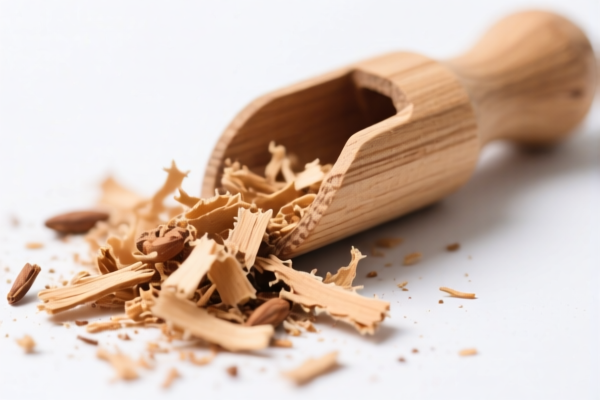
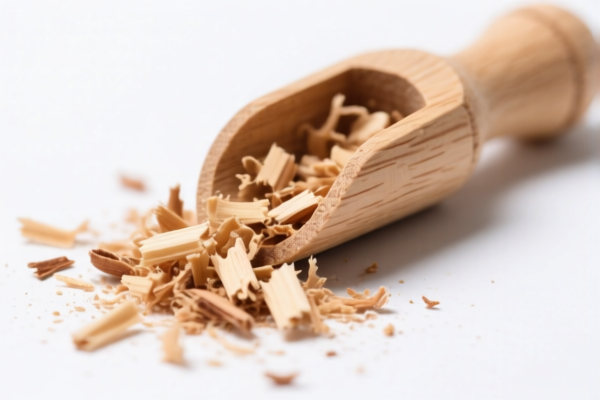
Product Images


AI Analysis
🌱 Soybean Meal Residue (Oilcake and Other Solid Residues from Soybean Oil Extraction)
🌐 HS Code Reference & Customs Clearance Guide | 2026 Latest Tariff Analysis | Professional Import Strategy
📌 One, Product Definition & Classification: What Exactly Is Soybean Meal Residue?
Soybean meal residue — also known as soybean oilcake or soybean meal byproduct — is the solid material left after extracting oil from soybeans. It is a high-protein, nutrient-rich feed ingredient widely used in animal husbandry, especially for livestock, poultry, and aquaculture.
⚠️ Key Classification Point:
- If the residue is not organic-certified, it falls under general agricultural byproducts.
- If it is certified organic, it is subject to additional tariffs due to special trade regulations and sustainability labeling.
📦 Two, HS Code Classification Details (2026 Latest Tariff Authority Match)
| HS Code | Product Description | Applicable Use Case | Organic? |
|---|---|---|---|
2304.00.00.90 |
Oilcake and other solid residues, whether or not ground or in the form of pellets, resulting from the extraction of soybean oil — Other | Standard non-organic soybean meal for animal feed | ❌ No |
2304.00.00.10 |
Oilcake and other solid residues, whether or not ground or in the form of pellets, resulting from the extraction of soybean oil — Certified Organic | Organic-certified soybean meal for premium livestock, organic farming, or specialty markets | ✅ Yes |
🔍 Critical Note:
- "Other" in2304.00.00.90means non-organic, non-exceptional soybean meal.
- "Certified organic" in2304.00.00.10triggers strict labeling, documentation, and higher tariffs under U.S. trade law.
💰 Three, 2026 Latest Tariff Breakdown (Including附加 Taxes & Policy Add-ons)
✅ Applicable Country: United States (US)
✅ Origin: China (CN), Brazil (BR), Argentina (AR), etc.
✅ Effective Date: November 10, 2025 (and ongoing)
🎯 1. 2304.00.00.90 — Non-Organic Soybean Meal Residue
| Item | Details |
|---|---|
| Base Duty Rate | 0.0% (ad valorem) |
| Additional Tariff | 0.0% |
| Total Tax Rate | 0.0% |
| Tax Calculation | CIF Value × 0.0% |
| De Minimis Threshold | ✅ Yes (eligible for de minimis exemption if value ≤ $800) |
| Legal Basis Path | USITC:2304.00.00.90 → FOOTNOTE:9903.88.01 → No additional tariffs applied |
📌 Explanation:
- This is the standard rate for non-organic soybean meal.
- No extra tariffs apply unless the product is from a restricted country or under specific trade actions.
- Perfect for bulk feed imports from Brazil, Argentina, or the U.S. itself.
🎯 2. 2304.00.00.10 — Certified Organic Soybean Meal Residue
| Item | Details |
|---|---|
| Base Duty Rate | 0.45¢/kg (per kilogram, not ad valorem) |
| Additional Tariff | +25.0% (on top of base rate) |
| Total Tax Rate | 0.45¢/kg + 25.0% |
| Tax Calculation | (0.45¢/kg × weight in kg) + (25% × CIF value) |
| De Minimis Exemption | ❌ No (not eligible due to organic certification) |
| Legal Basis Path | IEEPA:9903.01.25 → USITC:2304.00.00.10 → FOOTNOTE:9903.88.01 |
📌 Deep Dive:
- The 0.45¢/kg is a per-kilogram fixed duty, meaning it’s not based on value, but on weight.
- The +25% is an ad valorem additional tariff under Section 301 (USITC) for products from China or other designated countries.
- Total effective tax = Fixed + Variable, which can be very high for large shipments.
- Example:
- 1,000 kg shipment at $1,000 CIF value
- Fixed duty: 1,000 × $0.0045 = $4.50
- Additional 25%: $1,000 × 25% = $250.00
- Total Tax = $254.50 → 25.45% effective rate!🚨 Warning:
- Even if the product is not from China, if it’s certified organic, it may still be subject to 25% additional tariff under U.S. organic trade policy.
- Certification must be verifiable (e.g., USDA Organic, EU Organic, JAS).
🛠️ Four, Customs Clearance Best Practices (Pro Tips to Avoid Penalties)
✅ 1. Required Documentation (Must-Have Checklist)
| Document | Required? | Notes |
|---|---|---|
| ✅ Commercial Invoice | ✔️ | Clearly state "Soybean Meal Residue – Non-Organic" or "Certified Organic" |
| ✅ Bill of Lading (B/L) | ✔️ | Must match invoice |
| ✅ Certificate of Origin (CO) | ✔️ | Required for tariff eligibility |
| ✅ Organic Certification (e.g., USDA, EU Organic) | ✔️ | Mandatory for 2304.00.00.10 |
| ✅ Product Specifications (Protein, Moisture, FFA) | ✔️ | For feed quality verification |
| ✅ Packing List | ✔️ | Weight, packaging type (pellets, powder, etc.) |
| ✅ Third-Party Lab Test Report | ✔️ | For GMO, mycotoxin, heavy metal testing (if required) |
✅ 2.申报技巧 (Key Tips for Accurate Classification)
🔥 "Organic = Higher Tax, Non-Organic = Zero Tax — Know Your Code!"
| Scenario | Correct HS Code | Common Mistake |
|---|---|---|
| Non-organic soybean meal from Brazil | 2304.00.00.90 |
Misdeclaring as 2304.00.00.10 → extra 25% |
| Certified organic soybean meal from EU | 2304.00.00.10 |
Misdeclaring as 2304.00.00.90 → missing organic proof → rejected |
| Ground pellets vs. powder | Same HS Code | No difference in tariff — both 2304.00.00.90 or 2304.00.00.10 |
| Mixed with other feed ingredients | Must declare as soybean meal | Risk of misclassification → higher duty or seizure |
✅ 3. Special Cases & Solutions
| Situation | Recommended Action |
|---|---|
| Organic product from non-China country (e.g., EU, Canada) | Still use 2304.00.00.10 — 25% additional tariff applies unless under a trade agreement |
| Shipment under $800 | Can use de minimis for 2304.00.00.90 → 0% tax |
| Need to avoid 25% tariff | Apply for tariff exemption via USITC Section 301 or trade agreement (e.g., USMCA) |
| Dispute over organic certification | Submit certification audit trail to CBP for review |
🌍 Five, Global Customs Comparison (2026 Latest)
| Country/Region | Recommended HS Code | Tariff | Certification Required | Notes |
|---|---|---|---|---|
| 🇺🇸 United States | 2304.00.00.90 (non-org) / 2304.00.00.10 (org) |
0% (non-org), 0.45¢/kg + 25% (org) | ✅ Organic: Yes | High scrutiny on organic claims |
| 🇨🇳 China | 2304.00.00.90 |
5% | ❌ No | No additional tariffs |
| 🇪🇺 European Union | 2304.00.00.90 |
0% (if CE/organic cert) | ✅ Organic: Yes | No 25% extra tariff |
| 🇦🇺 Australia | 2304.00.00.90 |
0% | ❌ No | No additional tariffs |
| 🇯🇵 Japan | 2304.00.00.90 |
0% | ❌ No | No extra charges |
📌 Insight:
- The U.S. is the only major market with a 25% additional tariff on organic soybean meal.
- China and EU are more favorable for organic feed imports.
📌 Six, Common Mistakes & Risk Avoidance (Learn from Others’ Errors)
❌ Mistake 1: Declaring organic soybean meal as 2304.00.00.90
👉 Result: Customs rejects the shipment → delay, fines, or return.
❌ Mistake 2: Not providing organic certification for 2304.00.00.10
👉 Result: 25% tariff applied + penalty for false declaration.
❌ Mistake 3: Assuming non-organic = 0% tax everywhere
👉 Result: Not checking country-specific tariffs (e.g., some countries have anti-dumping duties).
❌ Mistake 4: Using "soybean meal" without specifying organic/non-organic
👉 Result: Customs may default to higher tariff.
✅ Correct Way to Declare:
"Soybean Meal Residue, Non-Organic, Ground Pellets, 45% Protein, Origin: Brazil, HS Code: 2304.00.00.90"
🎯 Seven, Conclusion: Accurate Classification = Cost Savings & Smooth Clearance!
🎯 Remember the Rule of Thumb:
🔹 "Non-Organic → 0% → Use
2304.00.00.90"
🔹 "Organic → 0.45¢/kg + 25% → Use2304.00.00.10"
🔹 "No de minimis for organic → Always check weight & value!"
📌 Pro Tip:
If your soybean meal is certified organic, consider sourcing from non-China countries (e.g., EU, Canada) to avoid the 25% additional tariff under U.S. Section 301.
✅ Apply for a pre-ruling (Advance Ruling) with U.S. Customs to lock in HS Code and tariff rate.
📣 Take Action Now:
📞 Contact a licensed customs broker + provide organic certificate + request HS Code pre-approval
🚀 Ensure your soybean meal clears customs fast, pays the right tax, and protects your profit margin!
✨ Precision in Classification, Power in Trade!
💼 Your next shipment starts with the right HS Code — don’t gamble with tariffs!
Customer Reviews
About HS Code Classification
The Harmonized System (HS) is an internationally standardized nomenclature developed by the World Customs Organization (WCO) to classify traded products. Over 200 countries use the HS system as the basis for customs tariffs, trade statistics, and import/export regulations.
Each HS code follows a hierarchical structure:
- Chapter (2 digits) — Broad category of goods (e.g., Chapter 84: Machinery and Mechanical Appliances)
- Heading (4 digits) — More specific grouping within the chapter
- Subheading (6 digits) — Internationally standardized breakdown, used by all WCO member countries
- National subdivisions (8-10 digits) — Country-specific extensions for further classification, such as US HTSUS 10-digit codes
Correct HS code classification is essential for smooth customs clearance, accurate duty payment, and compliance with trade regulations. Misclassification can lead to customs delays, overpayment of duties, or penalties.
When importing from CN to US, the applicable tariff rates may include:
- Most-Favored-Nation (MFN) rate — The standard duty rate applied to WTO members
- General rate — Applied to countries without trade agreements
- Trade remedy duties — Additional tariffs such as Section 301 (anti-dumping), Section 232 (national security), or countervailing duties
The information provided on this page is for reference purposes only. For official classification, please consult with your local customs authority or a licensed customs broker.