Space Weather Station
CN → US| HS Code | Tariff Rate | Origin | Destination | Doc |
|---|---|---|---|---|
| 9015808040 | 35.0% | CN | US | Official Doc |
| 9015808080 | 35.0% | CN | US | Official Doc |
| 8517610000 | 17.5% | CN | US | Official Doc |
| 8517690000 | 35.0% | CN | US | Official Doc |
Product Images
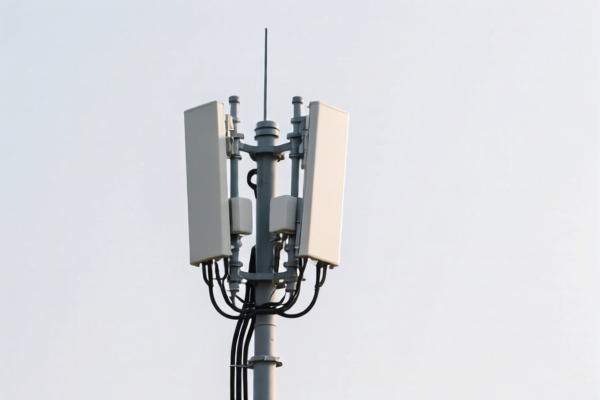
AI Analysis
🌩️ Space Weather Station (Solar & Geomagnetic Monitoring Systems)
🌐 HS Code Reference & Clearance Guide | 2026 Latest Tariff Analysis | Professional Customs Strategy
📌 I. Product Definition & Classification: Do You Really Understand "Space Weather Stations"?
A Space Weather Station is a specialized scientific instrument used to monitor solar activity, geomagnetic fields, ionospheric conditions, and high-energy particles from the sun. These systems are critical for protecting power grids, satellite operations, aviation, and telecommunications infrastructure.
In international trade, these stations are often categorized under communication or data transmission equipment, specifically focusing on their ability to transmit sensor data via wired or wireless networks, rather than just the physical sensors themselves.
⚠️ Key Distinction:
- If the system is a complete, self-contained unit designed to transmit data (voice, images, or digital signals) via wireless networks (e.g., satellite, radio, cellular backhaul), it falls under 8517.
- If the item is merely a raw sensor component (e.g., a magnetometer probe) without the transmission apparatus, it might fall elsewhere (e.g., 9031), but complete stations are typically treated as communication/transmission apparatus.
📦 II. HS Code Classification Details (2026 Latest Tariff Authority Comparison)
| HS Code | Product Description | Application Scenario | Transmission Capability |
|---|---|---|---|
8517.69.00.00 |
Other apparatus for transmission/reception of voice, images, or data (including wireless network apparatus) | Complete space weather monitoring hubs that transmit data via wireless networks (e.g., RF, Satellite, 5G backhaul) | ✅ Yes (Wireless/Wired) |
8517.61.00.00 |
Base stations | If the station functions primarily as a communication base station for data relay (e.g., a gateway hub for other sensors) | ✅ Yes (Base Station Function) |
🔍 Key Insight:
- Most commercially traded "Space Weather Stations" are categorized under 8517.69.00.00 because they are essentially data transmission apparatus that receive sensor inputs and transmit them to central servers via wireless or wired networks.
- They are not classified as simple measuring instruments (Chapter 90) if their primary function includes data transmission over a network.
💰 III. 2026 Latest Tariff Rate Breakdown (Including Surtaxes & Policy Add-ons)
✅ Applicable Country: United States (US)
✅ Country of Origin: China (CN)
✅ Effective Date: November 10, 2025 (and subsequent imports)
🎯 1. 8517.69.00.00 —— Other Apparatus for Transmission/Reception of Data (Wireless/Wired)
| Item | Detail |
|---|---|
| Base Tariff | 0.0% (ad valorem) |
| Section 301 Surtax | +25.0% (USITC Footnote 9903.88.01 / HTSUS 8517.69) |
| Total Tariff Rate | 25.0% |
| Tax Calculation | CIF Value × 25% |
| De Minimis Exemption? | ❌ No (deny_de_minimis applies to Section 301 items) |
| Legal Basis Path | USITC:8517.69.00.00 → FOOTNOTE:9903.88.01 → 301 Tariff List |
📌 Explanation:
- The base tariff for most data transmission apparatus is 0%.
- However, due to Section 301 trade actions, Chinese-origin "apparatus for transmission or reception of voice, images, or other data" (including wireless network apparatus) are subject to a 25% additional duty.
- Total Cost Impact: A $10,000 CIF value will incur $2,500 in additional duties.
- Note: This is not a small tariff. It significantly impacts the landed cost of scientific monitoring equipment.
🎯 2. 8517.61.00.00 —— Base Stations
| Item | Detail |
|---|---|
| Base Tariff | 0.0% (ad valorem) |
| Section 301 Surtax | +7.5% (USITC Footnote 9903.88.01 / HTSUS 8517.61) |
| Total Tariff Rate | 7.5% |
| Tax Calculation | CIF Value × 7.5% |
| De Minimis Exemption? | ❌ No (deny_de_minimis applies) |
| Legal Basis Path | USITC:8517.61.00.00 → FOOTNOTE:9903.88.01 → 301 Tariff List |
📌 Note:
- If your space weather station is explicitly classified as a Base Station (e.g., it serves as a central hub for other devices), the tariff drops to 7.5%.
- However, this classification is stricter. If it’s a general-purpose data transmitter, it will likely be caught under 8517.69.00.00 (25%).
- Risk: Misclassifying a general station as a base station to save tax can lead to customs audits and penalties.
🛠️ IV. Clearance Practical Advice (Battle-Tested Pitfall Avoidance Guide)
✅ 1. Required Documentation Checklist (Non-Negotiable)
| Document | Mandatory? | Description |
|---|---|---|
| ✅ Technical Specification Sheet | ✔️ | Must detail transmission methods (Wi-Fi, LTE, Satellite, Ethernet), frequency bands, and data protocols. |
| ✅ Product Photos (Clear Labels) | ✔️ | Show antennas, ports, model numbers, and "Made in China" markings. |
| ✅ Commercial Invoice | ✔️ | Clearly state: "Space Weather Monitoring Station, Data Transmission Apparatus, Model XYZ" |
| ✅ Packing List | ✔️ | Separate items if shipping antennas, sensors, and main units separately. |
| ✅ FCC Certification (if US-bound) | ✔️ | Critical for wireless transmission equipment. No FCC ID = Customs hold. |
| ✅ Country of Origin Certificate | ✔️ | To confirm Chinese origin and apply correct surtax. |
✅ 2. Declaration Tips (Key Mnemonics)
🔥 "Wireless Data, 25% Hit; Base Station, 7.5% Fit. Don't Guess, Check the Protocol!"
| Scenario | Correct HS Code | Error Risk |
|---|---|---|
| General station with wireless data output | 8517.69.00.00 (25%) |
If misdeclared as "Measuring Instrument" (9031), penalties apply. |
| Central hub/base station for other sensors | 8517.61.00.00 (7.5%) |
If it’s not a true base station, customs may reclassify to 25%. |
| Standalone magnetometer (no transmission) | 9031.80 (Varies) |
If packaged with transmission unit, whole unit may fall under 8517. |
| Software-only solution | 8543 or 9903 |
Hardware must be declared separately. |
✅ 3. Special Case Handling
| Scenario | Handling Advice |
|---|---|
| Mixed Container | If space weather stations are mixed with exempt goods (e.g., from Vietnam), separate shipment is strongly recommended to avoid blanket 25% surtax on the whole container if origin cannot be proven. |
| FCC Certification Missing | Stop! Without FCC ID, CBP will deny entry. Apply for FCC certification before shipping. |
| "Scientific Instrument" Claim | Be careful. If the primary function is data transmission, Chapter 85 (8517) overrides Chapter 90. Customs will look at the primary function. |
| OEM Custom Units | Provide design documents proving the transmission hardware is integral to the device. |
🌍 V. Global Market Comparison (2026 Latest)
| Country/Region | Recommended HS Code | Tariff (CN Origin) | Certification | Remarks |
|---|---|---|---|---|
| 🇺🇸 USA | 8517.69.00.00 |
25.0% | FCC + RoHS | High surtax. 7.5% if Base Station (8517.61). |
| 🇨🇳 China | 8517.69.00.00 |
0% | CCC (if applicable) | No surtax for exports from China. |
| 🇪🇺 EU | 8517.62 |
0% (Most) | CE + RED | Generally free trade under normal conditions. |
| 🇬🇧 UK | 8517.62 |
0% | UKCA | Post-Brexit, similar to EU. |
| 🇯🇵 Japan | 8517.62 |
0% | TELEC | Free trade under JETPA. |
| 🇮🇳 India | 8517.62 |
10-15% | WPC/ BIS | No Section 301 surtax. |
📌 Conclusion:
- The US is the only major market with a significant 25% surtax on this category.
- FCC certification is the biggest clearance hurdle in the US.
- For other markets, tariffs are low or zero, but local telecom certifications (CE, UKCA, TELEC) are required.
📌 VI. Common Errors & Pitfalls (Blood & Tears Lessons)
❌ Error 1: Declaring as "Scientific Measuring Instrument" (9031) to avoid 25% tax
👉 Consequence: Customs will reclassify to 8517.69, charge 25% + interest + penalties.
👉 Why: If it transmits data over a network, it’s Chapter 85 by legal definition.
❌ Error 2: Missing FCC ID on wireless components
👉 Consequence: Cargo held at US port for months, eventually returned or destroyed.
👉 Fix: Get FCC ID before production.
❌ Error 3: Confusing "Base Station" with "General Transmitter"
👉 Consequence: Audits, retroactive 25% charge.
👉 Fix: Only use 8517.61 if it explicitly functions as a network base station (e.g., cellular tower node).
❌ Error 4: Not separating origin labels
👉 Consequence: If any part is Chinese, the whole assembly may be subject to surtax.
👉 Fix: Clearly mark "Made in China" on each component.
✅ Correct Declaration Example:
"Space Weather Monitoring Station, Model SW-2026, Includes Magnetometer & Solar Flux Sensor, Integrated Wireless Data Transmission Module (LTE/RF), FCC ID: ABC-XYZ-123, Made in China"
🎯 VII. Conclusion: Professional Declaration, Save Time, Cut Costs!
🎯 Remember the Mnemonic:
🔹 "Wireless Data? 25% Hits. Base Station? 7.5% Fits. No FCC? Don’t Ship!"
🔹 "HS Code Defines Your Cost. 25% Difference is Huge. Declare Correctly, Avoid Custom’s Rage."
📌 Pro Tip:
If your space weather station uses satellite uplink instead of terrestrial wireless, it may still fall under 8517.69. There is no exemption for space-related communication equipment under US Section 301 tariffs.
Action Plan:
1. Verify FCC Certification for all wireless components.
2. Confirm HS Code with a customs broker: Is it a general transmitter (25%) or base station (7.5%)?
3. Prepare Technical Docs showing data transmission capability.
4. Budget for 25% Duty if shipping to the US.
📣 Act Now:
📞 Contact a Customs Broker + Provide FCC ID + Apply for Pre-Ruling (if needed)
🚀 Ensure your Space Weather Stations clear US Customs smoothly, avoid delays, and protect your margins!
✨ Professional Clearance Starts with Accurate Classification!
💼 Every Percent of Tariff Counts! Calculate Precisely!
Customer Reviews
About HS Code Classification
The Harmonized System (HS) is an internationally standardized nomenclature developed by the World Customs Organization (WCO) to classify traded products. Over 200 countries use the HS system as the basis for customs tariffs, trade statistics, and import/export regulations.
Each HS code follows a hierarchical structure:
- Chapter (2 digits) — Broad category of goods (e.g., Chapter 84: Machinery and Mechanical Appliances)
- Heading (4 digits) — More specific grouping within the chapter
- Subheading (6 digits) — Internationally standardized breakdown, used by all WCO member countries
- National subdivisions (8-10 digits) — Country-specific extensions for further classification, such as US HTSUS 10-digit codes
Correct HS code classification is essential for smooth customs clearance, accurate duty payment, and compliance with trade regulations. Misclassification can lead to customs delays, overpayment of duties, or penalties.
When importing from CN to US, the applicable tariff rates may include:
- Most-Favored-Nation (MFN) rate — The standard duty rate applied to WTO members
- General rate — Applied to countries without trade agreements
- Trade remedy duties — Additional tariffs such as Section 301 (anti-dumping), Section 232 (national security), or countervailing duties
The information provided on this page is for reference purposes only. For official classification, please consult with your local customs authority or a licensed customs broker.