Spark Plugs and Glow Plugs
CN → US| HS Code | Tariff Rate | Origin | Destination | Doc |
|---|---|---|---|---|
| 8409999990 | 35.0% | CN | US | Official Doc |
| 8506800090 | 37.7% | CN | US | Official Doc |
| 8511100000 | 37.5% | CN | US | Official Doc |
| 8511906040 | 37.5% | CN | US | Official Doc |
| 8409919990 | 37.5% | CN | US | Official Doc |
| 8506900000 | 37.7% | CN | US | Official Doc |
Product Images
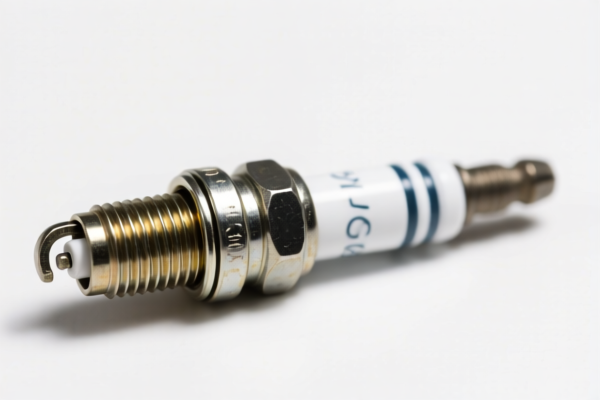
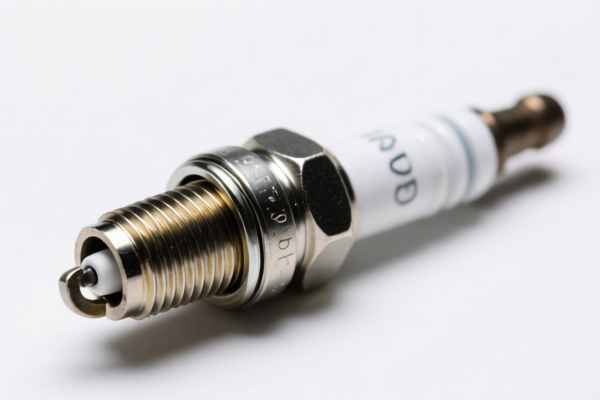
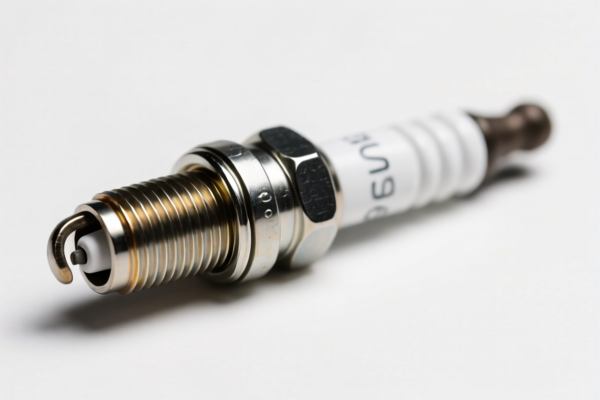

AI Analysis
🔥 Spark Plugs & Glow Plugs (Ignition Components for Internal Combustion Engines)
🌐 HS Code Reference & Customs Clearance Guide | 2026 Latest Tariff Analysis | Professional Clearance Strategy
📌 I. Product Definition & Classification: Do You Really Know "Spark Plugs"?
Spark plugs and glow plugs are critical components of the ignition system in internal combustion engines. In international trade, their classification can be ambiguous depending on whether they are viewed as general engine parts, electrical equipment, or battery accessories. The provided highlights four major classification paths, each with significant tax implications.
⚠️ Key Distinction Point:
- Spark Plugs: Primarily classified under Chapter 84 (Machinery) as engine parts OR Chapter 85 (Electrical Machinery) as ignition equipment.
- Glow Plugs: Typically treated similarly to spark plugs but often grouped under specific electrical ignition parts.
- Critical Risk: Misclassification can lead to tax differences ranging from 35.0% to 37.7%, plus potential penalties for incorrect declaration.
📦 II. HS Code Classification Details (2026 Latest Tariff Authoritative Comparison)
Based on the input, here are the specific HS codes, summaries, and tax rates:
| HS Code | Summary / Justification | Total Tax Rate | Tax Detail Breakdown |
|---|---|---|---|
| 8409.99.99.90 | Fallback Classification: Spark plugs are essential engine components; categorized under "Other" parts due to fallback principles. | 35.0% | Base: 0.0% Additional (301): 25.0% Section 122: 10% |
| 8506.80.00.90 | Battery Parts Logic: Spark plugs are engine parts, logically falling under "Parts of Primary Cells/Batteries" in some interpretive frameworks. | 37.7% | Base: 2.7% Additional (301): 25.0% Section 122: 10% |
| 8506.90.00.00 | Battery Parts Logic: Fits the logical scope of "Parts of Primary Cells/Batteries" as engine ignition system accessories. | 37.7% | Base: 2.7% Additional (301): 25.0% Section 122: 10% |
| 8511.10.00.00 | Direct Match: Product name "Spark Plugs" matches the specific description in classification explanations; usage and material properties align. | 37.5% | Base: 2.5% Additional (301): 25.0% Section 122: 10% |
| 8511.90.60.40 | Electrical Ignition Parts: Core functional component of electrical ignition devices; fits "Electrical Ignition or Starting Equipment and Parts." | 37.5% | Base: 2.5% Additional (301): 25.0% Section 122: 10% |
| 8409.91.99.90 | Engine Part Specific: Key ignition part for spark-ignition internal combustion engines; explicitly fits "Parts for Spark-Ignition Engines." | 37.5% | Base: 2.5% Additional (301): 25.0% Section 122: 10% |
🔍 Important Note:
- 8409.99.99.90 has the lowest tax rate (35.0%) among the options, but requires strong justification that the part is specifically an "engine part" and not primarily an "electrical component." - 8511.10.00.00 and 8511.90.60.40 rely on the argument that spark plugs are "electrical ignition equipment," which is a common and defensible classification in many jurisdictions. - 8506.xxxx codes are generally less recommended unless specific regulatory interpretations in the destination country explicitly treat spark plugs as battery parts (which is rare and risky).
💰 III. 2026 Latest Tariff Rate Details (Including Additional Taxes & Policy Surcharges)
✅ Applicable Country: United States (US)
✅ Origin: China (CN)
✅ Effective Date: November 10, 2025 onwards (including subsequent imports)
🎯 1. 8409.99.99.90 —— Engine Parts (Fallback Category) – LOWEST TAX
| Item | Content |
|---|---|
| Base Tariff | 0.0% (ad valorem) |
| USITC Additional Tariff | +25% (Section 301 Tariff) |
| Section 122 Tariff | +10% (Specific Chinese Product Surcharge) |
| Total Tariff | 35.0% |
| Tax Calculation | CIF Value × 35.0% |
| De Minimis Exemption | ❌ Not Eligible (deny_de_minimis) |
| Legal Basis Path | Section 122: 122.01.25 → USITC: 8409.99.99.90 → FOOTNOTE: 9903.88.01 |
📌 Explanation:
- The 0% base rate makes this the most attractive option for cost minimization. - However, customs may challenge this if they view the spark plug primarily as an electrical component (Chapter 85) rather than a mechanical engine part. - Strategy: Provide detailed engineering drawings showing integration with the mechanical engine block to support the "engine part" classification.
🎯 2. 8409.91.99.90 —— Parts for Spark-Ignition Internal Combustion Engines
| Item | Content |
|---|---|
| Base Tariff | 2.5% |
| USITC Additional Tariff | +25% |
| Section 122 Tariff | +10% |
| Total Tariff | 37.5% |
| Tax Calculation | CIF Value × 37.5% |
| De Minimis Exemption | ❌ Not Eligible |
| Legal Basis Path | Section 122: 122.01.25 → USITC: 8409.91.99.90 → FOOTNOTE: 9903.88.01 |
📌 Explanation:
- This is a more precise engine part classification than 8409.99.99.90. - It explicitly references "spark-ignition engines," which directly matches the function of spark plugs. - Strategy: Use this if customs rejects 8409.99.99.90. It is still cheaper than Chapter 85 options.
🎯 3. 8511.10.00.00 & 8511.90.60.40 —— Electrical Ignition Equipment & Parts
| Item | Content |
|---|---|
| Base Tariff | 2.5% |
| USITC Additional Tariff | +25% |
| Section 122 Tariff | +10% |
| Total Tariff | 37.5% |
| Tax Calculation | CIF Value × 37.5% |
| De Minimis Exemption | ❌ Not Eligible |
| Legal Basis Path | Section 122: 122.01.25 → USITC: 8511.10.00.00 / 8511.90.60.40 → FOOTNOTE: 9903.88.01 |
📌 Explanation:
- These codes classify spark plugs as electrical machinery rather than mechanical engine parts. - This is a very common classification because spark plugs require electricity to function. - Strategy: This is a safe and defensible classification. If you cannot prove the "mechanical part" status, this is the best alternative to the lowest-tax code.
🎯 4. 8506.80.00.90 & 8506.90.00.00 —— Parts of Primary Cells/Batteries – HIGHEST TAX
| Item | Content |
|---|---|
| Base Tariff | 2.7% |
| USITC Additional Tariff | +25% |
| Section 122 Tariff | +10% |
| Total Tariff | 37.7% |
| Tax Calculation | CIF Value × 37.7% |
| De Minimis Exemption | ❌ Not Eligible |
| Legal Basis Path | Section 122: 122.01.25 → USITC: 8506.80.00.90 / 8506.90.00.00 → FOOTNOTE: 9903.88.01 |
📌 Explanation:
- This classification is highly problematic. Spark plugs are not battery parts. - Avoid this classification unless specifically instructed by local customs in a rare jurisdictional case. It offers no benefit and carries high audit risk.
🛠️ IV. Customs Clearance Practical Advice (Real-World Pitfall Avoidance Guide)
✅ 1. Required Documentation Checklist (All Must Be Provided)
| Document | Required | Notes |
|---|---|---|
| ✅ Product Specifications | ✔️ | Include material (ceramic/metal), voltage, thread size, gap specification. |
| ✅ Product Photos (with Labels) | ✔️ | Clear images showing brand, model, and any certification marks. |
| ✅ Commercial Invoice | ✔️ | Must accurately describe the product as "Spark Plug for Internal Combustion Engine." |
| ✅ Packing List | ✔️ | Detail packaging to prevent拆分 (splitting) of shipments. |
| ✅ Origin Certificate (CO) | ✔️ | If applicable, to prove origin for Section 122 calculations. |
| ✅ Engineering Drawing/Assembly View | ✔️ | Crucial for 8409 codes: Show how the spark plug integrates with the engine block to justify "engine part" status. |
✅ 2. Declaration Tips (Key Mantra)
🔥 "Be Precise, Justify Function, Choose the Right Chapter!"
| Situation | Correct Declaration | Wrong Practice |
|---|---|---|
| Spark Plug (Standard) | 8409.91.99.90 or 8511.10.00.00 |
Using 8506.xxxx (Battery Parts) → High Risk |
| Spark Plug (Cost Optimization) | 8409.99.99.90 (with strong justification) |
Declaring as "General Engine Part" without detail → Audit Risk |
| Glow Plug | 8409.91.99.90 or 8511.90.60.40 |
Confusing with automotive battery cables → Wrong HS |
| Mixed Shipment (Plugs + Battery) | Separate Line Items | Combining into one line → Valuation Issues |
✅ 3. Special Case Handling
| Situation | Recommendation |
|---|---|
| OEM Custom Spark Plugs | Provide customer PO + technical specs to prove specific engine compatibility. |
| High-Performance Racing Plugs | Still fall under general ignition parts; no special tariff exemption. |
| Small Quantity (De Minimis) | ❌ Not Eligible for Section 122/301 exemptions. |
| Pre-Ruling Request | Highly Recommended: Apply for an Advance Ruling from CBP to lock in the HS code (preferably 8409.99.99.90 or 8409.91.99.90). |
🌍 V. Global Market Customs Comparison (2026 Latest)
| Country/Region | Recommended HS Code | Tariff (China Origin) | Certification Required | Notes |
|---|---|---|---|---|
| 🇺🇸 USA | 8409.99.99.90 or 8511.10.00.00 |
35.0% - 37.5% | None specific | Section 122 + 301 apply. |
| 🇨🇳 China | 8408.90.90.90 or 8511.10.00.00 |
5% - 10% | CCC (if applicable) | No additional surcharges. |
| 🇪🇺 EU | 8409.91.90 or 8511.10.90 |
0% - 4.5% | CE (if applicable) | No additional tariffs. |
| 🇦🇺 Australia | 8409.91.90 |
5% | RCM (if applicable) | No additional tariffs. |
| 🇯🇵 Japan | 8409.91.90 |
0% - 3% | PSE (if applicable) | No additional tariffs. |
📌 Conclusion:
- The US market is the most complex and costly due to Section 122 and Section 301 tariffs. - Choice of HS Code between Chapter 84 (Engine Parts) and Chapter 85 (Electrical) can save 0% - 2.7% on the base rate, which compounds on the CIF value. - Chapter 84 (8409.99.99.90) is the most cost-effective if defensible.
📌 VI. Common Errors & Pitfall Guide (Lessons Learned)
❌ Mistake 1: Classifying Spark Plugs under 8506 (Battery Parts)
👉 Consequence: Unnecessary higher base tariff (2.7% vs 0% or 2.5%) and potential rejection by customs for incorrect classification.
❌ Mistake 2: Declaring "Spark Plug" without technical details
👉 Consequence: Customs may default to the highest tax rate or request additional documentation, causing delays.
❌ Mistake 3: Assuming De Minimis Exemption Applies
👉 Consequence: Section 122 and 301 tariffs apply regardless of value; small shipments are not exempt.
❌ Mistake 4: Using "Ignition Coil" classification for "Spark Plug"
👉 Consequence: Different HS codes may have different duties; accuracy is key.
✅ Correct Approach:
"Spark Plug, Ceramic Insulator, Nickel Alloy Electrode, for Automotive Spark-Ignition Internal Combustion Engine, Model XYZ, Compatible with Engine Type ABC"
🎯 VII. Conclusion: Professional Declaration for Cost Optimization
🎯 Remember the Mantra:
🔹 "8409 is cheapest, 8511 is safest, 8506 is dangerous!"
🔹 "Base rate matters: 0% vs 2.7% makes a difference!"
🔹 "Pre-Ruling is your best friend for high-volume imports!"
📌 Pro Tip:
If your spark plugs are originating from Vietnam, Mexico, Thailand, or Malaysia, you may be eligible for IEEPA Exemptions or lower Section 122 rates.
Recommendation: Apply for an Advance Ruling from US Customs and Border Protection (CBP) to secure the lowest possible HS code (preferably 8409.99.99.90 at 35.0%) before shipment.
📣 Immediate Action:
📞 Contact a professional customs broker + Provide product specs + Request HS Code Pre-Ruling
🚀 Ensure smooth customs clearance, minimize tax burden, and maximize profit margins!
✨ Professional clearance starts with accurate classification!
💼 Every percentage point of tariff is money lost or saved!
Customer Reviews
About HS Code Classification
The Harmonized System (HS) is an internationally standardized nomenclature developed by the World Customs Organization (WCO) to classify traded products. Over 200 countries use the HS system as the basis for customs tariffs, trade statistics, and import/export regulations.
Each HS code follows a hierarchical structure:
- Chapter (2 digits) — Broad category of goods (e.g., Chapter 84: Machinery and Mechanical Appliances)
- Heading (4 digits) — More specific grouping within the chapter
- Subheading (6 digits) — Internationally standardized breakdown, used by all WCO member countries
- National subdivisions (8-10 digits) — Country-specific extensions for further classification, such as US HTSUS 10-digit codes
Correct HS code classification is essential for smooth customs clearance, accurate duty payment, and compliance with trade regulations. Misclassification can lead to customs delays, overpayment of duties, or penalties.
When importing from CN to US, the applicable tariff rates may include:
- Most-Favored-Nation (MFN) rate — The standard duty rate applied to WTO members
- General rate — Applied to countries without trade agreements
- Trade remedy duties — Additional tariffs such as Section 301 (anti-dumping), Section 232 (national security), or countervailing duties
The information provided on this page is for reference purposes only. For official classification, please consult with your local customs authority or a licensed customs broker.