Speaker (including loudspeaker)
CN → US| HS Code | Tariff Rate | Origin | Destination | Doc |
|---|---|---|---|---|
| 8518210000 | 17.5% | CN | US | Official Doc |
| 8518220000 | 17.5% | CN | US | Official Doc |
Product Images
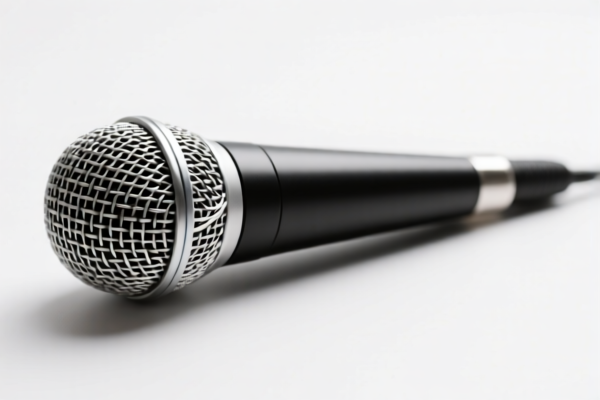
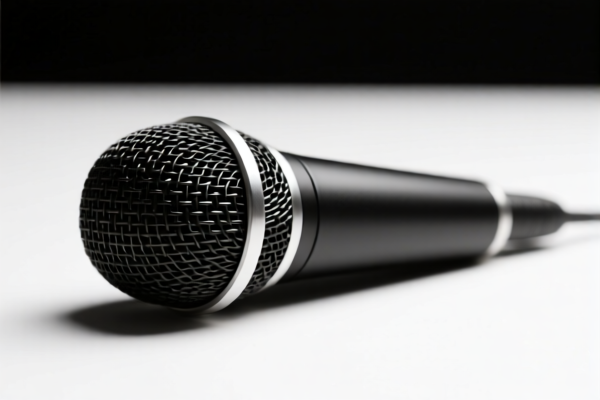
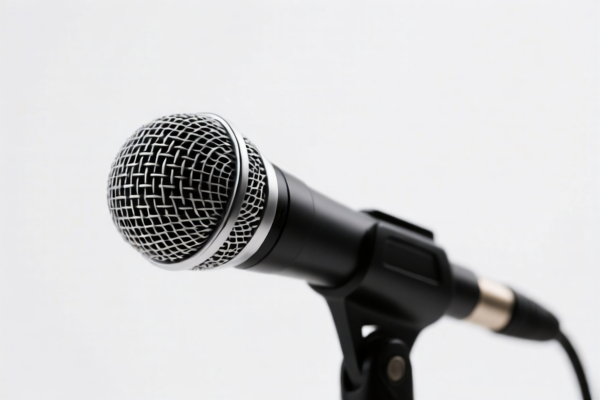
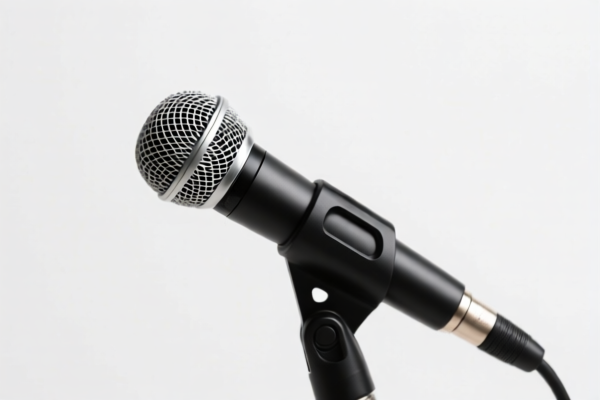
AI Analysis
🔊 Speaker (including loudspeaker)
🌐 HS Code Reference & Customs Clearance Guide | 2026 Latest Tariff Analysis | Professional-Level Clearance Strategy
📌 I. Product Definition and Classification: Do You Really Understand "Speakers"?
A "Speaker" (including loudspeakers, speaker systems, and audio output devices) is a transducer that converts electrical signals into sound waves. In international trade, classification depends heavily on whether the device contains its own amplifier/power source and its intended connection.
The two primary categories are:
1. Loudspeakers (Active/Self-Contained or Passive Components): * Loudspeaker Boxes (Passive): The actual speaker unit(s) inside a cabinet. If it’s just the transducer unit (cone, magnet, frame) without amplification, it often falls under Chapter 85 as a component. * Loudspeaker Systems (Active): Integrated units with built-in amplifiers, power supplies, and sometimes control circuits (e.g., Bluetooth speakers, computer speakers, PA systems). These are usually classified as Article 8543 or 8518 depending on complexity.
2. Audio Signal Processors/Amplifiers: * If the device primarily amplifies or processes audio signals rather than just radiating sound, it may fall under 8543 (Electrical machines and apparatus...).
⚠️ Key Distinction Point:
- If the device is a simple loudspeaker (transducer only) or a loudspeaker box with no independent audio processing logic → 8518
- If the device has complex independent functionality (e.g., Bluetooth, Wi-Fi, app control, distinct DSP) → 8543
- If it is a part/accessory to a machine (e.g., a car speaker module) → Check specific machinery chapters (e.g., 8708, 8471)
📦 II. HS Code Classification Details (2026 Latest Tariff Authority Comparison)
| HS Code | Product Description | Application Scenario | Independent Function? |
|---|---|---|---|
8518.21.00.00 |
Loudspeakers, whether or not mounted in their enclosures | Standard PC speakers, car audio speakers, studio monitor drivers | ❌ No (Passive) |
8518.22.00.00 |
Multiple-speaker systems (e.g., 2.1, 5.1 setups) | Home theater systems, multi-driver speaker boxes | ❌ No (But integrated enclosure) |
8518.29.00.00 |
Other loudspeakers | Headphones, earphones, unique transducers | ❌ No |
8518.40.00.00 |
Sound absorbers and noise reduction devices | Acoustic panels, foam | ❌ No (Passive material) |
8543.70.90.95 |
Electrical apparatus for individual confection... other | Smart speakers (Echo, HomePod), Bluetooth speakers with DSP | ✅ Yes (Active/Autonomous) |
8543.70.99.90 |
Other machines and mechanical appliances | Complex audio processors, professional mixing amps | ✅ Yes |
🔍 Key Reminder:
- Simple "Loudspeakers" (even if in a box) generally go to 8518.
- Smart Speakers (with Wi-Fi/Bluetooth/App connectivity) are increasingly classified under 8543 because they function as autonomous data processing or communication devices, not just passive audio transducers.
- Headphones/Earpieces are NOT classified as "Speakers" under 8518 in many jurisdictions but often under 8517.62 or 8518.21/29 depending on region. Note: US HTS often treats earphones under 8518.29 or 8517.62. Check local customs.
💰 III. 2026 Latest Tariff Rate Details (Including Surtaxes & Policy Add-ons)
✅ Applicable Country: United States (US)
✅ Origin: China (CN)
✅ Effective Date: Nov 10, 2025 onwards (including subsequent imports)
🎯 1. 8518.21.00.00 – Loudspeakers (with or without enclosure)
| Item | Content |
|---|---|
| Base Rate | 0% (ad valorem) |
| USITC Surtax (Section 301) | +7.5% (Standard Footnote) |
| IEEPA Surtax | +10% (For China/HK products, from Nov 10, 2025) |
| Total Tariff Rate | 17.5% |
| Tax Calculation | CIF Value × 17.5% |
| De Minimis Eligibility | ❌ No (deny_de_minimis for Section 301 goods) |
| Legal Basis Path | IEEPA:9903.01.25 → IEEPA:9903.01.24 → USITC:8518.21.00.00 → FOOTNOTE:9903.88.01 |
📌 Explanation:
- Section 301: The 7.5% is a standard penalty for many electronics from China.
- IEEPA 10%: This is the new 2025 surcharge targeting specific tech components.
- Total 17.5%: This is a moderate-to-high rate. Compared to monitors (20% base + surtax), speakers are slightly cheaper but still significant.
🎯 2. 8543.70.90.95 – Smart Speakers / Autonomous Audio Devices
| Item | Content |
|---|---|
| Base Rate | 0% |
| USITC Surtax (Section 301) | +7.5% (Often higher for "Tech" items) |
| IEEPA Surtax | +10% |
| Total Tariff Rate | 17.5% |
| Tax Calculation | CIF Value × 17.5% |
| De Minimis Eligibility | ❌ No |
| Legal Basis Path | IEEPA:9901.25 → USITC:8543.70.90.95 |
📌 Note:
- If your "Speaker" is a Smart Speaker (e.g., Amazon Echo, Google Nest), it may fall here.
- Some customs brokers might argue for 8517.62.00.00 (Machines for reception/registration of sound), which could have different surtax statuses. Consult a broker!
- Risk: Misclassification between 8518 (Passive) and 8543/8517 (Active) can lead to penalties.
🛠️ IV. Customs Clearance Practical Advice (Real-World Pitfall Guide)
✅ 1. Required Documentation Checklist (None Can Be Missing)
| Document | Mandatory | Description |
|---|---|---|
| ✅ Product Datasheet | ✔️ | Must specify: Power supply type, Audio frequency range, Connection interface (USB, Bluetooth, 3.5mm) |
| ✅ Circuit Diagram/Block Diagram | ✔️ | Crucial to prove if it has an amplifier or DSP (for 8518 vs. 8543/8517 distinction) |
| ✅ Product Photos (Clear Label) | ✔️ | Show model number, input voltage, wattage |
| ✅ Test Reports | ✔️ | FCC (EMC/RF), CE, RoHS, UL (if applicable) |
| ✅ Commercial Invoice | ✔️ | Clearly state: "Loudspeaker" or "Smart Speaker", not just "Audio Device" |
| ✅ Packing List | ✔️ | Detail if accessories (cables, remotes) are included |
✅ 2. Declaration Tips (Key Mantra)
🔥 “Passive is 8518, Active is 8543/8517, Name it Right, Save the Tax!”
| Scenario | Correct Declaration | Wrong Practice |
|---|---|---|
| Simple PC Speaker (No USB power, just audio jack) | 8518.21.00.00 |
Declared as "Smart Speaker" → Higher scrutiny |
| Bluetooth Speaker (Built-in battery/amplifier) | 8543.70.90.95 or 8518.29.00.00 |
Declared as "Part of PC" → Incorrect |
| Car Speaker | 8518.21.00.00 |
Declared as "Automotive Part" (8708) → Risky |
| Headphones | 8518.21.00.00 or 8517.62.00.00 |
Declared as "Speaker" → Confusion |
📌 Critical:
- If the speaker has its own power supply and amplification, do NOT use 8518.21 unless it’s strictly a passive driver.
- For Smart Speakers, emphasize "Wi-Fi/Bluetooth enabled" and "Voice Assistant Compatible" to guide customs toward 8543/8517.
✅ 3. Special Cases Handling
| Scenario | Handling Advice |
|---|---|
| OEM Custom Speakers | Provide design specs. If it’s a "driver unit" only, stick to 8518. |
| Professional Audio Equipment (PA Systems) | Often classified as 8518.22 (Multi-speaker systems) or 8543.70. |
| Headsets with Microphone | If combined, it may be classified as a "Telephone Set" under 8517.62 or 8517.13. Check carefully! |
| Wireless Charging Speakers | If it includes a wireless charger, the primary function dictates classification. Usually still audio. |
🌍 V. Global Market Customs Comparison (2026 Latest)
| Country/Region | Recommended HS Code | Tariff (China Origin) | Certification | Notes |
|---|---|---|---|---|
| 🇺🇸 USA | 8518.21.00.00 |
17.5% (Base 0 + 7.5% 301 + 10% IEEPA) | FCC + UL | High scrutiny on "Smart" devices |
| 🇨🇳 China | 8518.21.00.00 |
5% - 10% | CCC | Lower entry barrier |
| 🇪🇺 EU | 8518.21.00.00 |
0% (General) | CE + RoHS + REACH | No Section 301 equivalent, but high VAT |
| 🇦🇺 Australia | 8518.21.00.00 |
5% | RCM | Standard tariff |
| 🇯🇵 Japan | 8518.21.00.00 |
0% - 5% | PSE | Varies by power rating |
📌 Conclusion:
- USA is the most expensive market for speakers due to Section 301 + IEEPA.
- EU and Japan are more friendly, but CE/PSE certification is strict.
- Smart Speakers face higher regulatory hurdles in the US (FCC RF testing).
📌 VI. Common Errors & Pitfalls (Lessons from Blood)
❌ Error 1: Declaring a Smart Speaker as a Passive Loudspeaker (8518.21)
👉 Consequence: Customs may reclassify to 8517.62 or 8543, leading to higher duties or penalties for misdeclaration.
❌ Error 2: Ignoring FCC ID for Wireless Speakers
👉 Consequence: Seizure at US border. All Bluetooth/Wi-Fi speakers MUST have an FCC ID.
❌ Error 3: Mixing Headphones and Speakers in one shipment
👉 Consequence: Confusion. Declare them separately if possible. Headphones often have different HS codes.
❌ Error 4: Omitting Power Supply Details
👉 Consequence: If the speaker has an external adapter, customs may view the adapter as a separate "Power Supply" (HS 8504), leading to double taxation or complex classification.
✅ Correct Practice:
"Active Bluetooth Speaker, 10W, Internal Battery, FCC ID: XXXXX, Model XYZ"
🎯 VII. Conclusion: Precise Classification, Smoother Clearance!
🎯 Remember the Mantra:
🔹 "Passive = 8518, Smart = 8543/8517, Wireless Needs FCC, Label Clearly!"
🔹 "17.5% is the US Reality for Chinese Speakers, Plan Your Margin!"
📌 Pro Tip:
If your speakers are manufactured in Vietnam, India, or Mexico, you may avoid US Section 301 and IEEPA surtaxes, reducing the total tariff to 0%~2.5%.
Consider supply chain diversification if shipping large volumes to the US.
📣 Immediate Action:
📞 Contact a licensed customs broker + Provide FCC Reports + Request HS Code Pre-Ruling
🚀 Let your speakers pass smoothly, boost profits, and reach the market faster!
✨ Professional clearance starts with accurate classification!
💼 Every percentage point of duty counts!
Customer Reviews
About HS Code Classification
The Harmonized System (HS) is an internationally standardized nomenclature developed by the World Customs Organization (WCO) to classify traded products. Over 200 countries use the HS system as the basis for customs tariffs, trade statistics, and import/export regulations.
Each HS code follows a hierarchical structure:
- Chapter (2 digits) — Broad category of goods (e.g., Chapter 84: Machinery and Mechanical Appliances)
- Heading (4 digits) — More specific grouping within the chapter
- Subheading (6 digits) — Internationally standardized breakdown, used by all WCO member countries
- National subdivisions (8-10 digits) — Country-specific extensions for further classification, such as US HTSUS 10-digit codes
Correct HS code classification is essential for smooth customs clearance, accurate duty payment, and compliance with trade regulations. Misclassification can lead to customs delays, overpayment of duties, or penalties.
When importing from CN to US, the applicable tariff rates may include:
- Most-Favored-Nation (MFN) rate — The standard duty rate applied to WTO members
- General rate — Applied to countries without trade agreements
- Trade remedy duties — Additional tariffs such as Section 301 (anti-dumping), Section 232 (national security), or countervailing duties
The information provided on this page is for reference purposes only. For official classification, please consult with your local customs authority or a licensed customs broker.