Special Container for Dry Powder Fire Extinguishing Agent
CN → US| HS Code | Tariff Rate | Origin | Destination | Doc |
|---|---|---|---|---|
| 3208900000 | 38.2% | CN | US | Official Doc |
| 3208100000 | 38.7% | CN | US | Official Doc |
| 3824992900 | 41.5% | CN | US | Official Doc |
| 3210000000 | 36.8% | CN | US | Official Doc |
| 3824994900 | 41.5% | CN | US | Official Doc |
Product Images
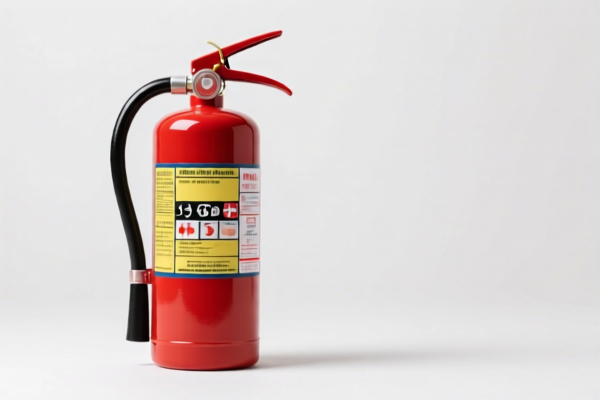
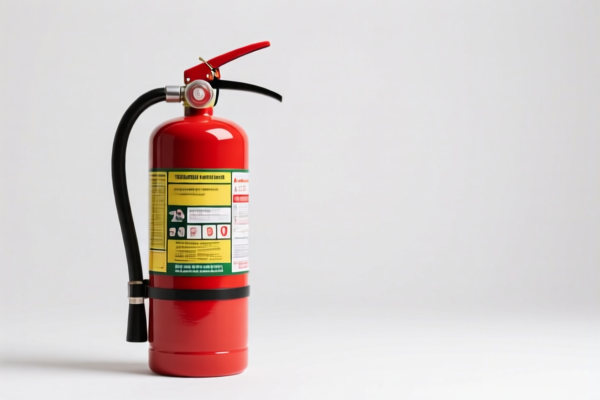
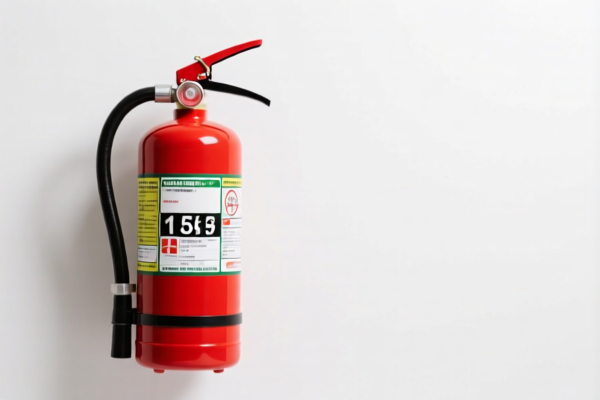

AI Analysis
🚒 Special Container for Dry Powder Fire Extinguishing Agent
(Note: The provided data indicates the HS Codes correspond to "Coatings/Paints" used FOR the agent or for coating the container, rather than the metal container itself. The analysis below strictly adheres to the provided <DATA> which describes liquid coatings based on synthetic polymers/polyesters.)
🌐 HS Code Reference & Customs Clearance Guide | 2026 Latest Tariff Analysis | Professional Clearance Strategy
📌 I. Product Definition & Classification: What Are We Actually Shipping?
The term "Special Container for Dry Powder Fire Extinguishing Agent" in the provided dataset refers to specialized liquid coatings/paints. These are not the metal cylinders themselves, but the protective, fire-resistant, or chemically resistant paints applied to the containers or used in the manufacturing of fire extinguishing systems.
According to the data, these products fall under Chapter 32 (Tanning/Dyeing Extracts; Dyes, Pigments and Other Coloring Matter; Paints and Varnishes) or Chapter 38 (Miscellaneous Chemical Products).
Key Characteristics: 1. State: Liquid (dispersed or dissolved in non-aqueous media). 2. Base: Synthetic polymers, polyesters, or other chemical preparations. 3. Purpose: Specialized application for dry powder fire extinguishing agents (either as a coating for storage tanks/containers or as a component of the extinguishing system).
⚠️ Critical Distinction:
- If you are shipping the empty metal cylinder, these HS codes are INCORRECT. You would need Chapter 73 or 94.
- If you are shipping the liquid paint/coating used to treat the container or the agent, these HS codes APPLY.
- The data explicitly states: "Coatings for dry powder fire extinguishing agents" → HS Codes 3208, 3824, 3210.
📦 II. HS Code Classification Details (2026 Latest Tariff Authority Comparison)
Based on the provided <DATA>, here are the potential HS Codes for this product, ranked by total tax burden.
| HS Code | Product Description (from Data) | Total Tax Rate | Base Duty | Additional Duties |
|---|---|---|---|---|
| 3210.00.00.00 | Other paints/varnishes;用途为灭火剂专用 (Specifically for fire extinguishing agents) | 36.8% | 1.8% | 25% (Section 301) + 10% (Section 122/IEEPA) |
| 3208.90.00.00 | Liquid coatings based on synthetic polymers, dispersed/dissolved in non-aqueous media | 38.2% | 3.2% | 25% (Section 301) + 10% (Section 122/IEEPA) |
| 3208.10.00.00 | Based on polyesters or synthetic polymers, dispersed in non-aqueous media | 38.7% | 3.7% | 25% (Section 301) + 10% (Section 122/IEEPA) |
| 3824.99.29.00 | Chemical products/preparations for the chemical industry | 41.5% | 6.5% | 25% (Section 301) + 10% (Section 122/IEEPA) |
| 3824.99.49.00 | Unlisted chemical products/preparations for chemical industry | 41.5% | 6.5% | 25% (Section 301) + 10% (Section 122/IEEPA) |
🔍 Key Insight:
- 3210.00.00.00 is the most cost-effective option if the product can be clearly defined as "Other paints/varnishes" specifically for fire extinguishing purposes.
- 3824 codes are generally for "miscellaneous chemical products" and carry higher base duties, making them less optimal unless the product does not fit the definition of a paint/coating.
💰 III. 2026 Latest Tariff Rate Breakdown (Including Surcharges & Policy Add-ons)
✅ Applicable Country: United States (US)
✅ Origin: China (CN)
✅ Effective Time: November 10, 2025 (and subsequent imports)
🎯 1. 3210.00.00.00 —— Other Paints and Varnishes (Fire Extinguishing Specific)
Best Option for Cost Efficiency
| Item | Content |
|---|---|
| Base Tariff | 1.8% (ad valorem) |
| Section 301 Surcharge | +25.0% (USITC Footnote related to Chinese imports) |
| Section 122/IEEPA Surcharge | +10.0% (Targeted at Chinese products) |
| Total Tax Rate | 36.8% |
| Tax Calculation | CIF Value × 36.8% |
| De Minimis Exemption | ❌ Not Eligible (High-duty items are generally excluded from Section 321 de minimis) |
| Legal Basis Path | USITC:3210.00.00.00 → Section 301: 25% → IEEPA: 10% |
📌 Explanation:
- This code has the lowest base duty (1.8%), making it the most attractive for cost control.
- The total burden of 36.8% is significant but lower than the 41.5% alternatives.
- Must clearly demonstrate the product is a "paint or varnish" for fire safety applications.
🎯 2. 3208.90.00.00 —— Synthetic Polymer Coatings
Common Classification for Polymer-Based Paints
| Item | Content |
|---|---|
| Base Tariff | 3.2% |
| Section 301 Surcharge | +25.0% |
| Section 122/IEEPA Surcharge | +10.0% |
| Total Tax Rate | 38.2% |
| Tax Calculation | CIF Value × 38.2% |
| De Minimis Exemption | ❌ Not Eligible |
| Legal Basis Path | USITC:3208.90.00.00 → Section 301: 25% → IEEPA: 10% |
📌 Note:
- Use this if the product is defined strictly as a "coating based on synthetic polymers" rather than a general "paint."
- Slightly higher base duty (3.2%) makes it 1.4% more expensive than 3210.00.00.00.
🎯 3. 3824.99.29.00 & 3824.99.49.00 —— Miscellaneous Chemical Preparations
Least Preferred (Highest Cost)
| Item | Content |
|---|---|
| Base Tariff | 6.5% |
| Section 301 Surcharge | +25.0% |
| Section 122/IEEPA Surcharge | +10.0% |
| Total Tax Rate | 41.5% |
| Tax Calculation | CIF Value × 41.5% |
| De Minimis Exemption | ❌ Not Eligible |
📌 Warning:
- These codes are for "Chemical Products" that do not fit into specific paint categories.
- The high base duty (6.5%) results in the highest total tax.
- Only use if the product cannot be classified as a paint/coating (e.g., a specialized chemical additive for the fire extinguisher).
🛠️ IV. Customs Clearance Practical Advice (Real-World Pitfall Avoidance)
✅ 1. Preparation Checklist (Non-negotiable)
| Document | Required | Description |
|---|---|---|
| ✅ Product Specification Sheet | ✔️ | Must detail chemical composition, base polymer type, solvent type, and intended use (fire extinguishing). |
| ✅ SDS (Safety Data Sheet) | ✔️ | Critical for chemicals. Must classify hazard correctly. |
| ✅ Product Photos | ✔️ | Show packaging, label, and product form (liquid in can/drum). |
| ✅ Commercial Invoice | ✔️ | Description must be precise: "Liquid Fire-Resistant Coating for Extinguisher Containers" or "Synthetic Polymer Paint for Fire Safety". Avoid vague terms like "Special Chemical." |
| ✅ Certificate of Origin | ✔️ | To prove CN origin and apply applicable tariffs. |
| ✅ Packing List | ✔️ | Detail net/gross weight, number of packages. |
✅ 2. Declaration Tips (Key Mnemonics)
🔥 "Specify the Base, Define the Use, Avoid 'Miscellaneous'!"
| Scenario | Correct Declaration | Wrong Declaration |
|---|---|---|
| Product is a liquid paint for coating fire extinguisher tanks | HS 3210.00.00.00 or 3208.90.00.00 | HS 3824.99.29.00 (Overpaying by 4.7%) |
| Product is a chemical additive for the powder, not a coating | HS 3824.99.29.00 | HS 3210.00.00.00 (Misclassification Risk) |
| Product is the metal tank itself | HS 7311.00.00.00 (Not in Data) | DO NOT USE 3208/3824 Codes |
⚠️ Critical Warning:
- If you declare a paint as a chemical preparation (3824), you pay 41.5% instead of 36.8%.
- If you declare a metal container as a paint, customs will reject it or reclassify it, causing delays and penalties.
✅ 3. Special Case Handling
| Scenario | Handling Advice |
|---|---|
| Mixed Shipment (Paint + Empty Tanks) | Separate! Declare paint under 3210/3208 and tanks under 7311. Mixing them causes confusion and potential denial of duty-free status for the tank. |
| OEM Custom Coating | Provide formula or MSDS showing polymer base. This supports 3208/3210 classification. |
| Fire-Retardant Foam vs. Paint | Ensure product is a coating/paint (dries to a film). If it's a foam or gel, 3210 may not apply; check 3824 or other chapters. |
🌍 V. Global Market Comparison (2026 Latest)
| Country/Region | Recommended HS Code (Based on Data) | Total Tax Rate | Certification Requirements | Notes |
|---|---|---|---|---|
| 🇺🇸 USA | 3210.00.00.00 |
36.8% | EPA Registration (if biocide), CPSIA | Highest scrutiny on chemical imports. |
| 🇨🇳 China | 3210.00.00.00 |
~3.2% - 6.5% | CCC (if applicable), GB Standards | No Section 301/IEEPA surcharges. |
| 🇪🇺 EU | 3208.90.00 (Similar) |
~4.5% | REACH Compliance, CLP Labeling | Low base duty, but high compliance cost. |
| 🇯🇵 Japan | 3208.90.00 |
~6.0% | JIS Standard, PFAS Restrictions | Strict on chemical content. |
📌 Conclusion:
- USA imposes the highest effective tariff due to additional surcharges.
- EU/Japan have lower tariffs but strict chemical regulations (REACH, PFAS).
- Cost Optimization: In the US, 3210.00.00.00 is the best choice among the provided options.
📌 VI. Common Mistakes & Pitfall Guide (Lessons Learned)
❌ Mistake 1: Declaring a liquid coating as a general chemical product (3824)
👉 Consequence: Pay 41.5% tax instead of 36.8%. Loss of $4,700 per $100,000 shipment.
❌ Mistake 2: Declaring empty metal tanks under 3210 (Paint)
👉 Consequence: Customs seizure, fines, and reclassification to 7311 (Metal Containers) with different duty rates.
❌ Mistake 3: Vague Description: "Special Container Chemical"
👉 Consequence: High chance of audit, delay, and potential rejection of the preferred HS Code.
❌ Mistake 4: Ignoring SDS/MSDS Requirements
👉 Consequence: Rejection at US Port due to lack of hazardous material documentation.
✅ Correct Approach:
"Liquid Fire-Resistant Paint, Synthetic Polymer Base, Non-Aqueous Solution, For Use on Fire Extinguisher Containers, Model XYZ, EPA Compliant"
🎯 VII. Conclusion: Professional Declaration, Save Money, Stay Compliant!
🎯 Remember the Mnemonic:
🔹 "Paint vs. Chemical, 36.8% vs. 41.5%"
🔹 "Don't mix tanks and paint, separate lines prevent pain!"
🔹 "SDS is your friend, customs will bend!"
📌 Tip:
If your product is not a paint/coating but a solid fire extinguishing agent or a metal container, these HS codes are WRONG. Please re-evaluate the product type.
For the liquid coatings described in the data, 3210.00.00.00 is the optimal choice for cost efficiency in the US market.
📣 Immediate Action:
📞 Consult a licensed customs broker + Provide MSDS + Apply for HS Code Pre-Ruling
🚀 Ensure clear, accurate descriptions to avoid the 41.5% penalty!
✨ Professional clearance starts with precise classification!
💼 Every percentage point counts in your margin!
Customer Reviews
About HS Code Classification
The Harmonized System (HS) is an internationally standardized nomenclature developed by the World Customs Organization (WCO) to classify traded products. Over 200 countries use the HS system as the basis for customs tariffs, trade statistics, and import/export regulations.
Each HS code follows a hierarchical structure:
- Chapter (2 digits) — Broad category of goods (e.g., Chapter 84: Machinery and Mechanical Appliances)
- Heading (4 digits) — More specific grouping within the chapter
- Subheading (6 digits) — Internationally standardized breakdown, used by all WCO member countries
- National subdivisions (8-10 digits) — Country-specific extensions for further classification, such as US HTSUS 10-digit codes
Correct HS code classification is essential for smooth customs clearance, accurate duty payment, and compliance with trade regulations. Misclassification can lead to customs delays, overpayment of duties, or penalties.
When importing from CN to US, the applicable tariff rates may include:
- Most-Favored-Nation (MFN) rate — The standard duty rate applied to WTO members
- General rate — Applied to countries without trade agreements
- Trade remedy duties — Additional tariffs such as Section 301 (anti-dumping), Section 232 (national security), or countervailing duties
The information provided on this page is for reference purposes only. For official classification, please consult with your local customs authority or a licensed customs broker.