Special Filter Paper
CN → US| HS Code | Tariff Rate | Origin | Destination | Doc |
|---|---|---|---|---|
| 4823201000 | 35.0% | CN | US | Official Doc |
| 8421290065 | 35.0% | CN | US | Official Doc |
| 4823209000 | 35.0% | CN | US | Official Doc |
| 8421990180 | 35.0% | CN | US | Official Doc |
| 4823201000 | 35.0% | CN | US | Official Doc |
Product Images

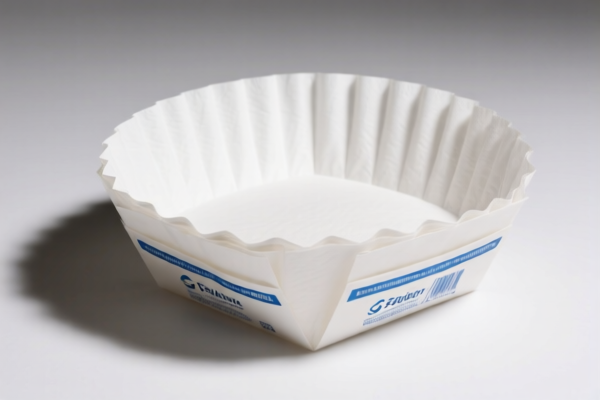


AI Analysis
🧪 Special Filter Paper (Precision & Food-Grade Filtration Media)
🌐 HS Code Reference & Customs Clearance Guide | 2026 Latest Tariff Analysis | Professional Entry Strategy
📌 I. Product Definition & Classification: Do You Truly Understand "Filter Paper"?
Special Filter Paper is not just a piece of paper; it is a critical functional material used in liquid purification, chemical separation, and food safety processes. In international trade, its classification depends heavily on its material composition and specific application:
1. Pure Filter Paper/Food-Grade Paper (Material-Based)
- Made primarily of paper or cellulose.
- Classified as "Paper of a kind used for technical purposes" or "Food-grade paper."
- Focuses on the material property (cellulose/paper).
2. Filter Paper as a Consumable for Machinery (Functional-Based)
- Used specifically as a replacement part or consumable for liquid filtration/purification machines.
- Classified as a part/accessory of filtration apparatus.
- Focuses on the functional relationship with machinery.
⚠️ Key Distinction Point:
- If the product is sold as a raw material or standalone sheet for general or food use →归入 4823 (Paper category).
- If the product is explicitly marketed as a consumable/part for filtration machines → Potential归类 to 8421 (Machinery category).
- Note: Customs often scrutinizes the description. "Paper" is safer unless specific machine compatibility is proven.
📦 II. HS Code Classification Details (2026 Latest Tariff Authority Comparison)
Based on the provided data, here are the four applicable HS Codes for "Special Filter Paper":
| HS Code | Product Description | Application Scenario | Category Type |
|---|---|---|---|
4823.20.10.00 |
Precision Filter Paper or Food-Grade Filter Paper; Material: Paper/Cellulose; For Filtration | General industrial filtration, food processing (coffee filters, oil filtration), lab use | ✅ Paper & Cellulose Products |
8421.29.00.65 |
Precision Filter Paper; Consumable for Liquid Filtration/Purification Apparatus | Replacement filters for industrial liquid purification systems, water treatment plants | ✅ Machinery Consumables |
4823.20.90.00 |
Precision Filter Paper (General); Material: Filter Paper; Specific Use Application | Industrial filtration where specific sub-heading 10.00 doesn't fully apply; general technical paper | ✅ Paper & Cellulose Products |
8421.99.01.80 |
Precision Filter Paper; Filter Medium; Part of Filtration & Purification Machinery | Parts/accessories for mechanical filtration units; compatible with purifying machines | ✅ Machinery Parts/Accessories |
🔍 Critical Reminder:
-4823codes are for the paper material itself (cellulose-based).
-8421codes are for the functional role (part of a machine).
- Risk: Misclassifying a "paper" item as a "machine part" without proof of machine integration can lead to customs delays. Conversely, classifying a specialized machine part as generic paper might trigger scrutiny on technical standards.
- Consistency: All four codes below share the same tax rate due to current trade policies, but the legal basis differs.
💰 III. 2026 Latest Tariff Rate Breakdown (Including Surtaxes & Policy Add-ons)
✅ Applicable Country: United States (US)
✅ Country of Origin: China (CN)
✅ Effective Date: Current Policy (Includes 25% Section 301 + 10% IEEPA)
🎯 1. 4823.20.10.00 — Precision/Food-Grade Filter Paper (Cellulose)
| Item | Content |
|---|---|
| Base Tariff | 0% (Ad Valorem) |
| Section 301 Surtax | +25% (Standard China-specific tariff) |
| IEEPA Add-on Tariff | +10% (Section 1221 Tariff on Chinese Products, effective Nov 2025) |
| Total Effective Rate | 35.0% |
| Tax Calculation | CIF Value × 35% |
| De Minimis Eligibility | ❌ Not Eligible (High tariff threshold blocks de minimis exemption) |
| Legal Basis Path | Section 301: 8421/4823... → IEEPA: 9903.01.24 → USITC: 4823.20.10.00 → FOOTNOTE: 9903.88.01 |
📌 Explanation:
- The 0% base rate reflects the traditional trade status of paper products.
- However, the 35% total burden is driven by US trade policies targeting Chinese goods.
- Food-grade designation does not exempt it from surtaxes in this specific code structure.
🎯 2. 8421.29.00.65 — Filter Paper as Liquid Filtration Consumable
| Item | Content |
|---|---|
| Base Tariff | 0% |
| Section 301 Surtax | +25% |
| IEEPA Add-on Tariff | +10% |
| Total Effective Rate | 35.0% |
| Tax Calculation | CIF Value × 35% |
| De Minimis Eligibility | ❌ Not Eligible |
| Legal Basis Path | IEEPA: 9903.01.24 → Section 301: 8421.29.00.65 → USITC → FOOTNOTE: 9903.88.01 |
📌 Note:
- Even though it is a "machine part," it is still subject to the same aggressive tariff structure as the paper itself.
- The "Consumable" label must be backed by invoices showing it is used with filtration machinery.
🎯 3. 4823.20.90.00 — General Precision Filter Paper
| Item | Content |
|---|---|
| Base Tariff | 0% |
| Section 301 Surtax | +25% |
| IEEPA Add-on Tariff | +10% |
| Total Effective Rate | 35.0% |
| Tax Calculation | CIF Value × 35% |
| De Minimis Eligibility | ❌ Not Eligible |
| Legal Basis Path | IEEPA: 9903.01.24 → Section 301: 4823.20.90.00 → FOOTNOTE: 9903.88.01 |
📌 Note:
- This code is often a "catch-all" for filter papers that don't fit the "Food-grade" (10.00) sub-heading.
- Risk: Customs may prefer4823.20.10.00if the paper meets food-grade specs. Using90.00for food-grade items can raise red flags.
🎯 4. 8421.99.01.80 — Filter Paper as Machinery Part/Accessory
| Item | Content |
|---|---|
| Base Tariff | 0% |
| Section 301 Surtax | +25% |
| IEEPA Add-on Tariff | +10% |
| Total Effective Rate | 35.0% |
| Tax Calculation | CIF Value × 35% |
| De Minimis Eligibility | ❌ Not Eligible |
| Legal Basis Path | IEEPA: 9903.01.24 → Section 301: 8421.99.01.80 → FOOTNOTE: 9903.88.01 |
📌 Note:
- This code emphasizes the part/accessory nature.
- Must be clearly linked to "Filtration and Purification Machines" (8421).
- If the importer cannot prove it is a "part" of a specific machine, customs may reclassify it to4823.
🛠️ IV. Customs Clearance Practical Advice (Avoiding Pitfalls)
✅ 1. Documentation Checklist (Non-Negotiable)
| Document | Must Provide? | Explanation |
|---|---|---|
| ✅ Product Specification Sheet | ✔️ | Must detail material (e.g., "Cellulose," "Glass Fiber"), porosity, and thickness. |
| ✅ Commercial Invoice | ✔️ | Clearly state "Special Filter Paper" or "Filter Consumable." Avoid vague terms like "Paper." |
| ✅ Usage Statement | ✔️ | Explicitly state: "Used for liquid filtration" or "Food-grade filtration." |
| ✅ Food Safety Certificates | ✔️ | If claiming 4823.20.10.00 as food-grade, provide FDA compliance or equivalent. |
| ✅ Packing List | ✔️ | Show quantity and weight. Ensure packaging protects the paper from moisture. |
| ✅ Origin Certificate | ✔️ | Proof of Chinese origin is critical for applying the correct surtaxes. |
✅ 2. Declaration Tips (Key Mantras)
🔥 "Material First, Function Second; Description Must Match HS!"
| Scenario | Correct Declaration | Wrong Practice |
|---|---|---|
| Paper sold by roll/sheet | 4823.20.10.00 (Paper) |
Declaring as "Machine Part" without machine context |
| Packaged as filter cartridges | 8421.29.00.65 or 8421.99.01.80 (Part) |
Declaring as raw "Paper" (under-declares value/complexity) |
| Food-grade use | Explicitly state "Food-Grade" in invoice | Generic "Industrial Filter Paper" (may lose food-grade justification) |
| Mixed shipments | Separate line items for Paper vs. Machinery Parts | Blending all into one code → Audit risk |
✅ 3. Special Circumstances Handling
| Situation | Handling Advice |
|---|---|
| OEM Filters for Specific Machines | Provide the machine model number and compatibility list. This supports 8421 classification. |
| Food vs. Industrial | If the paper is used in both, declare the primary intended use. If mixed, consider splitting shipments or using the safer 4823 if unsure. |
| High-Value Precision Paper | Ensure the "Value" declared matches the "Function." High-tech paper may attract scrutiny for "undervaluation." |
| Re-imports | If returning defective filter paper, provide proof of original export to avoid double taxation. |
🌍 V. Global Market Comparison (2026 Latest)
| Country/Region | Recommended HS Code | Tariff (China Origin) | Certification Required | Notes |
|---|---|---|---|---|
| 🇺🇸 USA | 4823.20.10.00 or 8421.29.00.65 |
35% | FDA (if food), EPA (if industrial water) | Highest cost due to 301 + IEEPA |
| 🇨🇳 China | 4823.20.10.00 |
5% | GB Standards | No surtaxes; easier clearance |
| 🇪🇺 EU | 4823.20 |
0-6% | CE (if machinery part), REACH | No Section 301; lower burden |
| 🇬🇧 UK | 4823.20 |
0-6% | UKCA | Post-Brexit rules apply; similar to EU |
| 🇦🇺 Australia | 4823.20 |
5% | SAA | No major surtaxes |
📌 Conclusion:
- The USA is the most expensive market for Chinese filter paper due to the 35% effective tariff.
- EU/UK offer significant cost advantages if you can pivot supply chains.
- Strategy: For US imports, ensure maximum accuracy in HS Code to avoid penalties, as the base tax is low but surtaxes are high.
📌 VI. Common Errors & Pitfalls Guide (Lessons Learned)
❌ Error 1: Declaring "Filter Paper" as generic "Paper" (4817 or 4804) without specifying "Filtration"
👉 Consequence: Customs reclassification → Delays + Back-tariffs + Penalties
❌ Error 2: Using 8421 for raw paper sheets that are not yet installed in machines
👉 Consequence: Customs views it as "Paper" → Misclassification (though tax rate is same, legal risk is higher)
❌ Error 3: Ignoring IEEPA Section 1221 (10% tariff) in cost calculations
👉 Consequence: Profit margin erosion – Budgeting only for 25% leads to unexpected 10% additional cost
❌ Error 4: Failing to provide Food-Grade Certificates when claiming 4823.20.10.00 for food use
👉 Consequence: Seizure or Return – FDA may block entry if compliance is not documented
✅ Correct Practice:
"Precision Filter Paper, Cellulose-based, 10-micron pore size, Food-Grade Certified, Used for Liquid Filtration, Model XYZ, Country of Origin: China"
🎯 VII. Conclusion: Precise Declaration Saves Money!
🎯 Remember the Mantra:
🔹 "Paper is Paper, Part is Part; Misclassify and Start All Over!"
🔹 "35% Total Tax in USA; Plan Your Margin or Shift Supply Chain!"
📌 Pro Tip:
If your filter paper is originating from Vietnam, Thailand, or Malaysia, you may apply for IEEPA Exemptions or lower Section 301 rates.
Recommend Advance Ruling (APA) from US CBP if your product is highly specialized to lock in the correct HS Code and tax rate.
📣 Immediate Action:
📞 Contact a licensed customs broker + Provide Product Specs + Request HS Code Advance Ruling
🚀 Ensure your Special Filter Paper clears customs smoothly, legally, and profitably!
✨ Professional Clearance Starts with Accurate Classification!
💼 Every percentage point of tariff impacts your bottom line!
Customer Reviews
About HS Code Classification
The Harmonized System (HS) is an internationally standardized nomenclature developed by the World Customs Organization (WCO) to classify traded products. Over 200 countries use the HS system as the basis for customs tariffs, trade statistics, and import/export regulations.
Each HS code follows a hierarchical structure:
- Chapter (2 digits) — Broad category of goods (e.g., Chapter 84: Machinery and Mechanical Appliances)
- Heading (4 digits) — More specific grouping within the chapter
- Subheading (6 digits) — Internationally standardized breakdown, used by all WCO member countries
- National subdivisions (8-10 digits) — Country-specific extensions for further classification, such as US HTSUS 10-digit codes
Correct HS code classification is essential for smooth customs clearance, accurate duty payment, and compliance with trade regulations. Misclassification can lead to customs delays, overpayment of duties, or penalties.
When importing from CN to US, the applicable tariff rates may include:
- Most-Favored-Nation (MFN) rate — The standard duty rate applied to WTO members
- General rate — Applied to countries without trade agreements
- Trade remedy duties — Additional tariffs such as Section 301 (anti-dumping), Section 232 (national security), or countervailing duties
The information provided on this page is for reference purposes only. For official classification, please consult with your local customs authority or a licensed customs broker.