Special Paper Labels for Lithium Batteries
CN → US| HS Code | Tariff Rate | Origin | Destination | Doc |
|---|---|---|---|---|
| 4821104000 | 35.0% | CN | US | Official Doc |
| 4823908680 | 35.0% | CN | US | Official Doc |
| 4823901000 | 35.0% | CN | US | Official Doc |
| 4821102000 | 35.0% | CN | US | Official Doc |
Product Images
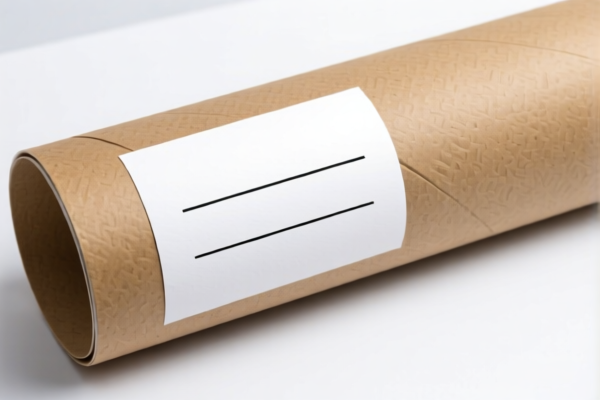
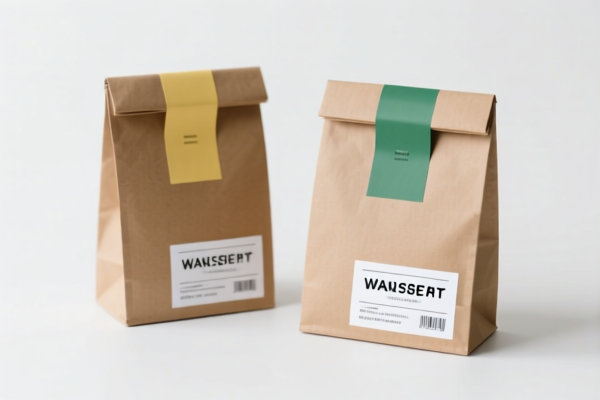
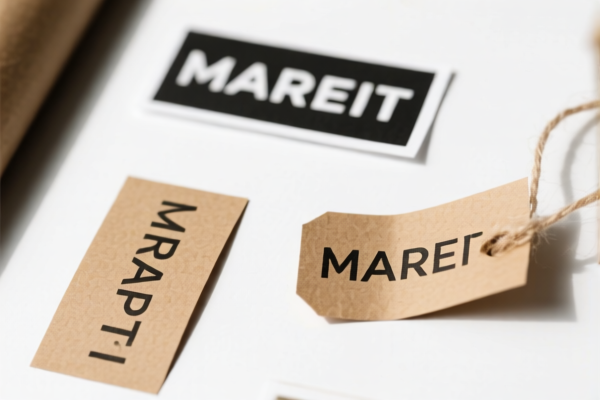
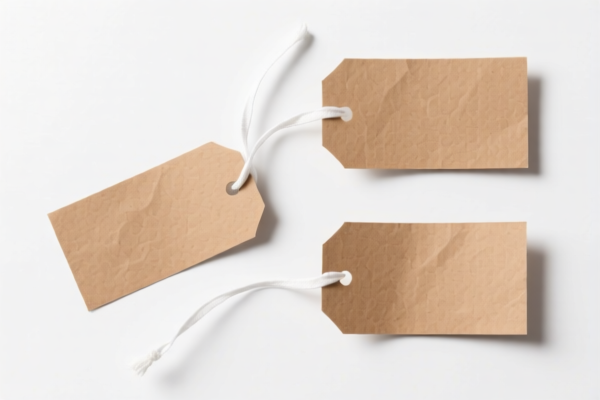
AI Analysis
🏷️ Special Paper Labels for Lithium Batteries
🌐 HS Code Reference & Customs Clearance Guide | 2026 Latest Tariff Analysis | Professional-Level Clearance Strategy
📌 I. Product Definition and Classification: Do You Really Understand "Label"?
Labels for Lithium Batteries are critical compliance components used to identify safety warnings, battery specifications, serial numbers, and handling instructions. In international trade, especially when importing into the US from China, they are generally classified as printed paper products.
Key Classification Logic:
Material: Paper/Cardboard (Infers from "Paper Labels" and "Lithium-printed" context).
Form: Cut to size/shape, printed.
Function:* Identification/Warning.
⚠️ Critical Distinction:
- If the label is simply a printed paper sheet cut to size → It falls under Chapter 48 (Paper Products).
- If the label includes complex adhesive/backing that changes its essential character significantly, or is part of a larger assembly, it might be scrutinized, but generally, "Paper Labels" stay in Chapter 48.
- Do NOT confuse with "Battery Labels" that are electronic components or part of the battery casing itself. These are accessories, not batteries.
📦 II. HS Code Classification Details (2026 Latest Tariff Authority Comparison)
Based on the provided data, there are 4 primary HS Codes applicable. All share the same tax structure because they fall under similar paper product categories subject to trade measures.
| HS Code | Product Description | Reason for Classification | Summary Logic |
|---|---|---|---|
4821.10.40.00 |
Paper or paperboard labels, other than printed | Match: The item is a "Label". "Lithium-printed" implies paper material. Fits "Other" category. | Paper Label |
4823.90.86.80 |
Other articles of paper or paperboard | Inference: Material is paper. Fits "Other paper products" excluding excluded categories. | Other Paper Item |
4823.90.10.00 |
Other articles of paper or paperboard, cut to size/shape | Inference: Material is paper/fiber. Form is cut/shape-specific. Fits "Other paper products". | Cut Paper Product |
4821.10.20.00 |
Paper or paperboard labels, self-adhesive | Match: "Label" matches purpose. "Lithium-printed" inferred as paper/cardboard printed label. No material conflict. | Self-Adhesive Paper Label |
🔍 Key Takeaway:
- All four codes are in Chapter 48 (Paper and Paperboard).
- The difference lies in whether it's a specific "Label" (4821) or a general "Paper Product" (4823).
- Crucially, all these codes are subject to the SAME high tariff rate due to US-China trade measures.
💰 III. 2026 Latest Tariff Rate Breakdown (Including Additional Taxes, Policy Surcharges)
✅ Applicable Country: United States (US)
✅ Origin: China (CN)
✅ Effective Time: November 10, 2025 (and subsequent imports)
🎯 Universal Tariff Structure for All 4 HS Codes
| Item | Content |
|---|---|
| Base Tariff Rate | 0% (ad valorem) |
| Section 301 Tariff (USITC) | +25% (Additional duty under Section 301 of the Trade Act) |
| Section 122 Tariff (IEEPA) | +10% (Additional duty targeting specific Chinese imports, often linked to supply chain security measures) |
| Total Tariff Rate | 35% |
| Tax Calculation | CIF Value × 35% |
| De Minimis Exemption | ❌ NOT APPLICABLE (These goods do NOT qualify for the $800 de minimis threshold) |
| Legal Basis Path | Section 301 → Section 122 → HS Code (4821.10.xx / 4823.90.xx) |
📌 Explanation:
- "USITC Additional Duty 25%": Comes from the U.S. Trade Representative's Section 301 investigation on Chinese goods.
- "Section 122 Tariff 10%": An additional surcharge often applied to specific categories under emergency economic powers.
- Total 35%: This is a high-cost item. For a $1,000 shipment, you pay $350 in duties alone.
- No De Minimis: Unlike small parcels under $800, these industrial/commercial labels are fully declared and taxed.
🛠️ IV. Customs Clearance Practical Advice (Real-World Pitfall Avoidance)
✅ 1. Required Documentation Checklist (None Can Be Skipped)
| Document | Must Provide | Explanation |
|---|---|---|
| ✅ Product Specification Sheet | ✔️ | Must explicitly state: "Paper Material", "Self-adhesive" (if applicable), "Lithium Battery Safety Label". |
| ✅ Product Photos (Front/Back) | ✔️ | Show the printed content (warnings, barcodes, text) to prove it's a label, not a battery part. |
| ✅ Commercial Invoice | ✔️ | Clearly state: "Paper Labels for Lithium Batteries". Avoid vague terms like "Stickers" or "Decals" without context. |
| ✅ Packing List | ✔️ | List quantity, weight, and dimensions. Ensure HS Code matches exactly. |
| ✅ Material Declaration | ✔️ | Confirm 100% Paper/Paperboard composition. No plastic, metal, or electronic components. |
✅ 2. Declaration Tips (Key Mantra)
🔥 "Material is Key, Use is Clear, HS Code Precise, Tax Saved!"
| Situation | Correct Declaration | Wrong Approach |
|---|---|---|
| Paper Label with Lithium Warning | 4821.10.40.00 or 4821.10.20.00 |
Misdeclaring as "Battery Accessory" (Chapter 85) → Risk of higher scrutiny |
| Simple Paper Sticker | 4823.90.86.80 |
Declaring as "Printed Material" without specifying "Label" → Potential misclassification |
| Self-Adhesive Label | 4821.10.20.00 |
Forgetting to mention "Self-Adhesive" → May be forced into "Other Paper" code |
| Bulk Roll Labels | Specify "On Roll" in description | Not specifying form factor → Customs may reject |
✅ 3. Special Handling Notes
| Situation | Recommendation |
|---|---|
| OEM Custom Labels | Provide customer PO and design file. Proves it's a commercial product, not a sample. |
| Mixed Shipments (Labels + Batteries) | Declare Separately! Never mix batteries and labels in one HS Code. Batteries have higher safety risks and different duties. |
| Small Quantity (Under $800) | Still Taxed! Do not rely on de minimis. Declare fully to avoid detention. |
| Origin: China | Expect 35% Tax. Budget accordingly. No tariff exemptions available for these paper products from China. |
🌍 V. Global Market Comparison (2026 Latest)
| Country/Region | Recommended HS Code | Tariff (China Origin) | Certification | Notes |
|---|---|---|---|---|
| 🇺🇸 USA | 4821.10.40.00 etc. |
35% (0% base + 25% + 10%) | None specific | High tariff barrier. |
| 🇨🇳 China | 4821.10.40.00 |
5-10% (Import Tariff) | None | Lower duty if importing into China. |
| 🇪🇺 EU | 4821.10.40.00 |
0% (Most Favored Nation) | CE Marking (if part of product) | Tariff-free. Best market for cost. |
| 🇬🇧 UK | 4821.10.40.00 |
0% | UKCA Marking | Tariff-free. |
| 🇯🇵 Japan | 4821.10.40.00 |
0% | PSE (if for battery) | Tariff-free. |
📌 Conclusion:
- The USA is the only major market with a 35% tariff on these paper labels.
- If you are exporting to the US, the 35% duty is unavoidable for Chinese-origin goods.
- Consider non-China origins (e.g., Vietnam, India, Mexico) if you can shift production, as they may qualify for lower or zero tariffs under various FTAs.
📌 VI. Common Mistakes & Pitfalls (Lessons Learned)
❌ Mistake 1: Declaring as "Battery Parts" (HS Code 8507/8543)
👉 Consequence: Customs may reclassify as Paper (4821) + apply 35% tax + issue a penalty for misdeclaration.
👉 Correct: It is a Paper Label, not a battery component.
❌ Mistake 2: Assuming De Minimis Applies (< $800)
👉 Consequence: Goods detained at border. You must file entry anyway.
👉 Correct: Declare fully, regardless of value.
❌ Mistake 3: Vague Description: "Stickers"
👉 Consequence: CBP may question the nature of the goods.
👉 Correct: Use "Paper Labels for Lithium Battery Safety Compliance".
❌ Mistake 4: Not Separating from Batteries in One Shipment
👉 Consequence: If batteries are also in the shipment, the entire container may be held for hazmat inspection.
👉 Correct: Ship labels and batteries separately if possible, or clearly delineate in the manifest.
🎯 VII. Conclusion: Professional Declaration, Cost Control, Efficiency
🎯 Remember the Mantra:
🔹 "Paper Labels = Chapter 48, Not Chapter 85."
🔹 "35% Total Tax for China-Origin to USA: 0% Base + 25% Sec 301 + 10% Sec 122."
🔹 "No De Minimis. Declare Fully."
📌 Pro Tip:
If your labels are printed on non-Chinese paper (e.g., paper made in the US or EU, then shipped to China for printing), you may argue for a different country of origin. However, if the essential character is imparted in China, it remains CN.
For high-volume shipments, consider Advance Rulings with CBP to lock in the HS Code and avoid surprise audits.
📣 Immediate Action:
📞 Contact your customs broker.
📄 Provide product photos + material composition.
💰 Budget for 35% duty on all US-bound paper labels from China.
✨ Professional Clearance Starts with Accurate Classification!
💼 Your cost is every cent. Don't let 35% eat your profit!
Customer Reviews
About HS Code Classification
The Harmonized System (HS) is an internationally standardized nomenclature developed by the World Customs Organization (WCO) to classify traded products. Over 200 countries use the HS system as the basis for customs tariffs, trade statistics, and import/export regulations.
Each HS code follows a hierarchical structure:
- Chapter (2 digits) — Broad category of goods (e.g., Chapter 84: Machinery and Mechanical Appliances)
- Heading (4 digits) — More specific grouping within the chapter
- Subheading (6 digits) — Internationally standardized breakdown, used by all WCO member countries
- National subdivisions (8-10 digits) — Country-specific extensions for further classification, such as US HTSUS 10-digit codes
Correct HS code classification is essential for smooth customs clearance, accurate duty payment, and compliance with trade regulations. Misclassification can lead to customs delays, overpayment of duties, or penalties.
When importing from CN to US, the applicable tariff rates may include:
- Most-Favored-Nation (MFN) rate — The standard duty rate applied to WTO members
- General rate — Applied to countries without trade agreements
- Trade remedy duties — Additional tariffs such as Section 301 (anti-dumping), Section 232 (national security), or countervailing duties
The information provided on this page is for reference purposes only. For official classification, please consult with your local customs authority or a licensed customs broker.