Special Paper for Encoding Cards
CN → US| HS Code | Tariff Rate | Origin | Destination | Doc |
|---|---|---|---|---|
| 4823906700 | 35.0% | CN | US | Official Doc |
| 4811412100 | 35.0% | CN | US | Official Doc |
| 4823908680 | 35.0% | CN | US | Official Doc |
| 4911914040 | 17.5% | CN | US | Official Doc |
Product Images
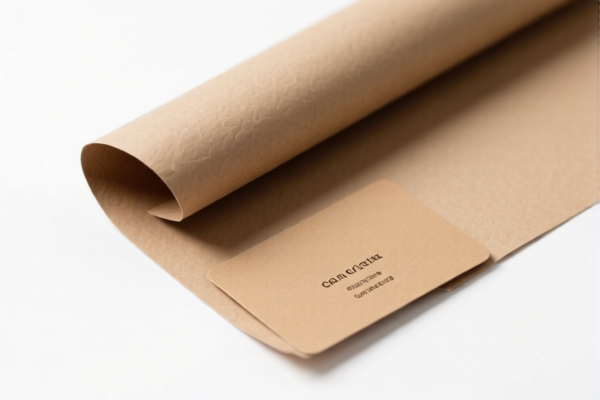

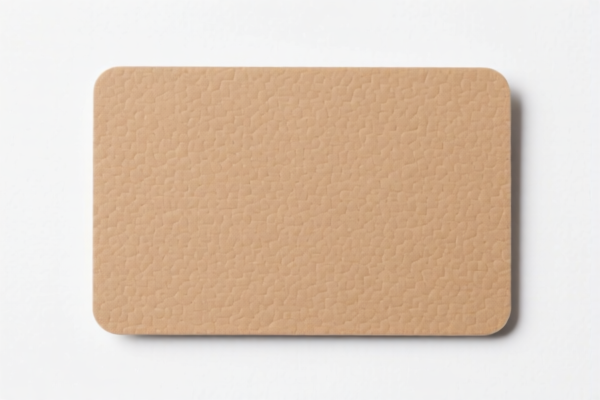
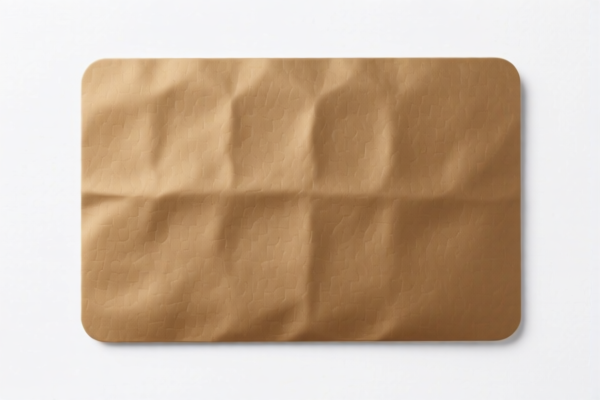
AI Analysis
📄 Special Paper for Encoding Cards (打码卡专用纸)
🌐 HS Code Reference & Customs Clearance Guide | 2026 Latest Tariff Analysis | Strategic Compliance Strategy
📌 I. Product Definition & Classification: Do You Really Understand "Encoding Card Paper"?
Special Paper for Encoding Cards refers to specialized paper products used in the production of encoding cards, receipt printers, or thermal printing systems. In international trade, the classification depends heavily on the processing level (uncoated vs. coated/printed) and the final form (raw material vs. finished printed item).
Key Distinctions: 1. Raw/Unprocessed Paper (Uncoated/Basic): Used for cutting into encoding cards or as blank stock. → Classified under Chapter 48 (Paper Products). 2. Coated/Printed Paper: Paper with specific coatings for thermal printing or already printed with data/images. → Classified under Chapter 48 (Coated/Printed) or Chapter 49 (Printed Materials). 3. Finished Printed Cards: If the product is already a finished "card" with printed data/images, it may fall under Chapter 49.
⚠️ Critical Classification Point:
- If it is blank paper stock meant for further processing → HS 48xx.xx.xx.xx
- If it is already printed with images/data/images as the final product → HS 4911.91.40.40
- Misclassification leads to significant tax differences (35% vs. 17.5%) and potential customs delays.
📦 II. HS Code Classification Details (2026 Latest Tariff Authority Comparison)
| HS Code | Product Description | Application Scenario | Tax Rate (Total) | Tax Detail |
|---|---|---|---|---|
4823.90.67.00 |
Special paper for encoding cards; Material: Paper; Belongs to Other paper articles (Uncoated/Basic) | Blank paper stock for encoding cards, uncoated paper sheets | 35.0% | Base: 0%, Add-on: 25%, 122 Clause: 10% |
4811.41.21.00 |
Special paper for encoding cards; Material: Paper; Belongs to Coated or Printed Paper Articles | Coated paper for thermal encoding, self-adhesive label paper, coated sheets | 35.0% | Base: 0%, Add-on: 25%, 122 Clause: 10% |
4823.90.86.80 |
Special paper for encoding cards or paper encoding cards; Material: Paper; Belongs to Other paper articles | Mixed category for unprocessed paper or semi-finished paper cards | 35.0% | Base: 0%, Add-on: 25%, 122 Clause: 10% |
4911.91.40.40 |
Paper encoding cards; Material: Paper; Belongs to Other printed pictures, designs, and photographs | Finished printed encoding cards with data/images | 17.5% | Base: 0%, Add-on: 7.5%, 122 Clause: 10% |
🔍 Key Reminder:
- HS 48xx codes (35% Total Tax): Apply to raw, coated, or unprocessed paper. This includes uncoated paper, thermal-coated paper, and paper rolls/sheets.
- HS 4911.91.40.40 (17.5% Total Tax): Applies only if the paper is already printed with images, designs, or encoded data as a final product (e.g., printed reward cards, finished thermal labels with pre-printed graphics).
- Do NOT mix: Shipping uncoated paper as "printed cards" (4911) may trigger customs audits for under-declaration. Shipping printed cards as "raw paper" (4823) may lead to over-payment but is safer for compliance, though inefficient.
💰 III. 2026 Latest Tariff Rate Breakdown (Including Additional Duties & Policy Add-ons)
✅ Applicable Country: United States (US)
✅ Origin: China (CN)
✅ Effective Date: From Nov 10, 2025 (and subsequent imports)
🎯 1. 4823.90.67.00 / 4811.41.21.00 / 4823.90.86.80 —— Special Paper for Encoding Cards (Paper Articles)
| Item | Content |
|---|---|
| Base Tariff | 0% (ad valorem) |
| USITC Add-on Tariff (Section 301) | +25% (Under USITC Footnote 9903.88.01) |
| IEEPA Add-on Tariff (Section 122/Other) | +10% (For China/Hong Kong products, effective Nov 10, 2025) |
| Total Tax Rate | 35.0% |
| Tax Calculation | CIF Value × 35% |
| De Minimis Exemption Eligible? | ❌ No (deny_de_minimis) |
| Legal Basis Path | IEEPA:9903.01.25 → IEEPA:9903.01.24 → USITC:4811.41.21.00/4823.90.67.00/4823.90.86.80 → FOOTNOTE:9903.88.01 |
📌 Explanation:
- The 25% USITC surcharge is part of the Section 301 tariffs targeting Chinese goods; - The 10% IEEPA surcharge is an additional levy on Chinese-origin products; - Total 35% is a high tariff rate, requiring strict supply chain cost calculation.
🎯 2. 4911.91.40.40 —— Paper Encoding Cards (Printed Products)
| Item | Content |
|---|---|
| Base Tariff | 0% |
| USITC Add-on Tariff (Section 301) | +7.5% |
| IEEPA Add-on Tariff | +10% |
| Total Tax Rate | 17.5% |
| Tax Calculation | CIF Value × 17.5% |
| De Minimis Exemption Eligible? | ❌ No (deny_de_minimis) |
| Legal Basis Path | IEEPA:9901.25 → IEEPA:9903.01.24 → USITC:4911.91.40.40 → FOOTNOTE:9903.88.01 (or applicable footnote) |
📌 Note:
- This code offers a significant tax advantage (17.5% vs. 35%) IF the product qualifies as "printed pictures/designs." - Crucial: The product must be already printed with designs or data. Blank thermal paper does NOT qualify.
🛠️ IV. Customs Clearance Practical Advice (Battle-Tested Pitfall Avoidance)
✅ 1. Required Documentation Checklist (Non-Negotiable)
| Document | Mandatory | Description |
|---|---|---|
| ✅ Product Specification Sheet | ✔️ | Must detail: Material (paper type), Coating status (thermal/coated/uncoated), Final use (encoding cards). |
| ✅ Product Photos (Clear) | ✔️ | Show the item as shipped. Is it a roll? Sheet? Already printed? |
| ✅ Commercial Invoice | ✔️ | Must clearly state: "Special Paper for Encoding Cards" AND "Printed/Unprinted". |
| ✅ Packing List | ✔️ | Detail dimensions, weight, and quantity. |
| ✅ Certificate of Origin (CO) | ✔️ | Required to verify CN origin for tariff application. |
| ✅ Third-Party Test Report | Optional but Recommended | If claiming specific coating types, provide test results to justify HS 4811 vs 4823. |
✅ 2. Declaration Tips (Key Mantra)
🔥 “Printed is 49, Unprinted is 48; Mix them up, Tax doubles!”
| Scenario | Correct HS Code | Wrong Action |
|---|---|---|
| Blank Thermal Paper Rolls | 4811.41.21.00 |
Misdeclare as "Printed Cards" (4911) → Risk of Fraud Audit |
| Uncoated Paper Sheets | 4823.90.67.00 |
Misdeclare as "Printed Cards" → Under-declaration Risk |
| Finished Printed Reward Cards | 4911.91.40.40 |
Misdeclare as "Blank Paper" (4823) → Overpay 17.5% unnecessarily |
| Semi-finished Paper Cards (Cut but Unprinted) | 4823.90.86.80 |
Misdeclare as "Printed Cards" → Compliance Violation |
✅ 3. Special Cases Handling
| Situation | Recommendation |
|---|---|
| OEM Custom Printing | If printing is done in the US post-import, declare as Blank Paper (48xx). If printed in China, declare as Printed Cards (4911). |
| Mixed Container (Printed & Unprinted) | Must separate申报. Do not mix under one HS code. Use two lines in the manifest. |
| "Encoding Card" Ambiguity | Provide a detailed product description in the invoice: "Paper sheets for manufacturing encoding cards, unprinted." |
| Thermal Coating Claim | If claiming HS 4811 (Coated), ensure the product has a functional thermal layer. Pure paper is HS 4823. |
🌍 V. Global Market Clearance Comparison (2026 Latest)
| Country/Region | Recommended HS Code | Tariff (China Origin) | Certification | Notes |
|---|---|---|---|---|
| 🇺🇸 USA | 4811.41.21.00 / 4911.91.40.40 |
35% (Paper) / 17.5% (Printed) | No specific tech cert | High scrutiny on "Printed" vs "Unprinted" |
| 🇨🇳 China | 4811.41.21.00 / 4911.91.40.40 |
0-13% (Import Duty) | None | Export tax rebate applies |
| 🇪🇺 EU | 4811.41.21.00 / 4911.91.40.40 |
0-6.5% | CE (if electronic accessories) | No Section 301-style surcharges |
| 🇦🇺 Australia | 4811.41.21.00 / 4911.91.40.40 |
5% | None | GST applies on CIF + Duty |
| 🇯🇵 Japan | 4811.41.21.00 / 4911.91.40.40 |
0-3% | None | Stable tariff structure |
📌 Conclusion:
- USA is the only major market imposing 122 Clause + Section 301 surcharges, making accurate classification critical for cost control. - EU, Japan, Australia have stable, lower tariffs. Focus on accuracy to avoid penalties, not just rate arbitrage.
📌 VI. Common Mistakes & Pitfall Avoidance (Blood-Tested Lessons)
❌ Mistake 1: Declaring Uncoated Paper as Printed Cards to save taxes
👉 Consequence: Customs audit, back taxes + penalties, potential seizure.
❌ Mistake 2: Declaring Printed Cards as Uncoated Paper to over-declare value
👉 Consequence: Overpayment of 17.5% tax. No refund possible easily.
❌ Mistake 3: Using vague terms like "Paper" or "Card" without specifying Printed vs. Unprinted
👉 Consequence: Customs officer may choose the higher tax rate (35%) or hold the shipment for classification review.
❌ Mistake 4: Mixing Thermal Coated and Uncoated paper in one HS code
👉 Consequence: Misdeclaration of HS 4811 (Coated) vs HS 4823 (Uncoated) can lead to compliance flags.
✅ Correct Practice:
"Special Paper for Encoding Cards, Uncoated, Unprinted, Rolls/Sheets, Model XYZ"
OR
"Finished Printed Encoding Cards, Paper, Pre-printed with Logo/Data, Model ABC"
🎯 VII. Conclusion: Precision Classification, Cost Optimization!
🎯 Remember the Mantra:
🔹 "Unprinted = 48 (35%); Printed = 49 (17.5%)"
🔹 "HS Code defines your cost; Misclassification costs you double!"
📌 Pro Tip:
- If your product is blank thermal paper, use 4811.41.21.00 (if coated) or 4823.90.67.00 (if uncoated).
- If your product is already printed, use 4911.91.40.40 to save 17.5%.
- Always provide clear photos and detailed descriptions to support your classification.
📣 Immediate Action:
📞 Contact a professional customs broker + Provide product photos + Apply for HS Code Pre-Ruling if unsure.
🚀 Ensure smooth clearance, minimize tax burden, and maximize profit margins!
✨ Professional clearance starts with accurate classification!
💼 Every cent of cost deserves precise calculation!
Customer Reviews
About HS Code Classification
The Harmonized System (HS) is an internationally standardized nomenclature developed by the World Customs Organization (WCO) to classify traded products. Over 200 countries use the HS system as the basis for customs tariffs, trade statistics, and import/export regulations.
Each HS code follows a hierarchical structure:
- Chapter (2 digits) — Broad category of goods (e.g., Chapter 84: Machinery and Mechanical Appliances)
- Heading (4 digits) — More specific grouping within the chapter
- Subheading (6 digits) — Internationally standardized breakdown, used by all WCO member countries
- National subdivisions (8-10 digits) — Country-specific extensions for further classification, such as US HTSUS 10-digit codes
Correct HS code classification is essential for smooth customs clearance, accurate duty payment, and compliance with trade regulations. Misclassification can lead to customs delays, overpayment of duties, or penalties.
When importing from CN to US, the applicable tariff rates may include:
- Most-Favored-Nation (MFN) rate — The standard duty rate applied to WTO members
- General rate — Applied to countries without trade agreements
- Trade remedy duties — Additional tariffs such as Section 301 (anti-dumping), Section 232 (national security), or countervailing duties
The information provided on this page is for reference purposes only. For official classification, please consult with your local customs authority or a licensed customs broker.