Special Purpose Off the Highway Pneumatic Tires
CN → US| HS Code | Tariff Rate | Origin | Destination | Doc |
|---|---|---|---|---|
| 4012206000 | 35.0% | CN | US | Official Doc |
| 4011205050 | 38.4% | CN | US | Official Doc |
| 4016996010 | 37.5% | CN | US | Official Doc |
| 4012128050 | 38.4% | CN | US | Official Doc |
| 4011201035 | 39.0% | CN | US | Official Doc |
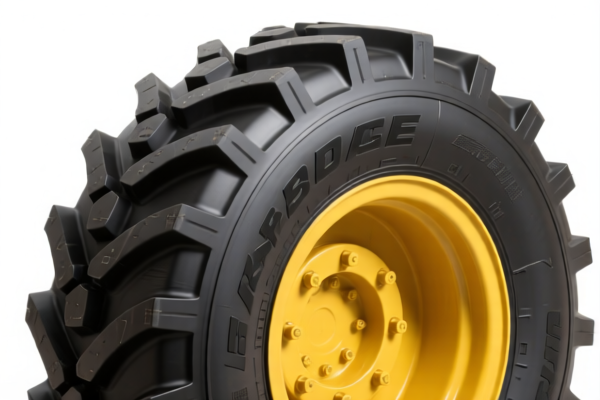
Product Images


AI Analysis
🚜 Special Purpose Off-the-Highway Pneumatic Tires
🌐 HS Code Reference & Customs Clearance Guide | 2026 Latest Tariff Analysis | Professional Clearance Strategy 📌 I. Product Definition & Classification: What are "Special Purpose Off-the-Highway Pneumatic Tires"?
These are pneumatic tires designed for vehicles or equipment that operate outside of public highways. They are characterized by specific tread patterns and reinforced sidewalls for rugged terrain, agriculture, construction, or industrial use.
In international trade, the classification depends heavily on: 1. Vehicle Type: Bus, Tractor, Truck, Car, etc. 2. Usage: Off-highway, Agricultural, Industrial. 3. Condition: New or Used (Recapped/Retreaded).
⚠️ Key Distinction:
- "Off-the-Highway" means not used for standard road transport (e.g., mining excavators, farm tractors, airport fire trucks).
- "Pneumatic" means air-filled (excludes solid rubber tires).
- "Special Purpose" is a broad category; precise HS codes require matching the specific vehicle type (e.g., Bus vs. Tractor).
📦 II. HS Code Classification Details (Based on Provided Data)
The provided data identifies five potential HS Codes based on different interpretations of "Special Purpose Off-the-Highway Pneumatic Tires." Below is the detailed breakdown for each, including tax implications and rationale.
| HS Code | Product Description & Rationale | Total Tax Rate | Tax Breakdown |
|---|---|---|---|
| 4012.20.60.00 | Used Pneumatic Tires 🔍 Rationale: Matches "tires" form, "rubber" material, and usage for road transport vehicles. Fits the logic of used pneumatic tires classification. ⚠️ Note: Despite the name "Off-the-Highway," this code is often used for used tires intended for general vehicle use if specific off-highway codes don't fit perfectly. |
35.0% | Base: 0.0% Section 301 (25%): +25.0% Section 122 (10%): +10.0% |
| 4011.20.50.50 | Tires for Buses, Off-Highway 🔍 Rationale: Matches "Bus" (use), "Off-Highway" (non-road use), and inferred "Rubber" material. Aligns with the specific subheading for bus tires used off-highway. ✅ Best Fit: If the tire is explicitly for Buses but used off-road. |
38.4% | Base: 3.4% Section 301 (25%): +25.0% Section 122 (10%): +10.0% |
| 4016.99.60.10 | Other Rubber Articles (Auto Parts) 🔍 Rationale: Classifies tires as "Rubber Articles" under "Other" heading (4016). Matches "Rubber" material and "Auto Mechanical Parts" use. ⚠️ Note: This is a fallback classification if the specific tire headings (4011/4012) do not apply. Often higher risk for misclassification. |
37.5% | Base: 2.5% Section 301 (25%): +25.0% Section 122 (10%): +10.0% |
| 4012.12.80.50 | Retreaded or Used Bus Tires 🔍 Rationale: Matches "Bus" (use) and "Tire" (form). The "Other" category covers cases where it's unclear if new or retreaded, or doesn't fit specific "New" subheadings. ⚠️ Note: Use only if the tire is for Buses and fits "Other" criteria. |
38.4% | Base: 3.4% Section 301 (25%): +25.0% Section 122 (10%): +10.0% |
| 4011.20.10.35 | Tires for Tractors, Off-Highway 🔍 Rationale: Matches "Bus" (interpreted as heavy vehicle/bus-type off-highway), "Off-Highway" (non-road), and inferred "Rubber". ✅ Best Fit: If the tire is for Tractors or similar heavy off-highway vehicles. |
39.0% | Base: 4.0% Section 301 (25%): +25.0% Section 122 (10%): +10.0% |
🔍 Critical Insight:
- 4011.xxxx is for NEW pneumatic tires.
- 4012.xxxx is for USED/RETREADED pneumatic tires.
- The term "Special Purpose" is vague; you must identify if it's for Buses (4011.20) or Tractors/Other (4011.20/4011.40) to choose correctly.
💰 III. 2026 Latest Tariff Rate Explanation (USA Import from China)
✅ Applicable Country: USA (US)
✅ Origin: China (CN)
✅ Effective Date: From Nov 10, 2025 (and subsequent imports)
🎯 1. General Tariff Structure for Tires
All tire HS codes below are subject to: - Section 301 Tariff: +25% (USITC Footnote 9903.88.01) - Section 122 Tariff: +10% (IEEPA, targeting China/HK products)
🔹 Case A: Used Tires (HS Code 4012.20.60.00)
| Item | Details |
|---|---|
| Base Duty | 0.0% |
| Section 301 | +25.0% |
| Section 122 | +10.0% |
| Total Rate | 35.0% |
| Calculation | CIF Value × 35% |
| De Minimis | ❌ Not Eligible (Deny de minimis) |
🔹 Case B: New Off-Highway Bus/Tractor Tires (HS Codes 4011.20.50.50, 4011.20.10.35, 4012.12.80.50)
| Item | Details |
|---|---|
| Base Duty | 3.4% – 4.0% (Varies by subheading) |
| Section 301 | +25.0% |
| Section 122 | +10.0% |
| Total Rate | 38.4% – 39.0% |
| Calculation | CIF Value × (38.4% ~ 39.0%) |
| De Minimis | ❌ Not Eligible (Deny de minimis) |
🔹 Case C: Rubber Articles (Fallback) (HS Code 4016.99.60.10)
| Item | Details |
|---|---|
| Base Duty | 2.5% |
| Section 301 | +25.0% |
| Section 122 | +10.0% |
| Total Rate | 37.5% |
| Calculation | CIF Value × 37.5% |
| De Minimis | ❌ Not Eligible (Deny de minimis) |
📌 Important Note:
- Section 122 (10%) is a new/additional tariff for China-origin goods.
- Section 301 (25%) is long-standing for Chinese tires.
- No de minimis exemption applies to tires from China.
🛠️ IV. Customs Clearance Practical Advice
✅ 1. Essential Documentation
| Document | Required? | Description |
|---|---|---|
| ✅ Product Specification Sheet | ✔️ | Must state: Type (Pneumatic), Use (Off-Highway), Vehicle Compatibility (Bus/Tractor/Other), Material (Rubber). |
| ✅ Technical Diagrams | ✔️ | Show tread pattern, sidewall markings, and size (e.g., 315/80R22.5). |
| ✅ Photos of Tires | ✔️ | Clear images of sidewall labels showing "Off-Highway," "Bus," or "Tractor." |
| ✅ Commercial Invoice | ✔️ | Must accurately describe: "Off-the-Highway Pneumatic Tires, Rubber, New/Used." |
| ✅ Certificate of Origin | ✔️ | To determine origin for Section 301/122 applicability. |
| ✅ Packing List | ✔️ | Include number of tires, weights, and dimensions. |
✅ 2. Classification Strategy
🔥 Golden Rule:
"Identify Vehicle Type First, Then Condition (New/Used)!"
| Scenario | Correct HS Code | Reason |
|---|---|---|
| New Tire for Bus (Off-Highway) | 4011.20.50.50 |
Specific for bus tires used off-highway. |
| New Tire for Tractor (Off-Highway) | 4011.20.10.35 |
Specific for tractor/off-highway tires. |
| Used Tire (General) | 4012.20.60.00 |
Used pneumatic tires for vehicles. |
| Retreaded Bus Tire | 4012.12.80.50 |
Retreaded/used bus tires. |
| Unclear Use/Other Rubber Item | 4016.99.60.10 |
Fallback if not clearly a tire for a specific vehicle. |
✅ 3. Common Mistakes & Pitfalls
❌ Mistake 1: Misclassifying New Tires as Used Tires (or vice versa).
👉 Consequence: Severe penalties, retroactive duties, and potential seizure.
❌ Mistake 2: Using generic term "Tire" without specifying "Off-Highway" or vehicle type.
👉 Consequence: Customs may assign a higher general duty code or request additional info, causing delays.
❌ Mistake 3: Ignoring Section 122 (10%).
👉 Consequence: Underpayment of duties. This 10% is in addition to the 25% Section 301 tariff.
❌ Mistake 4: Assuming "Off-Highway" means lower tax.
👉 Consequence: Off-highway tires often have higher base duties (3.4%-4.0%) compared to some car tires. Total tax is still high (~38-39%).
✅ Correct Declaration Example:
"Off-the-Highway Pneumatic Tires, Rubber, New, for Bus Use, Size 12R22.5, HS Code 4011.20.50.50"
🌍 V. Global Market Comparison (2026)
| Country/Region | Recommended HS Code | Estimated Total Duty | Certification |
|---|---|---|---|
| 🇺🇸 USA | 4011.20.50.50 (Example) |
38.4% (CN Origin) | DOT, FMVSS |
| 🇨🇳 China | 4011.20.50.50 |
3.4% + VAT | CCC (if applicable) |
| 🇪🇺 EU | 4011.20.50.50 |
4.5% (if non-preferential) | E-Mark, CE |
| 🇯🇵 Japan | 4011.20.50.50 |
6.0% | JIS, STCC |
📌 Key Takeaway:
- USA is the most expensive market due to 35%-39% effective duty for Chinese tires.
- EU/Asia have significantly lower duties but require strict certification (DOT, E-Mark, etc.).
📌 VI. Final Recommendations
- Determine Vehicle Type: Is it for a Bus (
4011.20.50.50) or Tractor/Other (4011.20.10.35)? This is the most critical step. - Check Condition: Is it New (4011) or Used/Retreaded (4012)? Misclassification here leads to major issues.
- Calculate Total Cost: Include Base Duty + 25% (Sec 301) + 10% (Sec 122). Example: $10,000 CIF → ~$3,840 in duties.
- Prepare Documentation: Ensure invoices and specs clearly state "Off-Highway" and vehicle type.
- Consider Origin: If sourcing from Vietnam, Thailand, or Malaysia, check for IEEPA exemptions (lower or 0% Section 122 tariff).
🎯 Pro Tip:
"Off-Highway" does NOT mean "Tax-Free."
For US imports from China, expect 35%-39% total duty.
Always verify if the tire is for Bus or Tractor to avoid classification errors.
📣 Action Required:
📞 Consult a licensed customs broker.
📄 Submit HS Code Pre-Ruling if possible.
📦 Ensure all documents match the HS Code exactly.
✨ Accurate Classification, Smooth Customs, Profit Protection!
💼 Your tires deserve the right code, not the wrong cost!
Customer Reviews
About HS Code Classification
The Harmonized System (HS) is an internationally standardized nomenclature developed by the World Customs Organization (WCO) to classify traded products. Over 200 countries use the HS system as the basis for customs tariffs, trade statistics, and import/export regulations.
Each HS code follows a hierarchical structure:
- Chapter (2 digits) — Broad category of goods (e.g., Chapter 84: Machinery and Mechanical Appliances)
- Heading (4 digits) — More specific grouping within the chapter
- Subheading (6 digits) — Internationally standardized breakdown, used by all WCO member countries
- National subdivisions (8-10 digits) — Country-specific extensions for further classification, such as US HTSUS 10-digit codes
Correct HS code classification is essential for smooth customs clearance, accurate duty payment, and compliance with trade regulations. Misclassification can lead to customs delays, overpayment of duties, or penalties.
When importing from CN to US, the applicable tariff rates may include:
- Most-Favored-Nation (MFN) rate — The standard duty rate applied to WTO members
- General rate — Applied to countries without trade agreements
- Trade remedy duties — Additional tariffs such as Section 301 (anti-dumping), Section 232 (national security), or countervailing duties
The information provided on this page is for reference purposes only. For official classification, please consult with your local customs authority or a licensed customs broker.