Special Rubber Raw Materials
CN → US| HS Code | Tariff Rate | Origin | Destination | Doc |
|---|---|---|---|---|
| 4002990000 | 35.0% | CN | US | Official Doc |
| 4002800000 | 35.0% | CN | US | Official Doc |
Product Images


AI Analysis
🧪 Synthetic Rubber & Factice (Special Rubber Raw Materials)
🌐 HS Code Reference & Clearance Guide | 2026 Latest Tariff Analysis | Professional Customs Strategy
📌 Part I: Product Definition & Classification: Do You Really Understand "Special Rubber Raw Materials"?
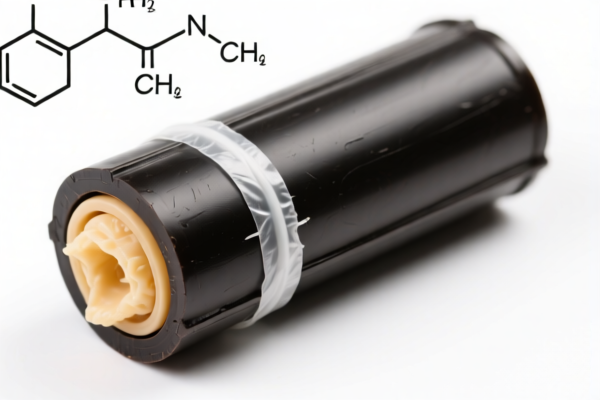
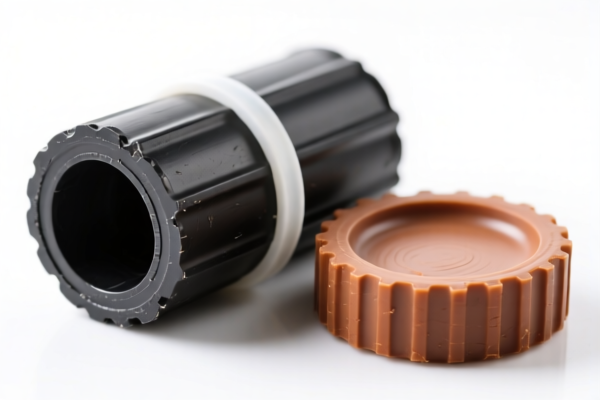
Synthetic Rubber and Factice Derived from Oils are the foundational raw materials for the global rubber industry. They are used in everything from car tires and footwear to industrial seals and medical devices. In international trade, these materials are strictly categorized based on their chemical origin (synthetic vs. factice) and their physical form (primary forms, plates, sheets, or strips).
The data provided focuses on two critical sub-categories under Heading 4002: 1. Other Synthetic Rubbers/Factice: Products that do not fit the specific mixture definitions of 4002.80. 2. Mixtures of Heading 4001 Products with Heading 4002 Products: Pre-blended rubber compounds ready for further processing.
⚠️ Key Distinction Point:
- If the product is a pure synthetic rubber (e.g., SBR, BR, NBR) or factice in primary form/sheets/strip, it generally falls under "Other" (4002.99.00.00) unless it is a specific mixture defined in 4002.80. - If the product is a mixture of a product from Heading 4001 (natural rubber/latex) with a product from Heading 4002 (synthetic rubber/factice), it is classified under Mixtures (4002.80.00.00). - Physical Form Matters: Both codes apply to "primary forms or in plates, sheets or strip." If it is in powder, granules, or other forms not listed as primary/sheets/strip, it may fall under a different subheading (e.g., 4002.19 or 4002.39), which is outside the scope of the provided<DATA>.
📦 Part II: HS Code Classification Details (2026 Latest Tariff Authority Cross-Reference)
Based strictly on the provided <DATA>, here are the two applicable HS Codes and their specific descriptions:
| HS Code | Product Description | Applicability Scenario | Key Characteristics |
|---|---|---|---|
4002.99.00.00 |
Synthetic rubber and factice derived from oils; Mixtures... : Other: Other | Pure synthetic rubber (e.g., SBR, BR, CR, IIR) or factice not classified elsewhere; Mixtures not covered by 4002.80. | Primary forms, plates, sheets, or strips. Generic "Other" category. |
4002.80.00.00 |
Synthetic rubber and factice... : Mixtures of any product of heading 4001 with any product of this heading | Pre-blended compounds mixing Natural Rubber (4001) with Synthetic Rubber/Factice (4002). | Specific mixture definition. Must be a blend of 4001 and 4002 products. |
🔍 Critical Reminder:
- Do not confuse "Mixtures" (4002.80) with "Other" (4002.99). If you are importing a simple SBR rubber compound that is not mixed with natural rubber, it likely falls under 4002.99.00.00. If you are importing a blend of natural latex and synthetic rubber, it falls under 4002.80.00.00. - Both codes require the product to be in primary forms or plates, sheets, or strip. Granules or powders are excluded from this specific data set.
💰 Part III: 2026 Latest Tariff Rate Breakdown (Including Surtaxes & Policy Add-ons)
✅ Applicable Country: United States (US)
✅ Origin: China (CN) (Implied by the 25% surtax structure typical of US-China trade relations)
✅ Effective Time: Current 2026 Trade Policy Framework
🎯 1. 4002.99.00.00 —— Other Synthetic Rubber / Factice (Primary Forms, Sheets, Strips)
| Item | Content |
|---|---|
| Base Tariff Rate | 0.0% (ad valorem) |
| USITC Surtax | +25.0% (Section 301 Tariff) |
| Total Tax Rate | 25.0% |
| Tax Calculation | CIF Value × 25% |
| Can De Minimis Exemption Apply? | ❌ No (High risk of scrutiny; de minimis thresholds often exclude Section 301 goods) |
| Legal Basis Path | USITC:4002.99.00.00 → FOOTNOTE:301 |
📌 Explanation:
- Although the base Most Favored Nation (MFN) rate is 0%, the 25% additional duty under Section 301 of the Trade Act applies to these Chinese-origin rubber products. - This is a significant cost factor. Synthetic rubber is a strategic industrial material, and tariffs are strictly enforced. - Total Landed Cost Impact: A $10,000 shipment will incur $2,500 in additional duties.
🎯 2. 4002.80.00.00 —— Mixtures of Heading 4001 with Heading 4002
| Item | Content |
|---|---|
| Base Tariff Rate | 0.0% (ad valorem) |
| USITC Surtax | +25.0% (Section 301 Tariff) |
| Total Tax Rate | 25.0% |
| Tax Calculation | CIF Value × 25% |
| Can De Minimis Exemption Apply? | ❌ No |
| Legal Basis Path | USITC:4002.80.00.00 → FOOTNOTE:301 |
📌 Explanation:
- This code has the exact same tax profile as 4002.99.00.00 in the provided data. - Whether it is a pure synthetic or a mixture, the 25% surtax applies equally. - No advantage in tariff rate by choosing this code over 4002.99.00.00, unless the product composition strictly requires it.
🛠️ Part IV: Clearance Practical Advice (Avoid Pitfalls Guide)
✅ 1. Documentation Checklist (Non-Negotiable)
| Document | Required | Description |
|---|---|---|
| ✅ Product Specification Sheet | ✔️ | Must specify: Type of synthetic rubber (SBR, BR, etc.), oil-derived factice content, physical form (sheet/strip/primary). |
| ✅ Composition Statement | ✔️ | Critical: Explicitly state if it is a mixture of Heading 4001 (Natural) and Heading 4002 (Synthetic). If no natural rubber is present, use 4002.99.00.00. |
| ✅ Commercial Invoice | ✔️ | Clearly describe as "Synthetic Rubber SBR, Primary Form" or "Mixture of Natural and Synthetic Rubber, Sheet." Avoid vague terms like "Rubber Raw Material." |
| ✅ Certificate of Origin | ✔️ | To confirm Chinese origin (triggering the 25% surtax). |
| ✅ Material Safety Data Sheet (MSDS) | ✔️ | Required for chemical handling and customs compliance. |
✅ 2. Declaration Tips (Key Mnemonics)
🔥 “Form Defines Code, Mixture Defines 80, Surcharge is 25%, Don’t Guess!”
| Scenario | Correct Declaration | Wrong Action |
|---|---|---|
| Pure SBR Rubber in Sheet Form | 4002.99.00.00 |
Misclassify as 4002.80 → Audit Risk |
| Blend of Natural Latex + SBR | 4002.80.00.00 |
Misclassify as 4002.99 → Potential Penalties |
| Rubber Granules/Powder | Check Other HS Codes (e.g., 4002.19/39) | Use 4002.99/80 → Rejection/Return |
| Rubber Tiles (Finished Goods) | Check Heading 4016 | Use 4002 → Classification Error |
✅ 3. Special Situation Handling
| Situation | Handling Advice |
|---|---|
| Oil-Derived Factice | Ensure it is classified under 4002 (Factice derived from oils), not 4003 (Reclaimed Rubber). 4003 has different tax rates. |
| Mixed Shipments | If a single container contains both pure synthetic rubber (4002.99) and mixtures (4002.80), declare separately on the bill of entry. |
| Primary Form vs. Finished Part | "Primary forms" include blocks, lumps, and powders not yet shaped. If it is cut into specific gaskets or seals, it may fall under 4016 (Articles of vulcanized rubber). Do not use 4002 codes for finished rubber parts. |
🌍 Part V: Global Market Clearance Comparison (2026 Latest)
| Country/Region | Recommended HS Code | Tariff (China Origin) | Certification Requirement | Notes |
|---|---|---|---|---|
| 🇺🇸 United States | 4002.99.00.00 / 4002.80.00.00 |
25.0% (Total) | No specific pre-approval, but strict Form compliance | Section 301 surtax is mandatory. No de minimis. |
| 🇨🇳 China | 4002.99.00.00 / 4002.80.00.00 |
Varies (0-10%) | CCC (if applicable for end-product) | Import duties may be lower; focus on VAT. |
| 🇪🇺 European Union | 4002.99.00 / 4002.80.00 |
0% (Most scenarios) | REACH Registration Required | No Section 301 equivalent. REACH compliance is key. |
| 🇦🇺 Australia | 4002.99.00 / 4002.80.00 |
5% | No specific pre-approval | Standard FTA rates may apply if origin is different. |
📌 Conclusion:
- US Market: Highest barrier due to 25% additional duty. Cost planning must include this. - EU/Other Markets: Generally lower tariff barriers, but REACH (EU) or other chemical regulations apply. - China Origin: The 25% surtax is the single biggest cost driver for US-bound rubber raw materials.
📌 Part VI: Common Mistakes & Pitfall Guide (Lessons Learned)
❌ Mistake 1: Classifying "Rubber Tiles" or "Gaskets" under 4002
👉 Consequence: 4016 is the correct code for finished rubber articles. Misclassification leads to wrong duty rate and potential penalties.
❌ Mistake 2: Confusing "Factice" with "Reclaimed Rubber" (4003)
👉 Consequence: Factice is oil-derived; Reclaimed is recycled. They have different HS codes and tax rates. Factice (4002) is taxed at 25% in the US; Reclaimed (4003) may have different rules.
❌ Mistake 3: Ignoring the "Physical Form" Requirement
👉 Consequence: If the product is granules, it does not fit 4002.99.00.00 or 4002.80.00.00 (which specify primary forms/sheets/strip). Granules may fall under 4002.19 or 4002.39. Using the wrong code leads to customs hold.
✅ Correct Practice:
"Synthetic Rubber SBR, Oil-Extended, Primary Form, Block, Model X, China Origin"
🎯 Part VII: Conclusion: Professional Classification, Cost Control, Risk Mitigation
🎯 Remember the Mantra:
🔹 "Mixture = 4002.80, Other = 4002.99, Both = 25% Surcharge!"
🔹 "Primary Form Only, Granules Go Elsewhere, Sheet/Strip is Key, Don’t Mess It Up!"
📌 Pro Tip:
If your synthetic rubber is sulfur-vulcanized (already cured), it cannot be classified under 4002. It must be classified under 4016 (Other articles of vulcanized rubber other than hard rubber). 4002 is strictly for unvulcanized rubber and factice.
📣 Immediate Action:
📞 Verify the vulcanization status and physical form of your product.
📄 Prepare a precise Composition Statement to determine if it’s 4002.80 or 4002.99.
💰 Factor in the 25% US Surtax for accurate landed cost calculation.
✨ Professional Customs Clearance Starts with Precise Classification!
💼 Your Every Dollar of Cost Deserves to Be Calculated Precisely!
Customer Reviews
About HS Code Classification
The Harmonized System (HS) is an internationally standardized nomenclature developed by the World Customs Organization (WCO) to classify traded products. Over 200 countries use the HS system as the basis for customs tariffs, trade statistics, and import/export regulations.
Each HS code follows a hierarchical structure:
- Chapter (2 digits) — Broad category of goods (e.g., Chapter 84: Machinery and Mechanical Appliances)
- Heading (4 digits) — More specific grouping within the chapter
- Subheading (6 digits) — Internationally standardized breakdown, used by all WCO member countries
- National subdivisions (8-10 digits) — Country-specific extensions for further classification, such as US HTSUS 10-digit codes
Correct HS code classification is essential for smooth customs clearance, accurate duty payment, and compliance with trade regulations. Misclassification can lead to customs delays, overpayment of duties, or penalties.
When importing from CN to US, the applicable tariff rates may include:
- Most-Favored-Nation (MFN) rate — The standard duty rate applied to WTO members
- General rate — Applied to countries without trade agreements
- Trade remedy duties — Additional tariffs such as Section 301 (anti-dumping), Section 232 (national security), or countervailing duties
The information provided on this page is for reference purposes only. For official classification, please consult with your local customs authority or a licensed customs broker.