Special Vehicle Refurbished Rubber Tires
CN → US| HS Code | Tariff Rate | Origin | Destination | Doc |
|---|---|---|---|---|
| 4012909000 | 37.7% | CN | US | Official Doc |
| 4012904500 | 39.2% | CN | US | Official Doc |
| 4005910000 | 35.0% | CN | US | Official Doc |
| 4006901000 | 35.0% | CN | US | Official Doc |
| 4006100000 | 20.4% | CN | US | Official Doc |
Product Images
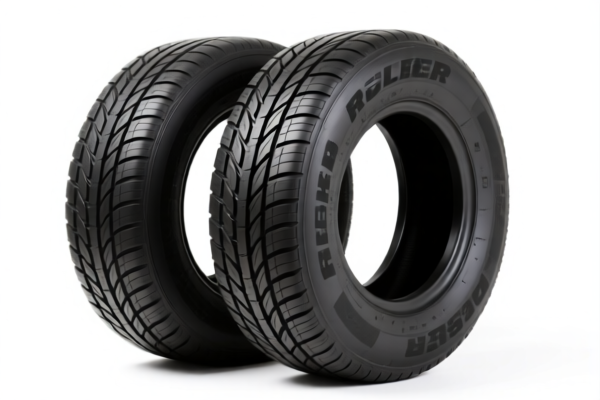
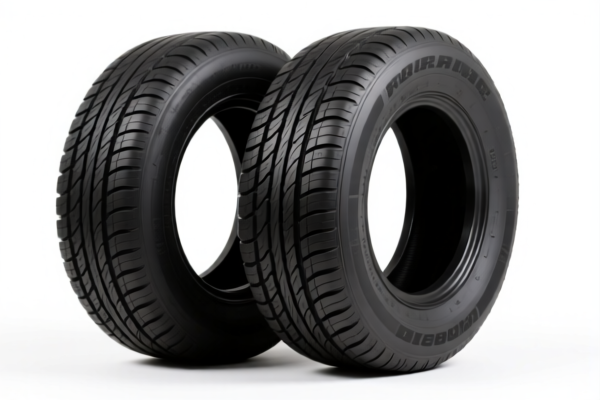
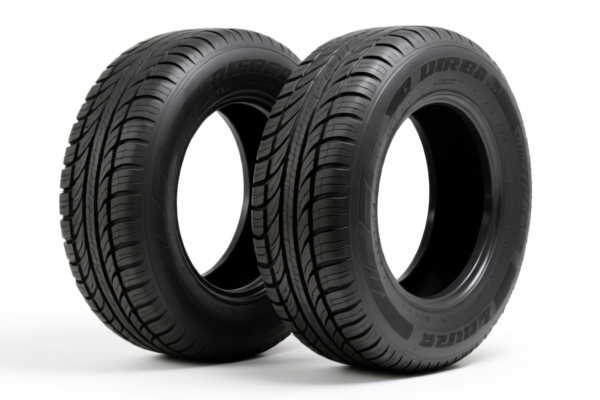
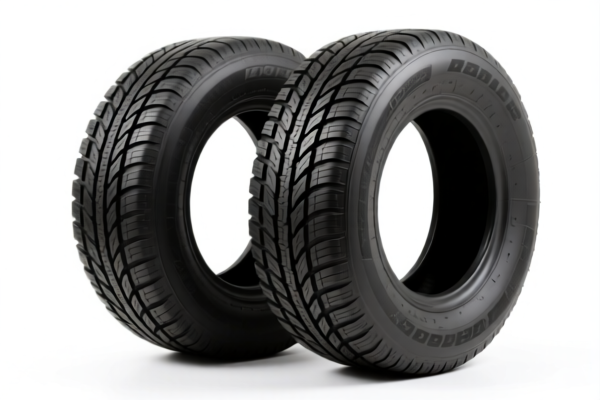
AI Analysis
🚜 Special Vehicle Refurbished Rubber Tires (Tread Re-capping)
🌐 HS Code Reference & Customs Clearance Guide | 2026 Latest Tariff Analysis | Professional Strategy for Heavy-Duty & Agricultural Assets
📌 I. Product Definition & Classification: What Exactly Is a "Refurbished Tire Tread"?
In international trade, "Special Vehicle Refurbished Rubber Tires" typically refers to treads (the outer rubber part) intended for retreading (refurbishing) existing casings of tires used on special vehicles (e.g., agricultural tractors, mining trucks, forklifts, or military vehicles). These are not finished, ready-to-mount tires. They are intermediate products.
Key Distinctions: 1. Treads for Retreading (Unvulcanized/Vulcanized Strips): Raw or semi-finished rubber strips designed to be applied to a used tire casing. 2. Finished Retreaded Tires: The final product after the tread has been bonded and vulcanized to the casing.
⚠️ Critical Classification Point:
- If the product is described as "Treads for Retreading" (often unvulcanized or semi-vulcanized strips) → Look at Chapter 40 (Rubber Articles), specifically subheadings 4005, 4006, or 4012.90.45.
- If the product is a Finished Retreaded Tire (complete, vulcanized, ready for use) → It falls under 4012.10 or 4012.20 (if retreaded pneumatic).
- Note: The provided data focuses on "Treads" and "Retreading-related" items, pointing heavily toward intermediate rubber goods or specific retreaded categories.
📦 II. HS Code Classification Details (Based on Provided Data)
| HS Code | Product Description & Matching Logic | Tax Rate (China Origin to US) |
|---|---|---|
| 4012.90.90.00 | Retreaded Tires / Treads for Special Vehicles: Matches material (rubber) and use (tread/retreading-related). Fits specific sub-features under this heading. | 37.7% |
| 4012.90.45.00 | Treads for Retreading (Vulcanized/Unvulcanized): Matches form (tread) and purpose (retreading). Material inferred as rubber from name "Rubber Tread." | 39.2% |
| 4005.91.00.00 | Unvulcanized Rubber Sheets/Strips: Matches material (rubber) and form (tread as a plate/strip of primary shape). Fits unvulcanized mixed rubber characteristics. | 35.0% |
| 4006.90.10.00 | Other Unvulcanized Rubber Articles: Matches material (rubber) and form (tread as an intermediate product). Fits "other shapes" of unvulcanized rubber. | 35.0% |
| 4006.10.00.00 | Unvulcanized Rubber "Hump" Bands/Strips: Matches material (rubber) and use (tire retreading). Form fits "hump bands" (unvulcanized rubber strips). | 20.4% |
🔍 Key Insight:
- The lowest tax rate (20.4%) applies to 4006.10.00.00, categorized as "Unvulcanized Rubber 'Hump' Bands/Strips." This is often the optimal classification for raw treads specifically designed for retreading, as they are considered intermediate rubber articles rather than finished tires.
- The highest rates (39.2% and 37.7%) apply to 4012.90.xx.xx, which covers finished retreaded tires or specific retreaded tire parts. If your product is a finished retreaded tire for a special vehicle, this is the correct heading, but beware of the higher tariff.
💰 III. 2026 Latest Tariff Rate Breakdown (Including Surtaxes & Policy Add-ons)
✅ Applicable Country: United States (US)
✅ Origin: China (CN)
✅ Effective Date: November 10, 2025 (and subsequent imports)
🎯 1. 4006.10.00.00 — Unvulcanized Rubber "Hump" Bands/Strips (Treads for Retreading)
🌟 RECOMMENDED FOR RAW TREADS
| Item | Details |
|---|---|
| Base Duty | 2.9% |
| USITC Section 301 Surtax | +7.5% |
| IEEPA Surtax | +10% |
| Total Tax Rate | 20.4% |
| Calculation | CIF Value × 20.4% |
| De Minimis Exemption | ❌ Not Eligible (Section 301 & IEEPA surcharges block de minimis) |
| Legal Basis Path | IEEPA:9903.01.25 → IEEPA:9903.01.24 → USITC:4006.10.00.00 → FOOTNOTE:301 |
📌 Explanation:
- Base Duty (2.9%): Standard MFN rate for unvulcanized rubber strips.
- Section 301 Surtax (7.5%): Note that this is lower than the standard 25% for many rubber goods, likely due to specific exclusions or category mapping for "hump bands."
- IEEPA Surtax (10%): Additional tariff under the International Emergency Economic Powers Act targeting Chinese imports.
- Why Choose This? If your product is unvulcanized treads (raw material for retreading), this classification offers the lowest total tax burden (20.4%).
🎯 2. 4005.91.00.00 / 4006.90.10.00 — Unvulcanized Rubber Articles (Sheets/Strips/Other Shapes)
| Item | Details |
|---|---|
| Base Duty | 0.0% |
| USITC Section 301 Surtax | +25% |
| IEEPA Surtax | +10% |
| Total Tax Rate | 35.0% |
| Calculation | CIF Value × 35.0% |
| De Minimis Exemption | ❌ Not Eligible |
📌 Explanation:
- These codes apply if the treads are classified as general unvulcanized rubber sheets or other shapes, not specifically as "hump bands."
- The base duty is 0%, but the 25% Section 301 surtax significantly increases the cost compared to4006.10.
- Only choose this if your product does not fit the "hump band" description in4006.10.
🎯 3. 4012.90.90.00 — Retreaded Tires / Other Retreaded Rubber Parts
| Item | Details |
|---|---|
| Base Duty | 2.7% |
| USITC Section 301 Surtax | +25% |
| IEEPA Surtax | +10% |
| Total Tax Rate | 37.7% |
| Calculation | CIF Value × 37.7% |
| De Minimis Exemption | ❌ Not Eligible |
📌 Explanation:
- Applies if the product is considered a finished retreaded tire or a specific part thereof that doesn't fit4012.90.45.
- Higher cost than intermediate products. Only use if the product is a completed retreaded tire for special vehicles.
🎯 4. 4012.90.45.00 — Treads for Retreading (Vulcanized/Specific Form)
| Item | Details |
|---|---|
| Base Duty | 4.2% |
| USITC Section 301 Surtax | +25% |
| IEEPA Surtax | +10% |
| Total Tax Rate | 39.2% |
| Calculation | CIF Value × 39.2% |
| De Minimis Exemption | ❌ Not Eligible |
📌 Explanation:
- This code explicitly mentions "Treads for Retreading" but may imply a vulcanized or more processed state.
- Highest tax rate (39.2%) among the options. Avoid unless your product is a finished, vulcanized tread that cannot be classified as an unvulcanized article.
🛠️ IV. Customs Clearance Practical Advice (Avoid Pitfalls)
✅ 1. Preparation Checklist (Non-Negotiable)
| Document | Required? | Notes |
|---|---|---|
| ✅ Product Specification Sheet | ✔️ | Must clearly state: "Unvulcanized Treads for Retreading", dimensions, rubber compound type, and explicitly state "Not a Finished Tire". |
| ✅ Technical Diagrams | ✔️ | Show the tread shape, confirming it is a strip/band (hump band) for application to a casing, not a complete tire. |
| ✅ Photos (Label & Product) | ✔️ | Clear photos of the raw tread, showing texture and edges. No mounted casing. |
| ✅ Commercial Invoice | ✔️ | Description: "Unvulcanized Rubber Treads for Retreading of Special Vehicle Tires (HS 4006.10)". Avoid vague terms like "Tire Parts." |
| ✅ Certificate of Origin | ✔️ | Required for origin determination (China). |
| ✅ Packing List | ✔️ | Detail weight and quantity. Ensure no finished tires are mixed in the shipment. |
✅ 2. Declaration Strategy (Key Mnemonic)
🔥 “RAW TREAD = 4006.10 = 20.4% | FINISHED TIRE = 4012.90 = 37-39%”
| Scenario | Correct HS Code | Why? | Risk if Wrong |
|---|---|---|---|
| Unvulcanized rubber strips for retreading | 4006.10.00.00 |
Matches "hump bands" and unvulcanized state. | Misclassification as 4012 leads to +17% higher tax. |
| Vulcanized treads ready to mount | 4012.90.45.00 |
Matches "Treads for Retreading" in finished form. | Misclassification as 4006 may be rejected as "not unvulcanized." |
| Completed retreaded tire | 4012.10 or 4012.20 |
Finished product, vulcanized. | Not in provided data, but generally higher duty. |
| Mixed shipment (Treads + Casing) | Separate Lines | Must declare each component separately. | Mixed shipment may lead to total misclassification. |
✅ 3. Special Handling for "Special Vehicles"
| Vehicle Type | Note |
|---|---|
| Agricultural Tractors | Treads for these are often large and specialized. Ensure description includes "For Agricultural Vehicle Retreading" to justify 4012 vs 4006. |
| Mining/Industrial Trucks | Heavy-duty treads. Same classification logic applies. |
| Forklifts | Solid or pneumatic? If pneumatic tread retreading, use 4006.10 for raw treads. |
📌 Tip:
- Avoid using the term "Refurbished Tire" in the commercial invoice if the product is raw material. Use "Unvulcanized Treads for Retreading".
- "Refurbished Tire" implies a finished product, triggering higher duties under4012.90.
- "Treads" or "Tread Strips" implies intermediate goods, potentially qualifying for lower duties under4006.10.
🌍 V. Global Market Comparison (2026)
| Country/Region | Recommended HS Code | Duty Rate (China) | Key Certifications |
|---|---|---|---|
| 🇺🇸 USA | 4006.10.00.00 (Raw) / 4012.90.45.00 (Finished) |
20.4% (Raw) / 39.2% (Finished) | None specific, but clear description critical. |
| 🇨🇳 China | 4006.10.00.00 |
5-10% | None. |
| 🇪🇺 EU | 4006.10.00.00 |
0-6.5% | REACH compliance for rubber compounds. |
| 🇦🇺 Australia | 4006.10.00.00 |
5% | None. |
📌 Conclusion:
- The US market imposes the highest tariffs due to Section 301 and IEEPA surcharges.
- Classification as "Unvulcanized Rubber Hump Bands" (4006.10) is the most cost-effective strategy for raw treads.
- Do not misdeclare finished products as raw materials to avoid penalties.
📌 VI. Common Mistakes & Pitfalls (Lessons Learned)
❌ Mistake 1: Declaring "Refurbished Tires" when you are shipping raw treads.
👉 Consequence: Higher duty (39.2% vs 20.4%).
👉 Fix: Use term "Unvulcanized Treads for Retreading."
❌ Mistake 2: Declaring "Treads" when the product is a finished retreaded tire.
👉 Consequence: Customs may reject the entry, demand reclassification, or impose fines.
👉 Fix: Ensure the product is unvulcanized for 4006.10. If vulcanized, use 4012.90.45.00.
❌ Mistake 3: Omitting "For Retreading" in the description.
👉 Consequence: Customs may classify as general rubber articles (4005 or 4006.90), leading to 35% duty instead of 20.4%.
👉 Fix: Always include "For Retreading" in the product description.
✅ Correct Declaration Example:
"Unvulcanized Rubber Treads for Retreading of Special Vehicle Tires (HS 4006.10.00.00), Material: Natural/Synthetic Rubber Blend, Shape: Hump Band, Not a Finished Tire."
🎯 VII. Conclusion: Professional Declaration, Cost Savings!
🎯 Remember the Golden Rule:
🔹 "Raw Treads = 4006.10 = 20.4% | Finished Treads = 4012.90 = 39.2%"
🔹 "Describe as 'Unvulcanized Treads for Retreading' to unlock the lower 20.4% rate!"
📌 Pro Tip:
If your treads are unvulcanized, ensure they are not classified as 4005.91 or 4006.90 unless necessary, as those carry 35% duty. 4006.10 is the best fit for "hump bands" or treads.
📣 Immediate Action:
📞 Consult with a licensed customs broker to confirm if your specific tread product qualifies as a "hump band" under
4006.10.
🚀 Declare accurately, pay the right tax, and clear customs smoothly!
✨ Professional Customs Clearance Starts with Precise Classification!
💼 Every 1% of duty savings adds to your profit margin!
Customer Reviews
About HS Code Classification
The Harmonized System (HS) is an internationally standardized nomenclature developed by the World Customs Organization (WCO) to classify traded products. Over 200 countries use the HS system as the basis for customs tariffs, trade statistics, and import/export regulations.
Each HS code follows a hierarchical structure:
- Chapter (2 digits) — Broad category of goods (e.g., Chapter 84: Machinery and Mechanical Appliances)
- Heading (4 digits) — More specific grouping within the chapter
- Subheading (6 digits) — Internationally standardized breakdown, used by all WCO member countries
- National subdivisions (8-10 digits) — Country-specific extensions for further classification, such as US HTSUS 10-digit codes
Correct HS code classification is essential for smooth customs clearance, accurate duty payment, and compliance with trade regulations. Misclassification can lead to customs delays, overpayment of duties, or penalties.
When importing from CN to US, the applicable tariff rates may include:
- Most-Favored-Nation (MFN) rate — The standard duty rate applied to WTO members
- General rate — Applied to countries without trade agreements
- Trade remedy duties — Additional tariffs such as Section 301 (anti-dumping), Section 232 (national security), or countervailing duties
The information provided on this page is for reference purposes only. For official classification, please consult with your local customs authority or a licensed customs broker.