Speed Detector
CN → US| HS Code | Tariff Rate | Origin | Destination | Doc |
|---|---|---|---|---|
| 9029206000 | 0.0% | CN | US | Official Doc |
| 8543706000 | 35.0% | CN | US | Official Doc |
| 9031200000 | 36.7% | CN | US | Official Doc |
| 9031808085 | 10.0% | CN | US | Official Doc |
| 9029204080 | 35.0% | CN | US | Official Doc |
| 8543709860 | 37.6% | CN | US | Official Doc |
Product Images
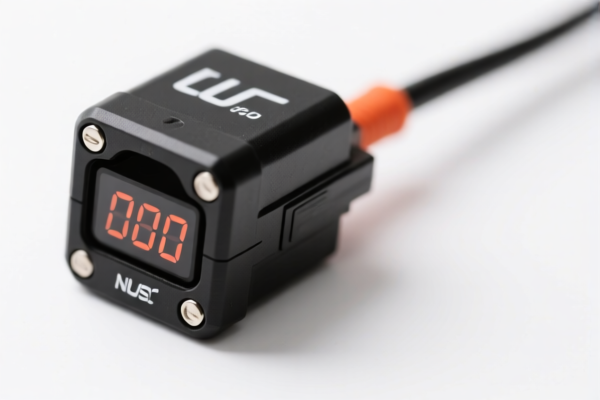
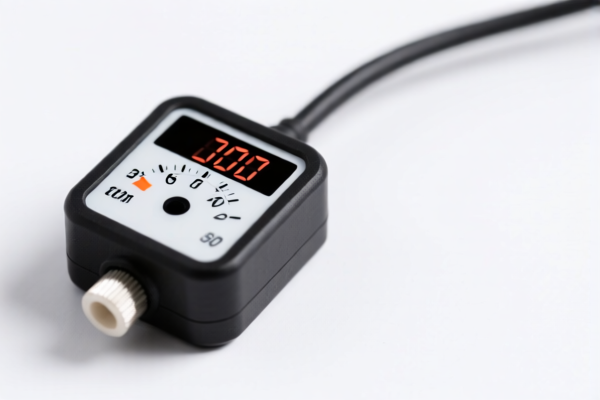
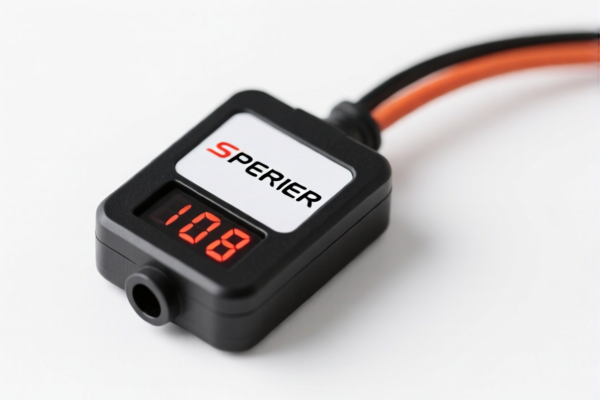
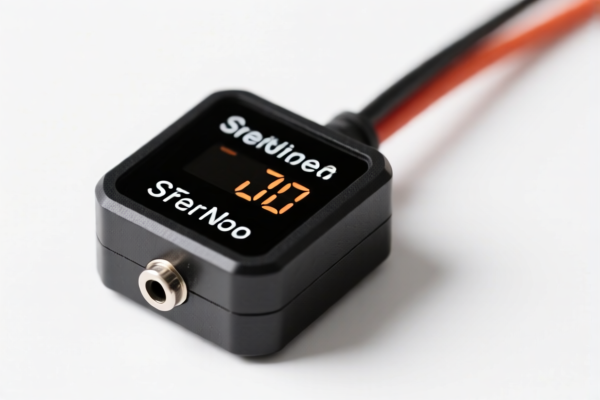
AI Analysis
🚀 Speed Detector (Speedometer & Tachometer Analysis)
🌐 HS Code Reference & Customs Clearance Guide | 2026 Latest Tariff Analysis | Professional Clearance Strategy
📌 I. Product Definition & Classification: Do You Really Understand "Speed Detectors"?
A Speed Detector is a broad term in international trade, covering devices used to measure the speed of rotation (Tachometer) or linear velocity (Speedometer). Depending on its internal circuitry, connection capabilities, and specific function, it can fall into drastically different HS Code categories with varying tariff implications.
Key Distinctions: * Mechanical/Basic Instruments: Traditional gauges used in vehicles for speed or RPM. * Electronic Measurement Devices: Devices that measure speed but are also capable of data transmission, network connectivity, or complex analysis. * General Testing Equipment: Devices used in labs or industrial testing benches.
⚠️ Critical Classification Point:
- If it is a standard gauge for vehicles (speed/RPM) → Chapter 90 (Instruments)
- If it has independent electronic functions and data transfer capabilities → Chapter 85 (Electrical Machinery)
- If it is a general-purpose measurement instrument without specific vehicle function → Chapter 90 (Other Measuring Instruments)
📦 II. HS Code Classification Details (2026 Latest Tariff Authority Comparison)
Based on the provided data, here are the five possible HS Codes for Speed Detectors, sorted by tax efficiency.
| HS Code | Product Description | Applicable Scenario | Total Tax Rate (China Origin → US) | Key Characteristics |
|---|---|---|---|---|
9031.80.80.85 |
Other Measuring/Checking Instruments | General-purpose speed detection, non-specific vehicle use, high precision | 10.0% | ✅ Lowest Tax! Fits "General Measurement" definition. No additional USITC/IEEPA surcharges in this specific slot per data. |
9029.20.60.00 |
Speedometers & Tachometers | Vehicle speed/RPM gauges, basic mechanical/electronic gauges | 38.1% | Base: 16¢/ea + 2.5%; 301 Tariff: 25%; 122 Tariff: 10% |
9029.20.40.80 |
Other Speedometers/Tachometers | Fallback category for vehicle instruments if 9029.20.60.00 doesn't fit perfectly | 35.0% | Base: 0%; 301 Tariff: 25%; 122 Tariff: 10% |
8543.70.60.00 |
Electronic Machines/Apparatus | Speed detectors with network/data transmission capabilities, independent function | 35.0% | Base: 0%; 301 Tariff: 25%; 122 Tariff: 10% |
9031.20.00.00 |
Testing Benches & Apparatus | Speed detection as part of a larger testing frame or industrial test bench | 36.7% | Base: 1.7%; 301 Tariff: 25%; 122 Tariff: 10% |
8543.70.98.60 |
Other Electric Machines/Apparatus | Complex electronic speed detectors with specific independent functions not listed elsewhere | 37.6% | Base: 2.6%; 301 Tariff: 25%; 122 Tariff: 10% |
🔍 Important Note:
-9031.80.80.85is the MOST COST-EFFECTIVE option if your product can be justified as a "General Measuring Instrument" rather than a specific vehicle part or complex electronic machine.
- All other codes attract significant Section 301 (25%) and Section 122 (10%) tariffs.
💰 III. 2026 Latest Tariff Rate Breakdown (Detailed Tax Clauses)
✅ Applicable Country: United States (US)
✅ Country of Origin: China (CN)
✅ Validity: Current as of 2026 tariff regulations
🎯 1. 9031.80.80.85 — The "Golden Ticket" for Low Tariffs
| Item | Content |
|---|---|
| Base Duty Rate | 0% (Ad Valorem) |
| Section 301 Tariff (USITC) | 0.0% (Exempt or not applicable under this specific subheading) |
| Section 122 Tariff (IEEPA) | 10.0% |
| Total Tax Rate | 10.0% |
| Tax Calculation | CIF Value × 10% |
| De Minimis Eligibility | ❌ No (Generally denied for Section 122 goods) |
| Legal Basis | 9031.80.80.85 → IEEPA:122 (if applicable) |
📌 Explanation:
- This code is classified under "Other measuring or checking instruments."
- Crucially, the provided data indicates 0% USITC (301) tariff and only a 10% 122 tariff.
- This results in the lowest total duty (10%), making it the preferred classification if the product meets the definition of a general measuring instrument.
- Strategy: Justify the product as a general lab or industrial speed tester, not a vehicle part, to qualify for this rate.
🎯 2. 9029.20.60.00 — Standard Vehicle Speedometer/Tachometer
| Item | Content |
|---|---|
| Base Duty Rate | 16¢ each + 2.5% (Ad Valorem) |
| Section 301 Tariff (USITC) | 25.0% |
| Section 122 Tariff (IEEPA) | 10.0% |
| Total Effective Rate | ~37.5-38.1% (depending on unit value) |
| Tax Calculation | (16¢/unit + 2.5% of Value) + 25% + 10% |
| De Minimis Eligibility | ❌ No |
📌 Explanation:
- This is the standard classification for vehicle-specific speedometers and tachometers.
- High base duty (per unit + %) combined with 301 and 122 tariffs makes this expensive.
- Avoid this if your product is not exclusively for vehicles.
🎯 3. 9029.20.40.80 — Other Speedometers/Tachometers (Fallback)
| Item | Content |
|---|---|
| Base Duty Rate | 0.0% |
| Section 301 Tariff (USITC) | 25.0% |
| Section 122 Tariff (IEEPA) | 10.0% |
| Total Tax Rate | 35.0% |
| Tax Calculation | CIF Value × 35% |
| De Minimis Eligibility | ❌ No |
📌 Explanation:
- Used when the product doesn't fit the specific 9029.20.60.00 definition but is still a speedometer/tachometer.
- Slightly cheaper than 9029.20.60.00 due to no per-unit duty, but still high.
🎯 4. 8543.70.60.00 — Electronic Measuring/Testing Instruments
| Item | Content |
|---|---|
| Base Duty Rate | 0.0% |
| Section 301 Tariff (USITC) | 25.0% |
| Section 122 Tariff (IEEPA) | 10.0% |
| Total Tax Rate | 35.0% |
| Tax Calculation | CIF Value × 35% |
| De Minimis Eligibility | ❌ No |
📌 Explanation:
- Applies if the speed detector is an independent electronic apparatus capable of data transmission or network connectivity.
- Risk: Customs may argue this should be 9031 (Measuring Instruments) if it’s purely for measurement, not "electronic machinery."
🎯 5. 9031.20.00.00 — Testing Benches & Apparatus
| Item | Content |
|---|---|
| Base Duty Rate | 1.7% |
| Section 301 Tariff (USITC) | 25.0% |
| Section 122 Tariff (IEEPA) | 10.0% |
| Total Tax Rate | 36.7% |
| Tax Calculation | CIF Value × 36.7% |
| De Minimis Eligibility | ❌ No |
📌 Explanation:
- Use this if the speed detector is part of a testing bench or industrial test system.
- Not suitable for standalone handheld or vehicle-mounted units.
🎯 6. 8543.70.98.60 — Other Electric Machines (Catch-all)
| Item | Content |
|---|---|
| Base Duty Rate | 2.6% |
| Section 301 Tariff (USITC) | 25.0% |
| Section 122 Tariff (IEEPA) | 10.0% |
| Total Tax Rate | 37.6% |
| Tax Calculation | CIF Value × 37.6% |
| De Minimis Eligibility | ❌ No |
📌 Explanation:
- A fallback for electronic devices with independent functions not covered elsewhere.
- High tax rate; use only if no other code fits.
🛠️ IV. Customs Clearance Practical Advice (Real-World Pitfall Guide)
✅ 1. Documentation Checklist (Non-Negotiable)
| Document | Required? | Description |
|---|---|---|
| ✅ Product Specification Sheet | ✔️ | Must clearly state: "Speed Measurement Device," "Does it connect to a network?", "Intended Use (Vehicle vs. Industrial)." |
| ✅ Circuit Diagram/Block Diagram | ✔️ | Crucial to prove whether it has data transmission capabilities (Chapter 85) or is purely a measuring instrument (Chapter 90). |
| ✅ Product Photos | ✔️ | Show interface, connectors (USB, Ethernet, etc.), and lack of vehicle-specific mounting (if claiming 9031). |
| ✅ Commercial Invoice | ✔️ | Description must match HS Code rationale (e.g., "Industrial Speed Tester" vs. "Vehicle Speedometer"). |
| ✅ Origin Certificate (CO) | ✔️ | To verify China origin for 301/122 tax calculations. |
✅ 2. Classification Strategy & Declaration Tips
🔥 “Claim General Measurement, Avoid Vehicle Parts, Prove No Network if Possible!”
| Scenario | Recommended HS Code | Why? |
|---|---|---|
| Standalone Speedometer for Lab/Industry | 9031.80.80.85 |
Lowest tax (10%). Justify as "Measuring Instrument," not a vehicle part. |
| Vehicle Speedometer/Tachometer | 9029.20.40.80 or 9029.20.60.00 |
Must be vehicle-specific. Expect ~35-38% tax. |
| Smart Speed Detector with Wi-Fi/Bluetooth | 8543.70.60.00 |
Data transmission capability pushes it to Chapter 85. Tax: 35%. |
| Part of a Test Bench | 9031.20.00.00 |
Only if integrated into a larger testing system. Tax: 36.7%. |
📌 Key Warning:
- Do NOT claim9031.80.80.85if your device has network connectivity or is specifically designed for vehicles. Customs will reclassify it, leading to back taxes and penalties.
- The 10% tax for9031.80.80.85is only available if the product is a pure measuring instrument without the characteristics of "electronic machinery" or "vehicle parts."
✅ 3. Special Circumstances
| Situation | Advice |
|---|---|
| OEM Custom Speed Detector | Provide design drawings showing it is a general instrument, not a vehicle part. |
| Device with USB Data Output | High Risk for 9031.80.80.85. Customs may argue it’s data-transfer equipment (8543.70.60.00). Be prepared to justify that data output is secondary to measurement. |
| Vehicle-Mounted Device | Must use 9029.xxxx.xxxx. No alternative. |
🌍 V. Global Market Comparison (2026)
| Region | Recommended HS Code | Estimated Tax (China Origin) | Notes |
|---|---|---|---|
| 🇺🇸 USA | 9031.80.80.85 |
10% | Best if classified as general instrument. 301/122 only apply to others. |
| 🇺🇸 USA | 9029.20.40.80 |
35% | Standard for vehicle speedometers. |
| 🇨🇳 China | 9029.20.00.00 |
~5-10% | Lower import duty, no 301/122. |
| 🇪🇺 EU | 9029.20.00 |
~0-4.5% | No Section 301/122. |
| 🇬🇧 UK | 9029.20.00 |
~0-4.5% | Post-Brexit tariffs align with EU for many instruments. |
📌 Conclusion:
- USA is the most challenging market due to Section 301 (25%) and Section 122 (10%) tariffs.
- Effortlessly achieving the 10% rate requires precise classification as a general measuring instrument (9031.80.80.85).
📌 VI. Common Mistakes & Pitfalls (Lessons Learned)
❌ Mistake 1: Claiming 9031.80.80.85 for a vehicle speedometer.
👉 Result: Customs reclassification → Back taxes + penalties. Vehicle speedometers must go under 9029.
❌ Mistake 2: Ignoring network capabilities.
👉 Result: If the device has Wi-Fi/Ethernet, customs may classify it as 8543.70.60.00 (35% tax) instead of 9031.80.80.85 (10% tax).
❌ Mistake 3: Vague product descriptions.
👉 Result: "Speed Detector" is too vague. Must specify: "Industrial Speed Tester" vs. "Car Speedometer."
❌ Mistake 4: Assuming all electronic devices are 8543.
👉 Result: Many electronic measuring devices are still 9031 if their primary function is measurement, not data processing.
✅ Correct Approach:
"Industrial Speed Measurement Instrument, Non-Vehicle, Digital Display, USB Data Output (Measurement Primary), Model XYZ"
🎯 VII. Conclusion: Strategic Classification for Cost Savings
🎯 Remember the Rule:
🔹 "Vehicle Parts = 35-38% Tax"
🔹 "General Instruments = 10% Tax"
🔹 "Smart/Networked Devices = 35% Tax"🔹 Goal: If your speed detector is not for vehicles and does not primarily function as a data-processing network device, strive for
9031.80.80.85(10% tax).
📌 Pro Tip:
If your product has any vehicle-specific features (OBDII port, vehicle mounting kit, etc.), you must use 9029 codes, and the 10% rate is off the table.
For non-vehicle industrial speed detectors, ensure marketing materials and specs emphasize "Laboratory/Industrial Use" to support 9031.80.80.85.
📣 Immediate Action:
📞 Consult a Customs Broker before shipment.
📄 Provide circuit diagrams and product specs for pre-classification.
🚀 Save 25%+ in tariffs by getting the HS Code right from day one!
✨ Professional Classification Saves Millions!
💼 Every percentage point of tax is pure profit lost!
Customer Reviews
About HS Code Classification
The Harmonized System (HS) is an internationally standardized nomenclature developed by the World Customs Organization (WCO) to classify traded products. Over 200 countries use the HS system as the basis for customs tariffs, trade statistics, and import/export regulations.
Each HS code follows a hierarchical structure:
- Chapter (2 digits) — Broad category of goods (e.g., Chapter 84: Machinery and Mechanical Appliances)
- Heading (4 digits) — More specific grouping within the chapter
- Subheading (6 digits) — Internationally standardized breakdown, used by all WCO member countries
- National subdivisions (8-10 digits) — Country-specific extensions for further classification, such as US HTSUS 10-digit codes
Correct HS code classification is essential for smooth customs clearance, accurate duty payment, and compliance with trade regulations. Misclassification can lead to customs delays, overpayment of duties, or penalties.
When importing from CN to US, the applicable tariff rates may include:
- Most-Favored-Nation (MFN) rate — The standard duty rate applied to WTO members
- General rate — Applied to countries without trade agreements
- Trade remedy duties — Additional tariffs such as Section 301 (anti-dumping), Section 232 (national security), or countervailing duties
The information provided on this page is for reference purposes only. For official classification, please consult with your local customs authority or a licensed customs broker.