Speed Measuring Instrument
CN → US| HS Code | Tariff Rate | Origin | Destination | Doc |
|---|---|---|---|---|
| 9029206000 | 0.0% | CN | US | Official Doc |
| 8543706000 | 35.0% | CN | US | Official Doc |
| 9031200000 | 36.7% | CN | US | Official Doc |
| 9031808085 | 35.0% | CN | US | Official Doc |
| 9029204080 | 35.0% | CN | US | Official Doc |
| 8543709860 | 37.6% | CN | US | Official Doc |
Product Images
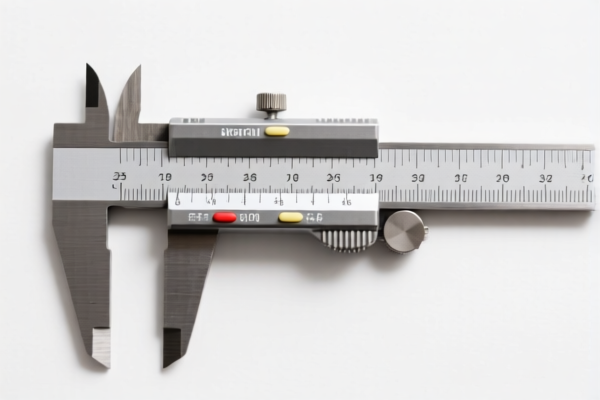
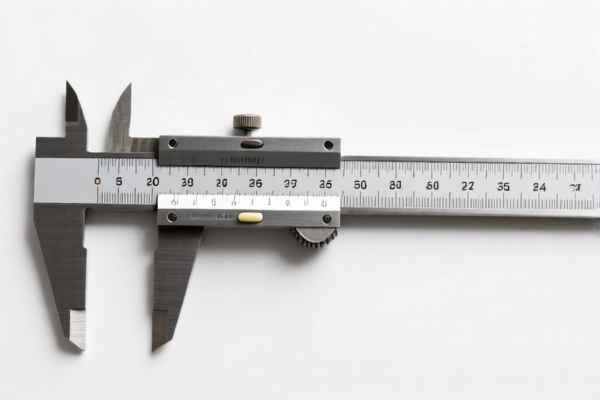
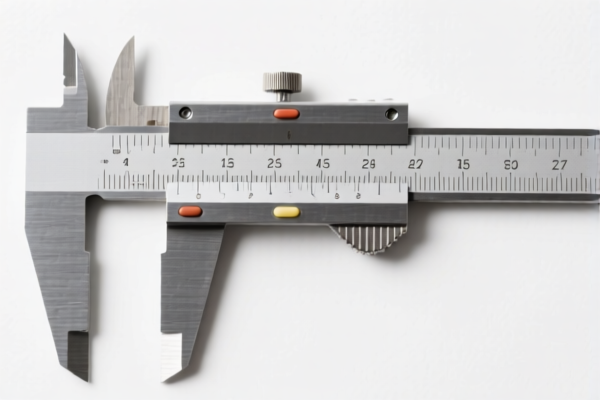
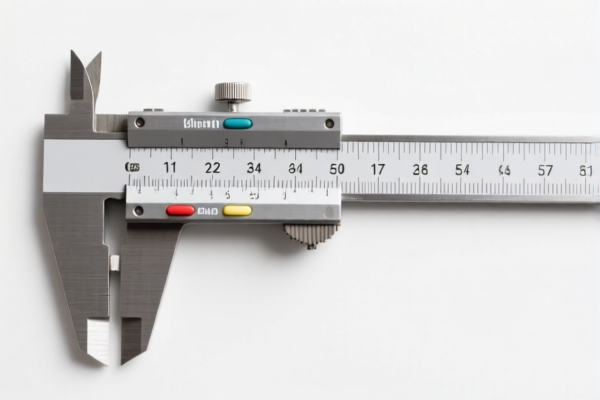
AI Analysis
⚡ Speed Measuring Instrument (Speedometer/Tachometer)
🌐 HS Code Reference & Customs Clearance Guide | 2026 Latest Tariff Analysis | Strategic Clearance Strategy
📌 Part I: Product Definition & Classification: Do You Truly Understand "Speed Measuring Instruments"?
In the realm of international trade, "Speed Measuring Instruments" generally refer to devices used to measure the speed of vehicles (speedometers) or rotational speed of machinery (tachometers). These devices are categorized based on their technical nature, application scenario, and data transmission capabilities.
In 2026, accurate classification is critical because US tariffs vary significantly depending on whether the device is considered a mechanical instrument, an electronic measuring device, or a standalone electronic apparatus. Misclassification can lead to severe tax penalties and customs delays.
⚠️ Key Distinction Point:
- Mechanical/Analog vs. Electronic/Digital: Devices with complex electronics, network connectivity, or independent computational functions often fall under Chapter 85 (Electrical Machinery), while traditional mechanical gauges fall under Chapter 90 (Optical/Photographic/Medical Instruments).
- Specific vs. General Purpose: Is it specifically designed for vehicles (Ch 90), or is it a general-purpose electronic test instrument (Ch 90.31 or Ch 85)?
📦 Part II: HS Code Classification Details (2026 Latest Tariff Authority Comparison)
Based on the provided data, here are the 6 most relevant HS Codes for Speed Measuring Instruments, along with their logical justification and tax implications.
| HS Code | Product Description | Classification Logic / Summary | Total Tax Rate (US/CN) |
|---|---|---|---|
9029.20.60.00 |
Speedometers & Tachometers (Vehicles/Machinery) | Specific Match: Classified under "Speedometers and tachometers for vehicles, aircraft, or other vehicles." This is the most direct category for traditional vehicle speedometers. | 16¢/each + 2.5% + 25% + 10% |
8543.70.60.00 |
Electronic Measuring Instruments with Network Function | Electronic/Network: Classified as electrical apparatus with individual functions, capable of network data transmission. Fits modern digital sensors sending data via IoT/Network. | 35.0% |
9031.20.00.00 |
Measuring/Checking Instruments (Test Benches) | Testing Equipment: Classified under "Measuring or checking instruments, appliances & machines... not specified elsewhere." Often used for calibration test benches or industrial checking stations. | 36.7% |
9031.80.80.85 |
Other Measuring/Inspecting Instruments | General Measuring: Fits "Other instruments/appliances for measuring or checking." A broad category for instruments that don't fit specific automotive or electrical machinery codes. | 35.0% |
9029.20.40.80 |
Speedometers & Tachometers (Vehicles) | Specific Match: Similar to 9029.20.60.00, falls under "Speedometers and tachometers." The sub-code difference may relate to specific mechanical/electronic variations within Chapter 90. | 35.0% |
8543.70.98.60 |
Independent Electrical Machines & Apparatus | Independent Electronics: Classified as "Other electrical machines & apparatus with individual functions." Used for standalone electronic speed sensors that don't fit standard measuring instrument codes. | 37.6% |
🔍 Key Reminder:
- Chapter 90 (9029) is traditionally for instrumental/mechanical gauges (speedometers/tachometers).
- Chapter 85 (8543) is for electrical machines with independent functions, especially if they involve data processing or network connectivity.
- Chapter 90.31 is for general measuring/checking instruments not elsewhere specified.
💰 Part III: 2026 Latest Tariff Rate Breakdown (Including Surcharges & Policy Add-ons)
✅ Applicable Country: United States (US)
✅ Origin: China (CN)
✅ Effective Date: November 10, 2025 (and subsequent imports)
🎯 1. 9029.20.60.00 —— Speedometers & Tachometers (Vehicle Category)
| Item | Details |
|---|---|
| Base Tariff | 16¢ each + 2.5% (Ad Valorem) |
| USITC Surcharge (Section 301) | +25.0% |
| IEEPA Surcharge (Section 122) | +10.0% |
| Total Effective Rate | Highly Complex: Base duty + 2.5% + 25% + 10% |
| Calculation Method | (Base Value × 2.5%) + 25% + 10% + Fixed Fee (16¢/unit) |
| De Minimis Exemption? | ❌ NO (Deny De Minimis) |
| Legal Basis Path | USITC:9029.20.60.00 → FOOTNOTE:9903.88.01 (25%) → IEEPA:9903.01.25 (10%) |
📌 Explanation:
- This code carries a per-unit fixed duty (16¢) PLUS ad valorem duties.
- The 25% USITC and 10% IEEPA surcharges apply on top of the base value.
- This is often the most specific classification for automotive speedometers, but the fixed fee makes it costly for low-value items.
🎯 2. 8543.70.60.00 —— Electronic Measuring Instruments with Network Function
| Item | Details |
|---|---|
| Base Tariff | 0.0% |
| USITC Surcharge (Section 301) | +25.0% |
| IEEPA Surcharge (Section 122) | +10.0% |
| Total Tax Rate | 35.0% |
| Calculation Method | CIF Value × 35% |
| De Minimis Exemption? | ❌ NO |
| Legal Basis Path | IEEPA:9903.01.25 → IEEPA:9903.01.24 → USITC:8543.70.60.00 |
📌 Explanation:
- No base duty, but 35% total surcharge.
- Suitable for IoT-enabled speed sensors or digital data loggers that transmit data over networks.
🎯 3. 9031.20.00.00 —— Measuring/Checking Instruments (Test Benches)
| Item | Details |
|---|---|
| Base Tariff | 1.7% |
| USITC Surcharge (Section 301) | +25.0% |
| IEEPA Surcharge (Section 122) | +10.0% |
| Total Tax Rate | 36.7% |
| Calculation Method | CIF Value × 36.7% |
| De Minimis Exemption? | ❌ NO |
| Legal Basis Path | USITC:9031.20.00.00 → FOOTNOTE:9903.88.01 → IEEPA surcharges |
📌 Explanation:
- Slightly higher total rate (36.7%) due to the 1.7% base duty.
- Best for industrial calibration equipment or test bench speedometers.
🎯 4. 9031.80.80.85 —— Other Measuring/Inspecting Instruments
| Item | Details |
|---|---|
| Base Tariff | 0.0% |
| USITC Surcharge (Section 301) | +25.0% |
| IEEPA Surcharge (Section 122) | +10.0% |
| Total Tax Rate | 35.0% |
| Calculation Method | CIF Value × 35% |
| De Minimis Exemption? | ❌ NO |
| Legal Basis Path | IEEPA:9903.01.25 → USITC:9031.80.80.85 |
📌 Explanation:
- Same as8543.70.60.00(35% total).
- A fallback category for instruments that are measuring devices but don’t fit specific electrical or automotive codes.
🎯 5. 9029.20.40.80 —— Speedometers & Tachometers (Vehicle Category)
| Item | Details |
|---|---|
| Base Tariff | 0.0% |
| USITC Surcharge (Section 301) | +25.0% |
| IEEPA Surcharge (Section 122) | +10.0% |
| Total Tax Rate | 35.0% |
| Calculation Method | CIF Value × 35% |
| De Minimis Exemption? | ❌ NO |
| Legal Basis Path | IEEPA:9903.01.25 → USITC:9029.20.40.80 |
📌 Explanation:
- Also 35% total.
- Distinguishes from9029.20.60.00by having 0% base duty instead of 2.5% + fixed fee. This may apply to different sub-types of vehicle gauges.
🎯 6. 8543.70.98.60 —— Independent Electrical Machines & Apparatus
| Item | Details |
|---|---|
| Base Tariff | 2.6% |
| USITC Surcharge (Section 301) | +25.0% |
| IEEPA Surcharge (Section 122) | +10.0% |
| Total Tax Rate | 37.6% |
| Calculation Method | CIF Value × 37.6% |
| De Minimis Exemption? | ❌ NO |
| Legal Basis Path | IEEPA:9903.01.25 → USITC:8543.70.98.60 |
📌 Explanation:
- Highest total rate (37.6%) due to 2.6% base duty.
- Applies to standalone electronic speed sensors with independent functions that don’t fit standard measuring instrument codes.
🛠️ Part IV: Customs Clearance Practical Advice (Battle-Tested Pitfall Avoidance Guide)
✅ 1. Documentation Checklist (Must-Have)
| Document | Required? | Notes |
|---|---|---|
| ✅ Product Specification Sheet | ✔️ | Must detail: Measurement range, accuracy, output signal (analog/digital), power supply, interface type. |
| ✅ Circuit/Structure Diagram | ✔️ | Critical to determine if it’s a "measuring instrument" (Ch 90) or "electrical machine" (Ch 85). |
| ✅ Product Photos (with Nameplate) | ✔️ | Must show model, brand, input/output specs, and any certification marks (CE, FCC, UL). |
| ✅ Third-Party Test Report | ✔️ | FCC, CE, RoHS, UL (if applicable). |
| ✅ Commercial Invoice | ✔️ | Clearly state: "Speed Measuring Instrument, Model XYZ, for Vehicle/Machinery Testing." |
| ✅ Certificate of Origin (CO) | ✔️ | Required for origin determination. |
| ✅ Packing List | ✔️ | Detail contents to avoid "split shipment" penalties. |
✅ 2. Declaration Strategy (Key Mantras)
🔥 "Electronics in Ch 85, Instruments in Ch 90, Network = 35%, Vehicle = 35-37%!"
| Scenario | Correct Declaration | Incorrect Practice |
|---|---|---|
| Traditional Vehicle Speedometer | 9029.20.40.80 or 9029.20.60.00 |
Misdeclare as "Electronic Sensor" → 35-37% + risk |
| IoT Speed Sensor with Network | 8543.70.60.00 |
Misdeclare as "Mechanical Gauge" → 35% + risk |
| Industrial Test Bench Equipment | 9031.20.00.00 |
Misdeclare as "General Instrument" → 36.7% |
| Standalone Electronic Sensor | 8543.70.98.60 |
Misdeclare as "Measuring Instrument" → 37.6% |
📌 Warning:
- Do NOT split shipments: A speedometer with its mounting bracket and cables must be declared as one unit. Splitting leads to 89.5% tax on accessories.
- Be precise in description: "Speedometer" is better than "Sensor" if it fits Ch 90. "Electronic Measuring Instrument" is better if it fits Ch 85.
✅ 3. Special Case Handling
| Scenario | Handling Advice |
|---|---|
| OEM Custom Speedometer | Provide client order + design drawings to prove specific use case. |
| Speedometer with Touchscreen | Still classify under 9029.20.xxxx if primarily a vehicle gauge. Do NOT move to Ch 85 unless it’s a general-purpose display. |
| Calibration Test Equipment | Use 9031.20.00.00. Provide proof of calibration function. |
| Non-Chinese Origin | If from Vietnam, Mexico, etc., apply for IEEPA Exemption → Tax drops to 0-5%. |
🌍 Part V: Global Market Comparison (2026 Latest)
| Country/Region | Recommended HS Code | Tariff (China Origin) | Certification | Notes |
|---|---|---|---|---|
| 🇺🇸 USA | 9029.20.40.80 / 8543.70.60.00 |
35.0% - 37.6% | FCC + RoHS | High tariff environment. IEEPA + USITC apply. |
| 🇨🇳 China | 9029.20.40.80 |
5% - 10% | CCC | No extra surcharges. |
| 🇪🇺 EU | 9029.20.40.80 |
0% - 2.7% | CE | No surcharges if CE certified. |
| 🇬🇧 UK | 9029.20.40.80 |
0% - 2.7% | UKCA | Post-Brexit rules apply. |
| 🇦🇺 Australia | 9029.20.40.80 |
5% | RCM | No surcharges. |
| 🇯🇵 Japan | 9029.20.40.80 |
0% | PSE | No surcharges. |
📌 Conclusion:
- The US is the most expensive market for speed measuring instruments due to Section 301 (25%) + Section 122 (10%) surcharges.
- EU/Asia markets have much lower barriers. Consider supply chain diversification if targeting the US heavily.
📌 Part VI: Common Mistakes & Pitfall Avoidance (Blood & Tears Lessons)
❌ Mistake 1: Declaring a complete speedometer as "Electronic Components"
👉 Consequence: Tax jumps from 35% to 89.5% on accessories → Total cost explodes!
❌ Mistake 2: Declaring network-enabled sensors as "Mechanical Gauges"
👉 Consequence: Customs flags for misclassification → Delay, fines, or seizure.
❌ Mistake 3: Using vague terms like "Gadget" or "Tool" in commercial invoice
👉 Consequence: Customs cannot determine HS Code → Manual inspection, 2-4 weeks delay.
❌ Mistake 4: Ignoring IEEPA 10% surcharge
👉 Consequence: Underpayment → Back taxes + Penalties.
✅ Correct Practice:
"Digital Speedometer, Model XYZ, for Automotive Testing, with Data Output via USB, FCC Certified, HS Code 9029.20.40.80"
🎯 Part VII: Conclusion: Professional Declaration, Save Time, Save Money!
🎯 Remember the Mantra:
🔹 "Vehicle Gauges in Ch 90, Electronic Sensors in Ch 85.
🔹 US Tariffs: 35% - 37.6%.
🔹 "One Unit, One Declaration. Split = Disaster!"📌 Pro Tip:
If your product can be classified under multiple HS Codes, choose the one with the lowest total tax rate that accurately reflects the product’s function.
- For vehicle-specific gauges:9029.20.40.80(35%) or9029.20.60.00(Higher due to fixed fee).
- For general electronic sensors:8543.70.60.00(35%).
- For test equipment:9031.20.00.00(36.7%).
📣 Immediate Action:
📞 Contact a Professional Customs Broker + Provide Product Photos + Apply for Advance Ruling.
🚀 Ensure Smooth Clearance, Maximize Profit, Avoid Customs Nightmares!
✨ Professional Clearance Starts with Accurate Classification!
💼 Every Penny of Tax is Worth Calculating Precisely!
Customer Reviews
About HS Code Classification
The Harmonized System (HS) is an internationally standardized nomenclature developed by the World Customs Organization (WCO) to classify traded products. Over 200 countries use the HS system as the basis for customs tariffs, trade statistics, and import/export regulations.
Each HS code follows a hierarchical structure:
- Chapter (2 digits) — Broad category of goods (e.g., Chapter 84: Machinery and Mechanical Appliances)
- Heading (4 digits) — More specific grouping within the chapter
- Subheading (6 digits) — Internationally standardized breakdown, used by all WCO member countries
- National subdivisions (8-10 digits) — Country-specific extensions for further classification, such as US HTSUS 10-digit codes
Correct HS code classification is essential for smooth customs clearance, accurate duty payment, and compliance with trade regulations. Misclassification can lead to customs delays, overpayment of duties, or penalties.
When importing from CN to US, the applicable tariff rates may include:
- Most-Favored-Nation (MFN) rate — The standard duty rate applied to WTO members
- General rate — Applied to countries without trade agreements
- Trade remedy duties — Additional tariffs such as Section 301 (anti-dumping), Section 232 (national security), or countervailing duties
The information provided on this page is for reference purposes only. For official classification, please consult with your local customs authority or a licensed customs broker.