Spherical Graphite High Temperature Resistant Material
CN → US| HS Code | Tariff Rate | Origin | Destination | Doc |
|---|---|---|---|---|
| 2504105000 | 35.0% | CN | US | Official Doc |
| 3801105010 | 35.0% | CN | US | Official Doc |
| 6815190000 | 35.0% | CN | US | Official Doc |
| 6815110000 | 35.0% | CN | US | Official Doc |
| 2504900000 | 35.0% | CN | US | Official Doc |
Product Images


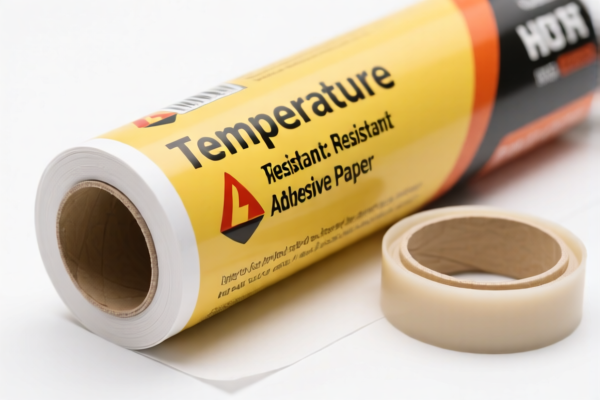
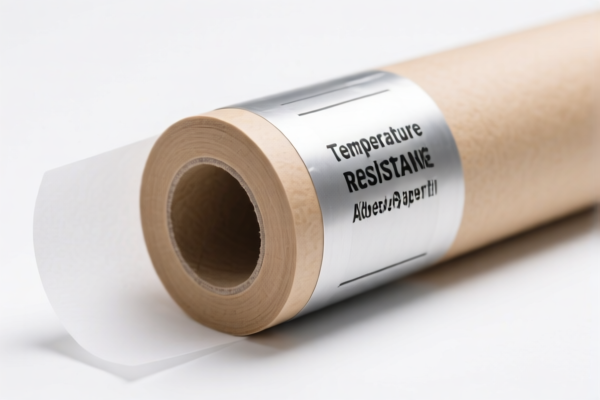
AI Analysis
Based on the data provided in your <DATA> section, here is a comprehensive classification guide and customs clearance strategy for Spherical Graphite High Temperature Resistant Material, formatted in a visually engaging Wiki style.
🌟 Spherical Graphite High Temperature Resistant Material
🌐 HS Code Classification & Customs Strategy | 2026 Tariff Analysis | Expert Clearance Guide
📌 I. Product Definition: What is "Spherical Graphite"?
Spherical Graphite is a high-purity carbon material characterized by a distinct spherical (ball-like) morphology. It is derived from natural graphite through a series of chemical and physical purification processes.
- Key Characteristics: High temperature resistance, excellent thermal conductivity, chemical stability, and a unique spherical shape that allows for high packing density.
- Primary Applications:
- Lithium-ion Battery Anodes: The most critical use case (Electric Vehicles, Energy Storage).
- Refractory Materials: High-temperature lining for furnaces.
- Lubricants & Additives: Used in high-performance industrial greases.
- Explosion-proof Agents: In mining and metallurgy.
⚠️ Critical Distinction for Customs: The classification hinges on Surface Modification and Specific Processing. - Raw/Natural Spherical Graphite → Often falls under Chapter 25 (Natural minerals). - Chemically/Physically Modified (Surface-treated) Spherical Graphite → Falls under Chapter 38 (Chemical products). - Carbon Articles for Non-Electrical Use → Falls under Chapter 68.
📦 II. HS Code Classification Matrix (2026 Tariff Reference)
Based on your specific input data, here are the 4 Valid HS Codes with their matching logic and tax structures.
| HS Code | Classification Logic (Based on Data) | Product Status | Key Feature Match |
|---|---|---|---|
| 2504.10.50.00 | Natural Graphite (Other) | Raw/Processing Stage | Matches "Natural Graphite" with "Powder/Granular" (Spherical) form. Excluded from specific high-purity battery grades. |
| 3801.10.50.10 | Surface-Modified Graphite | Highly Matched | Match Success: Explicitly mentions "Spherical" + "Graphite". Best fit for battery-grade or chemically treated spherical graphite. |
| 6815.19.00.00 | Carbon Articles (Other) | Non-Electrical Use | Matches "Graphite" material + "Primary Form". Fits industrial refractory/structural applications not for electrical use. |
| 6815.11.00.00 | Graphite & Other Carbon Articles | Non-Electrical Use | Match Success: "Graphite" material + "Spherical" shape. No conflict with non-electrical restrictions. |
🔍 Deep Dive: Why Multiple Codes? - 3801.10.50.10 is likely the most accurate for modern industrial applications (batteries) because "Spherical Graphite" usually implies surface modification to ensure conductivity and stability. - 2504.10.50.00 is the fallback for less processed or raw natural spherical forms. - 6815 Series applies if the graphite is used as a structural or refractory component rather than a raw additive.
💰 III. 2026 Tariff Rate Breakdown (US Market Specifics)
⚠️ WARNING: Regardless of the HS Code selected from the data above, ALL listed codes share the identical tax structure under current trade policies (US origin from China).
| Tax Component | Rate | Legal Basis (Data Source) | Description |
|---|---|---|---|
| Base Duty | 0.0% | Standard MFN Rate | The standard tariff for graphite/carbon products before sanctions. |
| Section 301 Add-on | +25.0% | USITC 301 List | "Additional Tariffs" (Section 301) applied to Chinese imports. |
| Section 122 Clause | +10.0% | IEEPA / Executive Order | Specific "122 Clause" tax targeting strategic materials and Chinese manufacturing. |
| TOTAL DUTY | 35.0% | 0% + 25% + 10% | Effective Tariff Rate for all listed HS Codes. |
📌 Tax Calculation Example: If the CIF (Cost, Insurance, Freight) value of your Spherical Graphite shipment is $100,000: * Tax Amount: $100,000 × 35% = $35,000 * Total Landed Cost: $135,000
🛠️ IV. Customs Clearance Strategy & Actionable Advice
✅ 1. Declaration Strategy: Which Code to Choose?
- Priority #1: If your product is chemically treated (surface modified) specifically for Lithium-ion batteries or high-tech applications, declare under
3801.10.50.10.- Reasoning: The data explicitly states "Match Success" with "Surface Modified Spherical Graphite". This is the most precise definition.
- Priority #2: If the product is raw, unmodified natural graphite in spherical form, use
2504.10.50.00.- Reasoning: Fits the "Natural Graphite" definition but excludes specific high-end battery categories.
- Priority #3: For industrial refractory blocks or non-electrical structural items, use
6815.19.00.00or6815.11.00.00.
🚫 Risk Alert: Do not arbitrarily choose
6815for battery-grade material to save costs (if rates differed); the 35% rate is uniform here, but accuracy is vital to avoid "Misdeclaration" penalties.
✅ 2. Documentation Checklist (Must-Have)
To pass customs and avoid delays, ensure you have: * ✅ Technical Data Sheet (TDS): Explicitly stating "Spherical" morphology and Surface Modification status (crucial for 3801 vs 2504). * ✅ Microscopy Photos: Visual proof of the spherical shape (evidence of morphology). * ✅ Chemical Composition Report: To prove it is not a mixture falling under a different chemical code. * ✅ End-Use Certificate: Confirming if it is for Battery Anodes (3801) or Refractory (6815). * ✅ Commercial Invoice: Clearly stating "Spherical Graphite, High Temp Resistant".
✅ 3. Pro-Tip: The "De Minimis" Trap
⚠️ Micro-shipments: Do NOT rely on the de minimis exemption (small parcel shipping) for this product. - Status: ❌ Denied for HS Codes 2504, 3801, and 6815. - Reason: These fall under Section 301 and Section 122 exclusions. Even small samples attract the 35% tax.
🌍 V. Global Market Context (2026)
| Market | Recommended HS Code | Effective Rate | Notes |
|---|---|---|---|
| 🇺🇸 USA | 3801.10.50.10 |
35% | High scrutiny on "Battery Grade" materials. |
| 🇨🇳 China | 3801.10.50.10 |
~5-10% | Lower import duties, but strict export controls on graphite. |
| 🇪🇺 EU | 3801.10.10 |
~6.5% | No Section 301/122 equivalents, but CE/RoHS required. |
| 🇯🇵 Japan | 3801.10.10 |
~2.5% | High quality standards; strict purity verification. |
🎯 VI. Conclusion & Final Recommendation
Spherical Graphite High Temperature Resistant Material is a strategic commodity. While the tax rate is a flat 35% across all potential codes in the provided data, classification accuracy is the key to compliance.
- Best Fit:
3801.10.50.10(Surface-Modified Spherical Graphite) is the most precise description for high-value applications. - Cost Impact: Prepare for a 35% tariff burden (0% Base + 25% Section 301 + 10% Section 122).
- Action: Ensure your product specifications explicitly highlight "Surface Modification" to justify the
3801code and avoid disputes with Customs regarding "Raw" vs. "Processed" status.
🚀 Clearance Success Formula:
Accurate Morphology Proof + Chemical Modification Evidence + Correct HS Code (3801) = Smooth Entry (despite high tariffs).
Disclaimer: Tariff rates and HS Code classifications are subject to change by national authorities. Always consult with a licensed Customs Broker for the final declaration.
Customer Reviews
About HS Code Classification
The Harmonized System (HS) is an internationally standardized nomenclature developed by the World Customs Organization (WCO) to classify traded products. Over 200 countries use the HS system as the basis for customs tariffs, trade statistics, and import/export regulations.
Each HS code follows a hierarchical structure:
- Chapter (2 digits) — Broad category of goods (e.g., Chapter 84: Machinery and Mechanical Appliances)
- Heading (4 digits) — More specific grouping within the chapter
- Subheading (6 digits) — Internationally standardized breakdown, used by all WCO member countries
- National subdivisions (8-10 digits) — Country-specific extensions for further classification, such as US HTSUS 10-digit codes
Correct HS code classification is essential for smooth customs clearance, accurate duty payment, and compliance with trade regulations. Misclassification can lead to customs delays, overpayment of duties, or penalties.
When importing from CN to US, the applicable tariff rates may include:
- Most-Favored-Nation (MFN) rate — The standard duty rate applied to WTO members
- General rate — Applied to countries without trade agreements
- Trade remedy duties — Additional tariffs such as Section 301 (anti-dumping), Section 232 (national security), or countervailing duties
The information provided on this page is for reference purposes only. For official classification, please consult with your local customs authority or a licensed customs broker.