Spherical Graphite Ink Additive
CN → US| HS Code | Tariff Rate | Origin | Destination | Doc |
|---|---|---|---|---|
| 3801105010 | 35.0% | CN | US | Official Doc |
| 3801105090 | 35.0% | CN | US | Official Doc |
| 6815110000 | 35.0% | CN | US | Official Doc |
| 6815190000 | 35.0% | CN | US | Official Doc |
Product Images
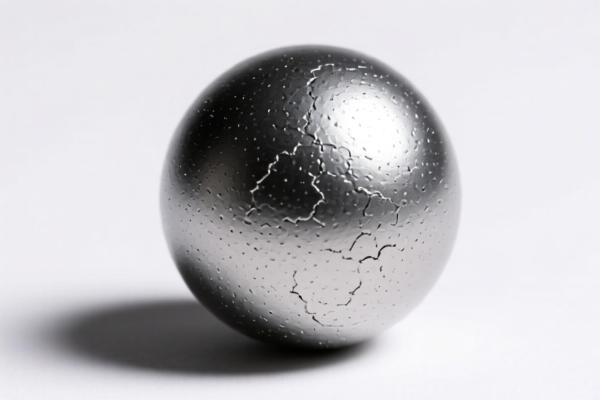
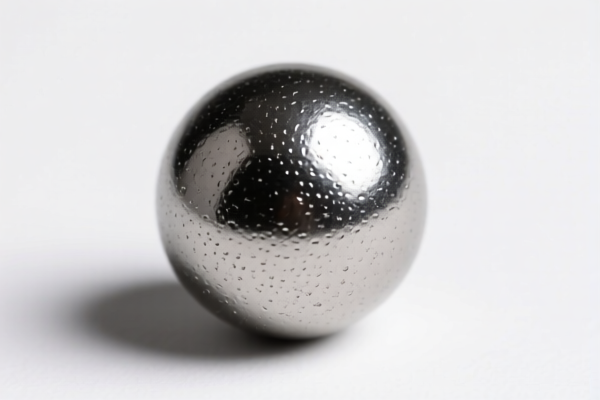
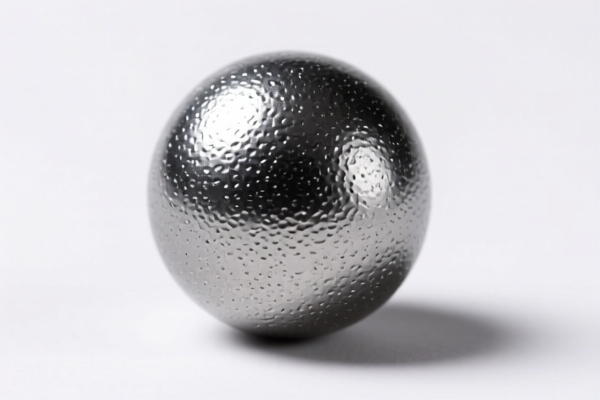
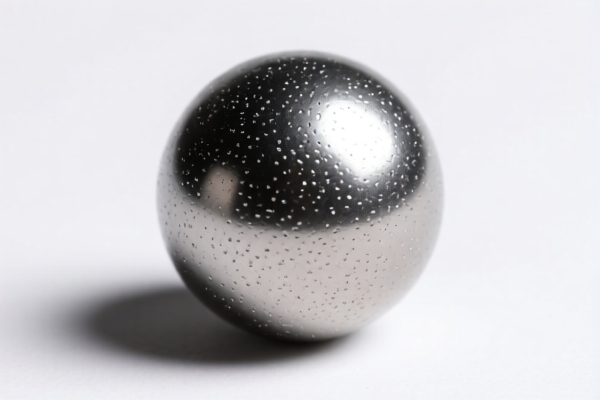
AI Analysis
🖋️ Spherical Graphite Ink Additive (球形石墨添加剂)
🌐 HS Code Classification & Customs Clearance Guide | 2026 Latest Tariff Analysis | Professional Strategy for Carbon Products
📌 I. Product Definition: What is "Spherical Graphite Ink Additive"?
Spherical graphite is a high-purity, surface-modified form of natural graphite. In the context of "Ink Additive," it is primarily used to enhance the conductivity, stability, and dispersion of conductive inks used in printed electronics, antennas, and flexible circuits.
In international trade, this product sits at the intersection of chemical processing and carbon material manufacturing. The key classification challenge lies in determining whether it is classified as a prepared chemical/binder (Chapter 38) or a raw/mined carbon product (Chapter 68), depending on its degree of purification and surface modification.
⚠️ Key Distinction Point:
- If the graphite has undergone significant chemical surface modification, dispersion in solvents/binders, or is formulated specifically as a "preparation" for ink → Chapter 38 (Chemical Products)
- If it is purified, sphericalized, but remains a raw powder without complex chemical binding systems → Chapter 68 (Mineral Products)
📦 II. HS Code Classification Details (2026 Latest Tariff Authority Reference)
Based on the provided data, here are the four potential HS Codes with detailed justifications:
| HS Code | Product Description | Justification from Data | Key Feature |
|---|---|---|---|
3801.10.50.10 |
Surface-Modified Spherical Graphite | Match Success: The name "Spherical Graphite" includes key morphology (Spherical) and material (Graphite), highly consistent with "Surface-Modified Spherical Graphite." | ✅ High Match for modified, functional additives |
3801.10.50.90 |
Other Graphite/Carbon Preparations | Match Basis: Material is graphite; since it is an "Additive," it falls under chemical preparations. No material conflict with the "Other" category. | ✅ Broad Match for general chemical additives |
6815.11.00.00 |
Non-Electrical Carbon Articles (Graphite) | Match Success: "Graphite" meets material requirements; "Spherical" is a morphology description, not conflicting with "Non-electrical use." | ✅ Match for raw/purified powder forms |
6815.19.00.00 |
Other Graphite/Carbon Articles | Match Basis: Material is graphite; matches "Other Graphite Articles" under non-electrical carbon products. Suitable for primary forms. | ✅ Match for unmodified or simply processed graphite |
🔍 Critical Analysis:
- Chapter 38 (3801.10) is generally preferred for ink additives because the term "Additive" implies a preparation or modification intended for a specific technical application (enhancing ink properties), rather than just a raw material. - Chapter 68 (6815) is typically reserved for raw or simply processed graphite (e.g., flakes, powder) used in foundries or batteries, without complex chemical formulation.
💰 III. 2026 Latest Tariff Rate Breakdown (Including Additional Duties & Policy Surcharges)
✅ Applicable Country: United States (US)
✅ Origin: China (CN)
✅ Effective Time: From November 10, 2025 (including subsequent imports)
🎯 1. 3801.10.50.10 —— Surface-Modified Spherical Graphite (Primary Recommendation for Ink Additives)
| Item | Content |
|---|---|
| Base Tariff Rate | 0% (ad valorem) |
| USITC Additional Duty (Section 301) | +25% |
| IEEPA Additional Duty (China Specific) | +10% (for China/Hong Kong products, effective Nov 10, 2025) |
| Total Effective Tax Rate | 35.0% |
| Tax Calculation | CIF Value × 35% |
| De Minimis Eligibility | ❌ Not Eligible (deny_de_minimis) |
| Legal Basis Path | IEEPA:9903.01.25 → IEEPA:9903.01.24 → USITC:3801.10.50.10 → FOOTNOTE:9903.88.01 |
📌 Interpretation:
- This code is the most precise fit for "Spherical Graphite" explicitly modified for use in inks.
- The 35% total rate is high but lower than many electronics components.
- Section 301 (25%) applies to all Chinese-origin graphite preparations.
- IEEPA 10% is a new surcharge targeting specific strategic materials.
🎯 2. 3801.10.50.90 —— Other Graphite Preparations
| Item | Content |
|---|---|
| Base Tariff Rate | 0% |
| USITC Additional Duty (Section 301) | +25% |
| IEEPA Additional Duty | +10% |
| Total Effective Tax Rate | 35.0% |
| Tax Calculation | CIF × 35% |
| De Minimis Eligibility | ❌ Not Eligible |
| Legal Basis Path | IEEPA:9901.25 → IEEPA:9903.01.24 → USITC:3801.10.50.90 → FOOTNOTE:9903.88.01 |
📌 Note:
- If the "surface modification" is not explicitly documented or the product is considered a generic additive, this "Other" category applies.
- Same 35% rate as above.
- Use this if the product’s modification is minimal or not specifically "surface-modified spherical."
🎯 3. 6815.11.00.00 —— Graphite (Non-Electrical Use)
| Item | Content |
|---|---|
| Base Tariff Rate | 0% |
| USITC Additional Duty (Section 301) | +25% |
| IEEPA Additional Duty | +10% |
| Total Effective Tax Rate | 35.0% |
| Tax Calculation | CIF × 35% |
| De Minimis Eligibility | ❌ Not Eligible |
| Legal Basis Path | IEEPA:9903.01.25 → IEEPA:9903.01.24 → USITC:6815.11.00.00 → FOOTNOTE:9903.88.01 |
📌 Warning:
- Misclassifying an ink additive (Chapter 38) as raw graphite (Chapter 68) can lead to customs audits.
- While the rate is the same (35%), the legal definition differs. Chapter 68 is for raw/semi-processed materials. If the product is dispersed in solvents or has anti-settling agents, it must be Chapter 38.
🎯 4. 6815.19.00.00 —— Other Graphite/Carbon Articles
| Item | Content |
|---|---|
| Base Tariff Rate | 0% |
| USITC Additional Duty (Section 301) | +25% |
| IEEPA Additional Duty | +10% |
| Total Effective Tax Rate | 35.0% |
| Tax Calculation | CIF × 35% |
| De Minimis Eligibility | ❌ Not Eligible |
| Legal Basis Path | IEEPA:9903.01.25 → IEEPA:9903.01.24 → USITC:6815.19.00.00 → FOOTNOTE:9903.88.01 |
📌 Note:
- This is a "catch-all" for graphite products not specified elsewhere.
- Only use if the product is not a chemical preparation and not spherical-modified for specific industrial uses.
🛠️ IV. Customs Clearance Operational Advice (Practical Pitfall Guide)
✅ 1. Documentation Checklist (Mandatory)
| Document | Required | Notes |
|---|---|---|
| ✅ Product Specification Sheet | ✔️ | Must detail: Purity (%C), Particle Size (D50/D90), Surface Modification Type (e.g., polymer coating, acid-treated) |
| ✅ Formulation/Composition Statement | ✔️ | Clearly state: Is it pure powder or dispersed in solvent/binder? This determines Ch. 38 vs. Ch. 68. |
| ✅ Product Photos | ✔️ | Show packaging, label, and powder/paste consistency |
| ✅ Third-Party Test Report | ✔️ | SEM/EDS analysis proving "Spherical" morphology; FTIR if surface-modified |
| ✅ Commercial Invoice | ✔️ | Use precise description: "Surface-Modified Spherical Graphite Powder for Conductive Ink Additive" |
| ✅ Certificate of Origin (CO) | ✔️ | Essential for proving China origin (triggers IEEPA 10%) |
| ✅ Bill of Lading | ✔️ | Ensure weight/volume matches invoice |
✅ 2. Declaration Tips (Key Mantras)
🔥 "Specify Modification, Declare Preparation, Avoid Raw Graphite Trap!"
| Scenario | Correct Declaration | Wrong Approach |
|---|---|---|
| Pure Graphite Powder (No additives) | 6815.11.00.00 or 6815.19.00.00 |
Calling it "Ink Additive" without formulation details |
| Graphite + Solvent/Binder | 3801.10.50.10 or 3801.10.50.90 |
Calling it "Raw Graphite" → Risk of penalty for misclassification |
| Surface-Modified Spherical Graphite | 3801.10.50.10 |
Calling it "Other Graphite" → Misses key feature "Surface-Modified" |
| Ink Paste (Graphite + Resin) | 3801.10.50.90 (as preparation) |
Declaring as "Graphite" → Incorrect material classification |
✅ 3. Special Cases Handling
| Situation | Recommendation |
|---|---|
| OEM Custom Ink Additive | Provide customer’s technical data sheet (TDS) to prove surface modification. This supports 3801.10.50.10. |
| Mixed Shipments (Graphite + Other Chemicals) | Split declaration if possible. If mixed in one container, declare the principal component (Graphite) and note "Additives." |
| Small Sample Shipments (< $800) | ❌ Cannot use De Minimis. The data shows deny_de_minimis for all codes. Must declare fully with duties paid. |
| Graphite for Battery Anodes | If intended for batteries, it may still be 3801.10.50.10 if modified for ink use, but clarify end-use to avoid misclassification as battery materials. |
🌍 V. Global Market Comparison (2026 Latest)
| Country/Region | Recommended HS Code | Tariff (China Origin) | Certification | Notes |
|---|---|---|---|---|
| 🇺🇸 USA | 3801.10.50.10 |
35% | No special certs | High tariffs apply. IEEPA 10% + 301 25% |
| 🇨🇳 China | 3801.10.50.10 |
0% (Export) | N/A | Export duty: 0% |
| 🇪🇺 EU | 3801.10.50.10 |
0% (if GSP or no tariff) | REACH Registration | No additional duties. REACH compliant |
| 🇬🇧 UK | 3801.10.50.10 |
0% | UK REACH | No additional duties |
| 🇯🇵 Japan | 3801.10.50.10 |
0% | None | Low tariff environment |
📌 Conclusion:
- USA is the only market with high additional duties (35%) for Chinese-origin spherical graphite.
- EU/UK/Japan offer 0% tariff for this HS code, making them more cost-effective for exports.
- Re-export strategy: If exporting to USA, consider transshipment via a non-China origin (e.g., Vietnam) to mitigate IEEPA/301 duties, but ensure substantial transformation occurs.
📌 VI. Common Errors & Pitfall Guide (Lessons Learned)
❌ Error 1: Declaring "Spherical Graphite Ink Additive" as 8542.31.00 (Electronic Components)
👉 Consequence: Misclassification → Delay, Penalty, or Seizure. Graphite is a material, not an electronic component.
❌ Error 2: Using "Raw Graphite" (6815) for a dispersed ink additive
👉 Consequence: Customs may impose higher penalties for hiding chemical preparation status. Rate is same, but legal risk is higher.
❌ Error 3: Ignoring IEEPA 10% surcharge
👉 Consequence: Underpayment of duties → Back taxes + Interest at port entry.
❌ Error 4: Claiming De Minimis for shipments < $800
👉 Consequence: Denied entry. The data explicitly states deny_de_minimis for all graphite codes.
✅ Correct Practice:
"Surface-Modified Spherical Graphite Powder, Pure Carbon >99%, Particle Size 1-5µm, Used as Conductive Additive in Ink, Model: SG-INK-01, Made in China"
🎯 VII. Conclusion: Professional Declaration, Cost Optimization!
🎯 Remember the Mantra:
🔹 "Modification = Chapter 38, Raw = Chapter 68"
🔹 "35% Total Rate in USA, 0% in EU/JP"
🔹 "No De Minimis for Graphite!"
🔹 "Declare Surface Modification Clearly!"
📌 Pro Tip:
If your spherical graphite is modified with polymers or resins, ensure the Technical Data Sheet (TDS) explicitly states the surface treatment process. This supports classification under 3801.10.50.10 and avoids disputes with CBP.
For large volumes entering the USA, consider applying for an HTS Exclusion under Section 301 if applicable (though unlikely for graphite), or pre-ruling to confirm classification.
📣 Immediate Action:
📞 Contact your customs broker with the TDS and SEM images.
📄 Request an Advance Ruling from CBP if shipping large quantities.
🚀 Ensure compliance with IEEPA 10% in your cost sheet.
✨ Professional Customs Clearance Starts with Accurate Classification!
💼 Your Cost Savings Depend on Precision!
Customer Reviews
About HS Code Classification
The Harmonized System (HS) is an internationally standardized nomenclature developed by the World Customs Organization (WCO) to classify traded products. Over 200 countries use the HS system as the basis for customs tariffs, trade statistics, and import/export regulations.
Each HS code follows a hierarchical structure:
- Chapter (2 digits) — Broad category of goods (e.g., Chapter 84: Machinery and Mechanical Appliances)
- Heading (4 digits) — More specific grouping within the chapter
- Subheading (6 digits) — Internationally standardized breakdown, used by all WCO member countries
- National subdivisions (8-10 digits) — Country-specific extensions for further classification, such as US HTSUS 10-digit codes
Correct HS code classification is essential for smooth customs clearance, accurate duty payment, and compliance with trade regulations. Misclassification can lead to customs delays, overpayment of duties, or penalties.
When importing from CN to US, the applicable tariff rates may include:
- Most-Favored-Nation (MFN) rate — The standard duty rate applied to WTO members
- General rate — Applied to countries without trade agreements
- Trade remedy duties — Additional tariffs such as Section 301 (anti-dumping), Section 232 (national security), or countervailing duties
The information provided on this page is for reference purposes only. For official classification, please consult with your local customs authority or a licensed customs broker.