Spherical Graphite Insulation Material
CN → US| HS Code | Tariff Rate | Origin | Destination | Doc |
|---|---|---|---|---|
| 3801105090 | 35.0% | CN | US | Official Doc |
| 6815190000 | 35.0% | CN | US | Official Doc |
| 3801105010 | 35.0% | CN | US | Official Doc |
| 8547900010 | 89.6% | CN | US | Official Doc |
| 6815110000 | 35.0% | CN | US | Official Doc |
Product Images
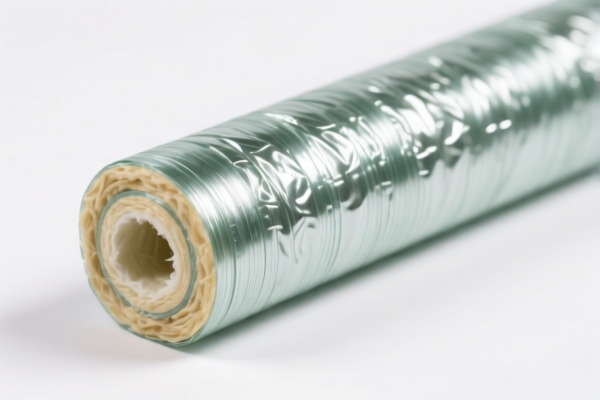
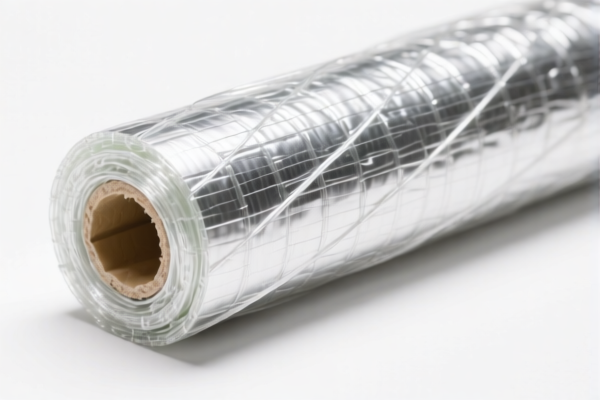
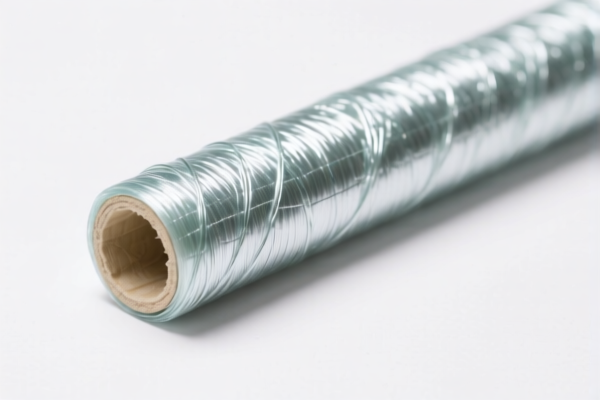
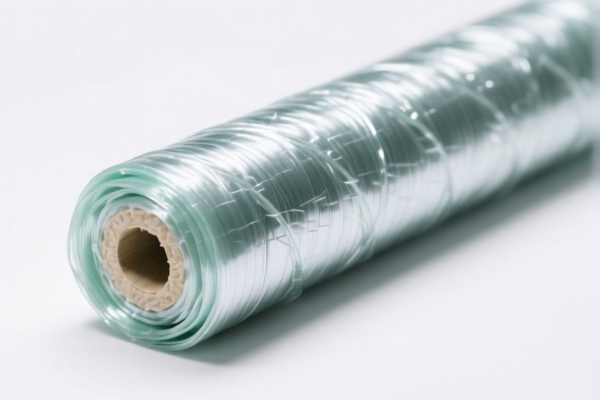
AI Analysis
⚡️ Spherical Graphite Insulation Material
🌐 HS Code Reference & Customs Clearance Guide | 2026 Latest Tariff Analysis | Professional Clearance Strategy
📌 I. Product Definition & Classification: What Exactly is "Graphite Insulation Material"?
Spherical Graphite Insulation Material is a specialized functional material primarily used for electrical insulation, thermal management, and high-temperature resistance in industrial applications (e.g., furnace components, battery electrodes, or industrial machinery). In international trade, its classification depends heavily on its physical form, chemical processing state, and primary function.
Key Distinctions: * Material State: Is it raw, processed, or a finished article? * Function: Is it primarily for electrical insulation (Chapter 85) or is it a graphite/carbon product (Chapter 38/68)? * Shape: Is it specifically "spherical" (often implying high-purity battery-grade) or generic powdered/块状 graphite?
⚠️ Critical Classification Point:
- If the material is deemed a chemical/graphite product (processed carbon), it falls under Chapter 38 or Chapter 68.
- If it is deemed a finished electrical component (insulator), it may fall under Chapter 85.
- Note: "Spherical" shape alone does not dictate the HS code; it is the purpose and composition that matter.
📦 II. HS Code Classification Details (Based on Provided Data)
| HS Code | Product Description | Applicable Scenario | Total Tax Rate |
|---|---|---|---|
3801.10.50.90 |
Graphite insulation material, graphite material, graphite product application form, non-surface modified spherical graphite. | General graphite products not specifically designated as other forms. | 35.0% |
6815.19.00.00 |
Graphite insulation material, graphite material, stone/mineral material product, non-electrical use carbon product category. | Graphite treated as a mineral/stone product, non-electrical. | 35.0% |
3801.10.50.10 |
Graphite insulation material, graphite material, fits 3801.10 core attributes, fallback principle for other categories. | Core graphite product attribute, fallback classification. | 35.0% |
8547.90.00.10 |
Graphite insulation material, named as insulation material, electrical insulation accessory category, consistent with other insulation accessories. | Finished electrical insulator, specific use in electrical equipment. | 89.6% |
6815.11.00.00 |
Graphite insulation material, graphite material, fits non-electrical use other graphite or carbon product requirements, mineral product category. | Non-electrical graphite/carbon product, mineral origin. | 35.0% |
🔍 Key Insight:
- Codes under 3801 and 6815 have a total tax rate of 35.0%.
- Code 8547 has a significantly higher total tax rate of 89.6%.
- Avoid 8547 unless the product is clearly a finished electrical insulator part. Misclassifying a raw/semi-finished graphite material as an electrical accessory can lead to severe penalties and massive cost increases.
💰 III. 2026 Latest Tariff Rate Breakdown (Including Surtaxes & Policy Additions)
✅ Applicable Country: United States (US)
✅ Origin: China (CN)
✅ Effective Time: 2025/2026 (Current Trade Policy)
🎯 1. 3801.10.50.90 & 3801.10.50.10 – Graphite Products (Chapter 38)
| Item | Content |
|---|---|
| Basic Duty Rate | 0% (ad valorem) |
| Section 301 Surtax | +25% (USITC Footnote 9903.88.01 type logic) |
| IEEPA Surcharge | +10% (For China/HK products, effective from Nov 10, 2025) |
| Total Tax Rate | 35.0% |
| Tax Calculation | CIF Value × 35% |
| De Minimis Exemption | ❌ Not Applicable |
| Legal Basis Path | Base 0% → Section 301 +25% → IEEPA +10% → Total 35% |
📌 Explanation:
- These codes treat the material as a graphite product.
- The base tariff is 0%, but the 301 Surtax (25%) and IEEPA (10%) combine to make the effective duty 35%.
- Cost Efficiency: This is the lower-cost classification path compared to Chapter 85.
🎯 2. 6815.19.00.00 & 6815.11.00.00 – Mineral/Stone Graphite Products (Chapter 68)
| Item | Content |
|---|---|
| Basic Duty Rate | 0% (ad valorem) |
| Section 301 Surtax | +25% |
| IEEPA Surcharge | +10% |
| Total Tax Rate | 35.0% |
| Tax Calculation | CIF Value × 35% |
| De Minimis Exemption | ❌ Not Applicable |
| Legal Basis Path | Base 0% → Section 301 +25% → IEEPA +10% → Total 35% |
📌 Explanation:
- These codes treat the material as a mineral or stone product (graphite is a mineral).
- Same tax structure as Chapter 38: 35% total.
- Use this if the product is described more as a "carbon制品" (carbon article) from stone/mineral origins rather than a processed chemical graphite.
🎯 3. 8547.90.00.10 – Electrical Insulation Accessories (Chapter 85)
| Item | Content |
|---|---|
| Basic Duty Rate | 4.6% (ad valorem) |
| Section 301 Surtax | +25% |
| IEEPA Surcharge | +10% |
| Steel/Aluminum/Copper Surcharge | +50% (if applicable, but typically not for graphite) |
| Total Tax Rate | 89.6% |
| Tax Calculation | CIF Value × 89.6% |
| De Minimis Exemption | ❌ Not Applicable |
| Legal Basis Path | Base 4.6% → Section 301 +25% → IEEPA +10% → Total 89.6% |
📌 Warning:
- This code classifies the item as an electrical accessory.
- The base rate is 4.6%, not 0%.
- Total Tax is 89.6%, which is 2.5x higher than the Chapter 38/68 options.
- Only use this if the product is a finished insulator part specifically designed for electrical equipment. If it is raw/spherical graphite powder or blocks, do not use this code.
🛠️ IV. Customs Clearance Practical Advice (Real-World Pitfall Avoidance)
✅ 1. Documentation Checklist (Essential)
| Document | Must Provide | Explanation |
|---|---|---|
| ✅ Product Specification Sheet | ✔️ | Detail: Graphite content, spherical shape, particle size, purity, and intended use. |
| ✅ Technical Data Sheet (TDS) | ✔️ | Must specify if it is for electrical insulation or general material. |
| ✅ Product Photos | ✔️ | Clear images showing shape (spherical/powder/block) and packaging. |
| ✅ Commercial Invoice | ✔️ | Description should match HS code logic (e.g., "Graphite Powder" vs. "Electrical Insulator"). |
| ✅ Packing List | ✔️ | Net/Gross weight, package type. |
📌 Tip: The invoice description should avoid words like "Insulation Material" if you are classifying under Chapter 38/68. Use "Spherical Graphite Powder" or "Graphite Carbon Block" instead.
✅ 2. Classification Strategy (Key Mnemonics)
🔥 "Function Determines Class: Insulator = Expensive, Graphite = Cheaper!"
| Scenario | Correct HS Code | Tax Rate | Why? |
|---|---|---|---|
| Raw Spherical Graphite Powder | 3801.10.50.90 |
35% | Treated as graphite product. |
| Graphite Blocks/Bricks for Furnaces | 6815.19.00.00 |
35% | Treated as mineral/stone product. |
| Finished Electrical Insulator Parts | 8547.90.00.10 |
89.6% | Treated as electrical accessory. |
| Graphite for Battery Anodes | 3801.10.50.90 |
35% | Treated as graphite product. |
⚠️ Pitfall Alert:
- Do not self-classify "Graphite Insulation Material" as8547.90.00.10unless it is a finished insulator.
- If you are exporting raw graphite or semi-finished graphite shapes, using8547will result in overpayment of taxes and potential audits for misclassification.
✅ 3. Special Cases
| Scenario | Handling Advice |
|---|---|
| OEM Custom Shapes | Provide design drawings. If it's a custom insulator part, 8547 might apply. If it's a custom graphite block, use 6815 or 3801. |
| Mixed Shipments | Separate shipments for "raw graphite" and "finished insulators" to optimize tax rates. |
| Non-China Origin | If graphite is mined/processed outside China (e.g., Brazil, Mexico), check for FTA benefits (e.g., USMCA, GSP if applicable). |
🌍 V. Global Market Comparison (2026)
| Country/Region | Recommended HS Code | Tax Rate (China Origin) | Certification Requirement | Notes |
|---|---|---|---|---|
| 🇺🇸 USA | 3801.10.50.90 |
35% | FCC (if electrical), RoHS | Highest tax if misclassified as 8547 (89.6%) |
| 🇨🇳 China | 3801.10.50.90 |
0%~13% | CCC (if electrical) | No 301/IEEPA surcharges |
| 🇪🇺 EU | 3801.10.50 |
5%~7% | REACH, RoHS | Lower baseline, no 25% surcharge |
| 🇬🇧 UK | 3801.10.50 |
5%~7% | UKCA, RoHS | Post-Brexit rates |
| 🇯🇵 Japan | 3801.10.50 |
0%~3% | PSE (if electrical) | Generally favorable for graphite |
📌 Conclusion:
- The USA is the most challenging market due to the 35% surcharge on graphite/mineral products.
- Misclassification to Chapter 85 (8547) is a critical error that doubles the tax burden.
- Strategy: Classify as graphite product (3801/6815) unless it is a finished electrical component.
📌 VI. Common Errors & Pitfalls (Lessons Learned)
❌ Error 1: Using 8547.90.00.10 for raw spherical graphite powder.
👉 Result: Paying 89.6% tax instead of 35%. Loss of ~55% profit margin.
❌ Error 2: Describing "Graphite Powder" as "Electrical Insulation Material" on the invoice.
👉 Result: Customs may flag for review, causing delays and audits.
❌ Error 3: Not providing technical data sheets.
👉 Result: Customs cannot verify if it's an "insulator" or "graphite product," leading to default high-rate classification.
✅ Correct Approach:
"Spherical Graphite Powder, 99.9% Purity, Particle Size 10-50μm, Used for Battery Anodes & Lubricants."
HS Code:3801.10.50.90
Tax: 35%
🎯 VII. Conclusion: Precise Classification Saves Money!
🎯 Remember the Mnemonic:
🔹 "Graphite Raw = 35%, Insulator Part = 89.6%. Don't Mix Them!"
🔹 "3801/6815 is your friend, 8547 is a trap for raw materials."
🔹 "Clear Description = Fast Clearance = Lower Costs."
📌 Pro Tip:
If your graphite material is used in electrical applications but is raw/semi-finished, classify it under 3801 or 6815. Reserve 8547 only for finished insulator components (e.g., insulating gaskets, bushings).
Consider applying for an Advance Ruling (Ruling Letter) from US Customs (CBP) to secure your classification and avoid future disputes.
📣 Immediate Action:
📞 Consult a licensed customs broker.
📄 Provide detailed product specs.
🚀 Optimize your tax rate from 89.6% down to 35%!
✨ Professional Clearance Starts with Accurate Classification!
💼 Every Percent Matters in Trade!
Customer Reviews
About HS Code Classification
The Harmonized System (HS) is an internationally standardized nomenclature developed by the World Customs Organization (WCO) to classify traded products. Over 200 countries use the HS system as the basis for customs tariffs, trade statistics, and import/export regulations.
Each HS code follows a hierarchical structure:
- Chapter (2 digits) — Broad category of goods (e.g., Chapter 84: Machinery and Mechanical Appliances)
- Heading (4 digits) — More specific grouping within the chapter
- Subheading (6 digits) — Internationally standardized breakdown, used by all WCO member countries
- National subdivisions (8-10 digits) — Country-specific extensions for further classification, such as US HTSUS 10-digit codes
Correct HS code classification is essential for smooth customs clearance, accurate duty payment, and compliance with trade regulations. Misclassification can lead to customs delays, overpayment of duties, or penalties.
When importing from CN to US, the applicable tariff rates may include:
- Most-Favored-Nation (MFN) rate — The standard duty rate applied to WTO members
- General rate — Applied to countries without trade agreements
- Trade remedy duties — Additional tariffs such as Section 301 (anti-dumping), Section 232 (national security), or countervailing duties
The information provided on this page is for reference purposes only. For official classification, please consult with your local customs authority or a licensed customs broker.