Spherical Graphite Vibration Damping Material
CN → US| HS Code | Tariff Rate | Origin | Destination | Doc |
|---|---|---|---|---|
| 3801105010 | 35.0% | CN | US | Official Doc |
| 3801105090 | 35.0% | CN | US | Official Doc |
| 6815190000 | 35.0% | CN | US | Official Doc |
| 2530908015 | 10.0% | CN | US | Official Doc |
| 6815110000 | 35.0% | CN | US | Official Doc |
Product Images
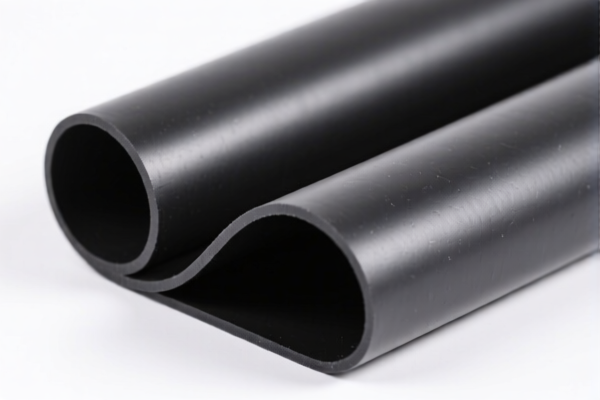
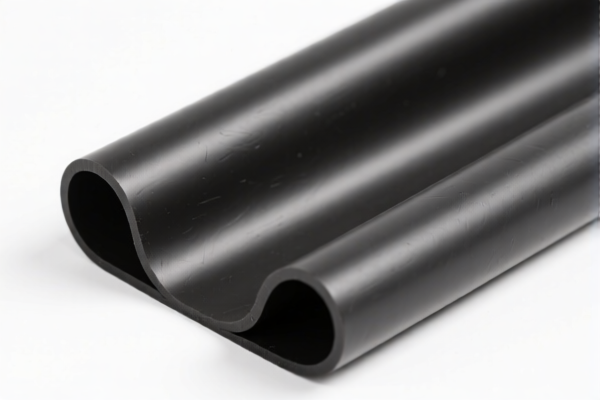
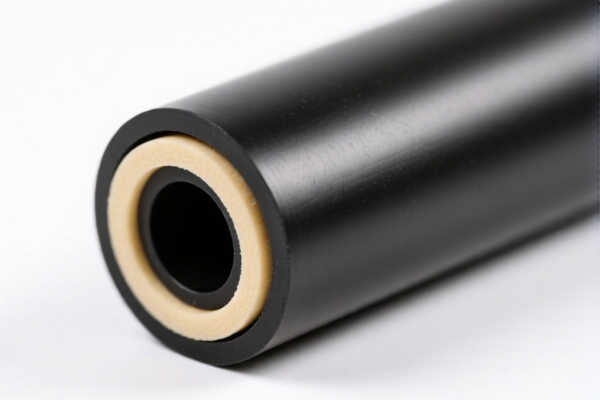
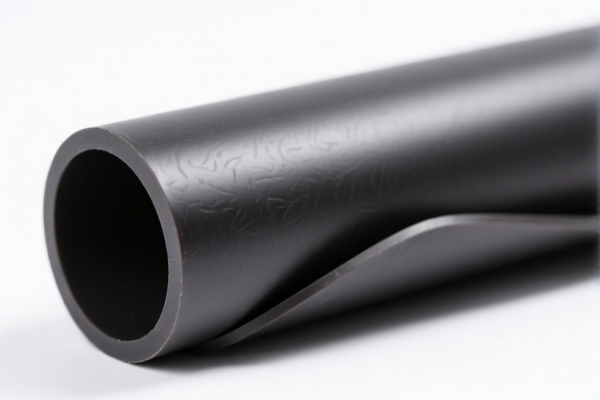
AI Analysis
⚡ Spherical Graphite Vibration Damping Material (Graphite Lubricants/Friction Reducers)
🌐 HS Code Reference & Clearance Guide | 2026 Latest Tariff Analysis | Professional Classification Strategy
📌 I. Product Definition & Classification: What is "Spherical Graphite" really?
Graphite, whether natural or synthetic, is a versatile material widely used as a lubricant, additive, or damping component in industrial machinery, batteries, and metallurgy. In international trade, "Spherical Graphite Vibration Damping Material" (often referred to as Graphite Powder, Lubricating Graphite, or Anti-friction Material) is classified based on its material origin (Natural vs. Artificial/Synthetic) and processing state (Spherical vs. Irregular/Modified).
The core distinction lies in: 1. Artificial (Synthetic) Graphite (HS 3801): Produced from carbonaceous materials (like coal tar pitch) through high-temperature graphitization. If it is spherical or non-spherical but not surface-modified for specific chemical uses, it falls here. 2. Carbon/Graphite Articles (HS 6815): Semi-manufactured or finished products made of graphite, not elsewhere specified. If the product is a specific "article" rather than a raw powder/paste, it may fall here. 3. Other Mineral Products (HS 2530): Less likely for high-purity graphite, but sometimes confused with other mineral fillers or pigments if the purity is low.
⚠️ Critical Distinction Point:
- If the graphite is Artificial/Synthetic and used as a general lubricant/damping agent → HS 3801.10 (Specifically 3801.10.50.xx).
- If the product is considered a Graphite Article (e.g., specific shaped blocks or specific non-electrical items) → HS 6815.11 or 6815.19.
- If the classification leans towards General Mineral Powders due to ambiguity or low-grade status → HS 2530.90 (Note: This is a risky classification for pure graphite, often rejected by customs if purity is high).
📦 II. HS Code Classification Details (2026 Latest Tariff Authority Comparison)
Based on the provided data, here are the potential HS Codes and the rationale for each:
| HS Code | Product Description | Application Scenario | Classification Rationale |
|---|---|---|---|
3801.10.50.10 |
Artificial Graphite, Other | General industrial lubricants, damping agents, carbon black additives | ✅ Likely Match: Material is "Artificial Graphite." Function is "Anti-friction/Damping." Falls under "Other" if not specifically spherical/surface-modified. |
3801.10.50.90 |
Artificial Graphite, Other | Similar to above, generic fallback for artificial graphite articles | ✅ Likely Match: Matches the "Artificial Graphite" material. Used as a damping/lubricating material. |
6815.19.00.00 |
Articles of Graphite or Carbon, Other | Semi-finished graphite materials, non-electrical graphite products | ✅ Possible Match: If the product is considered a "graphite article" rather than a chemical/mechanical additive. Focuses on "Non-electrical use." |
6815.11.00.00 |
Articles of Graphite or Carbon, Non-electrical | Specific graphite items for mechanical use (e.g., seals, bearings, damping parts) | ✅ Strong Match: Explicitly for "Non-electrical use." If the "damping material" is a specific shaped article, this fits perfectly. |
2530.90.80.15 |
Other Mineral Products, Other | Low-grade graphite, mineral fillers, or ambiguous mineral powders | ⚠️ Riskier Match: Only if the product is low-purity or classified as a general mineral filler. "Graphite" alone might trigger a reclassification to 3801/6815 by customs. |
🔍 Key Clarification:
- HS 3801 is for Artificial Graphite that is not spherical/surface-modified for specific chemical uses (or is a generic powder). - HS 6815.11 is for Graphite Articles (finished or semi-finished goods) used for non-electrical purposes. - HS 2530 is generally for Natural Graphite or other minerals, but for "Spherical Artificial Graphite," 3801 is the more accurate technical classification unless the physical form is clearly an "article" rather than a "powder/paste."
💰 III. 2026 Latest Tariff Rate Details (Including Additional Taxes, Policy Surcharges)
✅ Applicable Country: United States (US)
✅ Country of Origin: China (CN)
✅ Effective Date: From November 10, 2025 (and subsequent imports)
🎯 1. 3801.10.50.10 & 3801.10.50.90 —— Artificial Graphite (Other)
| Item | Content |
|---|---|
| Base Tariff Rate | 0% (ad valorem) |
| USITC Additional Tariff | +25% (Under Section 301, USITC Footnote 9903.88.01) |
| IEEPA Additional Tariff | +10% (For China/HK origin products, from Nov 10, 2025) |
| Total Tariff Rate | 35% |
| Tax Calculation | CIF Value × 35% |
| De Minimis Exemption Available? | ❌ No (deny_de_minimis) |
| Legal Basis Path | IEEPA:9903.01.25 → IEEPA:9903.01.24 → USITC:3801.10.50.xx → FOOTNOTE:9903.88.01 |
📌 Explanation:
- "USITC 25%" is the Section 301 tariff on specific chemical/graphite products. - "IEEPA 10%" is the additional levy on Chinese goods. - Total 35%: High tariff cost. Must be factored into pricing.
🎯 2. 6815.19.00.00 & 6815.11.00.00 —— Graphite/Carbon Articles (Non-Electrical)
| Item | Content |
|---|---|
| Base Tariff Rate | 0% (ad valorem) |
| USITC Additional Tariff | +25% (Under Section 301) |
| IEEPA Additional Tariff | +10% (For China/HK origin products) |
| Total Tariff Rate | 35% |
| Tax Calculation | CIF Value × 35% |
| De Minimis Exemption Available? | ❌ No (deny_de_minimis) |
| Legal Basis Path | IEEPA:9903.01.25 → IEEPA:9903.01.24 → USITC:6815.11/19 → FOOTNOTE:9903.88.01 |
📌 Note:
- Both 3801 and 6815 categories for Chinese-origin graphite products face the same 35% total tariff. - The distinction between 3801 (powder/additive) and 6815 (article) is crucial for customs compliance, even if the tariff rate is identical. Misclassification can lead to penalties.
🎯 3. 2530.90.80.15 —— Other Mineral Products (Risk Category)
| Item | Content |
|---|---|
| Base Tariff Rate | 0% (ad valorem) |
| USITC Additional Tariff | 0% (Not subject to Section 301 for this specific subheading in some interpretations, or different footnote) |
| IEEPA Additional Tariff | +10% (For China/HK origin products) |
| Total Tariff Rate | 10% |
| Tax Calculation | CIF Value × 10% |
| De Minimis Exemption Available? | ❌ No (deny_de_minimis) |
| Legal Basis Path | IEEPA:9903.01.25 → IEEPA:9903.01.24 → USITC:2530.90.80.15 |
📌 Warning:
- While the rate is lower (10%), this classification is high-risk. Customs may challenge the classification of pure graphite under "Other Mineral Products" if it is clearly artificial or high-purity. If challenged, you may face retroactive taxes (35% - 10% = 25% difference) + interest + penalties. - Only use this if the product is definitively a low-grade mineral filler and not pure synthetic graphite.
🛠️ IV. Clearance Practical Advice (Field Avoidance Guide)
✅ 1. Preparation Checklist (All documents are mandatory)
| Document | Required | Description |
|---|---|---|
| ✅ Product Spec Sheet | ✔️ | Must specify: Artificial vs. Natural, Purity %, Particle Size (Spherical), Use Case (Lubrication/Damping). |
| ✅ Material Safety Data Sheet (MSDS) | ✔️ | Standard for chemical/mineral products. |
| ✅ Product Photos | ✔️ | Clear images of the product, packaging, and label showing "Artificial Graphite" or "Synthetic Graphite." |
| ✅ Commercial Invoice | ✔️ | Accurately describe as "Spherical Artificial Graphite for Lubrication/Damping" or "Graphite Articles." Avoid vague terms like "Carbon Powder." |
| ✅ Certificate of Origin (CO) | ✔️ | Essential for applying IEEPA exemptions (if any) or proving CN origin for tariff calculation. |
| ✅ Packaging List | ✔️ | Detail net/gross weight. |
✅ 2. Declaration Strategy (Key Tips)
🔥 "Material First, Form Second, Name Precise, Tariff Predictable!"
| Scenario | Correct Declaration | Wrong Practice |
|---|---|---|
| Graphite Powder/Paste (Lubricant) | 3801.10.50.10 / 3801.10.50.90Desc: "Spherical Artificial Graphite, Lubricant Additive" |
Declare as "Mineral Powder" (2530) → Risk of audit & 25% back-tax. |
| Graphite Blocks/Pads (Damping Parts) | 6815.11.00.00Desc: "Non-Electrical Graphite Articles, Damping Pads" |
Declare as "Chemical Additive" → Mismatch with physical form. |
| Low-Grade Graphite Filler | 2530.90.80.15 (Only if confirmed low purity) |
Declare as "Artificial Graphite" → Overpay tariffs. |
⚠️ Critical Note:
- If the product is Spherical Artificial Graphite, ensure the description highlights "Artificial/Synthetic" to distinguish it from Natural Graphite (which may have different classification nuances, though often similar tariffs). - Do not split shipments (e.g., declaring powder as2530and articles as6815) if they are the same product. Consistency is key.
✅ 3. Special Circumstances
| Scenario | Handling Advice |
|---|---|
| OEM Custom Graphite | Provide client order + technical datasheet. Confirm if it’s "Article" (6815) or "Powder" (3801). |
| Mixed Shipment | Separate HS codes clearly on invoice. Do not lump different materials. |
| High-Purity Artificial Graphite | Strongly recommend 3801.10 or 6815.11. Avoid 2530 unless specifically advised by a customs broker due to high risk. |
| Pre-Clearance | Apply for an Advance Ruling from CBP if the classification is uncertain. Saves time and potential penalties. |
🌍 V. Global Market Clearance Comparison (2026 Latest)
| Country/Region | Recommended HS Code | Tariff (China Origin) | Certification | Notes |
|---|---|---|---|---|
| 🇺🇸 USA | 3801.10.50 / 6815.11 |
35% | No specific, but MSDS required | High tariff due to Sec 301 + IEEPA. |
| 🇨🇳 China | 3801.10 / 6815.11 |
0-5% (Varies) | CCC (if applicable) | Low tariff, easy clearance. |
| 🇪🇺 EU | 3801.10 / 6815.11 |
0% (if EEC agreement) | REACH, CLP | No major tariffs for graphite if pure. |
| 🇯🇵 Japan | 3801.10 / 6815.11 |
0% | JIS Standards | Low tariff, strict quality checks. |
📌 Conclusion:
- The USA market imposes a 35% total tariff on graphite products from China. - EU/Japan are more tariff-friendly, but have strict chemical/mineral regulations (REACH, etc.). - Cost Optimization: If possible, source graphite from non-Chinese origins (e.g., Vietnam, India) to avoid IEEPA/Section 301 surcharges, though base tariffs may still apply.
📌 VI. Common Errors & Pitfalls (Lessons Learned)
❌ Error 1: Declaring "Artificial Graphite" as "Natural Graphite" (2504)
👉 Consequence: If discovered, customs may reclassify to 3801 or 6815, applying different duties or triggering anti-dumping investigations. Fine + Back Tax.
❌ Error 2: Using vague terms like "Carbon Powder" or "Lubricant" without specifying "Graphite"
👉 Consequence: Customs may classify under general chemical categories with higher duties or hold the shipment for inspection.
❌ Error 3: Ignoring the "Spherical" aspect in documentation
👉 Consequence: While 3801.10.50 covers "Other," if the product is specifically "Spherical Artificial Graphite," it might still fall under 3801.10.50. However, being specific helps avoid ambiguity.
❌ Error 4: Attempting De Minimis (Section 321) for shipments > $800
👉 Consequence: Denied. Graphite products are explicitly denied de minimis status under current IEEPA/USITC rules. Must file formal entry.
✅ Correct Practice:
"Spherical Artificial Graphite Powder, Purity >99%, for Industrial Lubrication and Damping Applications, CAS No. 7782-42-5, Net Weight 50kg, Made in China"
🎯 VII. Conclusion: Precise Classification for Cost Efficiency
🎯 Remember the Mantra:
🔹 "Artificial Graphite = 3801/6815. Base 0% + 35% Extra. Total 35%."
🔹 "Natural/Mineral Filler = 2530 (Risky). Base 0% + 10% Extra. Total 10% (But High Audit Risk)."
🔹 "De Minimis is OFF. Formal Entry is Mandatory."
📌 Pro Tip:
If your graphite product is high-value (e.g., for EV batteries or aerospace), consider Advance Rulings from CBP to lock in the HS Code and tariff rate. This prevents future disputes and ensures budget accuracy.
📣 Immediate Action:
📞 Contact a Licensed Customs Broker + Provide Tech Specs + Request Advance Ruling
🚀 Ensure Smooth Clearance, Avoid Penalties, and Manage Costs Effectively!
✨ Professional Clearance Starts with Accurate Classification!
💼 Every Percent of Tariff Counts in the Bottom Line!
Customer Reviews
About HS Code Classification
The Harmonized System (HS) is an internationally standardized nomenclature developed by the World Customs Organization (WCO) to classify traded products. Over 200 countries use the HS system as the basis for customs tariffs, trade statistics, and import/export regulations.
Each HS code follows a hierarchical structure:
- Chapter (2 digits) — Broad category of goods (e.g., Chapter 84: Machinery and Mechanical Appliances)
- Heading (4 digits) — More specific grouping within the chapter
- Subheading (6 digits) — Internationally standardized breakdown, used by all WCO member countries
- National subdivisions (8-10 digits) — Country-specific extensions for further classification, such as US HTSUS 10-digit codes
Correct HS code classification is essential for smooth customs clearance, accurate duty payment, and compliance with trade regulations. Misclassification can lead to customs delays, overpayment of duties, or penalties.
When importing from CN to US, the applicable tariff rates may include:
- Most-Favored-Nation (MFN) rate — The standard duty rate applied to WTO members
- General rate — Applied to countries without trade agreements
- Trade remedy duties — Additional tariffs such as Section 301 (anti-dumping), Section 232 (national security), or countervailing duties
The information provided on this page is for reference purposes only. For official classification, please consult with your local customs authority or a licensed customs broker.