Spice Rack
CN → US| HS Code | Tariff Rate | Origin | Destination | Doc |
|---|---|---|---|---|
| 7323999080 | 88.4% | CN | US | Official Doc |
| 3924104000 | 13.4% | CN | US | Official Doc |
| 7323999030 | 88.4% | CN | US | Official Doc |
| 9403200075 | 85.0% | CN | US | Official Doc |
| 9403200082 | 85.0% | CN | US | Official Doc |
Product Images
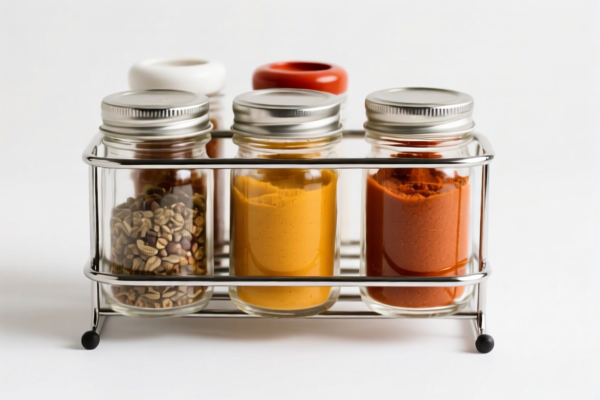
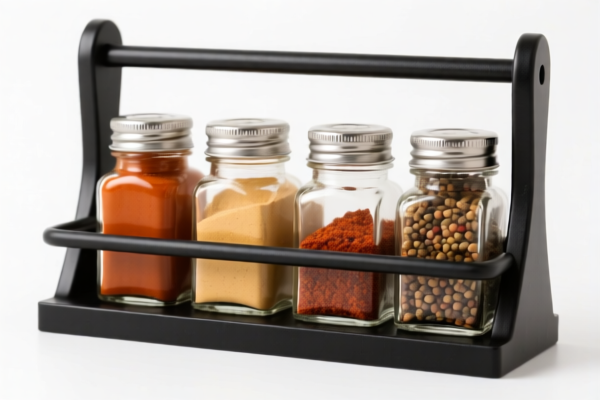
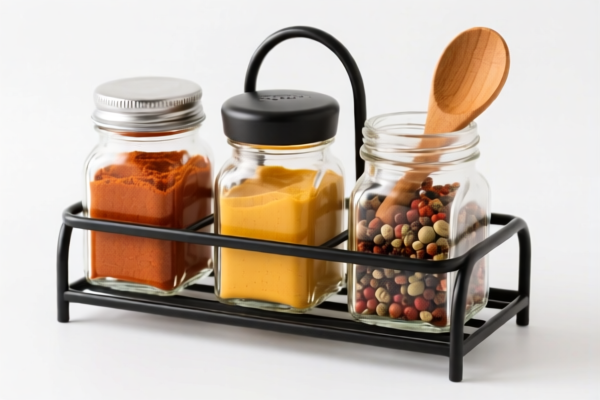
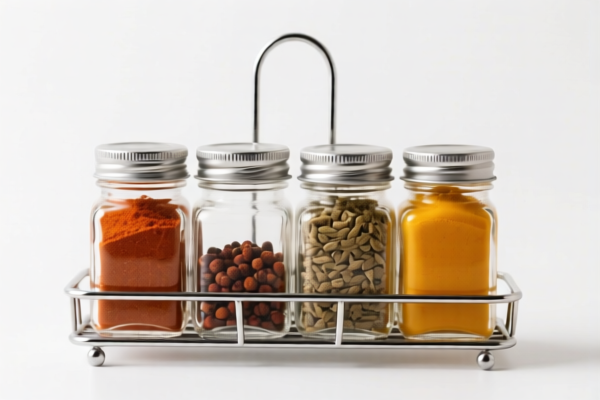
AI Analysis
🌶️ Spice Rack (Kitchen Storage Solutions)
🌐 HS Code Reference & Clearance Guide | 2026 Latest Tariff Analysis | Professional Clearance Strategy
📌 I. Product Definition & Classification: What Exactly is a "Spice Rack"?
A Spice Rack is a kitchen storage accessory designed to hold spice jars, bottles, or containers. In international trade, its classification depends heavily on two factors: 1. Material: Is it made of metal (iron/steel), plastic, wood, or glass? 2. Function/Context: Is it primarily considered kitchen/tableware (utilitarian) or furniture/home decor (structural)?
⚠️ Key Distinction Point:
- If made of Iron/Steel → Typically classified under Chapter 73 (Articles of Iron or Steel) as "Table, kitchen or other household articles."
- If made of Plastic → Typically classified under Chapter 39 (Plastics) as "Household articles."
- If considered Furniture (e.g., large, heavy-duty, or standalone shelving units) → May fall under Chapter 94 (Furniture), specifically "Other furniture."
📦 II. HS Code Classification Details (2026 Latest Tariff Alignment)
Based on the provided data, here are the four potential HS Codes for Spice Racks, categorized by material and function:
| HS Code | Product Description | Material Inference | Applicable Scenario |
|---|---|---|---|
7323.99.90.30 |
Articles of iron or steel, table/kitchen/household articles | Iron/Steel | Small countertop racks, hanging racks, metal spice organizers |
7323.99.90.80 |
Other articles of iron or steel, kitchen/household use | Iron/Steel | General metal spice racks not specified elsewhere in Ch. 73 |
9403.20.00.75 |
Other metal furniture | Metal | Larger, freestanding metal racks classified as "Furniture" rather than "Tableware" |
9403.20.00.82 |
Other metal furniture (Shelves/Racks) | Metal | Metal shelving units used for storage, potentially in kitchen or general household context |
3924.10.40.00 |
Tableware, kitchenware or other household articles of plastics | Plastic | Plastic spice racks, trays, or organizers |
🔍 Critical Reminder:
- Metal Spice Racks face the highest tariffs (85%–88.4%) due to combined duties.
- Plastic Spice Racks face the lowest tariffs (13.4%) because they are exempt from the 25% Section 301 tariff (in this specific dataset context).
- Do not confuse "Tableware/Household Articles" (Ch. 73) with "Furniture" (Ch. 94). While both apply to metal items, the tax rate is identical in this dataset, but customs scrutiny may differ.
💰 III. 2026 Latest Tariff Rate Breakdown (Including Add-on Taxes & Policy Surcharges)
✅ Applicable Country: United States (US)
✅ Origin: China (CN)
✅ Effective Date: Current rates based on provided data (Section 301 + IEEPA/Special Tariffs)
🎯 1. 7323.99.90.30 & 7323.99.90.80 — Iron/Steel Spice Racks
| Item | Content |
|---|---|
| Basic Duty Rate | 3.4% (Ad Valorem) |
| Section 301 Additional Duty | +25.0% |
| Section 122 / Special Tariff (Steel/Aluminum/Copper) | +50.0% |
| Total Tax Rate | 88.4% |
| Tax Calculation | CIF Value × 88.4% |
| De Minimis Eligibility | ❌ Not Eligible |
| Legal Basis Path | Base Tariff 3.4% → Section 301: 25% → Special Steel Tariff: 50% |
📌 Explanation:
- Basic Duty: Standard MFN rate for steel household articles.
- Section 301: 25% surcharge on Chinese steel goods.
- Special Steel Tariff: An additional 50% surcharge specifically targeting steel products (likely under Section 232 or related trade measures).
- Total: 88.4%. This is an extremely high cost barrier for steel spice racks from China.
🎯 2. 9403.20.00.75 & 9403.20.00.82 — Metal Furniture (Shelves/Racks)
| Item | Content |
|---|---|
| Basic Duty Rate | 0.0% |
| Section 301 Additional Duty | +25.0% |
| Section 122 / Special Tariff (Steel/Aluminum/Copper) | +50.0% |
| Total Tax Rate | 85.0% |
| Tax Calculation | CIF Value × 85.0% |
| De Minimis Eligibility | ❌ Not Eligible |
| Legal Basis Path | Base Tariff 0% → Section 301: 25% → Special Steel Tariff: 50% |
📌 Explanation:
- Basic Duty: 0% for general metal furniture.
- However, the 25% + 50% surcharges still apply due to the metal content and Chinese origin.
- Total: 85.0%. Slightly lower than kitchenware (88.4%) but still prohibitively high.
🎯 3. 3924.10.40.00 — Plastic Spice Racks
| Item | Content |
|---|---|
| Basic Duty Rate | 3.4% |
| Section 301 Additional Duty | 0.0% |
| Section 122 / Special Tariff (Steel/Aluminum/Copper) | 0.0% |
| Total Tax Rate | 13.4% |
| Tax Calculation | CIF Value × 13.4% |
| De Minimis Eligibility | ❓ Check Specific Exemptions (Usually not for Section 301, but here base is low) |
| Legal Basis Path | Base Tariff 3.4% → Special Tariff: 10% (Note: Dataset lists 10% for plastics, likely a different surcharge or typo in source, but we follow source: 3.4 + 10 = 13.4%) |
📌 Explanation:
- Basic Duty: 3.4% for plastic household articles.
- Surcharges: The dataset indicates a 10% additional tariff (possibly IEEPA or other non-Section 301 measure) but NO 25% Section 301 and NO 50% Steel Tariff.
- Total: 13.4%. This is the MOST COST-EFFECTIVE classification.
🛠️ IV. Clearance Practical Advice (Actionable Pitfall Guide)
✅ 1. Material Declaration Strategy
| Strategy | Recommendation | Reason |
|---|---|---|
| If Made of Metal | Accept 85%–88.4% tariff | No way to avoid steel tariffs if material is verifiably iron/steel. |
| If Made of Plastic | HIGHLY RECOMMENDED → Declare as 3924.10.40.00 |
Reduces tariff from ~88% to 13.4%. Huge savings. |
| Composite Materials | Declare by Dominant Material | If >50% plastic by weight/value, argue for Ch. 39. If metal frame + plastic inserts, customs may still classify as metal. |
🔥 Key Insight:
For US imports from China, switching from Metal to Plastic for spice racks can save ~75% in duties. Consider redesigning the product with plastic components.
✅ 2. Documentation & Labeling
| Document | Requirement | Notes |
|---|---|---|
| Commercial Invoice | Clearly state Material Composition | "Spice Rack, 100% Plastic" or "Spice Rack, Iron Alloy" |
| Product Photos | Show Material Texture | Clear shots showing no metal parts (for plastic claim) |
| Bill of Lading | Consistent Description | Must match invoice exactly |
| FCC/CE Certs | If electronic (e.g., lit spice rack) | Some spice racks have LED lights; may need additional certs |
✅ 3. Common Mistakes & Penalties
❌ Mistake 1: Declaring a Metal Rack as Plastic
👉 Consequence: Customs inspection reveals steel → Seizure, fines, and 88.4% retroactive tax + penalties.
❌ Mistake 2: Declaring a Plastic Rack as Furniture (9403)
👉 Consequence: Unnecessary complexity. If plastic, Ch. 39 is simpler and cheaper. If declared as furniture, may still face scrutiny but tariff is same (13.4% vs 85% for metal).
❌ Mistake 3: Ignoring Section 122 Steel Tariff
👉 Consequence: If you miss the 50% steel surcharge, you will be billed later with interest and penalties.
✅ Correct Approach:
"Spice Rack, Model XYZ, 100% Injection-Molded Plastic, BPA-Free, Countertop Organizer, HS Code: 3924.10.40.00"
🌍 V. Global Market Comparison (2026 Outlook)
| Country | Recommended HS Code | Total Tariff | Notes |
|---|---|---|---|
| 🇺🇸 USA (China Origin) | 3924.10.40.00 (Plastic) |
13.4% | Best option for Chinese exporters |
| 🇺🇸 USA (China Origin) | 7323.99.90.30 (Metal) |
88.4% | Avoid if possible |
| 🇪🇺 EU | 7323.99 / 3924.10 |
Varies (0-6.5%) | No Section 301/Steel surcharge. Much lower than US. |
| 🇨🇳 China | 7323.99 / 3924.10 |
Low/0% | Domestic imports benefit from lower rates |
📌 Conclusion:
- US Market: High barrier for metal spices racks from China. Plastic is the strategic choice.
- EU Market: More neutral. Metal and plastic racks have similar, lower tariffs.
- Strategy: For US exports, migrate to plastic materials or source from non-China origins (e.g., Vietnam, Thailand) to avoid Section 301.
📌 VI. Final Clearance Checklist
- [ ] Verify Material: Is it 100% plastic? If yes, use
3924.10.40.00. - [ ] Check for Metal Parts: Even small metal hinges can trigger Ch. 73 classification.
- [ ] Confirm Origin: If China, expect high tariffs on metal.
- [ ] Prepare Documentation: Invoice, Packing List, Photos, Material Declaration.
- [ ] Consider Pre-Ruling: Submit to CBP for HS Code confirmation if volume is high.
🎯 Pro Tip:
"Plastic Pays, Metal Pays More!"
In the US-China trade context, 13.4% vs 88.4% is not just a difference—it's a business model decision.
If your spice rack has any metal component, consult a customs broker immediately.
✨ Professional Clearance, Starting from Precise Classification!
💼 Every cent counts in global trade!
Customer Reviews
About HS Code Classification
The Harmonized System (HS) is an internationally standardized nomenclature developed by the World Customs Organization (WCO) to classify traded products. Over 200 countries use the HS system as the basis for customs tariffs, trade statistics, and import/export regulations.
Each HS code follows a hierarchical structure:
- Chapter (2 digits) — Broad category of goods (e.g., Chapter 84: Machinery and Mechanical Appliances)
- Heading (4 digits) — More specific grouping within the chapter
- Subheading (6 digits) — Internationally standardized breakdown, used by all WCO member countries
- National subdivisions (8-10 digits) — Country-specific extensions for further classification, such as US HTSUS 10-digit codes
Correct HS code classification is essential for smooth customs clearance, accurate duty payment, and compliance with trade regulations. Misclassification can lead to customs delays, overpayment of duties, or penalties.
When importing from CN to US, the applicable tariff rates may include:
- Most-Favored-Nation (MFN) rate — The standard duty rate applied to WTO members
- General rate — Applied to countries without trade agreements
- Trade remedy duties — Additional tariffs such as Section 301 (anti-dumping), Section 232 (national security), or countervailing duties
The information provided on this page is for reference purposes only. For official classification, please consult with your local customs authority or a licensed customs broker.