Spinning Top
CN → US| HS Code | Tariff Rate | Origin | Destination | Doc |
|---|---|---|---|---|
| 9503000073 | 10.0% | CN | US | Official Doc |
| 9503000090 | 10.0% | CN | US | Official Doc |
| 3926909989 | 22.8% | CN | US | Official Doc |
| 3926909905 | 22.8% | CN | US | Official Doc |
| 8482105068 | 44.0% | CN | US | Official Doc |
Product Images
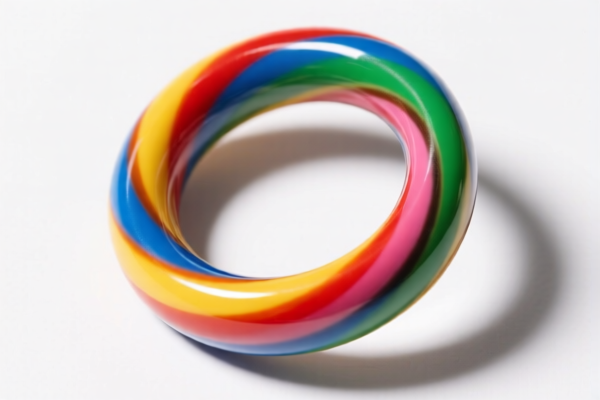

AI Analysis
🌀 Spinning Top (Fidget Spinner)
🌐 HS Code Classification & Tariff Guide | 2026 Updated | Expert Customs Clearance Strategy
📌 One Product, Multiple HS Codes — Know Which One Applies to Your Shipment!
📌 一、Product Definition & Classification: What Exactly Is a Spinning Top?
A spinning top, commonly known as a fidget spinner, is a handheld toy designed to spin on a central axis. It typically features 3 or more arms with weighted ends, and is often made from plastic, metal, or a combination of both. While it may appear simple, its classification depends heavily on material, function, and core components.
⚠️ Key Insight:
- If the primary purpose is play or sensory stimulation → Toy classification applies
- If the core component is a ball bearing → Machinery/Parts may apply
- If made of plastic and not a functional toy → Plastic制品 may apply
📦 二、HS Code Classification Breakdown (2026 Latest Tariff Authority)
| HS Code | Product Description | Material & Use Match | Core Component | Risk Level |
|---|---|---|---|---|
9503.00.00.73 |
Other toys, not elsewhere specified | ✅ Plastic/Metal, toy-like form | No bearing | Low |
9503.00.00.90 |
Other toys, not elsewhere specified | ✅ Rotating motion, child-friendly | No bearing | Low |
3926.90.99.89 |
Other articles of plastic, not elsewhere specified | ✅ Plastic-based, non-functional toy | Plastic body | Medium |
3926.90.99.05 |
Other articles of plastic, not elsewhere specified | ✅ Plastic construction, no toy function | Plastic only | Medium |
8482.10.50.68 |
Ball bearings, not elsewhere specified | ✅ Contains ball bearing as core | Ball bearing | High |
🔍 Critical Note:
- All five codes are valid, but only one applies per shipment based on dominant feature. - Misclassification = overpayment, delays, or penalties.
💰 三、2026 Tariff Rate Breakdown (With Full Legal Basis)
✅ Applicable Country: United States (US)
✅ Origin: China (CN)
✅ Effective Date: November 10, 2025 (including future imports)
🎯 1. 9503.00.00.73 — Other Toys (Plastic/Metal Toy)
| Item | Detail |
|---|---|
| Base Duty | 0% (ad valorem) |
| USITC Section 301 Tariff | +0% (not applied here) |
| Section 122 Tariff (IEEPA) | +10% |
| Total Effective Rate | 10.0% |
| Tax Calculation | CIF × 10% |
| De Minimis Threshold | ✅ Yes (under $800) |
| Legal Basis Path | IEEPA:9903.01.25 → 122 Tariff:9903.01.24 → HS:9503.00.00.73 |
📌 Why This Applies:
- The item is primarily marketed as a toy for children or adults seeking sensory relief
- No functional mechanical use beyond spinning
- Matches "other toys" under 9503.00.00
🎯 2. 9503.00.00.90 — Other Toys (Rotating Toy)
| Item | Detail |
|---|---|
| Base Duty | 0% |
| USITC Section 301 Tariff | +0% |
| Section 122 Tariff (IEEPA) | +10% |
| Total Effective Rate | 10.0% |
| Tax Calculation | CIF × 10% |
| De Minimis Threshold | ✅ Yes |
| Legal Basis Path | IEEPA:9903.01.25 → 122 Tariff:9903.01.24 → HS:9503.00.00.90 |
📌 Why This Applies:
- The rotating motion is the key feature
- Fits under "other toys" in the classification of rotational play items
- No mechanical or industrial function
🎯 3. 3926.90.99.89 — Other Articles of Plastic (Non-Toy Use)
| Item | Detail |
|---|---|
| Base Duty | 5.3% |
| USITC Section 301 Tariff | +7.5% |
| Section 122 Tariff (IEEPA) | +10% |
| Total Effective Rate | 22.8% |
| Tax Calculation | CIF × 22.8% |
| De Minimis Threshold | ❌ No (exceeds $800 threshold) |
| Legal Basis Path | USITC:3926.90.99.89 → 301 Tariff:9903.88.01 → IEEPA:9903.01.24 |
📌 Why This Applies:
- If the item is not marketed as a toy but as a plastic accessory
- Used in industrial, decorative, or non-play contexts
- No child-friendly labeling or packaging⚠️ High-Risk Category:
- No de minimis → even small shipments face full duty
- Higher cost if misclassified as plastic product
🎯 4. 3926.90.99.05 — Other Articles of Plastic (Plastic-Based Item)
| Item | Detail |
|---|---|
| Base Duty | 5.3% |
| USITC Section 301 Tariff | +7.5% |
| Section 122 Tariff (IEEPA) | +10% |
| Total Effective Rate | 22.8% |
| Tax Calculation | CIF × 22.8% |
| De Minimis Threshold | ❌ No |
| Legal Basis Path | USITC:3926.90.99.05 → 301 Tariff:9903.88.01 → IEEPA:9903.01.24 |
📌 Why This Applies:
- Plastic-only construction, no metal parts
- Not sold as a toy, but as a plastic novelty item
- Often used in gifts, office accessories, or promotional items⚠️ Warning:
- Same rate as 3926.90.99.89, but different code
- Must prove non-toy intent to avoid reclassification
🎯 5. 8482.10.50.68 — Ball Bearings (Core Component)
| Item | Detail |
|---|---|
| Base Duty | 9.0% |
| USITC Section 301 Tariff | +25.0% |
| Section 122 Tariff (IEEPA) | +10% |
| Total Effective Rate | 44.0% |
| Tax Calculation | CIF × 44% |
| De Minimis Threshold | ❌ No |
| Legal Basis Path | USITC:8482.10.50.68 → 301 Tariff:9903.88.01 → IEEPA:9903.01.24 |
📌 Why This Applies:
- If the ball bearing is the main functional component
- The spinning action is due to precision bearing, not toy design
- Not intended for play, but for mechanical function (e.g., in industrial tools)⚠️ Highest Risk & Cost:
- 44% tariff — most expensive option
- Only applies if bearing is the core — not the case for most fidget spinners
- Rarely used unless the item is marketed as a mechanical part
🛠️ 四、Customs Clearance Best Practices (Real-World Tips)
✅ 1. Essential Documentation (Must-Have)
| Document | Required? | Purpose |
|---|---|---|
| ✅ Commercial Invoice | ✔️ | Clearly state product name, material, use |
| ✅ Packing List | ✔️ | Show number of units, weight, packaging |
| ✅ Product Photos (Front/Back/Side) | ✔️ | Show bearing, material, branding |
| ✅ Material Certificate | ✔️ | Prove plastic/metal composition |
| ✅ Labeling & Packaging Proof | ✔️ | Show "toy" vs. "plastic item" |
| ✅ Test Reports (RoHS, FCC, CE) | ✔️ | If applicable |
| ✅ Certificate of Origin (CO) | ✔️ | For tariff eligibility |
✅ 2.申报技巧(Key Rules)
🔥 “Toy or Bearing? Label It Right!”
| Scenario | Correct HS Code | Wrong Code | Risk |
|---|---|---|---|
| Marketed as fidget toy for kids | 9503.00.00.73 or 9503.00.00.90 |
3926.90.99.89 |
High |
| Made of plastic only, no toy branding | 3926.90.99.05 |
9503.00.00.90 |
High |
| Contains precision ball bearing, no toy design | 8482.10.50.68 |
9503.00.00.73 |
Extremely High |
| Sold as gift/office accessory, not for play | 3926.90.99.89 |
9503.00.00.90 |
High |
✅ 3. Special Cases & Solutions
| Case | Solution |
|---|---|
| Mixed material (plastic + metal) | Use 9503.00.00.73 if toy-like, 3926.90.99.89 if plastic-focused |
| No bearing visible | Avoid 8482.10.50.68 — unless bearing is key |
| Small shipment (<$800) | Use 9503.00.00.73 or 9503.00.00.90 → de minimis applies |
| Large shipment (>$800) | Avoid 3926.90.99.05 or 3926.90.99.89 → no de minimis |
| Uncertain classification | Apply for Advance Ruling (Pre-Approval) |
🌍 五、Global Market Comparison (2026 Update)
| Country | Recommended HS Code | Tariff | Certification | Notes |
|---|---|---|---|---|
| 🇺🇸 USA | 9503.00.00.73 or 9503.00.00.90 |
10% | FCC, RoHS | 122 Tariff applies |
| 🇨🇳 China | 9503.00.00.73 |
5% | CCC | No extra tariffs |
| 🇪🇺 EU | 9503.00.00.73 |
0% (if CE) | CE | No 122 tariff |
| 🇦🇺 Australia | 9503.00.00.90 |
5% | RCM | No extra tariffs |
| 🇯🇵 Japan | 9503.00.00.73 |
0% | PSE | No extra tariffs |
📌 Key Takeaway:
- USA has the highest risk due to 122 Tariff + Section 301
- China, EU, Japan, Australia are much safer for fidget spinners
📌 六、Common Mistakes & How to Avoid Them (Real Cases)
❌ Mistake 1: Labeling a toy as "plastic novelty" to avoid toy tariffs
👉 Result: Re-classified to 3926.90.99.89 → 22.8% tax + no de minimis
❌ Mistake 2: Declaring as 8482.10.50.68 just because it has a bearing
👉 Result: 44% tariff — overcharged by 34% — audit risk
❌ Mistake 3: Not providing photos or material proof
👉 Result: Customs delays, request for clarification, possible seizure
✅ Correct Approach:
“Fidget Spinner, 3-Arm Plastic & Metal Toy, with Ball Bearing, Designed for Sensory Play, Not Industrial Use, Model XYZ, FCC & RoHS Certified”
🎯 七、Conclusion: Choose Wisely, Pay Less, Ship Faster!
🎯 Remember the Golden Rule:
🔹 “If it’s a toy, declare it as a toy. If it’s a bearing, declare it as a bearing. If it’s plastic, declare it as plastic.”
🔹 “One wrong code = 44% tax instead of 10% — that’s $4,400 on a $10,000 shipment!”
📌 Pro Tip:
📞 Apply for an Advance Ruling (Pre-Approval) before shipping
🚀 Get your HS Code confirmed legally — avoid surprises at the border
📣 Act Now:
📞 Contact a licensed customs broker
📂 Submit product photos, specs, and packaging
✅ Get official HS Code confirmation — protect your profit margin!
✨ Smart Classification = Smooth Customs = Higher Profits!
💼 Your shipment’s success starts with the right HS Code.
Customer Reviews
About HS Code Classification
The Harmonized System (HS) is an internationally standardized nomenclature developed by the World Customs Organization (WCO) to classify traded products. Over 200 countries use the HS system as the basis for customs tariffs, trade statistics, and import/export regulations.
Each HS code follows a hierarchical structure:
- Chapter (2 digits) — Broad category of goods (e.g., Chapter 84: Machinery and Mechanical Appliances)
- Heading (4 digits) — More specific grouping within the chapter
- Subheading (6 digits) — Internationally standardized breakdown, used by all WCO member countries
- National subdivisions (8-10 digits) — Country-specific extensions for further classification, such as US HTSUS 10-digit codes
Correct HS code classification is essential for smooth customs clearance, accurate duty payment, and compliance with trade regulations. Misclassification can lead to customs delays, overpayment of duties, or penalties.
When importing from CN to US, the applicable tariff rates may include:
- Most-Favored-Nation (MFN) rate — The standard duty rate applied to WTO members
- General rate — Applied to countries without trade agreements
- Trade remedy duties — Additional tariffs such as Section 301 (anti-dumping), Section 232 (national security), or countervailing duties
The information provided on this page is for reference purposes only. For official classification, please consult with your local customs authority or a licensed customs broker.