Spiral Notebook
CN → US| HS Code | Tariff Rate | Origin | Destination | Doc |
|---|---|---|---|---|
| 4820102060 | 35.0% | CN | US | Official Doc |
| 4820102040 | 35.0% | CN | US | Official Doc |
Product Images

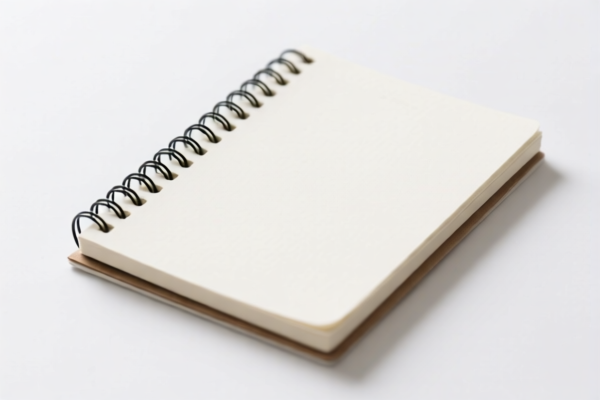
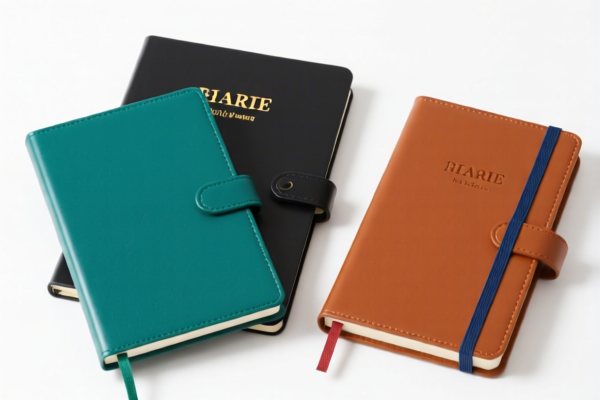
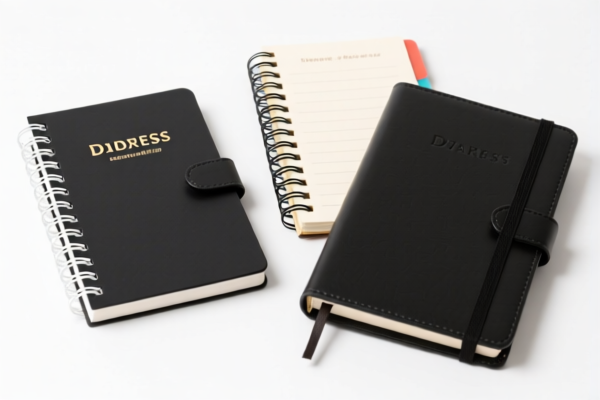
AI Analysis
📓 Spiral Notebooks & Stationery (Registers, Notebooks, Diaries)
🌐 HS Code Reference & Customs Clearance Guide | 2026 Latest Tariff Analysis | Professional Clearance Strategy
📌 I. Product Definition & Classification: Do You Really Understand "Spiral Notebooks"?
In international trade, "Spiral Notebook" is not a single HS Code. It falls under Chapter 48: Paper and Paperboard; Articles of Paper Pulp, of Paper or of Paperboard. The key differentiator is size and binding type.
The data provided identifies two specific subcategories for notebooks under Heading 4820:
- General/Large Notebooks: Bound notebooks, diaries, and memorandum pads that do not meet specific size criteria.
- Small Notebooks: Notebooks with specific dimensions (Small side: 152.4–381 mm; Large side: 222.5–381 mm).
⚠️ Critical Distinction Point:
- If the notebook’s shortest side is between 6 inches (152.4 mm) and 15 inches (381 mm) AND its longest side is between 8.75 inches (222.5 mm) and 15 inches (381 mm) → It is classified as "Other" under the specific size exemption.
- If the dimensions fall outside this range (e.g., standard A5, A4, or small pocket notebooks < 6 inches wide) → It is classified as "Other" under the general category.
- Binding: Spiral binding, stitched binding, or glued binding all fall under "Bound" or "Similar articles" in this heading.
📦 II. HS Code Classification Details (2026 Latest Tariff Authority Comparison)
| HS Code | Product Description | Applicable Scenario | Dimensions Constraint |
|---|---|---|---|
4820.10.20.40 |
Notebooks, bound; Memorandum pads, letter pads, similar articles. Notebooks with dimensions of |
Standard school notebooks, office pads, spiral notebooks within specified size ranges | ✅ Specific Size Range |
4820.10.20.60 |
Diaries, notebooks, address books, bound; Memorandum pads, letter pads, and similar articles Other | Notebooks outside the size range above (e.g., very small pocket notes, very large sketchbooks, or generic categories not specified) | ❌ Outside Specific Size Range |
🔍 Key Reminder:
- The phrase "Other" in4820.10.20.60is a residual category. If your notebook does not fit the exact dimensions in4820.10.20.40, it defaults here. - Spiral Binding: Does not change the classification. Both bound (glue/thread) and spiral-bound notebooks fall under this heading.
💰 III. 2026 Latest Tariff Rate Details (Detailed Tax Clauses)
✅ Applicable Country: United States (US)
✅ Origin: China (CN) (Implied by the tax structure "0% Base + 25% Additional" which is characteristic of US Section 301 duties on Chinese goods)
✅ Effective Time: 2025/2026 Current Period
🎯 1. 4820.10.20.40 —— Small/Medium Sized Spiral Notebooks (Specific Dimensions)
| Item | Content |
|---|---|
| Base Tariff Rate | 0.0% (Ad Valorem) |
| Additional Tariff (Section 301) | 0.0% |
| Total Tariff Rate | 0.0% |
| Tax Calculation | CIF Value × 0% = $0 |
| De Minimis Exemption | ✅ May Apply (Depending on shipment value, but base rate is 0 so duty is 0 regardless) |
| Legal Basis | USITC Harmonized Tariff Schedule (HTSUS) 2026 |
📌 Explanation:
- This HS Code benefits from zero additional tariffs.
- The 25% Section 301 tariff does NOT apply to this specific subcategory of notebooks.
- Cost Advantage: Significant cost saving compared to the alternative classification.
🎯 2. 4820.10.20.60 —— Other Notebooks (Outside Specific Dimensions or General Category)
| Item | Content |
|---|---|
| Base Tariff Rate | 0.0% (Ad Valorem) |
| Additional Tariff (Section 301) | +25.0% |
| Total Tariff Rate | 25.0% |
| Tax Calculation | CIF Value × 25% |
| De Minimis Exemption | ❌ Subject to Duties (Even if below $800, if declared separately, duties apply) |
| Legal Basis | USITC HTSUS 2026 + Section 301 Footnotes |
📌 Explanation:
- This HS Code is subject to the full 25% additional tariff under Section 301.
- This applies if the notebook is:
- Smaller than 6 inches in width (small side)
- Larger than 15 inches in any dimension
- Or simply not meeting the exact dimension criteria of4820.10.20.40.
- Cost Impact: High. A $1,000 shipment incurs $250 in duties.
🛠️ IV. Customs Clearance Practical Advice (Real-World Pitfall Avoidance)
✅ 1. Preparation Checklist (Essential Documents)
| Document | Required? | Explanation |
|---|---|---|
| ✅ Product Specifications | ✔️ | Must include exact dimensions (Height × Width × Thickness). This is the #1 factor for classification. |
| ✅ Photos of Product | ✔️ | Show binding type (spiral, stitched, glue) and page count. |
| ✅ Commercial Invoice | ✔️ | Describe as "Spiral Bound Notebook, Paper, School Supply". Do not just say "Notebook". |
| ✅ Packing List | ✔️ | List dimensions per box if possible. |
| ✅ Origin Certificate | ✔️ | To prove origin (China) for tariff determination. |
✅ 2. Classification Strategy (Key Mantra)
🔥 "Measure Twice, Classify Once! Small Side 6-15", Large Side 8.75-15" = FREE!"
| Scenario | Correct HS Code | Tariff | Wrong Practice |
|---|---|---|---|
| Notebook: 8" x 10" (203x254 mm) | 4820.10.20.40 |
0% | Declaring as 4820.10.20.60 → Pay 25% unnecessarily. |
| Notebook: 5" x 7" (127x178 mm) | 4820.10.20.60 |
25% | Trying to claim 4820.10.20.40 → Rejected. Small side < 6". |
| Notebook: 16" x 20" | 4820.10.20.60 |
25% | Trying to claim 4820.10.20.40 → Rejected. Large side > 15". |
| Diary/Address Book (Bound) | 4820.10.20.60 |
25% | Generally falls under "Other" unless specific exemptions apply. |
✅ 3. Special Considerations
| Situation | Handling Advice |
|---|---|
| Mixed Sizes in One Shipment | Separate Lines! You must list 4820.10.20.40 and 4820.10.20.60 on separate lines of the invoice to benefit from the 0% rate for qualifying items. |
| "Exercise Books" vs. "Notebooks" | Exercise books (for school work) are also under 4820.10.20.40 or 60. The key is still dimension. |
| Cover Material | If covers are plastic or metal, it might change the heading (e.g., to 3926 or 7616). However, "paper or paperboard" includes notebooks with paper covers. |
| Pre-printed Forms | If the notebook is essentially a logbook or receipt book with pre-printed forms, it might still fall under 4820, but ensure it's not "manifold business forms" (which can have different rates). |
🌍 V. Global Market Comparison (2026 Latest)
| Country/Region | Recommended HS Code | Tariff (China Origin) | Notes |
|---|---|---|---|
| 🇺🇸 USA | 4820.10.20.40 |
0% | Best option if dimensions match. |
| 🇺🇸 USA | 4820.10.20.60 |
25% | Default for non-qualifying sizes. |
| 🇨🇳 China | 4820.10.20 |
~5-10% | Import duties for foreign notebooks. |
| 🇪🇺 EU | 4820.10.00 |
~6.5% | No Section 301 equivalent, but higher base duty. |
| 🇬🇧 UK | 4820.10.00 |
~6.5% | Post-Brexit tariff structure. |
| 🇨🇦 Canada | 4820.10.00 |
~5% | FTA may apply if originating in Canada. |
📌 Conclusion:
- The US market offers a unique opportunity for 0% duty if you design notebooks within the 6"-15" (small) x 8.75"-15" (large) dimension range.
- Many standard school supplies fall into this "sweet spot."
📌 VI. Common Errors & Pitfall Guide (Lessons Learned)
❌ Error 1: Declaring all notebooks under 4820.10.20.60
👉 Consequence: Paying 25% duty on items that qualify for 0%. Overpayment!
❌ Error 2: Ignoring dimensions
👉 Consequence: Customs may reclassify based on actual measurement, leading to penalties and back duties for underpayment if you claimed 0% for a non-qualifying item.
❌ Error 3: Calling it "Exercise Book" but it's a "Diary"
👉 Consequence: While both are under 4820, specific descriptions help customs officers quickly identify the correct dimension-based subheading.
❌ Error 4: Mixed container without line-item separation
👉 Consequence: If you mix 0% and 25% items in one line, Customs may apply the higher rate (25%) to the entire shipment.
✅ Correct Practice:
"Spiral Notebook, Paper, Bound. Size: 8.5" x 11" (216mm x 279mm). Model XYZ. 100 Sheets."
(Note: 8.5" is > 6" and < 15"; 11" is > 8.75" and < 15". Qualifies for 0%!)
🎯 VII. Conclusion: Smart Design, Smart Duty!
🎯 Remember the Mantra:
🔹 "6 to 15 Small Side, 8.75 to 15 Large Side = ZERO DUTY!"
🔹 "Outside the Box? Pay 25%."
🔹 "Measure Your Product! Don't Guess!"
📌 Pro Tip:
If you are designing new notebooks for the US market, standardize your sizes to fit within the
4820.10.20.40range.
- Example: 8.5" x 11" (US Letter)
- Example: 6.5" x 9.25" (Standard Composition Book)
- Example: 7" x 10"
These sizes often qualify for the 0% tariff, giving you a 25% cost advantage over competitors who don't optimize for customs classification.
📣 Immediate Action:
📏 Measure your notebook!
📊 Check dimensions against the 6"-15" / 8.75"-15" rule.
📄 Use the correct HS Code on your invoice.
🚀 Save 25% on every unit shipped to the US!
✨ Smart Classification Saves Money!
💼 Your Notebook's Size is Your Tax Strategy!
Customer Reviews
About HS Code Classification
The Harmonized System (HS) is an internationally standardized nomenclature developed by the World Customs Organization (WCO) to classify traded products. Over 200 countries use the HS system as the basis for customs tariffs, trade statistics, and import/export regulations.
Each HS code follows a hierarchical structure:
- Chapter (2 digits) — Broad category of goods (e.g., Chapter 84: Machinery and Mechanical Appliances)
- Heading (4 digits) — More specific grouping within the chapter
- Subheading (6 digits) — Internationally standardized breakdown, used by all WCO member countries
- National subdivisions (8-10 digits) — Country-specific extensions for further classification, such as US HTSUS 10-digit codes
Correct HS code classification is essential for smooth customs clearance, accurate duty payment, and compliance with trade regulations. Misclassification can lead to customs delays, overpayment of duties, or penalties.
When importing from CN to US, the applicable tariff rates may include:
- Most-Favored-Nation (MFN) rate — The standard duty rate applied to WTO members
- General rate — Applied to countries without trade agreements
- Trade remedy duties — Additional tariffs such as Section 301 (anti-dumping), Section 232 (national security), or countervailing duties
The information provided on this page is for reference purposes only. For official classification, please consult with your local customs authority or a licensed customs broker.