Split Buffalo Leather
CN → US| HS Code | Tariff Rate | Origin | Destination | Doc |
|---|---|---|---|---|
| 4104493060 | 12.4% | CN | US | Official Doc |
| 4107124000 | 12.5% | CN | US | Official Doc |
| 4107194000 | 12.5% | CN | US | Official Doc |
| 4101503500 | 19.9% | CN | US | Official Doc |
| 4101203500 | 19.9% | CN | US | Official Doc |
| 4104413060 | 12.4% | CN | US | Official Doc |
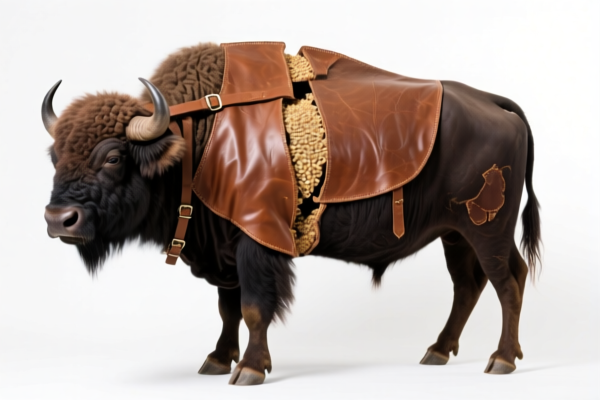
Product Images



AI Analysis
🐃 Split Buffalo Leather (水牛皮/水牛皮分层皮)
🌐 HS Code Reference & Customs Clearance Guide | 2026 Latest Tariff Analysis | Professional Clearance Strategy
📌 I. Product Definition & Classification: Do You Really Know "Split Buffalo Leather"?
Split Buffalo Leather refers to buffalo hides that have been split horizontally into layers. It is distinct from full-grain buffalo leather. In international trade, the classification depends heavily on the state of preservation (dry vs. tanned) and processing.
Dry Splits (Unprocessed): Raw buffalo hides that have been split but not yet tanned or dressed.
Tanned/Dressed Splits (Processed): Buffalo hides that have undergone tanning, dyeing, or finishing processes after splitting.
⚠️ Key Distinction Point:
- If the material is raw/dry buffalo hide that has been physically split but lacks tanning chemicals → It may fall under Chapter 41 (Raw Hides/Skins) depending on specific subheadings for "splits" in dry state.
- If the material is tanned or further processed buffalo leather (split) → It falls under Chapter 41 (Tanned Leather).
📦 II. HS Code Classification Details (2026 Latest Tariff Authority Comparison)
Based on the provided data, here are the matched HS Codes for Split Buffalo Leather. Note that while the term "Split" implies a physical separation, customs classification often hinges on the chemical state (Dry/Raw vs. Tanned) and the specific subheading logic for bovine species.
| HS Code | Product Description | Application Scenario | State of Leather |
|---|---|---|---|
4104.49.30.60 |
Buffalo Leather, Other, Split/Refined | Tanned/Chrome-tanned buffalo leather, not further processed than chrome-tanned | ✅ Tanned (Dry) |
4107.12.40.00 |
Buffalo Leather, Tanned, Vegetable Tanned | Tanned buffalo leather, specifically vegetable-tanned | ✅ Tanned (Wet Blue/Dry) |
4107.19.40.00 |
Other Tanned Buffalo Leather | Tanned buffalo leather, other than vegetable or chrome | ✅ Tanned |
4101.50.35.00 |
Buffalo Hides/Skins, Dry, Splits | Raw/Dry buffalo splits (before tanning) | ✅ Raw/Dry |
4101.20.35.00 |
Buffalo Hides/Skins, Dry, Whole | Raw/Dry buffalo whole hides (includes splits if defined as such in origin) | ✅ Raw/Dry |
4104.41.30.60 |
Buffalo Leather, Chrome-Tanned | Chrome-tanned buffalo leather splits | ✅ Tanned (Chrome) |
🔍 Critical Note:
-4101.xxxxCodes: Apply to DRY/RAW buffalo hides. If your "split" leather is raw (not tanned), it must be declared here.
-4104/4107.xxxxCodes: Apply to TANNED buffalo leather. "Split" usually refers to the physical grain layer. Most commercial "Split Buffalo Leather" is tanned.
- Do not mix: A dry split cannot be declared under tanned codes, and vice versa.
💰 III. 2026 Latest Tariff Rate Details (Including Additional Taxes & Policy Add-ons)
✅ Applicable Country: United States (US)
✅ Country of Origin: China (CN)
✅ Effective Date: November 10, 2025 (and subsequent imports)
🎯 1. 4104.49.30.60 & 4104.41.30.60 —— Tanned Buffalo Leather (Chrome/Other)
| Item | Content |
|---|---|
| Base Tariff | 2.4% (Ad Valorem) |
| Section 301 Tariff | 0.0% (No additional Section 301 tax for these specific subheadings in this dataset) |
| 122 Clause Tariff | +10% (Section 122 Tariff) |
| Total Tariff Rate | 12.4% |
| Tax Calculation | CIF Value × 12.4% |
| De Minimis Exemption | ❌ Not Applicable (Deny De Minimis) |
| Legal Basis Path | Base: 2.4% + 122: 10% → Total 12.4% |
📌 Explanation:
- These codes apply to tanned buffalo leather splits.
- The 10% Section 122 tariff is applied in addition to the base rate.
- No Section 301 (25%) is listed in this specific dataset for these codes, which is a significant cost advantage compared to other leather categories.
🎯 2. 4107.12.40.00 & 4107.19.40.00 —— Tanned Buffalo Leather (Vegetable/Other)
| Item | Content |
|---|---|
| Base Tariff | 2.5% (Ad Valorem) |
| Section 301 Tariff | 0.0% |
| 122 Clause Tariff | +10% (Section 122 Tariff) |
| Total Tariff Rate | 12.5% |
| Tax Calculation | CIF Value × 12.5% |
| De Minimis Exemption | ❌ Not Applicable (Deny De Minimis) |
| Legal Basis Path | Base: 2.5% + 122: 10% → Total 12.5% |
📌 Note:
- Vegetable-tanned (12) and other tanned (19) buffalo leathers.
- Slight increase in base rate (2.5% vs 2.4%) but still low total impact due to no Section 301.
🎯 3. 4101.50.35.00 & 4101.20.35.00 —— Dry/Raw Buffalo Hides/Splits
| Item | Content |
|---|---|
| Base Tariff | 2.4% (Ad Valorem) |
| Section 301 Tariff | +7.5% (Section 301 Tariff) |
| 122 Clause Tariff | +10% (Section 122 Tariff) |
| Total Tariff Rate | 19.9% |
| Tax Calculation | CIF Value × 19.9% |
| De Minimis Exemption | ❌ Not Applicable (Deny De Minimis) |
| Legal Basis Path | Base: 2.4% + 301: 7.5% + 122: 10% → Total 19.9% |
📌 Explanation:
- Raw/Dry buffalo hides (including splits) face higher tariffs.
- The 7.5% Section 301 tariff applies here, unlike the tanned leathers.
- This is a 15% higher cost compared to tanned leather splits.
- Crucial for Split Classification: If your product is "Split Buffalo Leather" and it is NOT tanned, it will likely fall here. If it IS tanned, you can optimize costs by using the 4104/4107 codes.
🛠️ IV. Customs Clearance Practical Advice (Real-World Pitfall Guide)
✅ 1. Preparation Checklist (No Exceptions)
| Document | Required | Description |
|---|---|---|
| ✅ Product Specification | ✔️ | Must specify: Split vs. Full Grain, Tanning Method (Chrome/Veg), Thickness, Weight. |
| ✅ Photo of Goods | ✔️ | Show the flesh side (to confirm split) and grain side. |
| ✅ Tanning Certificate | ✔️ | Essential to distinguish between Raw (4101) and Tanned (4104/4107). |
| ✅ Commercial Invoice | ✔️ | Clearly state "Split Buffalo Leather" and HS Code. |
| ✅ Packing List | ✔️ | Include gross/net weight, number of hides/sheets. |
✅ 2. Declaration Tips (Key Mnemonic)
🔥 "Tanned is Cheaper, Raw is Costly, Split is Physical, Tanning is Chemical!"
| Scenario | Correct HS Code | Wrong Practice | Consequence |
|---|---|---|---|
| Tanned Split Leather | 4104.49.30.60 (12.4%) |
Declared as Raw (4101.50.35.00) |
Overpayment (19.9% vs 12.4%) |
| Raw/Dry Split Hide | 4101.50.35.00 (19.9%) |
Declared as Tanned (4104.49.30.60) |
Underpayment + Penalty (12.4% vs 19.9%) |
| Vegetable Tanned Split | 4107.12.40.00 (12.5%) |
Mixed with Chrome Tanned | Classification error |
✅ 3. Special Cases Handling
| Situation | Handling Advice |
|---|---|
| Mixed Batches | Separate raw and tanned goods. Do not declare together. |
| OEM Custom Split Leather | Provide tanning method details. "Split" alone is insufficient; "Chrome-Tanned Split" is precise. |
| Small Quantity Samples | No De Minimis (Under $800 exemption is denied for Chinese leather goods under 122/301 rules). Prepare full duty payment. |
| Re-Split Leather | If leather is re-split after initial tanning, it is still classified as Tanned Leather (4104/4107). |
🌍 V. Global Market Clearance Comparison (2026 Latest)
| Country/Region | Recommended HS Code | Tariff Rate | Certification | Notes |
|---|---|---|---|---|
| 🇺🇸 USA | 4104.49.30.60 |
12.4% | No specific | Best Rate for Tanned Splits |
| 🇨🇳 China | 4104.49.30.60 |
~5-10% | CCC (if leather goods) | Import duty lower |
| 🇪🇺 EU | 4104.41 |
~10-12% | REACH (Chemicals) | Check REACH compliance for tanning agents |
| 🇦🇺 Australia | 4104.41 |
~5-10% | ACMA | No Section 122/301 equivalent |
📌 Conclusion:
- US Tariff Advantage: Tanned split buffalo leather (12.4%) is significantly cheaper than raw splits (19.9%).
- Optimization Strategy: Ensure the leather is fully tanned before export to US to utilize the lower 12.4% rate.
- Raw Splits: Face higher duties (19.9%) due to Section 301. Avoid if possible.
📌 VI. Common Errors & Pitfall Guide (Blood Lessons)
❌ Error 1: Declaring Tanned Split Leather as Raw Hides (4101.xxxx)
👉 Consequence: Overpaying 7.5% extra (19.9% vs 12.4%). No penalty, just lost profit.
❌ Error 2: Declaring Raw Split Hides as Tanned Leather (4104.xxxx)
👉 Consequence: Underpayment + Seizure/Fine. Customs will detect lack of tanning chemicals.
❌ Error 3: Ignoring 122 Clause Tariff
👉 Consequence: Every shipment faces an additional 10%. Budget accordingly.
❌ Error 4: Vague Description: "Buffalo Leather"
👉 Consequence: Customs may assign highest duty rate or delay clearance for classification review.
✅ Correct Description:
"Buffalo Leather, Split, Chrome-Tanned, Dry, 1.2mm Thickness, For Shoe Upper"
🎯 VII. Conclusion: Professional Declaration Saves Money!
🎯 Remember Mnemonic:
🔹 "Tanned is 12.4%, Raw is 19.9%, Split is Physical, Tanning is Key!"
🔹 "122 Clause Adds 10%, Base is Low, Total is Clear!"
📌 Pro Tip:
- If your product is Vegetable Tanned, use 4107.12.40.00 (12.5%).
- If Chrome Tanned, use 4104.49.30.60 (12.4%).
- If Raw/Dry, use 4101.50.35.00 (19.9%).
- Always provide Tanning Method in your commercial invoice to avoid misclassification.
📣 Immediate Action:
📞 Contact a professional customs broker.
📄 Provide Tanning Certificate and Product Photos.
🚀 Clearance Speed & Cost Efficiency Start with Accurate Classification!
✨ Professional Customs Clearance, Starting with Precise Classification!
💼 Every Dollar Saved is a Dollar Earned!
Customer Reviews
About HS Code Classification
The Harmonized System (HS) is an internationally standardized nomenclature developed by the World Customs Organization (WCO) to classify traded products. Over 200 countries use the HS system as the basis for customs tariffs, trade statistics, and import/export regulations.
Each HS code follows a hierarchical structure:
- Chapter (2 digits) — Broad category of goods (e.g., Chapter 84: Machinery and Mechanical Appliances)
- Heading (4 digits) — More specific grouping within the chapter
- Subheading (6 digits) — Internationally standardized breakdown, used by all WCO member countries
- National subdivisions (8-10 digits) — Country-specific extensions for further classification, such as US HTSUS 10-digit codes
Correct HS code classification is essential for smooth customs clearance, accurate duty payment, and compliance with trade regulations. Misclassification can lead to customs delays, overpayment of duties, or penalties.
When importing from CN to US, the applicable tariff rates may include:
- Most-Favored-Nation (MFN) rate — The standard duty rate applied to WTO members
- General rate — Applied to countries without trade agreements
- Trade remedy duties — Additional tariffs such as Section 301 (anti-dumping), Section 232 (national security), or countervailing duties
The information provided on this page is for reference purposes only. For official classification, please consult with your local customs authority or a licensed customs broker.