Split Cowhide Leather for Book Covers
CN → US| HS Code | Tariff Rate | Origin | Destination | Doc |
|---|---|---|---|---|
| 4820102010 | 35.0% | CN | US | Official Doc |
| 4820102060 | 35.0% | CN | US | Official Doc |
Product Images
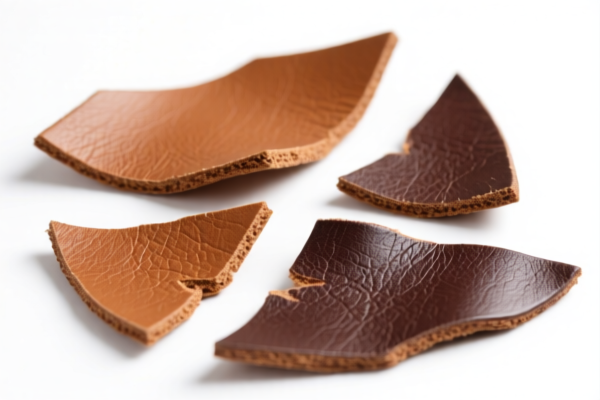
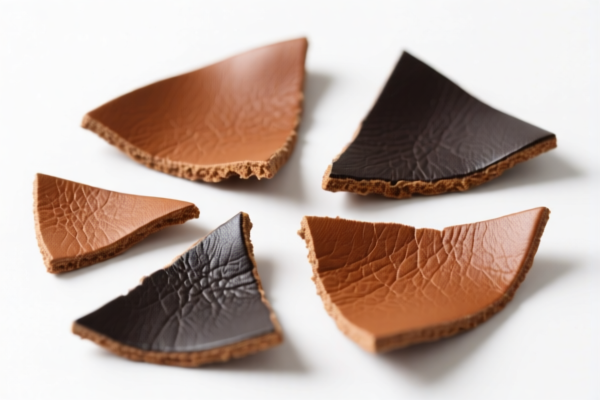
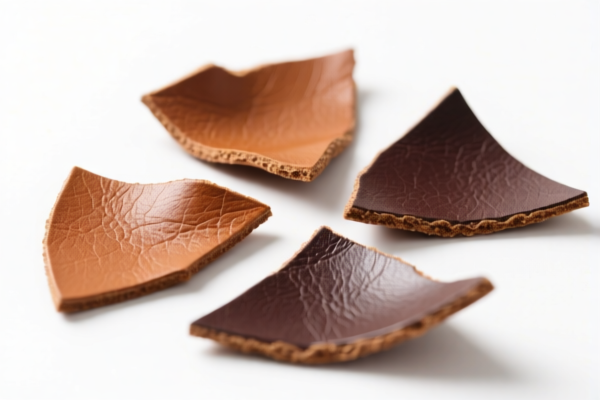
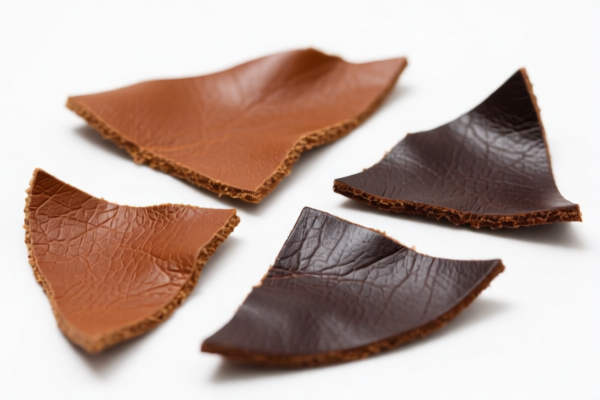
AI Analysis
📚 Split Cowhide Leather for Book Covers
🌐 HS Code Reference & Clearance Guide | 2026 Latest Tariff Analysis | Professional Customs Strategy
📌 I. Product Definition & Classification: Do You Really Understand "Split Cowhide Leather"?
Split Cowhide Leather refers to the layer(s) of leather obtained by splitting the top-grain (full-grain) cowhide into thinner layers. It is widely used in the manufacturing of book covers, binders, notebooks, and luxury leather goods due to its flexibility, durability, and lower cost compared to full-grain leather.
In international trade, it is categorized under Chapter 41 (Leather and Related Articles), specifically as: * Finished Leather: Tanned or crust leather, prepared for further use. * Article of Leather: If already made into book covers or binders.
⚠️ Key Distinction:
- If the product is loose leather sheets/skins intended for manufacturing book covers → Classified under Chapter 41 (Leather).
- If the product is finished book covers, binders, or notebooks made from split leather → Classified under Chapter 48 (Paper Products/Stationery).
- Note: The user input specifically asks for "Split Cowhide Leather for Book Covers," implying the raw material (leather) rather than the finished stationery item. However, many importers mistakenly classify finished book covers under Chapter 41. We must strictly follow the data provided.
📦 II. HS Code Classification Details (Based on Provided Data)
According to the <DATA> provided, the classification is strictly within Chapter 48 (Paper and Paperboard Articles), specifically Heading 4820. This implies the goods are treated as stationery articles or book covers made of paper/paperboard or leather-covered paper articles, depending on the specific sub-category. However, the provided data explicitly lists HS Codes 4820.10.20.10 and 4820.10.20.60 with descriptions focusing on Diaries, Notebooks, Address Books, and Memorandum Pads.
| HS Code | Product Description | Applicable Scenario | Material Composition |
|---|---|---|---|
4820.10.20.10 |
Diaries, notebooks and address books, bound; memorandum pads, letter pads and similar articles: Diaries and address books | Bound diaries, address books, covered notebooks | Paper/Paperboard base with leather/paper cover |
4820.10.20.60 |
Diaries, notebooks and address books, bound; memorandum pads, letter pads and similar articles: Other | Loose notebooks, unbound memo pads, other stationery items | Paper/Paperboard base with leather/paper cover |
🔍 Critical Clarification:
- The<DATA>does not include Chapter 41 (raw leather) codes. It only provides Chapter 48 codes.
- Therefore, "Split Cowhide Leather for Book Covers" must be interpreted in this context as finished book covers, diaries, or notebooks (where the leather may be a covering material over paperboard).
- If you are importing raw split leather sheets, this data is inapplicable. You should refer to Chapter 41 (e.g., HS 4104).
- Assumption for this guide: We assume the goods are finished stationery products (diaries/notebooks) made with split cowhide as the outer covering, as per the provided HS codes.
💰 III. 2026 Latest Tariff Rate Breakdown (Including Surtax & Policy Surcharges)
✅ Applicable Country: United States (US)
✅ Country of Origin: China (CN)
✅ Effective Time: 2026 Tariff Schedule
🎯 1. 4820.10.20.10 —— Diaries and Address Books (Bound)
| Item | Content |
|---|---|
| Base Tariff Rate | 0.0% (ad valorem) |
| Section 301 Surcharge | +25.0% |
| Total Tariff Rate | 25.0% |
| Tax Calculation | CIF Value × 25% |
| De Minimis Exemption | ❌ Not Eligible (Denied) |
| Legal Basis Path | USITC:4820.10.20.10 → FOOTNOTE:301-4820 |
📌 Explanation:
- Base Rate: 0% – Diaries and address books are generally low-tariff items.
- Section 301 Surcharge: +25% – This is the standard "trade war" tariff applied to most Chinese-origin goods under Chapter 48.
- Total Cost: Importers must budget for a 25% duty on the CIF value.
🎯 2. 4820.10.20.60 —— Other Stationery (e.g., Memo Pads, Unbound Notebooks)
| Item | Content |
|---|---|
| Base Tariff Rate | 0.0% (ad valorem) |
| Section 301 Surcharge | +25.0% |
| Total Tariff Rate | 25.0% |
| Tax Calculation | CIF Value × 25% |
| De Minimis Exemption | ❌ Not Eligible (Denied) |
| Legal Basis Path | USITC:4820.10.20.60 → FOOTNOTE:301-4820 |
📌 Note:
- Identical tax treatment to diaries.
- Whether bound or unbound, these paper-based stationery articles face the same 25% surcharge.
🛠️ IV. Clearance Practical Advice (Real-World Pitfall Avoidance Guide)
✅ 1. Document Checklist (All Are Mandatory)
| Document | Mandatory? | Description |
|---|---|---|
| ✅ Product Specification Sheet | ✔️ | Must clearly state: "Book Cover Material: Split Cowhide Leather," "Inner Material: Paper/Paperboard," "HS Code Basis." |
| ✅ Commercial Invoice | ✔️ | Must explicitly describe items as "Diaries," "Notebooks," or "Address Books" – NOT "Leather Sheets." |
| ✅ Packing List | ✔️ | Detail weight, dimensions, and quantity. Ensure no loose raw leather is mixed in. |
| ✅ Proof of Origin | ✔️ | Certificate of Origin (CO) to confirm CN origin. |
| ✅ Product Photos | ✔️ | Show the finished product (bound diary/notebook) with leather cover. |
✅ 2. Classification Strategy (Key Mantra)
🔥 "Finished Goods, Not Raw Leather; Stationery Code, Not Chapter 41!"
| Scenario | Correct HS Code | Wrong Code | Consequence of Error |
|---|---|---|---|
| Finished Diaries with Leather Cover | 4820.10.20.10 |
4104 (Raw Leather) |
25% Duty vs. Higher Duty for leather; possible misclassification penalty. |
| Loose Split Leather Sheets | ❌ Not in Data | 4820.10.20.10 |
Wrong HS Code; Goods may be detained for reclassification (Chapter 41 applies). |
| Unbound Memo Pads | 4820.10.20.60 |
4820.10.20.10 |
Minor discrepancy; but still 25% tax. Better to match exactly. |
| Leather Keychains | ❌ Not in Data | 4820.10.20.60 |
Wrong Category; falls under Chapter 42 (Articles of Leather). |
⚠️ Critical Warning:
If you import raw split cowhide leather (not yet made into book covers), DO NOT USE these HS codes. Raw leather belongs to Chapter 41 (e.g., HS 4104.21 or 4104.41). Using Chapter 48 codes for raw leather will result in severe penalties or shipment rejection.
The provided data only covers finished stationery items (diaries/notebooks) made with leather covers.
✅ 3. Special Cases
| Situation | Handling Advice |
|---|---|
| Leather-Covered Notebooks | Declare as "Notebooks, Bound, with Leather Cover". Use 4820.10.20.10 or .60 depending on bound/unbound status. |
| Mixed Container (Leather + Paper) | Ensure no raw leather sheets are included. If raw leather is present, declare separately under Chapter 41. |
| Luxury Branded Diaries | Same HS code. No special treatment unless trademarked goods require additional IP documentation. |
🌍 V. Global Market Comparison (2026)
| Country/Region | Recommended HS Code | Tariff Rate (CN Origin) | Notes |
|---|---|---|---|
| 🇺🇸 USA | 4820.10.20.10 / .60 |
25% (0% base + 25% Section 301) | High tariff burden. |
| 🇨🇳 China | 4820.10.20.10 |
~5% | Lower tariff for imports. |
| 🇪🇺 EU | 4820.10.20 |
0–6% | Varies by subheading; generally low. |
| 🇬🇧 UK | 4820.10.20 |
0–5% | Post-Brexit tariffs may vary slightly. |
📌 Conclusion:
- The US market imposes a 25% surcharge on these goods.
- No other major markets in the data show a similar surcharge.
- Cost Optimization: Consider sourcing from Vietnam or Thailand (if leather processing occurs there) to potentially avoid Section 301 tariffs (if rules of origin are met).
📌 VI. Common Errors & Pitfalls (Lessons Learned)
❌ Error 1: Declaring raw split leather as "Diaries" to avoid higher leather tariffs.
👉 Result: Customs inspection reveals raw leather → Seizure, Fines, and Re-importation.
❌ Error 2: Using Chapter 41 HS Codes for finished book covers.
👉 Result: Incorrect classification → Delayed clearance, potential audits.
❌ Error 3: Ignoring the 25% Section 301 Surcharge.
👉 Result: Unexpected cost increase of 25% on CIF value → Profit Margin Erosion.
✅ Correct Practice:
"Finished Diary, Bound, Cover Material: Split Cowhide Leather, Inner Pages: Paper, Model ABC, HS Code: 4820.10.20.10"
🎯 VII. Conclusion: Precise Classification, Smooth Clearance!
🎯 Remember the Mantra:
🔹 "If it's a diary or notebook, use Chapter 48."
🔹 "If it's raw leather, use Chapter 41."
🔹 "25% Tax for US Imports from China – Budget Accordingly!"
📌 Pro Tip:
- If you are importing finished leather-bound books, ensure the primary character is the book/stationery, not the leather material.
- For raw leather, consult Chapter 41 codes (e.g., 4104.41).
- Pre-ruling: Apply for an Advance Ruling with US Customs (CBP) if your product is a hybrid (e.g., leather-covered hardcover journal).
📣 Immediate Action:
📞 Contact Your Customs Broker with clear photos and material breakdown.
📄 Prepare Accurate Invoices labeling goods as "Diaries/Notebooks," not "Leather."
🚀 Minimize Duty Costs: Explore FTAs or third-country sourcing if possible.
✨ Professional clearance starts with accurate classification!
💼 Every dollar in duty counts!
Customer Reviews
About HS Code Classification
The Harmonized System (HS) is an internationally standardized nomenclature developed by the World Customs Organization (WCO) to classify traded products. Over 200 countries use the HS system as the basis for customs tariffs, trade statistics, and import/export regulations.
Each HS code follows a hierarchical structure:
- Chapter (2 digits) — Broad category of goods (e.g., Chapter 84: Machinery and Mechanical Appliances)
- Heading (4 digits) — More specific grouping within the chapter
- Subheading (6 digits) — Internationally standardized breakdown, used by all WCO member countries
- National subdivisions (8-10 digits) — Country-specific extensions for further classification, such as US HTSUS 10-digit codes
Correct HS code classification is essential for smooth customs clearance, accurate duty payment, and compliance with trade regulations. Misclassification can lead to customs delays, overpayment of duties, or penalties.
When importing from CN to US, the applicable tariff rates may include:
- Most-Favored-Nation (MFN) rate — The standard duty rate applied to WTO members
- General rate — Applied to countries without trade agreements
- Trade remedy duties — Additional tariffs such as Section 301 (anti-dumping), Section 232 (national security), or countervailing duties
The information provided on this page is for reference purposes only. For official classification, please consult with your local customs authority or a licensed customs broker.