Split Cowhide for Collectibles
CN → USProduct Images
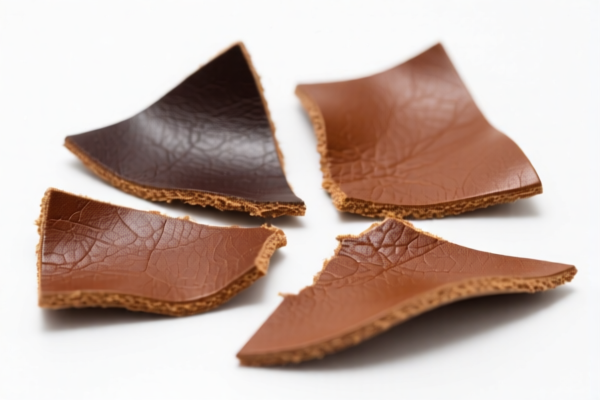
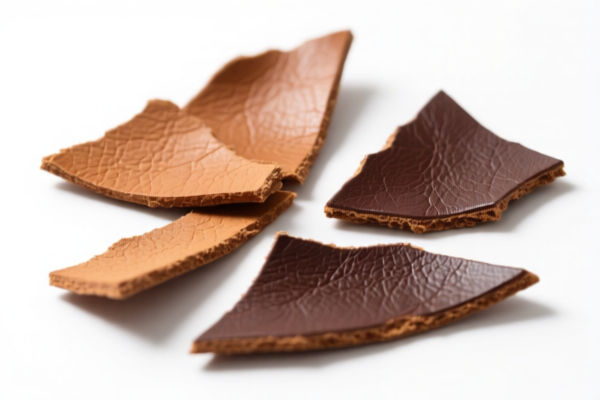
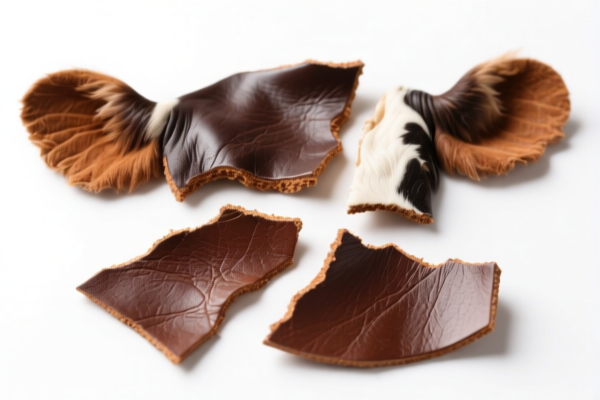
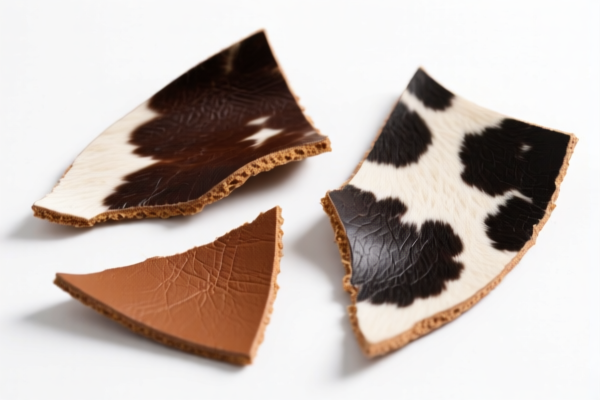
AI Analysis
🐂 Split Cowhide for Collectibles: The Ultimate Guide to Classification & US Customs Clearance
🌐 HS Code Reference & Customs Clearance Guide | 2026 Latest Tariff Analysis | Professional Strategy for Collectibles
📌 I. Product Definition: What Exactly is "Split Cowhide"?
In the world of high-end collectibles (e.g., luxury wallets, bespoke cards, decorative art, or limited-edition memorabilia), "Split Cowhide" refers to a specific leather processing stage. It is crucial to distinguish this from "Full-Grain" or "Top-Grain" leather, as it significantly impacts duty rates and customs acceptance.
Technical Definition: * Split Cowhide: Leather that has been sliced horizontally into layers. The top layer (grain layer) is removed for higher-quality leathers. The remaining bottom layers are called "splits." * Collectibles Context: These are rarely raw hides. They are processed leather sheets or cut pieces used to create finished collectible items (e.g., engraved leather cards, framed leather art, or components of luxury goods). * Key Characteristic: Split leather is porous, less durable, and often has a faux-grain surface applied (embossed and coated) to mimic top-grain leather.
⚠️ Critical Distinction:
- If sold as raw hides/skins (tanned but not further worked) → Classified under Chapter 41.
- If sold as finished articles (e.g., a leather wallet, a framed art piece, a credit card holder) → Classified under Chapter 46 or 42 depending on form.
- Most "Collectible" items are finished goods, not raw materials.
📦 II. HS Code Classification Details (2026 Latest Tariff Authority)
For US Customs and Border Protection (CBP), the classification depends heavily on whether the item is a raw material or a finished article.
| HS Code | Product Description | Applicable Scenario | Key Identification Features |
|---|---|---|---|
4106.32.00.00 |
Tanned or crust bovine hides, split, with grain layer | Raw Material: Wholesale split leather sheets | Unfinished, no branding, bulk shipment |
4107.21.90.00 |
Tanned leather, full-grain, of bovine | ❌ Not Applicable | Split leather is not full-grain |
4602.12.00.00 |
Plaiting materials; articles of plaiting materials | ❌ Not Applicable | Not woven/plaited |
4203.21.00.00 |
Articles of apparel clothing accessories, of leather | Finished Good: Wallets, cards, cases | Finished article, functional use |
9505.90.00.00 |
Festive, carnival or other entertainment articles | ❌ Not Applicable | Unless explicitly "Halloween Decor" |
9705.00.00.00 |
Collections and collectors' pieces of antiquity | ❌ Not Applicable | Leather is not "antique" (pre-100 years) |
9706.00.00.00 |
Antiques of an age exceeding one hundred years | ❌ Not Applicable | Same as above |
9705.00.00.99 |
Other Collections and Collectors' Pieces | Potential Fit: Framed leather art | High Risk: CBP may reclassify to Chapter 46/42 |
🔍 Important Note:
- "Collectibles" is a marketing term, not a customs classification term.
- If the item is a finished product (e.g., a leather credit card holder, a framed leather artwork), it generally falls under Chapter 42 (Articles of Leather) or Chapter 46 (Basketwork/Wickerwork, etc. - if woven), not Chapter 97 (Collectibles).
- Chapter 97 (9705/9706) is reserved for antiques (>100 years) or genuine collections (e.g., a boxed set of stamps, coins). A single piece of split leather or a leather craft item is not considered a "collectible" by CBP for duty purposes.
💰 III. 2026 Latest Tariff Rates (US Market)
✅ Applicable Country: United States (US)
✅ Origin: China (CN)
✅ Effective Date: Post-November 2025 (Including Section 301 & IEEPA adjustments)
🎯 1. If Classified as Raw Material: 4106.32.00.00
| Item | Content |
|---|---|
| Base Rate | 4.8% (ad valorem) |
| Section 301 (Footnote 9903.88.01) | +25% |
| IEEPA (China-Specific) | +10% |
| Total Duty Rate | 39.8% |
| Calculation | CIF Value × 39.8% |
| De Minimis Exemption? | ❌ No (Value > $800 is not exempt; <$800 is exempt but risky if misclassified) |
📌 Explanation:
- Raw split leather is considered a textile/leather input.
- High duty burden: 39.8% is significant for low-margin materials.
🎯 2. If Classified as Finished Article: 4203.21.00.00 (e.g., Wallet/Card Holder)
| Item | Content |
|---|---|
| Base Rate | 8.2% (ad valorem) |
| Section 301 (Footnote 9903.88.01) | +25% |
| IEEPA (China-Specific) | +10% |
| Total Duty Rate | 43.2% |
| Calculation | CIF Value × 43.2% |
| De Minimis Exemption? | ❌ No |
📌 Explanation:
- Finished leather articles attract higher base duties.
- Risk: If you misdeclare a $50 wallet as a "raw hide" to save duty, CBP will reclassify and penalize.
🎯 3. If Misclassified as "Collectible" under 9705.00.00.99
| Item | Content |
|---|---|
| Base Rate | 0% (ad valorem) |
| Section 301 | +0% (Exempt from 301 for Chapter 97 items) |
| IEEPA | +0% (Exempt for Chapter 97 items) |
| Total Duty Rate | 0% |
| De Minimis Exemption? | ✅ Yes (if value <$800) |
⚠️ CRITICAL WARNING:
- You CANNOT classify split cowhide as a "Collectible" under 9705.
- CBP explicitly states that Chapter 97 does not cover "newly manufactured items" simply because they are marketed as "collectibles."
- Consequence: If you declare under 9705, CBP will:
1. Reclassify to the correct HS Code (e.g., 4203.21.00.00).
2. Assess back duties + interest.
3. Issue a 1016 Warning or Seizure for false declaration.
4. Potentially fine under 19 U.S.C. § 1592.
🛠️ IV. Customs Clearance Practical Advice (Real-World Pitfalls)
✅ 1. Document Checklist (Non-Negotiable)
| Document | Required? | Explanation |
|---|---|---|
| ✅ Commercial Invoice | ✔️ | Must clearly state: "Split Cowhide, Tanned, Embossed," NOT "Collectible Art" |
| ✅ Product Photos | ✔️ | Show texture, edges, and any packaging. Prove it’s leather, not paper/plastic |
| ✅ Material Composition | ✔️ | "100% Bovine Split Leather" |
| ✅ Usage Declaration | ✔️ | "For use in manufacturing luxury accessories" OR "Finished wallet for retail" |
| ✅ Origin Certificate | ✔️ | To prove China origin (triggers IEEPA/301) |
✅ 2. Declaration Tips (The Golden Rules)
🔥 “Describe Function, Not Marketing!”
| Scenario | Correct Declaration | Wrong Declaration |
|---|---|---|
| Selling a leather wallet | "Leather Wallet, Split Cowhide, Model XYZ" | "Collectible Leather Card, Limited Edition" |
| Selling framed leather art | "Framed Embossed Leather Panel, 12x12" | "Collectible Art Piece, Value $500" |
| Selling bulk leather sheets | "Tanned Split Cowhide, Unfinished" | "Raw Hide Collectible" |
✅ 3. Special Cases & Mitigation
| Situation | Handling Advice |
|---|---|
| Value < $800 (De Minimis) | If shipped via e-commerce (e.g., Amazon, eBay), you might avoid duty, but classification accuracy is still mandatory. Misclassification can lead to account suspension. |
| "Limited Edition" Marketing | Do not include "Limited Edition" or "Collectible" on the commercial invoice. Use neutral terms like "Finished Leather Good." |
| Framed Leather Art | If the frame is wood, it’s still primarily a leather good. Classify under Chapter 42. Do not use Chapter 97. |
| Sample for R&D | If true samples, declare as "Commercial Sample" with value of $1-$10, but must be genuine samples (not production units). |
🌍 V. Global Market Comparison (2026)
| Country/Region | Recommended HS Code | Duty Rate | Certification | Notes |
|---|---|---|---|---|
| 🇺🇸 USA | 4203.21.00.00 |
43.2% (incl. 301+IEEPA) | No special cert | Hardest market due to high tariffs |
| 🇪🇺 EU | 4203.21.00 |
4.5% + VAT | REACH Compliance | No Section 301 equivalent |
| 🇨🇳 China | 4203.21.00 |
5% - 10% | CCC (if applicable) | Low duty, high volume |
| 🇬🇧 UK | 4203.21.00 |
4.5% + VAT | UKCA | Post-Brexit rules apply |
| 🇯🇵 Japan | 4203.21.00 |
4.5% + 10% Consumption | No special cert | Moderate duty |
📌 Conclusion:
- USA is the most expensive market for split leather collectibles due to 301 and IEEPA tariffs.
- EU/UK/Asia offer more favorable duty environments.
- Avoid Chapter 97 in all markets unless the item is genuinely an antique (>100 years).
📌 VI. Common Mistakes & Pitfalls (Blood & Tears)
❌ Mistake 1: Declaring a new leather wallet as a "Collectible" to avoid 43.2% duty.
👉 Result: CBP seizes shipment, fines up to 40% of value, and blacklists your importer code.
❌ Mistake 2: Using "Raw Hide" for finished leather goods.
👉 Result: CBP demands proof of "raw" status (no embossing, no finishing). If you have embossed leather, it’s finished → higher duty.
❌ Mistake 3: Ignoring IEEPA 10% surcharge.
👉 Result: Even if Section 301 is avoided (rare), IEEPA still applies to most Chinese leather goods.
❌ Mistake 4: Not disclosing "Split" vs. "Full-Grain."
👉 Result: If a buyer complains "it’s not genuine full-grain," CBP may audit your past shipments for fraud.
✅ Correct Approach:
"Finished Leather Wallet, Split Cowhide, Embossed, Model ABC, FCC/RoHS N/A, Country of Origin: China"
🎯 VII. Conclusion: Professional Classification, Cost Savings, Compliance!
🎯 Remember the Mantra:
🔹 "Marketing ≠ Customs. New ≠ Antique. Split ≠ Full-Grain."
🔹 "Classify as Leather Article, Pay 43.2% or Find Legal Loophole (e.g., Duty-Free Zone). Never Fake Collectible Status."
📌 Pro Tip:
If your product is truly unique and you believe it qualifies as a "Collectible" under CBP’s narrow definition (e.g., part of a numbered set with provenance), apply for an Advance Ruling (Ruling Number Request) with CBP before shipping. This is the only safe way to challenge classification.
📣 Immediate Action:
📞 Consult a Licensed Customs Broker
📄 Review Commercial Invoice Language
🚀 Avoid Seizure, Avoid Fines, Ensure Smooth Customs Clearance!
✨ Professional Classification Starts with Accurate Description!
💼 Your Profit Margin Depends on Your HS Code!
Customer Reviews
About HS Code Classification
The Harmonized System (HS) is an internationally standardized nomenclature developed by the World Customs Organization (WCO) to classify traded products. Over 200 countries use the HS system as the basis for customs tariffs, trade statistics, and import/export regulations.
Each HS code follows a hierarchical structure:
- Chapter (2 digits) — Broad category of goods (e.g., Chapter 84: Machinery and Mechanical Appliances)
- Heading (4 digits) — More specific grouping within the chapter
- Subheading (6 digits) — Internationally standardized breakdown, used by all WCO member countries
- National subdivisions (8-10 digits) — Country-specific extensions for further classification, such as US HTSUS 10-digit codes
Correct HS code classification is essential for smooth customs clearance, accurate duty payment, and compliance with trade regulations. Misclassification can lead to customs delays, overpayment of duties, or penalties.
When importing from CN to US, the applicable tariff rates may include:
- Most-Favored-Nation (MFN) rate — The standard duty rate applied to WTO members
- General rate — Applied to countries without trade agreements
- Trade remedy duties — Additional tariffs such as Section 301 (anti-dumping), Section 232 (national security), or countervailing duties
The information provided on this page is for reference purposes only. For official classification, please consult with your local customs authority or a licensed customs broker.