Split Cowhide for Handbags
CN → US| HS Code | Tariff Rate | Origin | Destination | Doc |
|---|---|---|---|---|
| 4107127030 | 15.0% | CN | US | Official Doc |
| 4107197050 | 15.0% | CN | US | Official Doc |
Product Images
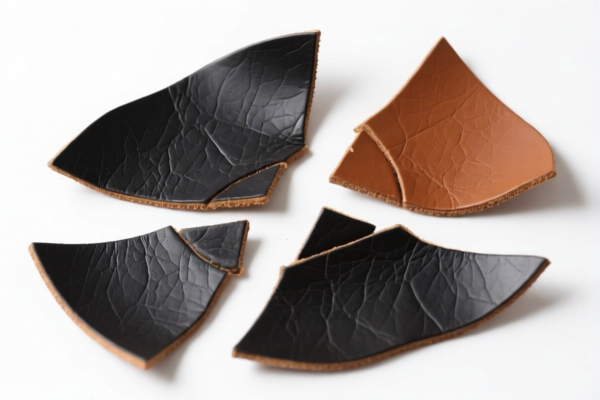
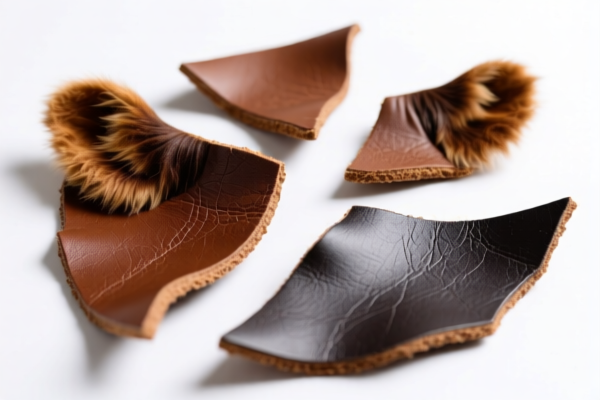
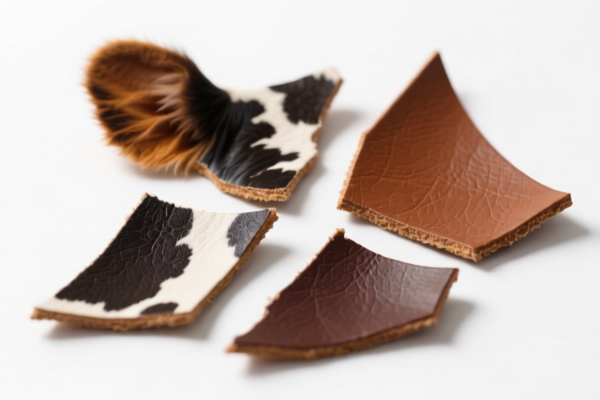
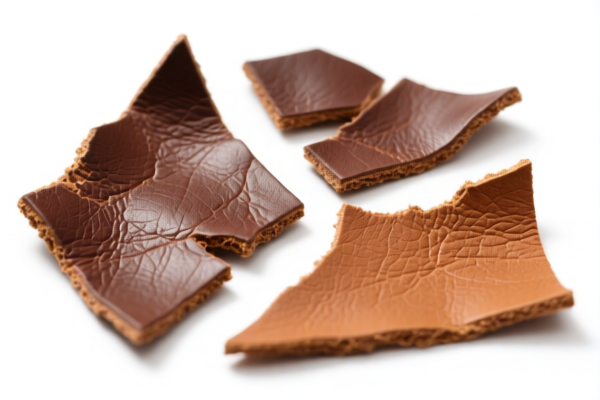
AI Analysis
👜 Split Cowhide for Handbags (Leather Preparation & Sourcing Guide)
🌐 HS Code Reference & Customs Clearance Guide | 2026 Latest Tariff Analysis | Professional Compliance Strategy
📌 I. Product Definition: What is "Split Cowhide"?
Split Cowhide refers to the lower layers of bovine hides (cows or buffalo) that have been separated from the top-grain layer. In the leather industry, the hide is sliced horizontally. The top layer (grain) is prized for natural texture, while the split layers are often buffed, embossed, or coated to create a uniform surface.
Key Classification Logic: * Material: Bovine (cow/buffalo) or Equine. * Process: Tanned or crust-prepared (further prepared after initial tanning). * Surface: Without hair on (delivered). * Usage: Specifically identified for Handbags, Cases, Straps, Collars or general Belting.
⚠️ Critical Distinction:
- If the leather is dyed, finished, or processed further after tanning → It falls under Heading 4107.
- If it is still raw/salted or merely cured but not fully tanned/prepared → It falls under earlier headings (e.g., 4102/4103), but for handbag materials, it is almost always 4107.
- Grain vs. Split: The HS codes provided in the data specifically address "Other" splits (not fancy belting or bag/case/strap/collar specific fancy leathers), so precise description matters.
📦 II. HS Code Classification Matrix (2026 Official Tariff Data)
Based on the provided dataset, there are two primary HS Codes for split cowhide, differentiated by end-use application specified in the sub-heading description.
| HS Code | Description (Extracted from Source) | Typical Application | Tax Rate (China Origin to US) |
|---|---|---|---|
4107.12.70.30 |
Leather further prepared... of bovine... without hair on... Other: Not fancy Belting | General purpose split leather, often used for Belting, industrial straps, or non-fancy general goods. | 0.0% |
4107.19.70.50 |
Leather further prepared... of bovine... without hair on... Other: Not fancy Bag, case, strap and collar | Split leather explicitly intended for Handbags, Wallets, Luggage, Straps, Collars. | 0.0% |
🔍 Key Insight for Handbags:
Although both codes show 0.0% total tax in the provided data,4107.19.70.50is the correct classification for Handbags because its description explicitly includes "Bag, case, strap and collar".
Using4107.12.70.30(labeled for "Belting") for handbag materials could lead to misclassification penalties during customs audits, even if the duty rate is currently identical.
💰 III. 2026 Tariff Rate Detailed Breakdown
✅ Applicable Country: United States (US)
✅ Origin: China (CN) (Assumed based on common trade context; verify if origin is different)
✅ Status: No Additional Section 301 Tariffs on Leather Hides (Note: Unlike electronics, leather hides often enjoy lower or zero additional tariffs, but this must be verified against the latest USITC lists.)
🎯 1. HS Code 4107.19.70.50 (Recommended for Handbags)
| Item | Details |
|---|---|
| Base Tariff Rate | 0.0% (Ad Valorem) |
| Section 301 / IEEPA Surcharge | 0.0% (No surcharge listed in provided data) |
| Total Effective Tax Rate | 0.0% |
| Duty Calculation | CIF Value × 0.0% = $0 |
| De Minimis Eligibility | ✅ Yes (If shipped via 86/87/88 channels, value <$800 may be duty-free entirely) |
| Legal Path | HTSUS:4107.19.70.50 → No Footnote Surcharge |
🎯 2. HS Code 4107.12.70.30 (For Belting/General)
| Item | Details |
|---|---|
| Base Tariff Rate | 0.0% (Ad Valorem) |
| Section 301 / IEEPA Surcharge | 0.0% (No surcharge listed in provided data) |
| Total Effective Tax Rate | 0.0% |
| Duty Calculation | CIF Value × 0.0% = $0 |
| De Minimis Eligibility | ✅ Yes |
| Legal Path | HTSUS:4107.12.70.30 → No Footnote Surcharge |
📌 Explanation:
- The provided data indicates 0.0% total tax for both codes. This is favorable for importers.
- Crucial: Always confirm if the leather is "Fancy" (embossed, printed, heavily processed). If it is "Fancy," it might fall under 4114 (Patent leather, metallic leather), which may have different tax rates. The data explicitly excludes "heading 4114" and "fancy" items, so ensure your product is not classified as "Fancy."
🛠️ IV. Customs Clearance Practical Advice
✅ 1. Documentation Checklist (Mandatory)
| Document | Requirement | Note |
|---|---|---|
| Commercial Invoice | Must specify: "Split Cowhide, Tanned, Without Hair" | Include HS Code 4107.19.70.50 explicitly. |
| Packing List | Weight (Net/Gross) and Volume | Leather is heavy; verify weight accuracy. |
| Product Description | Critical: State "Not Fancy" | If the leather is embossed with a brand logo or unique pattern, it may be deemed "Fancy" → Risk of misclassification. |
| Certificate of Origin | Required for preferential treatment (if any) | Standard CO for China origin. |
| Photos | Front, Back, Grain/Split surface | Prove it is "Split" and not "Full Grain" (which has different codes). |
✅ 2. Classification Strategy (The "Handbag" Rule)
| Scenario | Correct HS Code | Reason |
|---|---|---|
| Standard Split Cowhide (Buffed, uniform surface, no unique printing) | 4107.19.70.50 |
Explicitly covers "Bag, case, strap and collar". |
| Split Leather for Belts/Industrial Straps | 4107.12.70.30 |
Covers "Belting". |
| Patent/Metallic/Highly Embossed Leather | 4114.20.00.00 (Not in data) |
Excluded from the provided 4107 data; requires separate lookup. |
| Raw/Salted Skins (Not Tanned) | 4102.xx.xx (Not in data) |
Only apply if not fully tanned. Most handbag leather is tanned. |
🔥 Pro Tip:
"Name it Right, Pay it Right!"
Do NOT use vague terms like "Leather Material."
Use: "Split Cowhide Leather, Tanned, Without Hair, Not Fancy, For Handbag Manufacture, HS 4107.19.70.50"
✅ 3. Common Pitfalls & Avoidance
| ❌ Mistake | ✅ Correct Action |
|---|---|
| Misclassifying as "Fancy Leather" | Verify with supplier: Is there any gold foil, unique embossing, or printing? If no → "Not Fancy". |
| Using "Full Grain" description for Split | Split leather has a suede-like or coated back; ensure description matches physical sample. |
| Ignoring "Without Hair" status | If hair is still attached (e.g., shearling), it is NOT 4107. It must be deloused/delivered without hair. |
| Assuming 0% tax always applies | Check for Section 301 exclusions or changes in USITC lists. Current data shows 0%, but verify before shipment. |
🌍 V. Global Market Comparison (2026)
| Market | HS Code | Tariff Rate | Key Requirements |
|---|---|---|---|
| 🇺🇸 USA | 4107.19.70.50 |
0.0% | Clear "Not Fancy" declaration; accurate split vs. grain description. |
| 🇨🇳 China | 4107.19.70.50 |
Varies | Import duties may apply; check latest Chinese tariff schedule. |
| 🇪🇺 EU | 4107 21 / 4107 29 |
Varies (Often 4-6.5%) | CE/REACH compliance for chemical tanning agents. |
| 🇬🇧 UK | 4107 21 / 4107 29 |
Varies | Post-Brexit import rules apply; UKCA marking not required for leather but chemical regs do. |
📌 Conclusion:
The USA currently offers 0.0% duty on these specific split leather codes (based on provided data), making it a competitive market for handbag manufacturers sourcing split cowhide from China. However, accurate classification is key to avoiding audits.
📌 VI. Final Checklist for Importers
- Confirm Process: Is the leather tanned and crusted/prepared? → Yes → Heading 4107.
- Confirm Surface: Is it without hair? → Yes → Heading 4107.
- Confirm Use: Is it for Handbags/Straps? → Use
4107.19.70.50. - Confirm "Fancy" Status: Is it NOT patent, metallic, or heavily embossed with unique patterns? → Use "Not Fancy" → 0% Tax.
- Document Clearly: Invoice must state "Split Cowhide, Tanned, Without Hair, Not Fancy, For Handbags".
🎯 VII. Conclusion: Precision Pays Off
🎯 Remember:
🔹 "Split for Bags? Use 19.70.50!"
🔹 "Not Fancy? Say 'Not Fancy'!"
🔹 "0% Tax is Great, but Misclassification is Fatal!"
📌 Pro Tip:
If your leather is embossed with a brand logo (e.g., Gucci-style monogram), it may be considered "Fancy" and potentially fall under 4114, which could have different tax rates. Always consult a customs broker if the finish is complex.
📣 Immediate Action:
📞 Contact your freight forwarder with the exact HS Code
4107.19.70.50and description.
🚀 Ensure your supplier provides a "Material Test Report" confirming it is Split Cowhide and Not Fancy.
💼 Your profit margin depends on this 0.0% rate — don't lose it to errors!
✨ Professional Customs Clearance Starts with Correct Classification!
💼 Every percent saved is profit earned!
Customer Reviews
About HS Code Classification
The Harmonized System (HS) is an internationally standardized nomenclature developed by the World Customs Organization (WCO) to classify traded products. Over 200 countries use the HS system as the basis for customs tariffs, trade statistics, and import/export regulations.
Each HS code follows a hierarchical structure:
- Chapter (2 digits) — Broad category of goods (e.g., Chapter 84: Machinery and Mechanical Appliances)
- Heading (4 digits) — More specific grouping within the chapter
- Subheading (6 digits) — Internationally standardized breakdown, used by all WCO member countries
- National subdivisions (8-10 digits) — Country-specific extensions for further classification, such as US HTSUS 10-digit codes
Correct HS code classification is essential for smooth customs clearance, accurate duty payment, and compliance with trade regulations. Misclassification can lead to customs delays, overpayment of duties, or penalties.
When importing from CN to US, the applicable tariff rates may include:
- Most-Favored-Nation (MFN) rate — The standard duty rate applied to WTO members
- General rate — Applied to countries without trade agreements
- Trade remedy duties — Additional tariffs such as Section 301 (anti-dumping), Section 232 (national security), or countervailing duties
The information provided on this page is for reference purposes only. For official classification, please consult with your local customs authority or a licensed customs broker.