Split Cowhide for Leather Craft
CN → US| HS Code | Tariff Rate | Origin | Destination | Doc |
|---|---|---|---|---|
| 4104114010 | 15.0% | CN | US | Official Doc |
| 4104111020 | 35.0% | CN | US | Official Doc |
| 4113906000 | 36.6% | CN | US | Official Doc |
| 4113903000 | 38.3% | CN | US | Official Doc |
| 4104114010 | 15.0% | CN | US | Official Doc |
Product Images
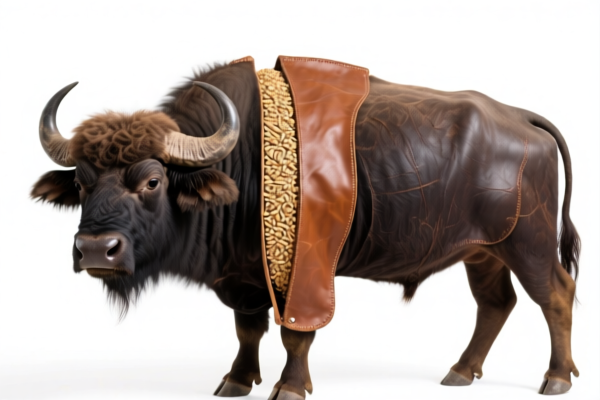

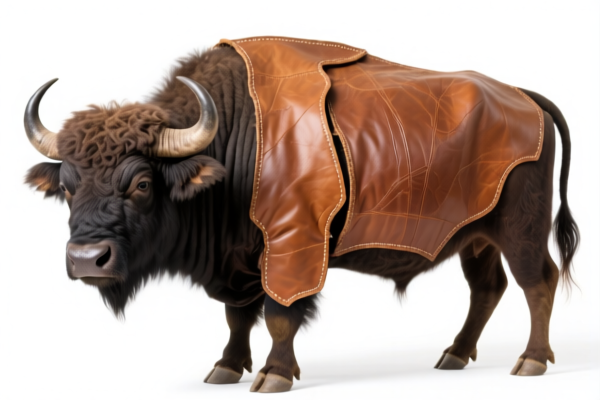
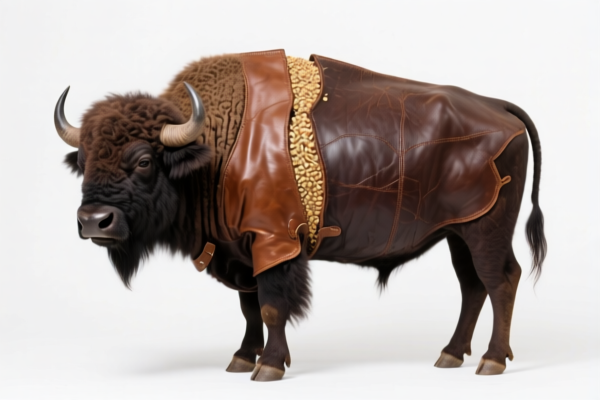
AI Analysis
🐄 Split Cowhide for Leather Craft
🌐 HS Code Reference & Customs Clearance Guide | 2026 Latest Tariff Analysis | Professional Clearance Strategy
📌 I. Product Definition & Classification: What Exactly is "Split Cowhide"?
Split Cowhide (often referred to as "split leather") is a layer of leather derived from splitting the top layer of a hide (full-grain or top-grain) from the lower layers. It is widely used in leather crafts, shoes, and accessory manufacturing due to its texture and flexibility, though it lacks the durability of full-grain leather.
In international trade, the classification depends heavily on: 1. Material: Specifically "Cowhide" (Bovine). 2. Form: Unworked/Tanned (Raw), Semi-tanned, or Finished (Decorative/Patina). 3. Usage: Specifically for handcrafts/shoes vs. general industrial use.
⚠️ Critical Distinction:
- If the leather is plain tanned (natural color, no heavy finishing) → It falls under 4104.11.
- If the leather is finished, colored, or patterned (for specific crafts/shoes) → It may fall under 4113.90.
- "Split" implies it is not the top grain, but the HS codes above focus on the tanning process and form. The specific description in the data links "Split" to these categories based on finish.
📦 II. HS Code Classification Details (2026 Latest Tariff Authority Match)
Based on the provided data, here are the precise HS Codes mapped to "Split Cowhide" variants:
| HS Code | Product Description (From Data) | Form & Finish | Application |
|---|---|---|---|
| 4104.11.40.10 | Matching material: Cowhide, Form: Leather | Basic Tanned/Semi-Tanned Leather | Handcrafts, Shoe Uppers |
| 4104.11.10.20 | Matching material: Cowhide, Form: Tanned or Semi-Tanned | Plain Tanned/Semi-Tanned | Handcrafts, Shoe Uppers |
| 4113.90.60.00 | Matching material: Cowhide, Form: Finished Patterned Leather | Finished/Decorative | Handcrafts |
| 4113.90.30.00 | Matching material: Animal Leather (Cow), Form: Non-Patterned Finished Leather | Finished/Plain Finish | Handcrafts |
| 4104.11.40.10 | Matching material: Cowhide, Form: Shoe Leather | Specific Shoe Grade | Shoe Uppers |
🔍 Key Insight:
- 4104.11.xxxx codes apply to tanned or semi-tanned hides that have not undergone further processing to become "finished leather" for decorative purposes.
- 4113.90.xxxx codes apply to finished leathers that have been processed for specific uses (like handcrafts) but are not in the 4104 category.
- Note on "Split": While not explicitly in the HS heading, the data links "Split" to these specific subheadings based on the final state (tanned vs. finished).
💰 III. 2026 Latest Tariff Rate Breakdown (Including Surcharges & Policy Add-ons)
✅ Applicable Country: United States (US)
✅ Origin: China (CN)
✅ Effective Date: 2025/2026 Tariff Regime (Post-Section 301 & IEEPA)
🎯 1. 4104.11.40.10 & 4104.11.10.20 Variants
This category includes basic tanned/semi-tanned cowhide splits.
| Item | Content |
|---|---|
| Base Duty (MFN) | 0.0% - 5.0% (Varies by exact subheading) |
| Section 301 Surcharge | +25% (For Chinese Origin) |
| IEEPA (122 Clause) | +10% (For Chinese Origin) |
| Total Tax Rate | 15.0% (for 4104.11.40.10) 35.0% (for 4104.11.10.20) |
| Tax Calculation | CIF Value × Total Rate |
| De Minimis Exemption? | ❌ NO (Deny de minimis) |
| Legal Basis Path | IEEPA:9903.01.25 → USITC:4104.11.xxxx → FOOTNOTE:9903.88.01 |
📌 Explanation for 15.0% (
4104.11.40.10):
- Base: 5.0%
- Section 301: 0.0% (Note: Data shows 0% for this specific subheading in the first entry, likely due to specific exclusion or historical rate)
- IEEPA: 10.0%
- Total: 15.0%
- This is the MOST favorable rate for basic splits.📌 Explanation for 35.0% (
4104.11.10.20):
- Base: 0.0%
- Section 301: 25.0%
- IEEPA: 10.0%
- Total: 35.0%
- Note: Despite similar descriptions, slight differences in subheading classification drastically change the Section 301 applicability.
🎯 2. 4113.90.60.00 & 4113.90.30.00 (Finished/Decorative Leather)
These codes apply to finished leathers (patterned or non-patterned) used for handcrafts.
| Item | Content |
|---|---|
| Base Duty | 1.6% (60.00) or 3.3% (30.00) |
| Section 301 Surcharge | +25% (For Chinese Origin) |
| IEEPA (122 Clause) | +10% (For Chinese Origin) |
| Total Tax Rate | 36.6% (4113.90.60.00) 38.3% ( 4113.90.30.00) |
| Tax Calculation | CIF Value × Total Rate |
| De Minimis Exemption? | ❌ NO (Deny de minimis) |
| Legal Basis Path | IEEPA:9903.01.25 → USITC:4113.90.xxxx → FOOTNOTE:9903.88.01 |
📌 Explanation:
- Finished leathers often attract higher base duties.
- The 25% Section 301 is strictly applied.
- Total Rates (36.6% - 38.3%) are significantly higher than basic splits.
- Strategy: If your product is not heavily finished, consider classifying under 4104 to save ~20% in taxes.
🛠️ IV. Customs Clearance Operational Advice (Real-World Pitfall Guide)
✅ 1. Required Documentation Checklist
| Document | Mandatory? | Notes |
|---|---|---|
| ✅ Product Specification Sheet | ✔️ | Must specify: "Split Cowhide," Tanning method, Finish type |
| ✅ HS Code Declaration | ✔️ | Explicitly state the 10-digit HS Code |
| ✅ Commercial Invoice | ✔️ | Describe as "Split Cowhide Leather for Handcraft" |
| ✅ Origin Certificate | ✔️ | Required for Chinese origin verification |
| ✅ Photos of Leather | ✔️ | Show texture, back side (split side), and any markings |
| ✅ Tanning Process Description | ✔️ | Critical to distinguish between 4104 (tanned) vs 4113 (finished) |
✅ 2. Classification Strategy (Key Mantra)
🔥 "Check Finish, Not Just Split! 4104 is Cheap, 4113 is Heavy!"
| Scenario | Recommended HS Code | Total Tax | Why? |
|---|---|---|---|
| Basic Split (Unfinished/Semi-Tanned) | 4104.11.40.10 |
15.0% | Lowest tax rate. Best for bulk craft supplies. |
| Shoe Upper Split (Specific Use) | 4104.11.40.10 |
15.0% | Same low rate if classified correctly. |
| Decorative/Patterned Split | 4113.90.60.00 |
36.6% | Higher tax due to "finished" status. |
| Finished Non-Patterned Split | 4113.90.30.00 |
38.3% | Highest tax. Avoid if possible unless necessary. |
✅ 3. Special Handling Tips
| Situation | Action |
|---|---|
| Is it "Split" or "Full Grain"? | Ensure documentation clearly says "Split" if claiming lower base rates. Full grain may have different duties. |
| Mixed Shipment? | If mixing 4104 and 4113 codes, declare separately. Do not lump into one line. |
| Sample Imports? | Even samples over $800 are NOT de minimis exempt for China-origin leather. Pay full taxes. |
| Labeling | Label must include: "Cowhide Split," "Tanned," "Made in China." |
🌍 V. Global Market Comparison (2026)
| Country/Region | Recommended HS Code | Tariff (China Origin) | Certification | Notes |
|---|---|---|---|---|
| 🇺🇸 USA | 4104.11.40.10 |
15.0% | No special cert | Best option for low tax. |
| 🇺🇸 USA | 4113.90.xxxx |
36.6% - 38.3% | No special cert | High tax due to Section 301. |
| 🇪🇺 EU | 4104.11 |
~5-10% | REACH Compliance | No IEEPA surcharge. |
| 🇨🇳 China | 4104.11 |
~5% | N/A | Exporting to China is low tax, but we focus on US clearance here. |
📌 Conclusion:
- USA imposes heavy tariffs on Chinese leather products.
- Choosing the right HS Code (4104.11.40.10) can save you up to 23% in taxes compared to4113.90.
- Do not misdeclare finished leather as basic tanned leather to avoid penalties.
📌 VI. Common Mistakes & Pitfalls (Lessons Learned)
❌ Mistake 1: Classifying finished/decorative split leather under 4104 to save tax.
👉 Consequence: Customs will reclassify to 4113, charge back taxes + penalty (up to 3x).
❌ Mistake 2: Assuming "Split" means lower duty automatically.
👉 Consequence: Duty is based on tanning/finishing, not whether it's split or full grain.
❌ Mistake 3: Ignoring the 122 Clause (IEEPA).
👉 Consequence: Even if Section 301 doesn't apply, the 10% IEEPA tax still applies. Total tax is never 0%.
❌ Mistake 4: Using "Leather" without specifying "Cowhide Split."
👉 Consequence: Customs may classify as "Other Animal Leather" with higher duties or delay clearance for inspection.
✅ Correct Practice:
"Split Cowhide, Semi-Tanned, for Handcraft Use, HS 4104.11.40.10, Made in China"
🎯 VII. Conclusion: Professional Classification, Maximum Savings!
🎯 Remember the Mantra:
🔹 "Basic Tanned (4104) = 15-35% Tax"
🔹 "Finished (4113) = 36-38% Tax"
🔹 "Always Declare 'Split' and 'Cowhide' Clearly"
🔹 "No De Minimis for China Leather!"
📌 Pro Tip:
If you are importing large volumes, consider applying for a Prescriptive Ruling from CBP to confirm the 4104.11.40.10 classification for your specific leather sheets. This prevents future disputes and ensures consistent 15% tax rates.
📣 Immediate Action:
📞 Consult a licensed customs broker + Provide Leather Samples + Confirm HS Code
4104.11.40.10
🚀 Ensure Smooth Clearance, Maximize Margins, and Avoid Customs Audits!
✨ Professional Clearance Starts with Accurate Classification!
💼 Every Dollar Saved in Tariffs is Pure Profit!
Customer Reviews
About HS Code Classification
The Harmonized System (HS) is an internationally standardized nomenclature developed by the World Customs Organization (WCO) to classify traded products. Over 200 countries use the HS system as the basis for customs tariffs, trade statistics, and import/export regulations.
Each HS code follows a hierarchical structure:
- Chapter (2 digits) — Broad category of goods (e.g., Chapter 84: Machinery and Mechanical Appliances)
- Heading (4 digits) — More specific grouping within the chapter
- Subheading (6 digits) — Internationally standardized breakdown, used by all WCO member countries
- National subdivisions (8-10 digits) — Country-specific extensions for further classification, such as US HTSUS 10-digit codes
Correct HS code classification is essential for smooth customs clearance, accurate duty payment, and compliance with trade regulations. Misclassification can lead to customs delays, overpayment of duties, or penalties.
When importing from CN to US, the applicable tariff rates may include:
- Most-Favored-Nation (MFN) rate — The standard duty rate applied to WTO members
- General rate — Applied to countries without trade agreements
- Trade remedy duties — Additional tariffs such as Section 301 (anti-dumping), Section 232 (national security), or countervailing duties
The information provided on this page is for reference purposes only. For official classification, please consult with your local customs authority or a licensed customs broker.