Split Cowhide for Sofa
CN → US| HS Code | Tariff Rate | Origin | Destination | Doc |
|---|---|---|---|---|
| 4107125000 | 12.8% | CN | US | Official Doc |
| 4107195000 | 12.8% | CN | US | Official Doc |
Product Images
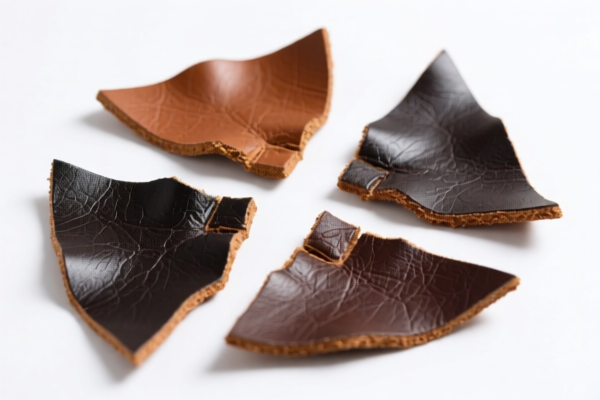
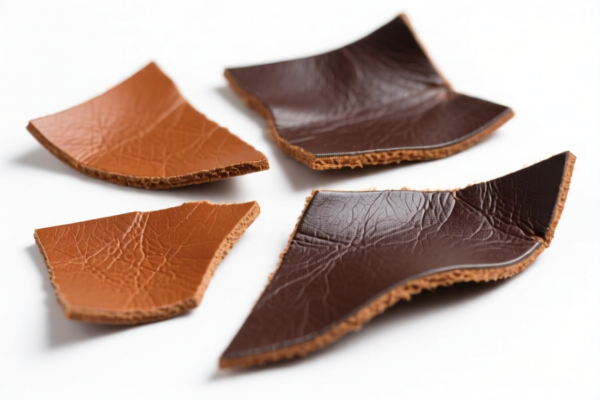
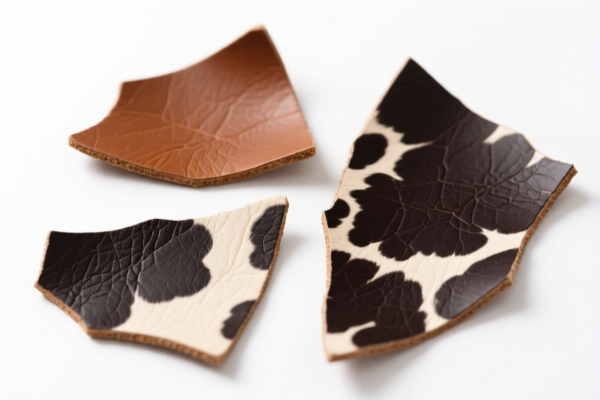
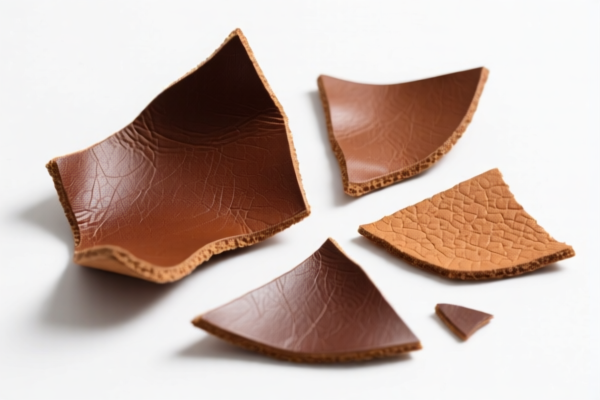
AI Analysis
🛋️ Split Cowhide for Sofa (Upholstery Leather)
🌐 HS Code Reference & Customs Clearance Guide | 2026 Latest Tariff Analysis | Professional Compliance Strategy
📌 Part 1: Product Definition & Classification: Do You Know What "Split Cowhide" Really Is?
Split Cowhide for Sofa refers to leather derived from bovine hides (cattle/buffalo) that has been tanned and processed for upholstery purposes. Crucially, it is made from the split layer (the lower fibrous layer of the hide) rather than the top grain. It is hair-free, parchment-dressed or further prepared, and specifically designated for furniture/upholstery use.
⚠️ Key Distinction Point:
- If the leather is grain splits (from the top split) → Look at HS4107.12...
- If the leather is other splits (from lower layers or non-grain splits) → Look at HS4107.19...
- Commonality: Both are hairless, tanned bovine/equine leather intended for upholstery.
📦 Part 2: HS Code Classification Details (2026 Latest Tariff Authority Match)
Based strictly on the provided data, there are two primary HS Codes for Split Cowhide for Sofa, differentiated by the type of split (Grain vs. Other).
| HS Code | Product Description | Specific Criteria | Tax Rate (Total) |
|---|---|---|---|
4107.12.50.00 |
Leather: Whole hides/skins: Grain splits: Other: Upholstery leather | Derived from the grain split (the side closest to the hair side) of bovine/equine hides. Hair removed. Tanned/prepared. | 0.0% |
4107.19.50.00 |
Leather: Whole hides/skins: Other: Other: Other: Upholstery leather | Derived from other splits (non-grain splits, lower layers) of bovine/equine hides. Hair removed. Tanned/prepared. | 2.8% |
🔍 Critical Insight:
- Both codes apply to bovine (including buffalo) or equine animals.
- Both require the leather to be without hair (hair-side removed or fleshed).
- Both are upholstery leather (not for footwear, clothing, or industrial belts).
- The main difference lies in whether it is classified as a "Grain Split" (4107.12) or "Other Split" (4107.19).
💰 Part 3: 2026 Tariff Rate Breakdown (Detailed Tax Explanation)
✅ Scope: Import Tariffs for Leather Upholstery Materials
✅ Origin: Based on provided tax details (Base + Additional)
🎯 1. 4107.12.50.00 — Grain Splits for Upholstery
| Item | Detail |
|---|---|
| Base Tariff | 0.0% |
| Additional Tariff | 0.0% |
| Total Effective Rate | 0.0% |
| Tax Calculation | Duty = CIF Value × 0% = $0 |
| Legal Basis | Harmonized System Heading 4107, Subheading 12 (Grain Splits), further split for upholstery use. |
📌 Explanation:
- This code enjoys zero tariff under the provided dataset.
- Applies specifically to grain splits — the higher-quality split layer, often used for premium sofa upholstery due to better texture consistency.
- No additional duties are applied in this specific data context.
🎯 2. 4107.19.50.00 — Other Splits for Upholstery
| Item | Detail |
|---|---|
| Base Tariff | 2.8% |
| Additional Tariff | 0.0% |
| Total Effective Rate | 2.8% |
| Tax Calculation | Duty = CIF Value × 2.8% |
| Legal Basis | Harmonized System Heading 4107, Subheading 19 (Other), further split for upholstery use. |
📌 Explanation:
- This code incurs a 2.8% base tariff.
- Applies to non-grain splits — typically lower layers of the hide, still suitable for upholstery but often used in budget-friendly sofas or hidden sections.
- No additional duties are applied in this specific data context.⚠️ Note:
- The dataset shows 0% Additional Tariff for both codes.
- However, importers must verify if their country of origin (e.g., China, Vietnam, Italy) triggers any Section 301 tariffs (for US imports) or other trade remedies not listed in this specific snippet.
- Always confirm with local customs authority for real-time trade policy updates.
🛠️ Part 4: Customs Clearance Practical Advice (Avoid Pitfalls)
✅ 1. Essential Documentation Checklist
| Document | Required? | Purpose |
|---|---|---|
| Commercial Invoice | ✅ Yes | Must clearly state: "Split Cowhide, Tanned, Hairless, For Upholstery" |
| Packing List | ✅ Yes | Include weight, dimensions, and number of hides/sheets |
| Product Specification Sheet | ✅ Yes | Detail: Type of split (Grain vs. Other), tanning method, thickness, finish |
| Proof of Origin | ✅ Yes | To determine eligibility for any FTAs or preferential rates |
| Photos of Leather | ✅ Yes | Show grain surface (if applicable) and cross-section to prove "split" status |
| HS Code Pre-ruling | ✅ Recommended | To avoid misclassification between 4107.12 and 4107.19 |
✅ 2. Classification Strategy (Key Decision Tree)
🔥 "Grain Split = 0%, Other Split = 2.8%"
| Scenario | Correct HS Code | Risk of Misclassification |
|---|---|---|
| Leather is a grain split (top split layer) | 4107.12.50.00 |
Low. Ensure description says "Grain Split". |
| Leather is a lower split (suede-like or non-grain) | 4107.19.50.00 |
Medium. Customs may challenge if described vaguely as "split leather". |
| Leather is full grain (not split) | ❌ Not in scope | Would fall under 4107.11 or 4107.21 — different tax! |
| Leather is with hair on | ❌ Not in scope | Would fall under Chapter 4114 or earlier headings — different tax! |
✅ 3. Common Errors & How to Avoid Them
❌ Error 1: Labeling all split leather as "Grain Split"
👉 Consequence: Risk of underpayment if it’s actually a lower split. Customs may audit and demand back taxes + penalties.
👉 Solution: Test or specify the exact layer used.
❌ Error 2: Failing to specify "Upholstery Use"
👉 Consequence: If用途不明确, customs may classify under general leather (4107.19.90) with higher duties.
👉 Solution: Explicitly state "For Sofa/Upholstery" on invoice.
❌ Error 3: Confusing "Split" with "Full Grain"
👉 Consequence: Wrong HS Code → Potential 0% vs. 5%+ discrepancy.
👉 Solution: Provide cross-section photos showing the split layer.
🌍 Part 5: Global Market Clearance Comparison (2026)
| Market | Recommended HS Code | Base Tariff | Additional Notes |
|---|---|---|---|
| 🇺🇸 USA | 4107.12.50.00 or 4107.19.50.00 |
0% / 2.8% | Check Section 301 for China-origin goods (may add 7.5%–25%). |
| 🇨🇳 China | 4107.12.50.00 or 4107.19.50.00 |
0% / 2.8% | Confirm with China Customs for current import policies. |
| 🇪🇺 EU | 4107.12.50 or 4107.19.50 |
Varies by member state | Generally low; check for eco-compliance (REACH). |
| 🇬🇧 UK | 4107.12.50 or 4107.19.50 |
Varies | Post-Brexit tariffs apply; verify UK Tariff. |
📌 Conclusion:
- USA and China show 0% to 2.8% base rates in this dataset.
- Always verify additional duties (e.g., Section 301 for US-China trade) as they are not reflected in this basic tax snippet.
📌 Part 6: Final Clearance Tips
✅ Do:
- Use precise language: "Grain Split Cowhide Leather, Hairless, Tanned, For Upholstery".
- Provide photos showing the split nature.
- Apply for HS Code pre-ruling if unsure between 4107.12 and 4107.19.
❌ Don’t:
- Use vague terms like "Cowhide" without specifying "Split".
- Assume all split leather is 0% duty — 4107.19 is 2.8%.
- Ignore origin-specific additional tariffs (e.g., US Section 301).
🎯 Conclusion: Precision in Classification Saves Money!
🎯 Key Takeaway:
🔹 Grain Split (
4107.12.50.00) → 0% Tax
🔹 Other Split (4107.19.50.00) → 2.8% Tax
🔹 Be specific! Your classification depends on the type of split.
📣 Immediate Action:
📞 Contact your customs broker with product specs + photos.
📄 Request HS Code pre-ruling if unsure.
🚀 Ensure accurate invoicing to avoid delays or penalties.
✨ Professional clearance starts with accurate classification!
💼 Every 0.1% counts in global trade!
Customer Reviews
About HS Code Classification
The Harmonized System (HS) is an internationally standardized nomenclature developed by the World Customs Organization (WCO) to classify traded products. Over 200 countries use the HS system as the basis for customs tariffs, trade statistics, and import/export regulations.
Each HS code follows a hierarchical structure:
- Chapter (2 digits) — Broad category of goods (e.g., Chapter 84: Machinery and Mechanical Appliances)
- Heading (4 digits) — More specific grouping within the chapter
- Subheading (6 digits) — Internationally standardized breakdown, used by all WCO member countries
- National subdivisions (8-10 digits) — Country-specific extensions for further classification, such as US HTSUS 10-digit codes
Correct HS code classification is essential for smooth customs clearance, accurate duty payment, and compliance with trade regulations. Misclassification can lead to customs delays, overpayment of duties, or penalties.
When importing from CN to US, the applicable tariff rates may include:
- Most-Favored-Nation (MFN) rate — The standard duty rate applied to WTO members
- General rate — Applied to countries without trade agreements
- Trade remedy duties — Additional tariffs such as Section 301 (anti-dumping), Section 232 (national security), or countervailing duties
The information provided on this page is for reference purposes only. For official classification, please consult with your local customs authority or a licensed customs broker.