Split Cowhide for Toys
CN → USProduct Images
AI Analysis
🧸 Split Cowhide for Toys (Leather Offcuts)
🌐 HS Code Reference & Customs Clearance Guide | 2026 Latest Tariff Analysis | Professional-Level Strategy
📌 I. Product Definition & Classification: Do You Really Understand "Split Cowhide"?
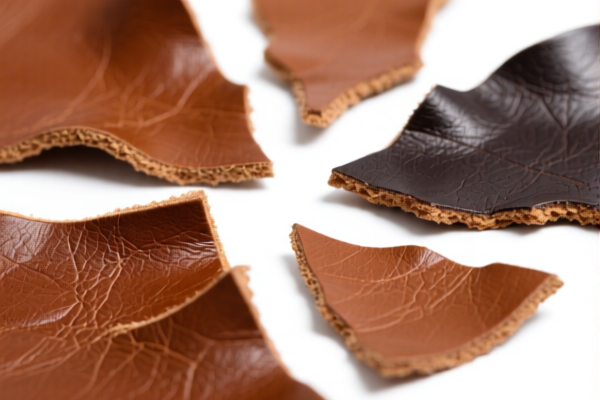
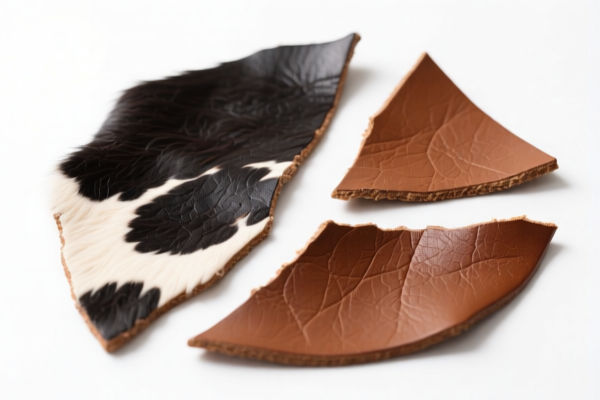
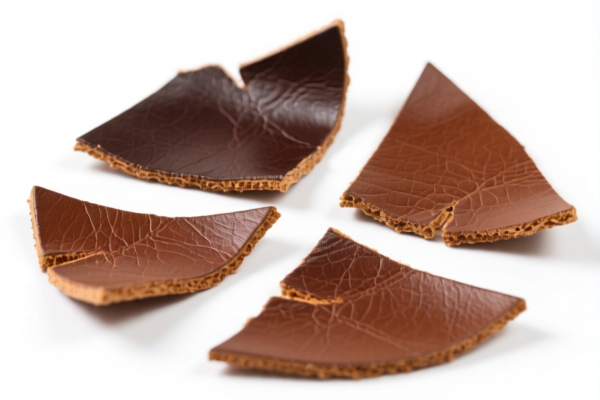
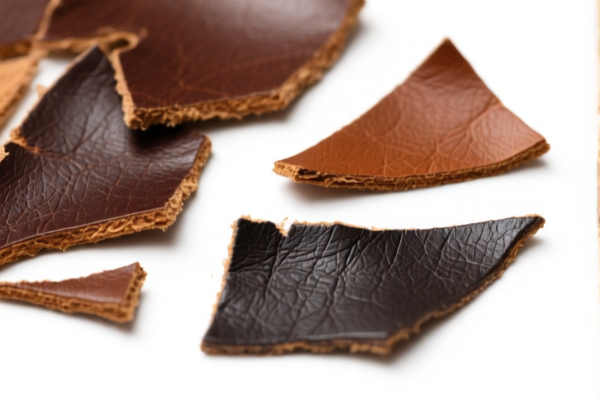
Split cowhide refers to the lower layer of leather obtained when full-grain or top-grain cowhide is split horizontally. For toys, this material is typically soft, pliable, and often used for stuffed animals, plush attachments, or eco-friendly leather toys. It is distinct from "full grain" or "top grain" leather due to its lack of the natural surface grain and its fibrous, suede-like appearance.
⚠️ Key Distinction:
- Split Cowhide = The inner layer(s) left after the top grain is removed. It lacks the durable surface layer.
- Full/Top Grain Cowhide = The outer layer, which is durable and has a natural surface.
- Not "Synthetic Leather" = Must be animal origin, not PVC/PU.
- Not "Tanned" = Must specify tanning process (Chrome tanned, Vegetable tanned, etc.), as this affects HS code sub-heading.🚫 Common Misclassification:
- Do NOT classify under 9503 (Toys) if the item is raw material (splits/skins). 9503 is for finished toys.
- Do NOT classify under 4115 (Leather Scraps/Offcuts) if the splits are cut to size, tanned, and ready for manufacturing. 4115 is for waste/scrap. Split cowhide for toys is considered usable leather, not scrap.
📦 II. HS Code Classification Details (2026 Latest Tariff Authority Comparison)
| HS Code | Product Description | Application Scenario | Tanning Process |
|---|---|---|---|
4115.20.80.50 |
Split Cowhide for Toys (Tanned, Further Processed) | Soft, pliable splits used in toy manufacturing; not waste/scrap | Chrome/Veg Tanned |
4114.20.10.30 |
Tanned Furskin (Not Applicable) | ❌ Wrong category | N/A |
4115.10.00.00 |
Leather Scrap and Waste | ❌ Only if shredded, torn, or unusable | N/A |
4112.00.00.00 |
Tanned Leather (Full Grain) | ❌ Too expensive/high-grade; not "split" | N/A |
3926.90.99.90 |
Articles of Plastic | ❌ Only if it’s synthetic "leatherette" | N/A |
🔍 Critical Reminder:
- Split cowhide is classified under Chapter 41 (Leather), not Chapter 95 (Toys).
- Chapter 95 applies only to finished toys (e.g., a stuffed lion). The material (split hide) goes to Chapter 41.
- If the splits are shredded or cut into irregular scraps with no further use than reprocessing, they may fall under 4115.10 (Scrap), but 4115.20 is correct for usable split leather.
💰 III. 2026 Latest Tariff Rate Breakdown (Including Surtaxes & Policy Add-ons)
✅ Applicable Country: United States (US)
✅ Origin: China (CN)
✅ Effective Date: November 10, 2025 onwards
🎯 1. 4115.20.80.50 —— Split Cowhide for Toys (Tanned, Usable)
| Item | Content |
|---|---|
| Base Tariff Rate | 0% (ad valorem) |
| USITC Surcharge | +25% (from USITC Footnote 9903.88.01) |
| IEEPA Surcharge | +10% (for China/HK products, from Nov 10, 2025) |
| Total Tariff Rate | 35% |
| Tax Calculation | CIF Value × 35% |
| De Minimis Exemption | ❌ Not Eligible (deny_de_minimis) |
| Legal Basis Path | IEEPA:9903.01.25 → IEEPA:9903.01.24 → USITC:4115.20.80.50 → FOOTNOTE:9903.88.01 |
📌 Explanation:
- Base Rate 0%: Leather articles often have low base tariffs.
- USITC 25%: Part of Section 301 tariffs on Chinese goods.
- IEEPA 10%: Additional tariff under International Emergency Economic Powers Act.
- Total 35%: Significant cost impact. Must be factored into FOB/CIF pricing.
🎯 2. 4115.10.00.00 —— Leather Scrap and Waste (If Misclassified)
| Item | Content |
|---|---|
| Base Tariff Rate | 0% |
| USITC Surcharge | +25% |
| IEEPA Surcharge | +10% |
| Total Tariff Rate | 35% |
| Tax Calculation | CIF Value × 35% |
| De Minimis Exemption | ❌ Not Eligible |
📌 Note:
- Even if classified as "scrap," the surtax rate is identical (35%).
- Risk: Misclassifying usable splits as "scrap" can lead to customs penalties for incorrect declaration.
🛠️ IV. Customs Clearance Practical Advice (Battle-Tested Pitfall Avoidance Guide)
✅ 1. Required Documentation Checklist (Non-Negotiable)
| Document | Mandatory | Explanation |
|---|---|---|
| ✅ Product Spec Sheet | ✔️ | Must specify: "Split Cowhide, Tanned, Thickness XXmm, Used for Toy Manufacturing" |
| ✅ Tanning Process Certificate | ✔️ | Chrome tanned? Vegetable tanned? Must declare. |
| ✅ Commercial Invoice | ✔️ | Clearly state: "Split Cowhide for Leather Toys, HS 4115.20.80.50" |
| ✅ Packing List | ✔️ | Show weight, volume, and number of hides/sheets |
| ✅ Declaration of Non-Scrap | ✔️ | Confirm that the splits are usable and not waste/shreds |
| ✅ FSC/PEFC Cert (If Applicable) | ✔️ | For sustainability claims (optional but recommended) |
✅ 2. Declaration Tips (Key Mnemonic)
🔥 "Split is Leather, Not Toy; Tanned & Usable, Code 4115!"
| Scenario | Correct Declaration | Wrong Practice |
|---|---|---|
| Split Cowhide (Usable) | 4115.20.80.50 + "Split Leather for Toys" |
Misdeclare as 9503 (Toy) → Audit Risk |
| Shredded Leather Waste | 4115.10.00.00 + "Leather Scrap" |
Misdeclare as usable splits → Penalty for False Declaration |
| Finished Stuffed Animal | 9503.00.00.00 |
Misdeclare raw material as toy → Wrong Chapter |
| Synthetic Leatherette | 3926.90.99.90 |
Misdeclare animal leather as synthetic → Different Tariff |
✅ 3. Special Case Handling
| Scenario | Handling Advice |
|---|---|
| Mixed Shipments (Leather + Toy Parts) | Declare separately. Leather under 4115, Toy parts under 9503. Do NOT lump into one HS code. |
| OEM Custom Dyes/Colors | Provide color fastness test and chemical composition to prove it’s leather, not coated fabric. |
| Samples < $800 | ❌ No De Minimis. Split cowhide from China is not eligible for $800 exemption. Pay 35% tariff. |
| Origin Tracing | Ensure Country of Origin is clearly marked as China. If from Vietnam, IEEPA may not apply (check FTAs). |
🌍 V. Global Customs Comparison (2026 Latest)
| Country/Region | Recommended HS Code | Tariff (China Origin) | Certification | Notes |
|---|---|---|---|---|
| 🇺🇸 USA | 4115.20.80.50 |
35% (25% + 10%) | None Required | High tariff due to Section 301 + IEEPA |
| 🇨🇳 China | 4115.20.80.50 |
8% | None | Import tariff for raw leather |
| 🇪🇺 EU | 4115.20.10 |
6.5% | REACH Compliance | No Section 301 surtax |
| 🇬🇧 UK | 4115.20.10 |
6.5% | UK REACH | Post-Brexit tariff |
| 🇦🇺 Australia | 4115.20.10 |
5% | None | Lower tariff than US |
📌 Conclusion:
- USA is the most expensive market for split cowhide from China (35%).
- EU/UK/Australia have significantly lower tariffs (5-6.5%).
- Consider supply chain diversification (e.g., source from Vietnam, Turkey, or Brazil) to avoid US surtaxes.
📌 VI. Common Errors & Pitfall Avoidance (Blood & Tears Lessons)
❌ Error 1: Declaring Split Cowhide under HS 9503 (Toys)
👉 Consequence: Customs will reject the declaration, demand reclassification, and impose penalties for misclassification. Tariff difference is negligible, but audit risk is high.
❌ Error 2: Misclassifying usable splits as Leather Scrap (4115.10)
👉 Consequence: Customs may question the "scrap" status, leading to delays, inspections, and fines for false declaration. Scrap implies waste; splits imply usable material.
❌ Error 3: Ignoring Tanning Process
👉 Consequence: If the declaration doesn’t specify "Chrome Tanned" vs. "Vegetable Tanned," customs may hold the shipment for chemical testing, causing delay fees.
❌ Error 4: Assuming De Minimis ($800) applies
👉 Consequence: Split cowhide from China is NOT eligible for de minimis. Small shipments (e.g., samples) will still incur 35% tariff.
✅ Correct Practice:
"Split Cowhide, Tanned (Chrome), Further Processed, for Toy Manufacturing, HS 4115.20.80.50, Origin: China"
🎯 VII. Conclusion: Precision Classification Saves Costs!
🎯 Remember the Mnemonic:
🔹 "Split is Leather, Not Toy; 4115 is the code; 35% is the tax; De Minimis is a no-go!"
🔹 "Tanned & Usable = 4115.20; Shredded & Waste = 4115.10; Finished Toy = 9503.00"
📌 Pro Tip:
If your split cowhide is sourced from Vietnam, Turkey, or Brazil, it may be eligible for lower or zero tariffs in the US under Free Trade Agreements (FTAs) or general tariffs. Always verify the Country of Origin.
Consider applying for an Advance Ruling from US Customs if you’re unsure about the classification.
📣 Immediate Action:
📞 Contact a professional customs broker + Provide Tanning Certificate + Apply for HS Code Advance Ruling
🚀 Ensure your split cowhide shipments clear customs smoothly, avoid penalties, and optimize costs!
✨ Professional customs clearance starts with accurate classification!
💼 Every dollar of tariff saved is pure profit!
Customer Reviews
About HS Code Classification
The Harmonized System (HS) is an internationally standardized nomenclature developed by the World Customs Organization (WCO) to classify traded products. Over 200 countries use the HS system as the basis for customs tariffs, trade statistics, and import/export regulations.
Each HS code follows a hierarchical structure:
- Chapter (2 digits) — Broad category of goods (e.g., Chapter 84: Machinery and Mechanical Appliances)
- Heading (4 digits) — More specific grouping within the chapter
- Subheading (6 digits) — Internationally standardized breakdown, used by all WCO member countries
- National subdivisions (8-10 digits) — Country-specific extensions for further classification, such as US HTSUS 10-digit codes
Correct HS code classification is essential for smooth customs clearance, accurate duty payment, and compliance with trade regulations. Misclassification can lead to customs delays, overpayment of duties, or penalties.
When importing from CN to US, the applicable tariff rates may include:
- Most-Favored-Nation (MFN) rate — The standard duty rate applied to WTO members
- General rate — Applied to countries without trade agreements
- Trade remedy duties — Additional tariffs such as Section 301 (anti-dumping), Section 232 (national security), or countervailing duties
The information provided on this page is for reference purposes only. For official classification, please consult with your local customs authority or a licensed customs broker.