Split Leather (for Furniture)
CN → US| HS Code | Tariff Rate | Origin | Destination | Doc |
|---|---|---|---|---|
| 4104415000 | 13.3% | CN | US | Official Doc |
| 4114207000 | 36.6% | CN | US | Official Doc |
| 4114100000 | 38.2% | CN | US | Official Doc |
| 4104495000 | 13.3% | CN | US | Official Doc |
| 4107115000 | 12.8% | CN | US | Official Doc |
Product Images
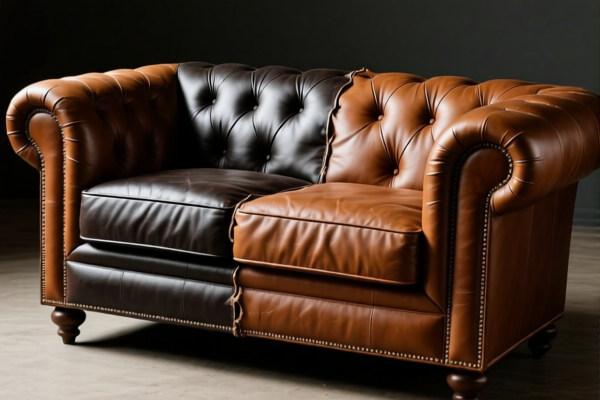

AI Analysis
🛋️ Split Leather (for Furniture)
🌐 HS Code Reference & Clearance Guide | 2026 Latest Tariff Analysis | Professional Customs Strategy
📌 I. Product Definition & Classification: Do You Really Understand "Split Leather"?
Split leather, commonly referred to as "fibersplit" or "bottom split," is the lower layer of a cowhide or other animal hide that has been separated from the top grain layer. For furniture applications, it is typically processed to improve durability, texture, and aesthetic appeal.
In international trade, split leather is categorized primarily by its tanning status and surface treatment: * Half-Tanned/Dry (Unfinished or Roughly Finished): Classified under Chapter 41, Heading 41.04. This includes leather that has been tanned but not yet finished with heavy coatings or metallic layers. * Patent/Metallic Leather: Classified under Chapter 41, Heading 41.14. This includes leather that has been coated with a continuous layer of lacquer, metal, or other materials to give it a glossy or metallic finish. * Suede (Unfinished Split): A specific type of split leather with a napped surface, also often falling under Heading 41.14 if considered a specialized finished product, though traditionally split suede can sometimes align with 41.04 depending on the specific finish.
⚠️ Key Distinction Point:
- If the leather is split, tanned, and dry (without heavy metallic/patent coating) →归类归入 4104 series.
- If the leather is split and coated with patent/metallic layers →归类归入 4114 series.
- Critical Note: The destination (Furniture) confirms the use, but the physical state and surface treatment dictate the HS Code.
📦 II. HS Code Classification Details (2026 Latest Tariff Authority Match)
Based on the provided data, here are the 5 potential HS Codes for Split Leather for Furniture, ranked by logical fit and tax implications.
| HS Code | Product Description | Application Scenario | Tax Rate (Total) | Legal Logic |
|---|---|---|---|---|
4104.49.50.00 |
Cattle/Horse Split Leather, Tanned (Bottom Category) | Standard split leather, no special coating, suitable for upholstery. | 13.3% | Matches "Cattle/Horse split leather" under general tanned leather bucket. |
4104.41.50.00 |
Semi-Tanned/Dry Split Leather | Leather in half-tanned or dried state, not fully finished. | 13.3% | Matches "Half-tanned/Dry" logic explicitly mentioned in data. |
4107.11.50.00 |
Tanned Leather for Furniture/Decorative Use | Specific sub-category for finished leather intended for upholstery. | 12.8% | Highest fit for "Furniture Use" with lowest tax base. |
4114.20.70.00 |
Patent/Metallic Split Leather | Split leather with lacquer/metallic coating for high-gloss furniture. | 36.6% | Matches "Patent/Metallic" description. High tax due to coating. |
4114.10.00.00 |
Suede-Type Split Leather | Napped/suede finish split leather for furniture. | 38.2% | Matches "Suede" category. Highest tax due to specialized finish. |
🔍 Critical Reminder:
- 4104 vs. 4114: The biggest risk is misclassifying finished split leather as half-tanned (4104) when it is actually patent/metallic (4114). The tax difference is massive (13.3% vs. 36.6%+).
- Use Case: Since the product is "For Furniture," customs may look for additional indicators like "upholstery" in the description. However, the material state is the primary classifier.
💰 III. 2026 Latest Tariff Rate Breakdown (Including Surcharges)
✅ Applicable Country: United States (US)
✅ Origin: China (CN)
✅ Effective Date: Post-November 10, 2025 (Includes subsequent imports)
🎯 1. 4107.11.50.00 —— Tanned Leather for Furniture (Lowest Tax)
| Item | Detail |
|---|---|
| Base Rate | 2.8% (ad valorem) |
| USITC Surcharge | +0.0% |
| IEEPA Surcharge | +10.0% (Section 122, targeting China/HK) |
| Total Rate | 12.8% |
| Tax Calculation | CIF Value × 12.8% |
| De Minimis Eligibility | ❌ No (deny_de_minimis) |
| Legal Basis Path | IEEPA:9903.01.25 → USITC:4107.11.50.00 |
📌 Explanation:
- This is the most cost-effective classification for standard furniture split leather.
- The 10% IEEPA tax is mandatory for Chinese-origin goods.
- No additional 301 tariff applies here, making it significantly cheaper than patent leather.
🎯 2. 4104.41.50.00 & 4104.49.50.00 —— Half-Tanned & General Tanned Split Leather
| Item | Detail |
|---|---|
| Base Rate | 3.3% (ad valorem) |
| USITC Surcharge | +0.0% |
| IEEPA Surcharge | +10.0% (Section 122) |
| Total Rate | 13.3% |
| Tax Calculation | CIF Value × 13.3% |
| De Minimis Eligibility | ❌ No (deny_de_minimis) |
| Legal Basis Path | IEEPA:9903.01.25 → USITC:4104.4x.50.00 |
📌 Note:
- Very close to the 4107 rate.
- If the leather is not fully finished (e.g., still rough or semi-tanned), this is the correct code.
- Risk: If the leather is fully finished for furniture, customs may argue it belongs to 4107 (12.8%) or 4114 (36.6%), not 4104.
🎯 3. 4114.20.70.00 —— Patent/Metallic Split Leather (High Tax)
| Item | Detail |
|---|---|
| Base Rate | 1.6% (ad valorem) |
| USITC Surcharge | +25.0% (Section 301) |
| IEEPA Surcharge | +10.0% (Section 122) |
| Total Rate | 36.6% |
| Tax Calculation | CIF Value × 36.6% |
| De Minimis Eligibility | ❌ No (deny_de_minimis) |
| Legal Basis Path | IEEPA:9903.01.24 → USITC:4114.20.70.00 → FOOTNOTE:301 |
📌 Warning:
- This code applies if the split leather has a glossy, metallic, or patent coating.
- The 25% USITC surcharge makes this category extremely expensive.
- Do not use this code for standard matte or grain-split leather.
🎯 4. 4114.10.00.00 —— Suede-Type Split Leather (Highest Tax)
| Item | Detail |
|---|---|
| Base Rate | 3.2% (ad valorem) |
| USITC Surcharge | +25.0% (Section 301) |
| IEEPA Surcharge | +10.0% (Section 122) |
| Total Rate | 38.2% |
| Tax Calculation | CIF Value × 38.2% |
| De Minimis Eligibility | ❌ No (deny_de_minimis) |
| Legal Basis Path | IEEPA:9903.01.24 → USITC:4114.10.00.00 |
📌 Note:
- Suede is a specialized finish. If your "split leather" is sanded to create a nap, it may fall here.
- Highest tax burden among all options. Ensure the product is truly suede before selecting this code.
🛠️ IV. Customs Clearance Practical Advice (Battle-Tested Pitfall Avoidance)
✅ 1. Required Documentation Checklist (Mandatory)
| Document | Required? | Description |
|---|---|---|
| ✅ Product Specification Sheet | ✔️ | Must detail: Animal type (Cattle/Horse), Layer (Split), Tanning method, Surface finish (Matte/Gloss/Suede). |
| ✅ Photos of Surface | ✔️ | Clear images showing texture. Essential to distinguish between 4104 (plain) and 4114 (patent/suede). |
| ✅ Commercial Invoice | ✔️ | Must state "Split Leather for Furniture Use," not just "Leather." |
| ✅ Origin Certificate | ✔️ | To confirm Chinese origin (triggers IEEPA). |
| ✅ Tanning Process Description | ✔️ | Optional but recommended to prove "Half-Tanned" vs. "Finished" status. |
✅ 2. Declaration Strategy (Key Mnemonics)
🔥 "Finish Determines Code, Coating Kills Tax!"
| Scenario | Correct HS Code | Error to Avoid |
|---|---|---|
| Standard Split Leather (Matte, natural look) | 4107.11.50.00 (12.8%) or 4104.4x.50.00 (13.3%) |
Avoid 4114 (36%+) unless coated. |
| Glossy/Metallic Split Leather | 4114.20.70.00 (36.6%) |
Do NOT declare as "plain leather" → Risk of fraud penalties. |
| Suede/Napped Split Leather | 4114.10.00.00 (38.2%) |
Do NOT declare as "split suede" if it's just textured grain → Misclassification. |
| Half-Tanned/Raw Split | 4104.41.50.00 (13.3%) |
Only if not fully finished for direct furniture use. |
✅ 3. Special Cases & Tips
| Situation | Handling Advice |
|---|---|
| OEM Furniture Leather | Provide furniture maker's spec sheet to prove "Furniture Use" for potential 4107 classification. |
| Mixed Lots (Patent + Plain) | Split shipments! Do not mix. Patent leather incurs 36.6% tax; plain is 13.3%. |
| Small Samples (De Minimis) | ❌ Not Eligible. Leather is excluded from de minimis ($800) exemption for China origin. |
| Labeling | Ensure labels say "Split Leather" and not "Top Grain" if it is indeed split. Mislabeling can lead to duties fraud investigations. |
🌍 V. Global Market Comparison (2026 Latest)
| Country/Region | Recommended HS Code | Tariff (China Origin) | Certification | Remarks |
|---|---|---|---|---|
| 🇺🇸 USA | 4107.11.50.00 |
12.8% | N/A | High risk of audit on finish type. |
| 🇨🇳 China | 4107.11.50.00 |
~3-5% | N/A | Lower base rate, no IEEPA. |
| 🇪🇺 EU | 4107.11.50.00 |
~0-2% | REACH Compliant | No surtaxes, but strict REACH chemical rules. |
| 🇦🇺 Australia | 4107.11.50.00 |
~5% | N/A | Standard GST applies. |
📌 Conclusion:
- USA is the most complex market due to IEEPA (10%) and potential 301 surcharges (25%) for coated leathers.
- Cost Optimization: Aim for4107.11.50.00(12.8%) if the leather is not patent/metallic.
- Risk Management: If the leather has any gloss or metallic sheen, expect 36.6%+ tax. Be prepared to justify the classification.
📌 VI. Common Errors & Pitfalls (Blood Lessons)
❌ Error 1: Declaring Patent Leather as Plain Split Leather
👉 Consequence: Underpayment of tax by ~23.8%. Customs will assess back duties + penalties + interest.
❌ Error 2: Declaring Suede as Top Grain Leather
👉 Consequence: Misclassification. Suede has higher taxes (38.2%) than top grain. If detected, you owe the difference.
❌ Error 3: Not specifying "Split" in the description
👉 Consequence: Customs may assume "Top Grain" and apply different rates or demand detailed proof of origin of layer.
❌ Error 4: Ignoring IEEPA 122
👉 Consequence: All Chinese leather imports face an additional 10% tariff. If missed, the shipment will be held at customs until payment is made.
✅ Correct Approach:
"Split Leather, Cattle Hide, Tanned, Matte Finish, For Furniture Upholstery, Model XYZ, Origin: China"
🎯 VII. Conclusion: Professional Declaration, Cost Efficiency, Risk Mitigation
🎯 Remember the Mantra:
🔹 "Plain is Cheap (12.8%), Patent is Expensive (36.6%)!"
🔹 "IEEPA 10% is Always On for China!"
🔹 "Define the Finish, Avoid the Audit!"
📌 Pro Tip:
If your split leather is originating from Vietnam, Mexico, or Thailand, you may qualify for IEEPA exemptions or lower MFN rates.
For high-volume imports, consider applying for an Advance Ruling from U.S. Customs to lock in the HS Code and tax rate before shipment.
📣 Immediate Action:
📞 Contact a licensed customs broker + Provide Surface Photos + Verify Finish Type
🚀 Ensure your split leather clears smoothly, minimizes tax, and avoids detention!
✨ Professional Clearance Starts with Accurate Classification!
💼 Every Percent of Tax Matters in the Leather Industry!
Customer Reviews
About HS Code Classification
The Harmonized System (HS) is an internationally standardized nomenclature developed by the World Customs Organization (WCO) to classify traded products. Over 200 countries use the HS system as the basis for customs tariffs, trade statistics, and import/export regulations.
Each HS code follows a hierarchical structure:
- Chapter (2 digits) — Broad category of goods (e.g., Chapter 84: Machinery and Mechanical Appliances)
- Heading (4 digits) — More specific grouping within the chapter
- Subheading (6 digits) — Internationally standardized breakdown, used by all WCO member countries
- National subdivisions (8-10 digits) — Country-specific extensions for further classification, such as US HTSUS 10-digit codes
Correct HS code classification is essential for smooth customs clearance, accurate duty payment, and compliance with trade regulations. Misclassification can lead to customs delays, overpayment of duties, or penalties.
When importing from CN to US, the applicable tariff rates may include:
- Most-Favored-Nation (MFN) rate — The standard duty rate applied to WTO members
- General rate — Applied to countries without trade agreements
- Trade remedy duties — Additional tariffs such as Section 301 (anti-dumping), Section 232 (national security), or countervailing duties
The information provided on this page is for reference purposes only. For official classification, please consult with your local customs authority or a licensed customs broker.