Split Leather Belt
CN → US| HS Code | Tariff Rate | Origin | Destination | Doc |
|---|---|---|---|---|
| 6217109550 | 32.1% | CN | US | Official Doc |
| 6217109520 | 32.1% | CN | US | Official Doc |
| 3926905500 | 40.1% | CN | US | Official Doc |
| 3926909989 | 22.8% | CN | US | Official Doc |
| 4203300000 | 37.7% | CN | US | Official Doc |
| 4203406000 | 35.0% | CN | US | Official Doc |
Product Images
AI Analysis
🎒 Split Leather Belt & Accessories Classification Guide (2026)
🌐 HS Code Reference & Customs Clearance Strategy | Latest 2026 Tariff Analysis | Professional Compliance Guide
📌 I. Product Definition & Classification: What is a "Split Leather Belt"?
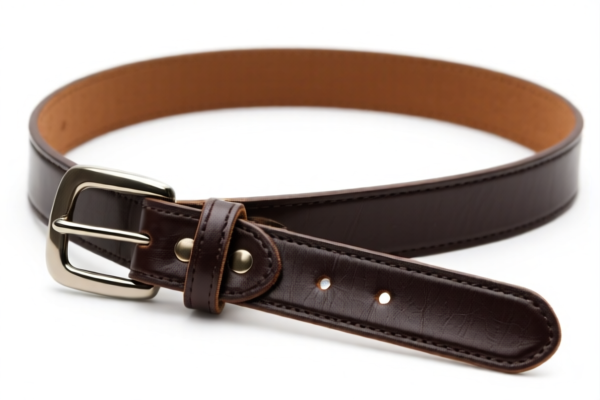
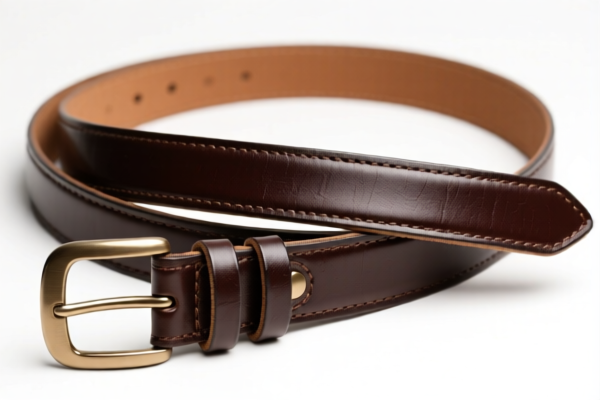
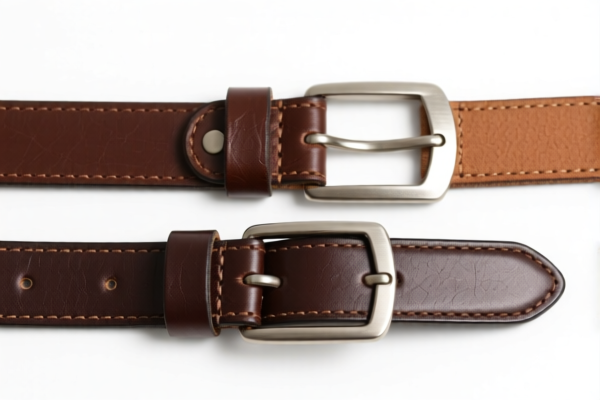
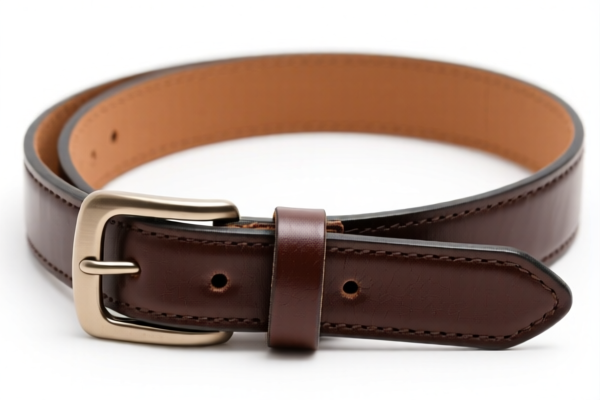
A Split Leather Belt is an article of apparel made from the "split" layer of hides (the fibrous part of the hide remaining after the top grain has separated). Unlike full-grain or top-grain leather, split leather is often corrected, embossed, or coated to resemble higher-quality leather. It is primarily used for fashion belts, bandoliers, and other clothing accessories.
⚠️ Key Distinction:
- If the item is a functional belt worn around the waist with or without a buckle, it falls under Heading 4203.
- If the item is a plastic/molded belt for machinery (e.g., V-belt), it falls under Heading 3926.
- If the item is a textile accessory (e.g., fabric sash, wool scarf) labeled as "leather-like" but actually textile-based, it may fall under Heading 6217.
📦 II. HS Code Classification Details (2026 Latest Tariff Schedule)
Based on the provided data, here are the relevant HS Codes for Split Leather Belts and related accessories:
| HS Code | Product Description | Application Scenario | Material Composition |
|---|---|---|---|
| 4203.30.00.00 | Articles of apparel... of leather or composition leather: Belts and bandoliers with or without buckles | Standard split leather fashion belts, waist belts, bandoliers | Leather or Composition Leather |
| 4203.40.60.00 | Articles of apparel... of leather or composition leather: Other clothing accessories: Other | Leather accessories not classified as belts/gloves/hats (e.g., leather keychains, small leather goods) | Leather or Composition Leather |
| 6217.10.95.50 | Other made up clothing accessories...: Accessories: Other: Other Other | Textile-based fashion accessories (e.g., fabric belts, scarves) mistakenly labeled or similar in function | Textile/Wool/Fine Animal Hair |
| 6217.10.95.20 | Other made up clothing accessories...: Accessories: Other: Other Of wool or fine animal hair | Wool or fine animal hair accessories (e.g., wool sashes) | Wool/Fine Animal Hair |
| 3926.90.55.00 | Other articles of plastics...: Belting and belts, for machinery: Containing textile fibers: V-belts | Industrial machinery belts (V-belts) | Plastics + Textile Fibers |
| 3926.90.99.89 | Other articles of plastics...: Other Other | General plastic articles not specified elsewhere (e.g., plastic decorative clips) | Plastics |
🔍 Critical Note:
- Split leather belts (fashion/apparel) must be classified under 4203.30.00.00.
- Do NOT confuse fashion belts with industrial V-belts (3926.90.55.00) or plastic accessories (3926.90.99.89).
- If the product is made of textile (even if called "leather" colloquially), it may fall under 6217.
💰 III. 2026 Tariff Rate Analysis (Detailed Breakdown)
✅ Applicable Country: United States (US)
✅ Origin: China (CN)
✅ Effective Date: 2025/2026 Tariff Schedule
🎯 1. 4203.30.00.00 — Split Leather Belts (Apparel)
| Item | Details |
|---|---|
| Base Tariff | 0.0% (Ad Valorem) |
| Additional Tariff | 0.0% |
| Total Effective Tax Rate | 0.0% |
| Tax Detail | Base: 0.0%, Additional: 0.0% |
| Legal Basis | HTSUS Chapter 42, Heading 4203 |
📌 Explanation:
- Fashion belts made of leather or composition leather (including split leather) are exempt from both base and additional tariffs.
- This is a zero-tariff category, making it highly cost-effective for importers.
- No IEEPA or 301 Section surcharges apply to this specific HS Code.
🎯 2. 4203.40.60.00 — Other Leather Clothing Accessories
| Item | Details |
|---|---|
| Base Tariff | 0.0% |
| Additional Tariff | 25.0% |
| Total Effective Tax Rate | 25.0% |
| Tax Detail | Base: 0.0%, Additional: 25.0% |
| Legal Basis | HTSUS Chapter 42, Heading 4203 |
📌 Explanation:
- This code covers other leather accessories (e.g., leather gloves, hats, sleeves, or small leather goods) excluding belts.
- If your product is misclassified as "other accessory" instead of "belt," you will face a 25% surcharge.
- Avoid misclassification: Ensure the product is clearly a belt to stay in4203.30.00.00(0% tax).
🎯 3. 3926.90.55.00 — Plastic V-Belts (Machinery)
| Item | Details |
|---|---|
| Base Tariff | 0.0% |
| Additional Tariff | 0.0% |
| Total Effective Tax Rate | 0.0% |
| Tax Detail | Base: 0.0%, Additional: 0.0% |
| Legal Basis | HTSUS Chapter 39, Heading 3926 |
📌 Explanation:
- This code applies only to industrial V-belts made of plastics containing textile fibers.
- Not applicable to fashion belts. Do not use this code unless you are importing industrial machinery belts.
🎯 4. 3926.90.99.89 — Other Plastic Articles
| Item | Details |
|---|---|
| Base Tariff | 5.3% |
| Additional Tariff | 7.5% |
| Total Effective Tax Rate | 12.8% |
| Tax Detail | Base: 5.3%, Additional: 7.5% |
| Legal Basis | HTSUS Chapter 39, Heading 3926 |
📌 Explanation:
- This is a catch-all for plastic articles not specified elsewhere.
- If your "split leather belt" is actually made of plastic (PU leather), it may be classified here depending on material composition.
- 12.8% tax is significantly higher than the 0% for genuine leather belts.
🎯 5. 6217.10.95.50 & 6217.10.95.20 — Textile Accessories
| Item | Details |
|---|---|
| Base Tariff | 0.0% |
| Additional Tariff | 0.0% |
| Total Effective Tax Rate | 0.0% |
| Tax Detail | Base: 0.0%, Additional: 0.0% |
| Legal Basis | HTSUS Chapter 62, Heading 6217 |
📌 Explanation:
- These codes apply to textile-based clothing accessories (e.g., fabric belts, scarves).
- If your product is made of wool or fine animal hair, use6217.10.95.20(0%).
- Other textile accessories fall under6217.10.95.50(0%).
- No additional tariffs apply.
🛠️ IV. Customs Clearance Practical Advice
✅ 1. Preparation Checklist (Must-Have Documents)
| Document | Required | Notes |
|---|---|---|
| ✅ Product Description | ✔️ | Must clearly state "Split Leather Belt" or "Composition Leather Belt" |
| ✅ Material Composition | ✔️ | Specify % of leather, textile, plastic, etc. |
| ✅ Product Photos | ✔️ | Show buckle, strap, label, and cross-section if possible |
| ✅ Bill of Lading/Air Waybill | ✔️ | Match description with invoice |
| ✅ Commercial Invoice | ✔️ | Value must match CIF value |
| ✅ Certificate of Origin | ✔️ | For origin verification (China/CN) |
| ✅ Customs Ruling (if any) | ✔️ | If previously approved, include reference number |
✅ 2. Declaration Tips (Key Mnemonics)
🔥 "Leather Belt = 4203.30.00.00 (0% Tax); Plastic Belt = 3926.90.99.89 (12.8%); Misclassification = High Risk!"
| Scenario | Correct Declaration | Incorrect Declaration |
|---|---|---|
| Fashion Split Leather Belt | 4203.30.00.00 |
3926.90.99.89 → 12.8% tax penalty |
| Leather Accessory (Non-Belt) | 4203.40.60.00 |
4203.30.00.00 → 25% tax penalty |
| Industrial V-Belt | 3926.90.55.00 |
4203.30.00.00 → Customs rejection |
| Textile Belt/Fabric Belt | 6217.10.95.50 |
4203.30.00.00 → Misclassification |
✅ 3. Special Considerations
| Situation | Advice |
|---|---|
| PU Leather (Polyurethane) | If the product is not genuine leather but "faux leather," it may be classified as plastic (3926.90.99.89) with 12.8% tax. Confirm material composition! |
| Composition Leather | If the product is made of leather scraps + binding material, it is "composition leather" and still qualifies for 4203.30.00.00 (0% tax). |
| Buckle Material | The buckle material does not change the classification of the belt, as long as the strap is leather/composition leather. |
| Mixed Materials | If the belt has significant textile or plastic components, consult a customs broker for precise classification. |
🌍 V. Global Market Comparison (2026)
| Country/Region | Recommended HS Code | Tariff Rate | Notes |
|---|---|---|---|
| 🇺🇸 USA | 4203.30.00.00 |
0% | Zero tariff for leather belts |
| 🇨🇳 China | 4203.30.00.00 |
8-10% | Import duty applies |
| 🇪🇺 EU | 4203.30.00.00 |
4-6% | Standard EU duty |
| 🇬🇧 UK | 4203.30.00.00 |
4-6% | Post-Brexit duty |
| 🇨🇦 Canada | 4203.30.00.00 |
0% (if MFN) | Check CUSMA eligibility |
📌 Conclusion:
- USA is the most favorable market for split leather belts due to 0% tariff.
- China and EU impose import duties, so factor this into pricing.
- Always confirm material composition to avoid misclassification penalties.
📌 VI. Common Mistakes & Pitfalls
❌ Mistake 1: Classifying PU Leather Belts as "Leather"
👉 Consequence: If deemed plastic, tax jumps from 0% to 12.8% → Back taxes + fines!
❌ Mistake 2: Classifying Leather Gloves as "Belts"
👉 Consequence: Tax increases from 0% to 25% → Unnecessary cost!
❌ Mistake 3: Ignoring Composition Leather Rules
👉 Consequence: If not properly declared as "composition leather," customs may reject the 0% rate → Delays!
✅ Correct Approach:
"Split Leather Belt, Composition Leather, With Metal Buckle, Fashion Accessory, HS Code: 4203.30.00.00, Tariff: 0%"
🎯 VII. Conclusion: Professional Classification Saves Money!
🎯 Remember:
🔹 "Leather Belt = 4203.30.00.00 (0%)"; "Other Leather Accessory = 4203.40.60.00 (25%)"; "Plastic/PU = 3926.90.99.89 (12.8%)"
🔹 "HS Code Determines Tax Rate; Wrong Code = Extra Cost!"
📌 Pro Tip:
If your product is made in China and imported to the USA, ensure you classify it correctly under 4203.30.00.00 to benefit from 0% tariff.
For PU/Leather-like belts, verify if they are considered "composition leather" (0%) or "plastic" (12.8%).
📣 Immediate Action:
📞 Contact a Customs Broker + Provide Product Photos + Apply for Pre-Ruling if unsure
🚀 Ensure Smooth Clearance, Avoid Penalties, Maximize Profit!
✨ Professional Clearance Starts with Accurate Classification!
💼 Every Dollar Saved is a Dollar Earned!
Customer Reviews
About HS Code Classification
The Harmonized System (HS) is an internationally standardized nomenclature developed by the World Customs Organization (WCO) to classify traded products. Over 200 countries use the HS system as the basis for customs tariffs, trade statistics, and import/export regulations.
Each HS code follows a hierarchical structure:
- Chapter (2 digits) — Broad category of goods (e.g., Chapter 84: Machinery and Mechanical Appliances)
- Heading (4 digits) — More specific grouping within the chapter
- Subheading (6 digits) — Internationally standardized breakdown, used by all WCO member countries
- National subdivisions (8-10 digits) — Country-specific extensions for further classification, such as US HTSUS 10-digit codes
Correct HS code classification is essential for smooth customs clearance, accurate duty payment, and compliance with trade regulations. Misclassification can lead to customs delays, overpayment of duties, or penalties.
When importing from CN to US, the applicable tariff rates may include:
- Most-Favored-Nation (MFN) rate — The standard duty rate applied to WTO members
- General rate — Applied to countries without trade agreements
- Trade remedy duties — Additional tariffs such as Section 301 (anti-dumping), Section 232 (national security), or countervailing duties
The information provided on this page is for reference purposes only. For official classification, please consult with your local customs authority or a licensed customs broker.