Split Leather for Shoe Upper
CN → US| HS Code | Tariff Rate | Origin | Destination | Doc |
|---|---|---|---|---|
| 411410 | 0.0% | CN | US | Official Doc |
| 411490 | 0.0% | CN | US | Official Doc |
| 6403599041 | 0.0% | CN | US | Official Doc |
| 6403599045 | 20.0% | CN | US | Official Doc |
Product Images



AI Analysis
👞 Split Leather for Shoe Uppers (and Associated Footwear)
🌐 HS Code Reference & Clearance Guide | 2026 Latest Tariff Analysis | Professional Customs Strategy
📌 I. Product Definition & Classification: What Exactly is "Split Leather for Shoe Uppers"?
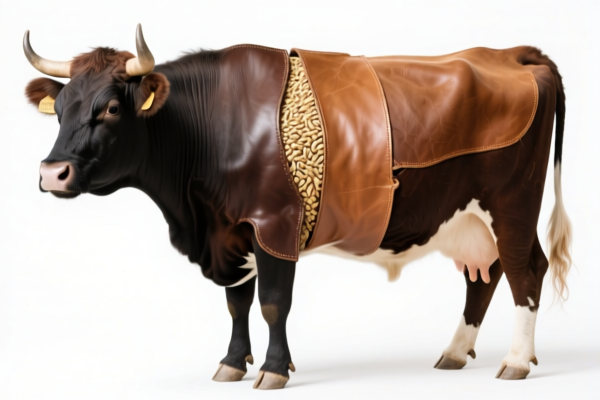
Split Leather refers to the flesh side of a hide that has been separated from the grain layer (the top, smooth layer). While grain leather is premium, split leather is often corrected, embossed, or coated to mimic high-quality leather. In international trade, the distinction lies in its specificity of use.
Key Distinction: - "For Use in Shoe Uppers": This is a specific legal definition. The leather must be processed specifically for footwear uppers, regardless of whether it is used for the outside (upper) or inside (lining) of the shoe, as long as it is designated for that purpose. - "Other Split Leather": Any split leather not specifically described or processed for shoe uppers (e.g., for bags, belts, upholstery).
⚠️ Critical Differentiation Point:
- If the product description explicitly states "for use in shoe uppers" → It falls under 4114.10.
- If the product is split leather but lacks this specific designation or is for general leather goods → It falls under 4114.90.
- Note: The data provided indicates a tax retrieval error for split leather categories, meaning zero duty may apply by default in some systems, but accuracy in description is vital to avoid scrutiny.
📦 II. HS Code Classification Details (2026 Latest Tariff Authority Reference)
| HS Code | Product Description | Applicable Scenario | Key Identifier |
|---|---|---|---|
4114.10 |
Split leather, whether or not reconstituted, for use in shoe uppers | Leather specifically processed/identified for footwear uppers (upper or lining) | ✅ "For use in shoe uppers" in description |
4114.90 |
Other split leather, not suitable for shoe uppers but used in similar applications | General split leather for bags, belts, accessories, or unspecified uses | ❌ Not specifically for shoes |
6403.59.90.41 |
Footwear with outer soles of leather... covering the ankle... for other persons (other) | Finished footwear (Men's/Unisex ankle boots, etc.) | ✅ Finished Footwear (not raw material) |
6403.59.90.45 |
Footwear with outer soles of leather... for other persons... For women: Other | Finished Footwear (Women's shoes) | ✅ Finished Footwear (not raw material) |
🔍 Key Reminder:
- Raw Material vs. Finished Good:4114.xxis for the leather material itself.6403.xxis for the finished shoe.
- Do not mix: You cannot declare split leather under shoe codes, nor finished shoes under leather codes.
- Tax Status in Data: The provided data shows "Failed to retrieve tax information" for leather codes (4114.10,4114.90) and "0.0%" for specific women's footwear (6403.59.90.45). Always verify the latest local tariff schedule.
💰 III. 2026 Latest Tariff Rate Details (Including Additional Duties)
✅ Applicable Country: Data Context Implied (US/General WTO Structure)
✅ Origin: Not Specified in Data, but Tariff Errors Suggest Need for Verification
✅ Validity: Based on provided dataset
🎯 1. 4114.10 —— Split Leather for Shoe Uppers
| Item | Content |
|---|---|
| Tariff Status | Error: Failed to retrieve tax information |
| Total Tax | Error |
| Interpretation | The system could not fetch the specific duty rate. Do not assume 0%. |
| Risk Level | 🔴 High (Uncertain classification leads to potential audits) |
| Recommendation | Verify with customs broker if this code currently enjoys a 0% MFN rate or if additional duties apply. In many jurisdictions, split leather for shoes may have low or zero duties, but "reconstituted" leather might be taxed differently. |
📌 Explanation:
- The "Error" flag suggests a data gap.
- Strategy: Assume the worst-case scenario (standard MFN rate) for cost modeling until confirmed.
- Legal Path:HS: 4114.10→Note: For use in shoe uppers.
🎯 2. 4114.90 —— Other Split Leather
| Item | Content |
|---|---|
| Tariff Status | Error: Failed to retrieve tax information |
| Total Tax | Error |
| Interpretation | Same as above. General split leather. |
| Risk Level | 🔴 High |
📌 Note:
- If the leather is not explicitly "for shoe uppers," it defaults to4114.90.
- Ensure your commercial invoice and product description explicitly state "For Use in Shoe Uppers" if you intend to use4114.10. If you use4114.10for general leather, you risk misclassification penalties.
🎯 3. 6403.59.90.45 —— Women's Footwear (Leather Upper/Sole)
| Item | Content |
|---|---|
| Basic Tariff | 0.0% |
| Additional Tariff | 0.0% |
| Total Tax | 0.0% |
| Tax Detail | 基础关税: 0.0%, 加征关税: 0.0% |
| Item Type | Women's Footwear (Other, for other persons) |
📌 Explanation:
- This specific women's footwear code shows 0% total tax in the provided data.
- Crucial: This is for finished footwear, not the leather itself.
- Condition: Must be leather uppers AND leather soles (or composition leather soles). If the sole is rubber/plastic, the HS code changes completely (e.g.,6404.xx).
🛠️ IV. Clearance Practical Advice (实战避坑指南)
✅ 1. Documentation Checklist (Must-Haves)
| Document | Required | Explanation |
|---|---|---|
| ✅ Commercial Invoice | ✔️ | Must clearly state: "Split Leather, For Use in Shoe Uppers" for 4114.10. Vague descriptions like "Leather" risk 4114.90. |
| ✅ Product Specification Sheet | ✔️ | Shows processing method (corrected, embossed) and intended use. |
| ✅ Sample/Photo | ✔️ | Visual proof of split texture (flesh side) vs. grain. |
| ✅ Declaration of Use | ✔️ | Statement that the leather is specifically processed/sized for footwear. |
✅ 2. Declaration Tips (Key Mnemonics)
🔥 "Leather For Shoes: 4114.10; General Leather: 4114.90; Finished Shoe: 6403. Check the Sole!"
| Scenario | Correct Declaration | Common Error |
|---|---|---|
| Raw Leather Pelts | 4114.10 (if for shoes) |
Declaring as "Fabric" or "Synthetic" |
| Leather for Bags | 4114.90 |
Forcing 4114.10 → Misclassification |
| Men's Leather Boots | 6403.xx (Check sole material) |
Using leather codes for finished goods |
| Women's Leather Shoes | 6403.59.90.45 (if 0% applies) |
Ignoring 0% opportunity |
✅ 3. Special Situation Handling
| Situation | Handling Advice |
|---|---|
| Reconstituted Leather | If the leather is "reconstituted" (regenerated from leather fibers), it still falls under 4114.10 if for shoe uppers. Ensure description includes "Reconstituted". |
| Mixed Shipments | If shipping leather and shoes together, separate HS codes. Do not lump together. |
| Tax Error Handling | If customs queries the "Error" on 4114.10, provide proof of the specific tariff schedule (e.g., HTSUS chapter 41 notes) to justify the code. |
| Women's Footwear 0% Rate | Verify if the 0% rate is contingent on free trade agreements (e.g., GSP, if applicable) or if it's the standard MFN rate. The data shows 0%, but always double-check current trade policies. |
🌍 V. Global Market Clearance Comparison (2026 Latest)
| Country/Region | Recommended HS Code (Leather) | Tariff Note | Certification |
|---|---|---|---|
| 🇺🇸 USA | 4114.10 |
Check latest HTSUS; data shows error, verify MFN | None for leather |
| 🇪🇺 EU | 4114.10 |
Standard TARIC code; verify duty rate | REACH compliance |
| 🇨🇳 China | 4114.10 |
Import duty applies | CCC not required for raw leather |
📌 Conclusion:
- Classification Accuracy is Key: The difference between4114.10and4114.90is purely intended use.
- Finish Goods vs. Raw Material: Never confuse split leather (4114) with finished shoes (6403).
- Tax Uncertainty: The "Error" for leather codes requires manual verification with a customs broker or official tariff database. Do not rely on the "Error" status for final cost calculations.
📌 VI. Common Mistakes & Pitfalls (Lessons Learned)
❌ Mistake 1: Describing split leather as "General Leather" when it is clearly for shoes.
👉 Consequence: Incorrect HS code 4114.90 may be assigned, potentially leading to higher duties or rejected declarations if the buyer expects 4114.10.
❌ Mistake 2: Declaring finished shoes under 4114 codes.
👉 Consequence: Customs rejection, shipment hold, fines. Leather ≠ Shoes.
❌ Mistake 3: Ignoring the "Error" status in tax data for 4114.10.
👉 Consequence: Underestimating costs. Always verify the actual duty rate.
✅ Correct Approach:
"Split Leather, Corrected Grain, For Use in Shoe Uppers, 1.2mm Thickness, 100kg Roll, HS 4114.10"
🎯 VII. Conclusion: Precision in Classification Saves Money!
🎯 Remember:
🔹 "For Shoe Uppers" =
4114.10; "Other" =4114.90.
🔹 Leather Material ≠ Finished Footwear.
🔹 Check the Tax Error: Verify4114.10rates manually;6403.59.90.45shows 0% in data.
📌 Tip:
If you are exporting women's leather shoes (6403.59.90.45), confirm the 0% rate is still valid in 2026. If you are exporting split leather, explicitly state "For Use in Shoe Uppers" on all documents to support 4114.10.
📣 Immediate Action:
📞 Contact a licensed customs broker to verify the current duty rate for
4114.10given the data error.
🚀 Ensure your invoice description is exact to avoid classification disputes.
✨ Professional clearance starts with precise classification!
💼 Your costs are calculated down to the cent!
Customer Reviews
About HS Code Classification
The Harmonized System (HS) is an internationally standardized nomenclature developed by the World Customs Organization (WCO) to classify traded products. Over 200 countries use the HS system as the basis for customs tariffs, trade statistics, and import/export regulations.
Each HS code follows a hierarchical structure:
- Chapter (2 digits) — Broad category of goods (e.g., Chapter 84: Machinery and Mechanical Appliances)
- Heading (4 digits) — More specific grouping within the chapter
- Subheading (6 digits) — Internationally standardized breakdown, used by all WCO member countries
- National subdivisions (8-10 digits) — Country-specific extensions for further classification, such as US HTSUS 10-digit codes
Correct HS code classification is essential for smooth customs clearance, accurate duty payment, and compliance with trade regulations. Misclassification can lead to customs delays, overpayment of duties, or penalties.
When importing from CN to US, the applicable tariff rates may include:
- Most-Favored-Nation (MFN) rate — The standard duty rate applied to WTO members
- General rate — Applied to countries without trade agreements
- Trade remedy duties — Additional tariffs such as Section 301 (anti-dumping), Section 232 (national security), or countervailing duties
The information provided on this page is for reference purposes only. For official classification, please consult with your local customs authority or a licensed customs broker.