Split Leather for Toys
CN → USProduct Images
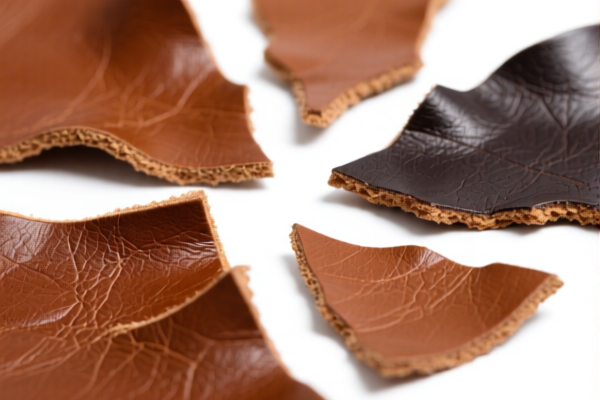
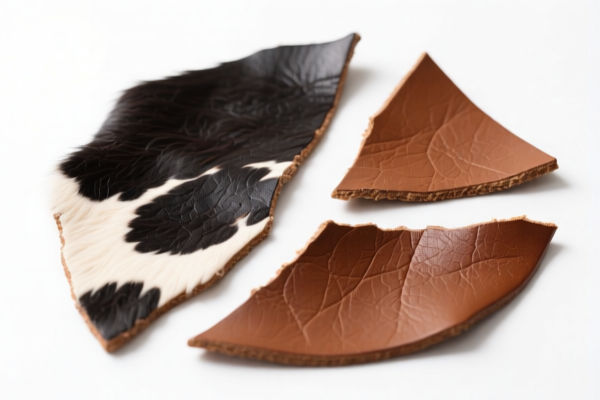
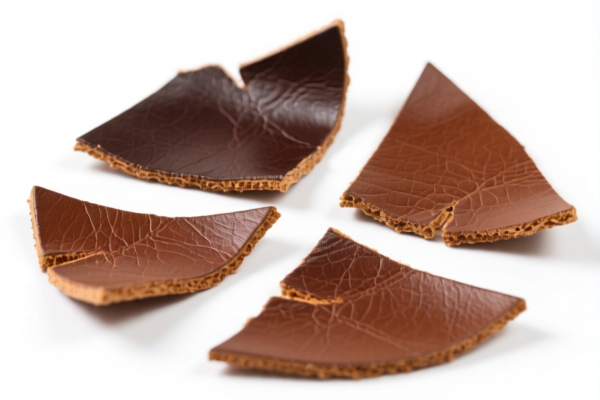
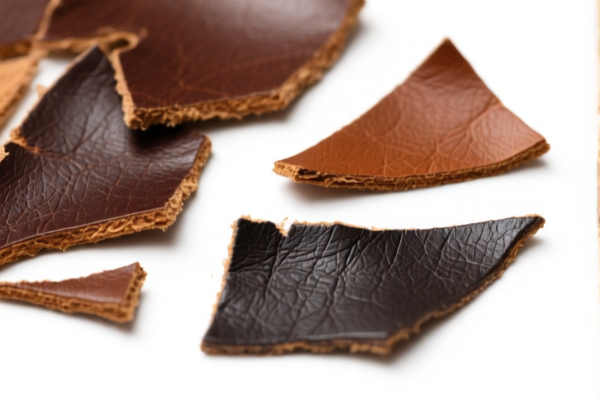
AI Analysis
🧸 Split Leather for Toys (Toy Leather Components)
🌐 HS Code Reference & Customs Clearance Guide | 2026 Latest Tariff Analysis | Professional-Grade Clearance Strategy
📌 1. Product Definition & Classification: Do You Really Know "Split Leather for Toys"?
Split leather, derived from the lower layer of the hide after the top grain has been split off, is a common material in the toy industry due to its softness, cost-effectiveness, and ease of shaping. In international trade, it is primarily classified based on its processing status and intended use.
Key Distinctions: * Tanned/Processed Split Leather: The leather has undergone tanning, dyeing, or finishing. This is the most common form for toy manufacturing. * Raw Split Leather: Minimal processing; rarely used directly for toys without further finishing. * Cut Pieces vs. Rolls: Even if cut to size, if it remains a material (not a finished toy part), it is classified as leather. If it is a fully assembled toy part (e.g., a sewn stuffed animal), it becomes a "part of a toy" or a "toy."
⚠️ Critical Classification Point:
- If it is tanned and processed leather, regardless of whether it is in rolls or cut pieces, it generally falls under Chapter 41.
- If it is unfinished or merely dressed, it may fall under 4114 or 4107.
- Do NOT classify finished stuffed animals or plush toys here; those belong to Chapter 95.
📦 2. HS Code Classification Details (2026 Latest Tariff Authority Comparison)
| HS Code | Product Description | Application Scenario | Processing Status |
|---|---|---|---|
4112.00 |
Tanned or crusted leather (full hides or skins) | Large sheets of split leather for industrial cutting | ✅ Tanned/Processed |
4114.20 |
Other prepared leather (incl. patent leather & aldehyde leather) | Most Common for Toys: Dyeing, coloring, or slight finishing of split leather | ✅ Tanned/Finished |
4107.21 |
Cattle hides (excluding calves), full & split, chrome-tanned | Raw chrome-split leather before final toy-specific finishing | ✅ Chrome-Tanned |
4107.29 |
Cattle hides (excluding calves), full & split, other tanning | Vegetable-tanned split leather (less common for soft toys) | ✅ Veg-Tanned |
4205.00 |
Other articles of leather or composition leather | Finished Parts: Pre-cut toy pieces, straps, or components ready for assembly | ✅ Semi-Finished Product |
9503.00 |
Toys... (e.g., stuffed animals, dolls) | Finished Toys: The final product, not the raw material | ❌ Not Leather Material |
🔍 Key Reminder:
- Most "split leather for toys" that is dyeing, softened, or slightly finished falls under 4114.20.00.00.
- If it is chrome-tanned but not yet finished for toy use, it may be 4107.21.
- Pre-cut pieces that are specifically shaped for toys might be classified as 4205.00 (articles of leather) if they are more than just cut shapes and have undergone significant processing.
💰 3. 2026 Latest Tariff Rate Details (Including Additional Duties & Policy Surcharges)
✅ Applicable Country: United States (US)
✅ Country of Origin: China (CN)
✅ Effective Date: From November 10, 2025 (including subsequent imports)
🎯 1. 4114.20.00.00 —— Other Prepared Leather (Including Split Leather for Toys)
| Item | Content |
|---|---|
| Base Rate | 0% (ad valorem) |
| USITC Surcharge | +25% (from USITC Footnote 9903.88.01) |
| IEEPA Surcharge | +10% (targeting China/Hong Kong products, effective Nov 10, 2025) |
| Total Rate | 45% |
| Tax Calculation | CIF Value × 45% |
| De Minimis Eligible? | ❌ No (deny_de_minimis) |
| Legal Basis Path | IEEPA:9903.01.25 → IEEPA:9903.01.24 → USITC:4114.20.00.00 → FOOTNOTE:9903.88.01 |
📌 Explanation:
- The 25% USITC surcharge is part of the Section 301 tariffs;
- The 10% IEEPA surcharge is the new对华加征 tariff;
- Total 45%, considered a very high tariff, must be factored into costings.
🎯 2. 4107.21.00.00 —— Chrome-Tanned Split Leather (Unfinished)
| Item | Content |
|---|---|
| Base Rate | 0% |
| USITC Surcharge | +25% |
| IEEPA Surcharge | +10% |
| Total Rate | 45% |
| Tax Calculation | CIF × 45% |
| De Minimis Eligible? | ❌ No |
| Legal Basis Path | IEEPA:9901.25 → IEEPA:9903.01.24 → USITC:4107.21.00.00 → FOOTNOTE:9903.88.01 |
📌 Note:
- Same tariff structure as4114.20;
- Even if not yet dyed or finished for toys, if it is chrome-split leather, it attracts the same high duties.
🛠️ 4. Customs Clearance Practical Advice (Combat Pitfall Avoidance Guide)
✅ 1. Preparation Checklist (Non-negotiable)
| Material | Required | Explanation |
|---|---|---|
| ✅ Product Specification Sheet | ✔️ | Include type (split), tanning method (chrome/veg), color, thickness, width |
| ✅ Photos (Rolls/Cut Pieces) | ✔️ | Clearly show texture, backing, and any labels |
| ✅ Commercial Invoice | ✔️ | Describe as "Tanned Split Leather for Toy Manufacturing" |
| ✅ Origin Certificate (CO) | ✔️ | If not from China, may qualify for lower rates |
| ✅ Bill of Lading | ✔️ | Ensure weight and volume match invoice |
✅ 2. Declaration Tips (Key Mantra)
🔥 "Chrome vs. Veg, Tanned vs. Raw, Name Precisely, Tariffs Climb Slowly!"
| Scenario | Correct Declaration | Wrong Practice |
|---|---|---|
| Chrome-split, dyed for toys | 4114.20.00.00 |
Misclassify as "fabric" → 20%+ |
| Chrome-split, raw/unfinished | 4107.21.00.00 |
Misclassify as "finished leather" → 25% penalty |
| Finished stuffed animal | 9503.00.00.00 |
Misclassify raw leather as toy → 25% base + 25% surcharge |
| Pre-cut leather pieces | 4205.00.00.00 |
Misclassify as raw hide → Higher scrutiny |
✅ 3. Special Situations Handling
| Scenario | Handling Advice |
|---|---|
| OEM Custom Colors | Provide color swatches and approval emails to prove specific toy-use processing |
| Mixed Shipments (Leather + Fabric) | Declare separately. Do not mix HS codes. |
| Small Samples (< $800) | May qualify for de minimis, but LEATHER IS EXCLUDED from most de minimis exemptions under IEEPA. Declare properly. |
| Recycled Leather/Composition Leather | May fall under 4115 or 3926 (plastic articles). Different tariffs. Clarify composition. |
🌍 5. Global Main Market Clearance Comparison (2026 Latest)
| Country/Region | Recommended HS Code | Tariff | Certification | Notes |
|---|---|---|---|---|
| 🇺🇸 USA | 4114.20.00.00 |
45% (China) | None Specific | High tariff due to Section 301 + IEEPA |
| 🇨🇳 China | 4114.20.00.00 |
5-12% | None | Lower base rate |
| 🇪🇺 EU | 4114.20 |
6.5% | REACH (Chemical) | No surcharges, but strict chemical regs |
| 🇦🇺 Australia | 4114.20 |
5% | None | Moderate tariff |
| 🇯🇵 Japan | 4114.20 |
6.5% | None | Stable rates |
📌 Conclusion:
- USA is the most expensive market for split leather imports from China;
- EU and Asia have more favorable tariffs but stricter chemical safety standards (REACH, etc.).
📌 6. Common Errors & Pitfall Guide (Blood & Tears Lessons)
❌ Mistake 1: Declaring "Split Leather for Toys" as "Fabric" or "Textile"
👉 Consequence: False declaration, heavy fines, and cargo detention.
❌ Mistake 2: Mixing "Raw Hides" and "Finished Leather" in one shipment
👉 Consequence: Customs will inspect every item, causing delays and potential re-classification.
❌ Mistake 3: Ignoring IEEPA 10% surcharge in cost calculation
👉 Consequence: Profit margin wiped out by unexpected 10% tax.
❌ Mistake 4: Using "Leather" without specifying "Split" or "Tanning Method"
👉 Consequence: Customs may assign a higher default rate (e.g., for full grain leather).
✅ Correct Approach:
"Chrome-Tanned Split Leather, Dyed, for Toy Manufacturing, Width: 50cm, Thickness: 1mm, HS Code: 4114.20.00.00"
🎯 7. Conclusion: Professional Declaration, Save Time, Reduce Costs!
🎯 Remember the Mantra:
🔹 "Chrome vs. Veg, Name it True, 45% in US, 0% Base, But Add 25+10, Plan Ahead!"
🔹 "HS Code Determines Destiny, 45% Tariff is Heavy, Declare Correctly, Sleep Well!"
📌 Tips:
If your leather is sourced from Vietnam, India, or Turkey, you may avoid IEEPA 10% and Section 301 25%, reducing total tariffs to 0-5%.
Recommend Advance Ruling for large recurring shipments to lock in classification.
📣 Action Now:
📞 Contact Professional Freight Forwarder + Provide Product Photos + Apply for HS Code Advance Ruling
🚀 Let your toy leather, clear smoothly, export efficiently, and maximize profits!
✨ Professional Clearance Starts with Accurate Classification!
💼 Every cent of your cost deserves precise calculation!
Customer Reviews
About HS Code Classification
The Harmonized System (HS) is an internationally standardized nomenclature developed by the World Customs Organization (WCO) to classify traded products. Over 200 countries use the HS system as the basis for customs tariffs, trade statistics, and import/export regulations.
Each HS code follows a hierarchical structure:
- Chapter (2 digits) — Broad category of goods (e.g., Chapter 84: Machinery and Mechanical Appliances)
- Heading (4 digits) — More specific grouping within the chapter
- Subheading (6 digits) — Internationally standardized breakdown, used by all WCO member countries
- National subdivisions (8-10 digits) — Country-specific extensions for further classification, such as US HTSUS 10-digit codes
Correct HS code classification is essential for smooth customs clearance, accurate duty payment, and compliance with trade regulations. Misclassification can lead to customs delays, overpayment of duties, or penalties.
When importing from CN to US, the applicable tariff rates may include:
- Most-Favored-Nation (MFN) rate — The standard duty rate applied to WTO members
- General rate — Applied to countries without trade agreements
- Trade remedy duties — Additional tariffs such as Section 301 (anti-dumping), Section 232 (national security), or countervailing duties
The information provided on this page is for reference purposes only. For official classification, please consult with your local customs authority or a licensed customs broker.