Splitter
CN → US| HS Code | Tariff Rate | Origin | Destination | Doc |
|---|---|---|---|---|
| 8543709860 | 37.6% | CN | US | Official Doc |
| 8543706000 | 35.0% | CN | US | Official Doc |
| 8544422000 | 85.0% | CN | US | Official Doc |
| 8536908530 | 35.0% | CN | US | Official Doc |
| 8536904000 | 35.0% | CN | US | Official Doc |
Product Images
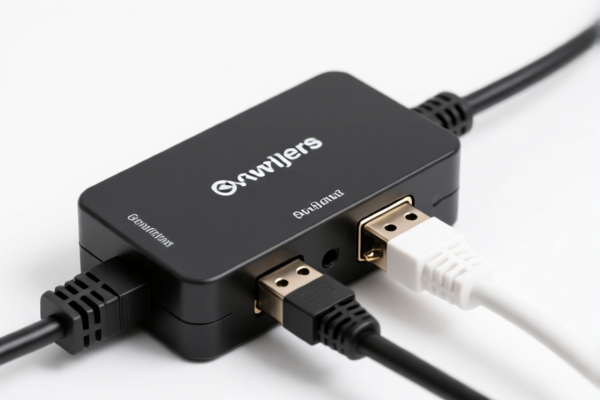
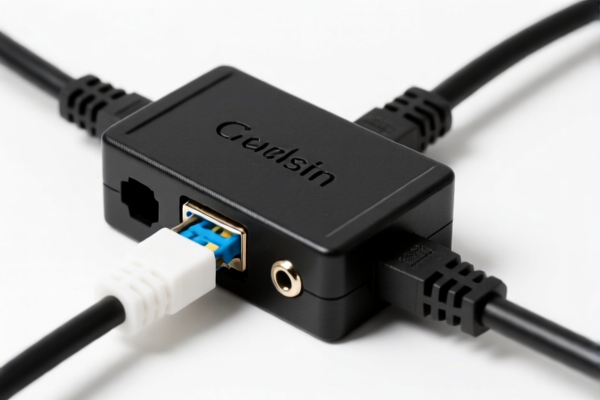
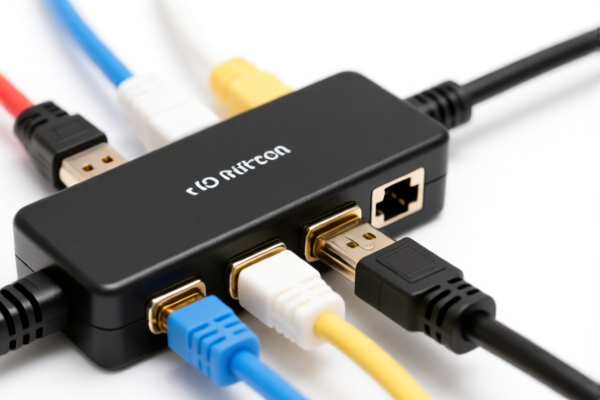
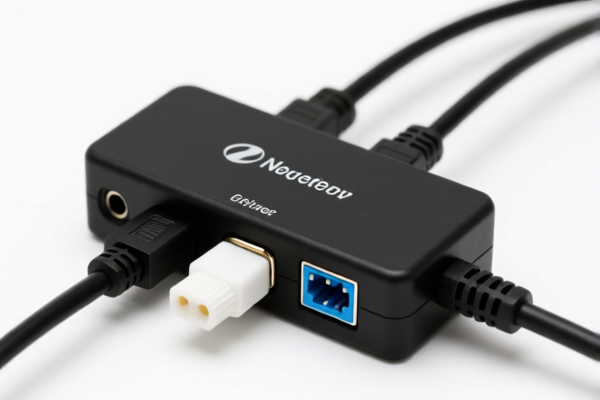
AI Analysis
🌐 Splitter (Signal/Power Distributor) | HS Code Classification & 2026 Tax Breakdown
🚀 Professional Customs Clearance Guide | Strategic Tariff Analysis for Chinese Exports to the US
📌 I. Product Definition: What Exactly Is a "Splitter"?
In international trade, a Splitter is not a single, monolithic product. Its classification depends entirely on its internal circuitry, function, and physical composition. Misclassification is the #1 cause of customs delays and unexpected tax bills.
There are two main categories: 1. Active Electronic Splitters: Devices with chips, circuit boards, and amplifiers (e.g., Network Splitters, HDMI Splitters). These "process" signals. 2. Passive Connectors/Cables: Simple metal/plastic devices that just physically divide a connection (e.g., Coaxial Splitters, Fiber Splitters, Wire Taps). These do not alter or amplify signals.
⚠️ Critical Distinction for Customs:
- If it has a circuit board/chip → Likely Chapter 85 (Electrical Machinery/Equipment).
- If it is purely wires/connectors → Likely Chapter 85 (Wires/Connectors) or 8536 (Connectors).
- Do NOT classify an active device as a simple connector to save tax; the risk of penalty is high.
📦 II. HS Code Classification Matrix (Based on Provided Data)
Based on the specific scenarios provided in your data, here is the precise breakdown for Splitter products entering the US Market from China.
| HS Code | Product Description & Logic | Key Differentiator |
|---|---|---|
8543.70.98.60 |
Electrical Apparatus with Individual Function Active devices not specifically named elsewhere. |
✅ Active: Contains independent functional circuitry (e.g., signal processing). Material: Metal + Insulation. |
8543.70.60.00 |
Signal Connection/Distribution Equipment Devices connected to telephones, data processing machines, or network devices. |
✅ Active/Network: Specifically designed to distribute signals to network equipment. |
8544.42.20.00 |
Insulated Conductors with Connectors Telecom cables/wires fitted with plugs/connectors. |
⚠️ Passive/Cable: Purely a wiring assembly with connectors. NO active electronics. |
8536.90.85.30 |
Electrical Circuit Connection Apparatus Connectors, junction boxes, terminal blocks (Voltage ≤ 1,000V). |
✅ Passive/Connector: Used to join electrical circuits physically. |
8536.90.40.00 |
Electrical Connections (Splicing/Terminals) Terminal blocks, splices, connectors (Voltage ≤ 1,000V). |
✅ Passive/Connector: High consistency with terminal blocks and splicing joints. |
💰 III. Detailed Tariff Structure (China → USA)
✅ Applicable Country: United States (US)
✅ Origin: China (CN)
✅ Effective Date: Current US Trade Policy (Section 301 + IEEPA)
🎯 1. Active Electronic Splitters (High-Function)
Codes: 8543.70.98.60 / 8543.70.60.00 / 8536.90.85.30 / 8536.90.40.00
| Tariff Component | Rate | Legal Basis | Explanation |
|---|---|---|---|
| Basic Duty | 0% - 2.6% | HTSUS Base Rate | Varies by specific subheading. |
| Section 301 Duty | +25.0% | 19 U.S.C. § 1677j | Standard "Trade War" tariff on Chinese electronics. |
| IEEPA Section 122 | +10.0% | 50 U.S.C. § 1702 | Additional tariff under International Emergency Economic Powers Act. |
| TOTAL ESTIMATED RATE | 35.0% - 37.6% | High Cost. Do not underestimate this. |
📌 Detailed Breakdown:
-8543.70.60.00/8536.90.xxxxxx:
- Base: 0%
- 301: 25%
- 122: 10%
- Total: 35.0%
-8543.70.98.60:
- Base: 2.6%
- 301: 25%
- 122: 10%
- Total: 37.6%
🎯 2. Passive Cable/Connector Splitters
Code: 8544.42.20.00
| Tariff Component | Rate | Legal Basis | Explanation |
|---|---|---|---|
| Basic Duty | 0.0% | HTSUS Base Rate | For insulated conductors with connectors. |
| Section 301 Duty | +25.0% | 19 U.S.C. § 1677j | Standard on Chinese copper/aluminum products. |
| IEEPA Section 122 | +10.0% | 50 U.S.C. § 1702 | Additional emergency tariff. |
| Steel/Aluminum/Copper Surcharge | +50.0% | Specific Footnote | CRITICAL: If the product contains significant steel, aluminum, or copper components, an additional 50% may apply depending on specific footnotes and material composition analysis. |
| TOTAL ESTIMATED RATE | 85.0% + | Extremely High. |
⚠️ Warning on
8544.42.20.00:
The data indicates a 85.0% total tax. This is driven by:
1. 25% (Section 301)
2. 10% (IEEPA 122)
3. 50% (Specific surcharge on steel/aluminum/copper articles)
Note: The 50% surcharge is severe. If your "splitter" is just a coaxial cable with a plug, this classification triggers the highest tax bracket.
🛠️ IV. Customs Clearance Strategy & Pitfalls
✅ 1. Documentation Checklist
To ensure smooth clearance, you must provide:
* Product Technical Datasheet: Clearly state if it is Active (has a chip/PCB) or Passive (purely passive).
* Circuit Diagram: Crucial for distinguishing between 8543 (Active) and 8544/8536 (Passive).
* Material Composition: Specify % of copper, aluminum, plastic, and electronic components.
* Photos: Show the interior (if possible) or port labels (e.g., "HDMI Input/Output" vs. "Coaxial In/Out").
* Invoice Description: Must match the HS Code logic exactly.
✅ 2. Classification Strategy: How to Choose?
| Scenario | Recommended HS Code | Reason |
|---|---|---|
| HDMI/Network Splitter with Chip | 8543.70.60.00 or 8543.70.98.60 |
It processes digital signals. It is an "electrical apparatus with individual function." |
| Simple Coaxial Splitter (Plastic/Metal) | 8544.42.20.00 or 8536.90.40.00 |
It is purely a connector/cable assembly. No electricity is generated or processed internally. |
| Power Splitter (Passive) | 8536.90.40.00 |
Falls under "connections for electrical circuits." |
✅ 3. Cost Optimization Tips
- Avoid
8544.42.20.00if possible: The 85% tax rate is prohibitive. If your product can be argued to have any active component (even a small indicator LED or impedance matching circuit), classify it under8543(35-37.6%) instead. - Verify Material for Surcharge: If using
8544, check if the 50% steel/aluminum surcharge applies. If it's primarily plastic with copper wiring, ensure the HTSUS footnote doesn't trigger the surcharge. - De Minimis Warning:
> ❌ No De Minimis Exemption: All these HS codes are subject to Section 301 and IEEPA tariffs. The $800 de minimis rule does NOT apply to goods subject to these additional duties. Every shipment is taxable.
🌍 V. Global Market Comparison (2026 Outlook)
| Market | Typical HS Code for Active Splitter | Est. Duty (China Origin) | Notes |
|---|---|---|---|
| 🇺🇸 USA | 8543.70.60.00 |
35.0% | High tariffs due to 301 + IEEPA. |
| 🇪🇺 EU | 8543.70.99 |
~0-14% | No Section 301 equivalent, but standard duties may apply. |
| 🇨🇳 China | 8543.70.98 |
0% | Imports from USA/Others may have duties; domestic trade is free. |
| 🇬🇧 UK | 8543.70.99 |
~0-14% | Post-Brexit tariffs align closely with EU. |
📌 VI. Common Mistakes to Avoid
❌ Mistake 1: Labeling an Active HDMI Splitter as "Plastic Part" or "Cable Accessory".
👉 Result: Customs will reclassify to 8543 or 8536, apply 35%+ tax, and issue a penalty.
❌ Mistake 2: Using 8544.42.20.00 for a passive splitter without checking the 50% surcharge.
👉 Result: You budget for 35%, but pay 85%. Profit margin destroyed.
❌ Mistake 3: Assuming "Splitter" is a generic term.
👉 Result: HS Codes are technology-specific. You must define the electrical function.
🎯 VII. Final Recommendation
- Identify Activity: Does the splitter have a chip/PCB?
- Yes → Use
8543.70.60.00(35.0% total). - No → Use
8536.90.40.00(35.0% total) OR8544.42.20.00(85.0% total - Avoid if possible).
- Yes → Use
- Documentation: Provide a circuit diagram proving active vs. passive status.
- Budgeting: Factor in 35-38% for active devices and ~85% for passive cable assemblies.
📢 Pro Tip:
For high-volume shipments, consider Advance Rulings from US Customs (CBP) to lock in a favorable classification. The difference between 35% and 85% can make or break your profitability.
✨ Stay Compliant, Stay Profitable!
💼 Accurate classification is the first step to successful global trade.
Customer Reviews
About HS Code Classification
The Harmonized System (HS) is an internationally standardized nomenclature developed by the World Customs Organization (WCO) to classify traded products. Over 200 countries use the HS system as the basis for customs tariffs, trade statistics, and import/export regulations.
Each HS code follows a hierarchical structure:
- Chapter (2 digits) — Broad category of goods (e.g., Chapter 84: Machinery and Mechanical Appliances)
- Heading (4 digits) — More specific grouping within the chapter
- Subheading (6 digits) — Internationally standardized breakdown, used by all WCO member countries
- National subdivisions (8-10 digits) — Country-specific extensions for further classification, such as US HTSUS 10-digit codes
Correct HS code classification is essential for smooth customs clearance, accurate duty payment, and compliance with trade regulations. Misclassification can lead to customs delays, overpayment of duties, or penalties.
When importing from CN to US, the applicable tariff rates may include:
- Most-Favored-Nation (MFN) rate — The standard duty rate applied to WTO members
- General rate — Applied to countries without trade agreements
- Trade remedy duties — Additional tariffs such as Section 301 (anti-dumping), Section 232 (national security), or countervailing duties
The information provided on this page is for reference purposes only. For official classification, please consult with your local customs authority or a licensed customs broker.