Spool Tray
CN → US| HS Code | Tariff Rate | Origin | Destination | Doc |
|---|---|---|---|---|
| 7326908688 | 87.9% | CN | US | Official Doc |
| 7326190080 | 87.9% | CN | US | Official Doc |
| 4415208000 | 45.7% | CN | US | Official Doc |
Product Images
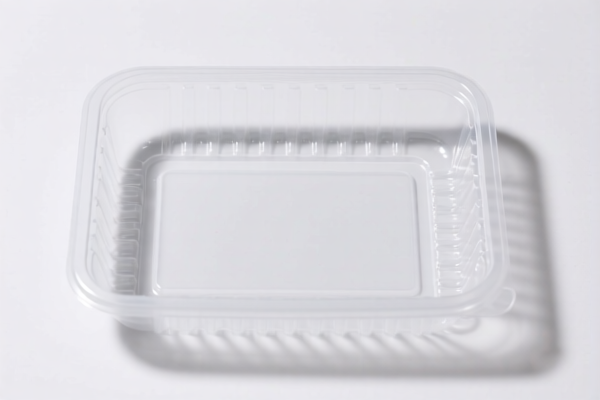


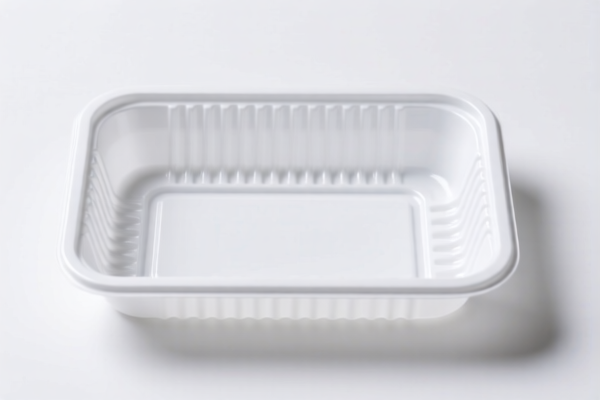
AI Analysis
🎣 Spool Tray (Line Spool Pallets)
🌐 HS Code Reference & Customs Clearance Guide | 2024-2026 Tariff Breakdown | Professional Compliance Strategy
📌 I. Product Definition & Classification: What is a "Spool Tray"?
A Spool Tray (also known as a Line Spool Pallet or Cable Drum Tray) is an industrial support structure designed to hold, transport, and stabilize large spools of cable, wire, fishing line, or similar industrial threads. In international trade, these items are classified based on their primary material composition, which dictates the tariff code and associated duties.
The data provided highlights three distinct classification paths depending on whether the tray is made of Steel/Iron, Plastic/Miscellaneous Steel, or Wood.
⚠️ Key Distinction Point:
- If the structure is primarily metal (iron/steel) and used for support/fixing → 7326.90.86.88
- If considered a part/component of machinery or other steel制品 → 7326.19.00.80
- If the structure is primarily wooden (pallet-like) → 4415.20.80.00
📦 II. HS Code Classification Details (Based on Provided Data)
| HS Code | Product Description | Applicable Scenario | Material Type |
|---|---|---|---|
7326.90.86.88 |
Articles of iron or steel, other | Support/Fixing structures, industrial pallets | 🛠️ Iron/Steel |
7326.19.00.80 |
Articles of iron or steel, other (Parts) | Components/Parts, inferred metal or plastic mix | 🔧 Steel/Part |
4415.20.80.00 |
Packing cases, boxes, crates, drums | Wooden pallets, loading boards | 🪵 Wood |
🔍 Critical Note:
- Metal Spool Trays attract significantly higher tariffs due to US-China trade tensions (Section 301 and 122).
- Wooden Spool Trays have lower base rates but are subject to specific agricultural/packaging inspections.
- Misclassification between "Steel Article" and "Part" can lead to customs audits, though the tax rate here is identical in the provided data.
💰 III. 2024-2026 Latest Tariff Rate Breakdown (Detailed Policy Analysis)
✅ Applicable Market: United States (US)
✅ Origin: China (CN) (Implied by the specific "122 Clause" and high add-on tariffs in the data)
✅ Effective Time: Current Active Regulations
🎯 1. 7326.90.86.88 —— Articles of Iron or Steel (Support/Fixing Type)
| Item | Detail |
|---|---|
| Base Duty | 2.9% (Ad Valorem) |
| Section 301 Duty | +25.0% (25% Add-on Tariff) |
| Section 122 Duty | +10.0% (Steel/Aluminum/Copper specific add-on) |
| Section 232 Duty | +50.0% (Steel, Aluminum, Copper Products Add-on) |
| Total Effective Rate | 87.9% |
| Tax Calculation | CIF Value × 87.9% |
| De Minimis Exemption | ❌ Denied |
| Legal Basis Path | HTSUS: 7326.90.86.88 → Sec 301: 25% → Sec 122: 10% → Sec 232: 50% |
📌 Explanation:
- This classification treats the spool tray as a general "Article of Iron or Steel".
- The 87.9% total tariff is extremely high, driven by the cumulative effect of Section 232 (National Security, 50% for steel), Section 301 (Trade War, 25%), and Section 122 (Trade Adjustment, 10%).
- Risk: High risk of anti-dumping/countervailing duty (AD/CVD) investigations if not carefully documented.
🎯 2. 7326.19.00.80 —— Articles of Iron or Steel (Parts/Components)
| Item | Detail |
|---|---|
| Base Duty | 2.9% |
| Section 301 Duty | +25.0% |
| Section 122 Duty | +10.0% |
| Section 232 Duty | +50.0% |
| Total Effective Rate | 87.9% |
| Tax Calculation | CIF Value × 87.9% |
| De Minimis Exemption | ❌ Denied |
| Legal Basis Path | HTSUS: 7326.19.00.80 → Sec 301: 25% → Sec 122: 10% → Sec 232: 50% |
📌 Note:
- Although classified as a "Part" or "Component," the tariff burden is identical to the general article.
- Customs may challenge this classification if the item is not strictly a "part" of a machine but a standalone handling tool.
- Warning: Do not assume "Part" status lowers costs; in this specific data set, it does not.
🎯 3. 4415.20.80.00 —— Wooden Pallets & Loading Blocks
| Item | Detail |
|---|---|
| Base Duty | 10.7% |
| Section 301 Duty | +25.0% |
| Section 122 Duty | N/A (Not applicable to wood per provided data) |
| Section 232 Duty | N/A (Not applicable to wood per provided data) |
| Total Effective Rate | 45.7% |
| Tax Calculation | CIF Value × 45.7% |
| De Minimis Exemption | ❌ Likely Denied (High value thresholds apply) |
| Legal Basis Path | HTSUS: 4415.20.80.00 → Sec 301: 25% |
📌 Significance:
- Wooden trays are significantly cheaper to import (45.7% vs 87.9%).
- However, they must strictly meet ISPM 15 (International Standards for Phytosanitary Measures) regarding heat treatment or fumigation to prevent pest importation.
- If the tray contains any metal brackets exceeding 10-20% of the value/structure, customs may reclassify it as steel (7326), triggering the higher tax.
🛠️ IV. Customs Clearance Practical Advice (Avoiding Pitfalls)
✅ 1. Documentation Checklist (Mandatory)
| Document | Required? | Notes |
|---|---|---|
| ✅ Product Specification | ✔️ | Must clearly state material (Wood vs. Steel vs. Mixed). |
| ✅ Material Composition Statement | ✔️ | Critical for HS Code determination. |
| ✅ Photos (Internal/External) | ✔️ | Show structure, welds (if steel), or joints (if wood). |
| ✅ ISPM 15 Mark (For Wood) | ✔️ | Mandatory for 4415.20.80.00. No mark = Rejection/Destruction. |
| ✅ Commercial Invoice | ✔️ | Describe as "Wooden Spool Support" or "Steel Cable Tray," NOT just "Tray." |
| ✅ Packing List | ✔️ | Show weight and volume accurately. |
✅ 2. Declaration Strategy (Crucial Tips)
🔥 "Material Defines Tax, Mark Defines Entry!"
| Scenario | Correct Declaration | Risk of Misdeclaration |
|---|---|---|
| Pure Wooden Tray | 4415.20.80.00 |
If metal brackets are hidden, customs may reclassify to Steel (87.9%). |
| Steel Tray | 7326.90.86.88 |
Cannot be reclassified as wood. Tax is fixed at 87.9%. |
| Mixed Material | Check dominant material | If steel > 50% by value, likely 7326. |
| Plastic-Coated Steel | 7326.90.86.88 |
Coating does not change the base classification. |
✅ 3. Special Considerations
| Issue | Recommendation |
|---|---|
| Cost Optimization | If feasible, switch to Wooden (4415) or Plastic (check if plastic has lower tariffs) to save ~42% in duties. |
| Section 232 Exemptions | Steel products often qualify for Country-Specific Exclusions if not from China. Verify if your supplier has an exclusion. |
| ISPM 15 Compliance | For wooden trays, ensure the QR code/marks are visible and valid. Customs will check this at the port. |
| Anti-Dumping | Check if your specific steel manufacturer has been targeted by AD/CVD orders. This data shows Section 232, but AD/CVD could add more. |
🌍 V. Global Market Comparison (2024-2026 Overview)
| Country/Region | Recommended HS Code | Est. Duty Rate | Key Requirement |
|---|---|---|---|
| 🇺🇸 USA | 7326.90.86.88 (Steel) |
87.9% | Section 301, 232, 122 Compliance |
| 🇺🇸 USA | 4415.20.80.00 (Wood) |
45.7% | ISPM 15 Phytosanitary Certificate |
| 🇪🇺 EU | 7326.90 (Steel) |
~1.7% + VAT | No Section 301/232. Lower risk. |
| 🇨🇳 China | 7326.90 (Steel) |
~2.9% | Import duty only. |
📌 Conclusion:
- US Market is the highest cost zone due to layered tariffs.
- Wooden trays offer a ~42% duty saving compared to steel trays in the US.
- However, wooden trays require strict phytosanitary documentation.
📌 VI. Common Errors & Pitfalls (Learn from Mistakes)
❌ Error 1: Declaring Steel Trays as "Plastic Parts" to avoid Section 232.
👉 Consequence: Customs audit, fines, and retroactive tax of 87.9%.
❌ Error 2: Shipping Wooden Trays without ISPM 15 Marking.
👉 Consequence: Cargo held at port, incineration, or return shipment. Huge delays.
❌ Error 3: Using "General Cargo" description in Invoice.
👉 Consequence: Ambiguous classification leads to worst-case duty assessment.
❌ Error 4: Ignoring Section 122 (10%) and Section 232 (50%) in cost calculations.
👉 Consequence: Budget overrun. Your landed cost could be nearly double the CIF value.
✅ Best Practice:
"Steel Spool Support Tray, Industrial Grade, No Wooden Components, Model XYZ, Compliant with US Steel Import Regulations."
🎯 VII. Conclusion: Professional Clearance, Cost Control, Efficiency!
🎯 Remember the Key Rules:
🔹 "Steel = 87.9% (High Cost), Wood = 45.7% (Lower Cost + Phytosanitary Risk)"
🔹 "Section 232 + 301 + 122 = The Triple Tax Penalty on US Steel Imports"
🔹 "HS Code is Not Just a Number; It’s Your Tax Bill!"
📌 Pro Tip:
If your product volume is high, consider restructuring the supply chain (e.g., final assembly in a non-China country like Vietnam or Mexico) to potentially avoid Section 301 and 232 duties.
Also, apply for Advance Rulings from US CBP to confirm the HS Code before shipment.
📣 Immediate Action Required:
📞 Consult a Customs Broker + Provide Material Specs + Verify ISPM 15 for Wood
🚀 Optimize your HS Code, minimize your tax, maximize your profit!
✨ Precision in Classification, Power in Compliance!
💼 Every percentage point of duty matters!
Customer Reviews
About HS Code Classification
The Harmonized System (HS) is an internationally standardized nomenclature developed by the World Customs Organization (WCO) to classify traded products. Over 200 countries use the HS system as the basis for customs tariffs, trade statistics, and import/export regulations.
Each HS code follows a hierarchical structure:
- Chapter (2 digits) — Broad category of goods (e.g., Chapter 84: Machinery and Mechanical Appliances)
- Heading (4 digits) — More specific grouping within the chapter
- Subheading (6 digits) — Internationally standardized breakdown, used by all WCO member countries
- National subdivisions (8-10 digits) — Country-specific extensions for further classification, such as US HTSUS 10-digit codes
Correct HS code classification is essential for smooth customs clearance, accurate duty payment, and compliance with trade regulations. Misclassification can lead to customs delays, overpayment of duties, or penalties.
When importing from CN to US, the applicable tariff rates may include:
- Most-Favored-Nation (MFN) rate — The standard duty rate applied to WTO members
- General rate — Applied to countries without trade agreements
- Trade remedy duties — Additional tariffs such as Section 301 (anti-dumping), Section 232 (national security), or countervailing duties
The information provided on this page is for reference purposes only. For official classification, please consult with your local customs authority or a licensed customs broker.