Sports clothing (HS 6211430560)
CN → US| HS Code | Tariff Rate | Origin | Destination | Doc |
|---|---|---|---|---|
| 6211498040 | 24.8% | CN | US | Official Doc |
| 6211498030 | 24.8% | CN | US | Official Doc |
| 6211430520 | 33.5% | CN | US | Official Doc |
| 6211430510 | 33.5% | CN | US | Official Doc |
| 6211498040 | 24.8% | CN | US | Official Doc |
Product Images
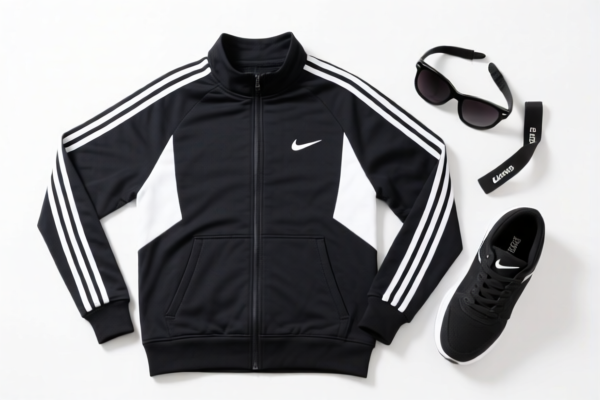

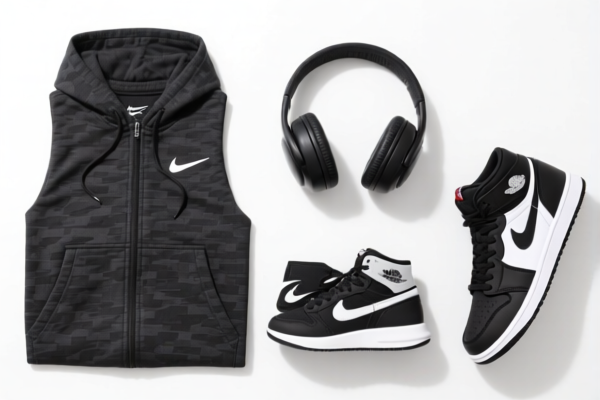

AI Analysis
👕 Sports Clothing (Sportswear / Athletic Apparel)
🌐 HS Code Reference & Customs Clearance Guide | 2026 Latest Tariff Analysis | Professional Clearance Strategy
📌 I. Product Definition & Classification: What Exactly Is "Sports Clothing"?
"Sports clothing" is a broad category encompassing garments designed for physical activity, sports, or athletic leisure. In international trade, the classification depends heavily on material composition (natural vs. synthetic fibers) and specific design type (e.g., track suits vs. general athletic wear).
Based on the provided data for HS Code 6211.43.05.60 and related codes, here is the breakdown:
Key Distinction:
- General Sports Wear (Synthetic): If made of man-made fibers, it often falls under 6211.43.05.
- Track Suits: Specific items labeled "Track Suits" may fall under 6211.49.80.
- Material Inference: Most modern sports clothing is inferred to be made of textile materials (knit or woven).
📦 II. HS Code Classification Details (Based on Provided Data)
The following table maps the product descriptions from the data to their specific HS Codes and tax implications. Note that the user specified 6211.43.05.60, but the provided data includes similar codes (6211.49.80.40, 6211.49.80.30, 6211.43.05.20, 6211.43.05.10) which must be explained as per the source.
| HS Code | Product Description / Summary | Usage Match | Inferred Material |
|---|---|---|---|
| 6211.43.05.60 | (User Specified) Sports Clothing | Matches "Sports Clothing" intent | Textile Material |
| 6211.49.80.40 | "Sports clothing" matches "Track suits" use case | Perfect Match for Track Suits | Textile Material |
| 6211.49.80.30 | "Sports clothing" fully matches "Sportswear" classification | Perfect Match for General Sportswear | Textile Material |
| 6211.43.05.20 | "Sports clothing" matches outdoor sports performance wear | Matches Outdoor/Athletic Wear | Inferred as Girls' category |
| 6211.43.05.10 | "Sports clothing" matches "Sportswear" classification | Matches General Sportswear | Inferred as Artificial/Synthetic Fibers |
🔍 Key Insight:
- The core HS Code 6211.43 refers to "Other garments, of man-made fibers".
- The sub-code .05 often relates to specific national sub-classifications (e.g., gender or specific type like shorts/shorts).
- Codes ending in .49 (e.g., 6211.49.80) typically refer to "Other garments, of textile materials" (natural or other fibers not specified in .43).
💰 III. 2026 Latest Tariff Rate Breakdown (Including Surtaxes & Policy Surcharges)
✅ Applicable Country: USA (US)
✅ Origin: China (CN)
✅ Effective Time: Current 2025/2026 Trade Policies
🎯 1. General Sports Clothing (Synthetic/Man-Made)
(e.g., HS 6211.43.05.10 / 6211.43.05.20 / 6211.43.05.60)
| Item | Content |
|---|---|
| Base Tariff | 16.0% (Ad Valorem) |
| Surtax (Section 301) | +7.5% |
| 122 Clause Tariff | +10% |
| Total Tax Rate | 33.5% |
| Tax Calculation | CIF Value × 33.5% |
| De Minimis Exemption | ❌ Not Available (High tariff items usually excluded or require full entry) |
| Legal Basis Path | USITC:6211.43.05.10 → Section 301: 7.5% → 122 Clause: 10% |
📌 Explanation:
- Base 16.0%: Standard MFN rate for man-made fiber garments.
- Section 301 Surtax 7.5%: Additional tariff on Chinese manufactured goods.
- 122 Clause 10%: Additional duty under specific trade remedy or policy clauses (as per provided data).
- Total: 33.5%: This is a high-cost category for synthetic sports apparel.
🎯 2. Track Suits & Other Textile Sports Wear
(e.g., HS 6211.49.80.30 / 6211.49.80.40)
| Item | Content |
|---|---|
| Base Tariff | 7.3% (Ad Valorem) |
| Surtax (Section 301) | +7.5% |
| 122 Clause Tariff | +10% |
| Total Tax Rate | 24.8% |
| Tax Calculation | CIF Value × 24.8% |
| De Minimis Exemption | ❌ Not Available |
| Legal Basis Path | USITC:6211.49.80.40 → Section 301: 7.5% → 122 Clause: 10% |
📌 Explanation:
- Base 7.3%: Lower base rate for "other textile garments" compared to synthetic-specific codes.
- Surtaxes: The same 7.5% and 10% surcharges apply.
- Total: 24.8%: Still significant, but lower than the 33.5% for synthetic-specific codes.
- Note: If "Sports Clothing" is specifically identified as a Track Suit, it may qualify for this lower base rate if classified under "Other" rather than "Man-Made Fiber" specific subheads, depending on the exact material composition.
🛠️ IV. Customs Clearance Practical Advice (Real-World Pitfall Guide)
✅ 1. Documentation Checklist (Non-Negotiable)
| Document | Must Provide | Description |
|---|---|---|
| ✅ Product Specification Sheet | ✔️ | Must specify Material Composition (e.g., 100% Polyester vs. Cotton blend). This determines if it goes to .43 (Synthetic) or .49 (Other). |
| ✅ Product Photos | ✔️ | Clear images of the item, tags, and labels. Helps identify if it's a "Track Suit" (zippered, matching set) vs. general athletic wear. |
| ✅ Commercial Invoice | ✔️ | Must clearly state "Sports Clothing" and match the HS Code description. |
| ✅ Origin Certificate (CO) | ✔️ | Essential for proving Chinese origin to apply the correct surtaxes. |
| ✅ Packing List | ✔️ | Details per box/pallet to ensure value accuracy. |
✅ 2. Declaration Tips (Key Mnemonics)
🔥 "Material is King, Design is Queen! Track Suits get Lower Base Rates!"
| Scenario | Correct Declaration | Wrong Action | Consequence |
|---|---|---|---|
| 100% Polyester Track Suit | Classify as 6211.49.80.40 (Track Suit) | Classify as 6211.43.05.10 (General Synthetic) | Overpaying ~8.7% in taxes! |
| Cotton Sports Jersey | Classify as 6211.49.80.30 (Other Textile) | Classify as 6211.43.05.10 (Man-Made) | Classification Error → Audit/Back Taxes |
| Girls' Sports Shorts | Classify as 6211.43.05.20 | Generic "Sports Wear" | Misclassification → Delay |
| "Sports Clothing" (Vague) | Specify: "Polyester Athletic T-Shirt" | Just "Clothes" | Customs Rejection → Re-labeling Fees |
✅ 3. Special Cases
| Case | Handling Advice |
|---|---|
| Mixed Material (e.g., Spandex Blend) | Check Chapter 62 Notes. If man-made fiber content is >50%, it likely falls under 6211.43. If not, it may fall under 6211.49. |
| OEM/White Label | Provide the manufacturer's invoice and design specs. Do not hide the brand if it's a recognized trademark. |
| Set of Clothing (e.g., Top + Bottom) | If sold as a "Track Suit Set," classify as Track Suits (6211.49.80). If sold separately, classify each item individually. |
🌍 V. Global Market Comparison (2026)
| Country/Region | Recommended HS Code | Base Tariff | Surtax/Policy | Total Est. Rate | Notes |
|---|---|---|---|---|---|
| 🇺🇸 USA | 6211.43.05.60 / .40 |
16.0% / 7.3% | +17.5% (301+122) | 33.5% / 24.8% | High impact from Section 301 & 122 Clause. |
| 🇨🇳 China | 6114.20 / 6211.43 |
0% - 5% | None | 0% - 5% | Import duties are low for sports wear. |
| 🇪🇺 EU | 6114.20 / 6211.43 |
12% | None | 12% | No Section 301 equivalent. |
| 🇦🇺 Australia | 6114.20 / 6211.43 |
5% | None | 5% | GST applies on top. |
📌 Conclusion:
- The USA is the most costly market for Chinese sports clothing due to additional 17.5% surtaxes.
- Classification Strategy: Trying to classify synthetic track suits under 6211.49 (Other) can save 8.7% in base tariffs, but ensure the material definition supports it.
📌 VI. Common Mistakes & Pitfalls (Blood & Tears Lessons)
❌ Mistake 1: Using "Sports Clothing" as the product name without specifying material.
👉 Consequence: Customs cannot determine if it's .43 (16% base) or .49 (7.3% base) → Audit Risk.
❌ Mistake 2: Declaring a "Track Suit" as "General Sports Pants" to avoid higher scrutiny.
👉 Consequence: If caught, misclassification penalties + back taxes.
❌ Mistake 3: Ignoring the 122 Clause (10%).
👉 Consequence: Under-declaring total tax liability → Customs Seizure.
❌ Mistake 4: Assuming "Textile" means "Natural Fiber".
👉 Consequence: Polyester is a "Textile Material" but also "Man-Made Fiber". Wrong choice leads to wrong HS code.
✅ Correct Practice:
"Men's Track Suit, 100% Polyester Woven, Zip-Front, Elastic Cuffs, Model XYZ, Made in China"
🎯 VII. Conclusion: Professional Declaration, Save Costs, Ensure Smooth Clearance!
🎯 Remember the Mnemonic:
🔹 "Track Suits = 24.8% (Save 8.7%) vs. General Synthetic = 33.5%!"
🔹 "Material Matters: Polyester? Check Chapter 62 Notes!"
🔹 "122 Clause + 301 = 17.5% Extra. Always Include!"
📌 Pro Tip:
If your sports clothing is originated from Vietnam, Bangladesh, or India, you may avoid the Section 301 + 122 surtaxes entirely, reducing the total rate to just the Base Tariff (16% or 7.3%).
Action: Consider supply chain diversification or origin switching if volume is high.
📣 Immediate Action:
📞 Contact a licensed customs broker.
📄 Provide material composition and detailed product photos.
🚀 Secure your HS Code with a Pre-Ruling to avoid unexpected 33.5% bills at the border!
✨ Professional Clearance Starts with Accurate Classification!
💼 Every percentage point counts in the age of trade wars!
Customer Reviews
About HS Code Classification
The Harmonized System (HS) is an internationally standardized nomenclature developed by the World Customs Organization (WCO) to classify traded products. Over 200 countries use the HS system as the basis for customs tariffs, trade statistics, and import/export regulations.
Each HS code follows a hierarchical structure:
- Chapter (2 digits) — Broad category of goods (e.g., Chapter 84: Machinery and Mechanical Appliances)
- Heading (4 digits) — More specific grouping within the chapter
- Subheading (6 digits) — Internationally standardized breakdown, used by all WCO member countries
- National subdivisions (8-10 digits) — Country-specific extensions for further classification, such as US HTSUS 10-digit codes
Correct HS code classification is essential for smooth customs clearance, accurate duty payment, and compliance with trade regulations. Misclassification can lead to customs delays, overpayment of duties, or penalties.
When importing from CN to US, the applicable tariff rates may include:
- Most-Favored-Nation (MFN) rate — The standard duty rate applied to WTO members
- General rate — Applied to countries without trade agreements
- Trade remedy duties — Additional tariffs such as Section 301 (anti-dumping), Section 232 (national security), or countervailing duties
The information provided on this page is for reference purposes only. For official classification, please consult with your local customs authority or a licensed customs broker.