Sports footwear
CN → US| HS Code | Tariff Rate | Origin | Destination | Doc |
|---|---|---|---|---|
| 6404112071 | 20.5% | CN | US | Official Doc |
| 6404114900 | 47.5% | CN | US | Official Doc |
| 6402191520 | 22.6% | CN | US | Official Doc |
| 6402191541 | 22.6% | CN | US | Official Doc |
| 6403194090 | 21.8% | CN | US | Official Doc |
| 6403197091 | 17.5% | CN | US | Official Doc |
Product Images
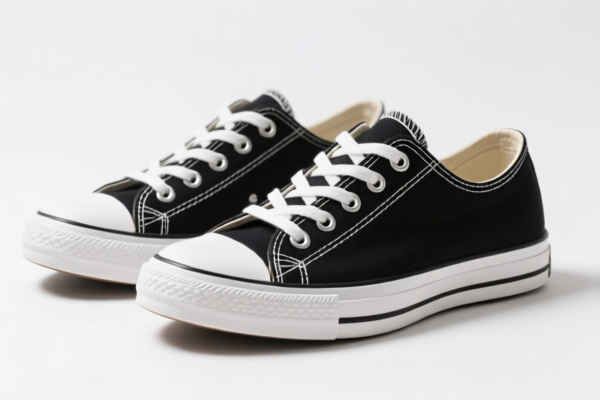
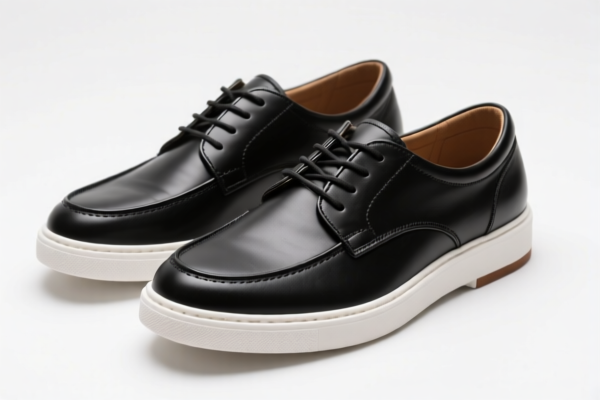
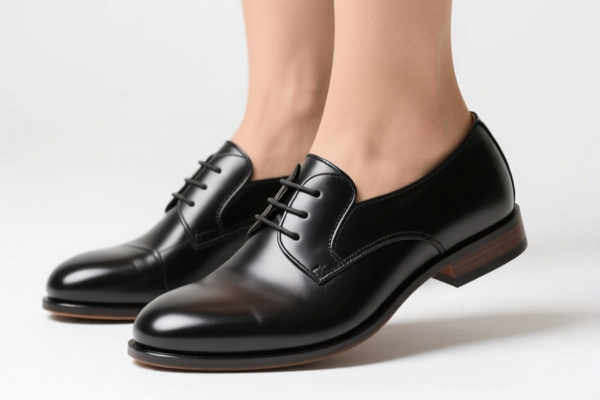
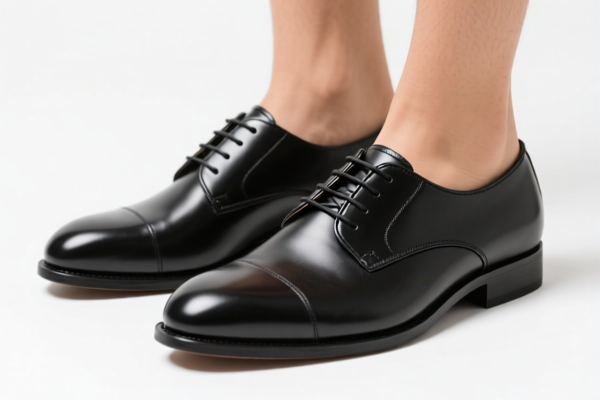
AI Analysis
🏃♂️ Sports Footwear (Athletic Shoes)
🌐 HS Code Reference & Customs Clearance Guide | 2026 Latest Tariff Breakdown | Professional Import Strategy
📌 One: Product Definition & Classification – What Exactly Is "Sports Footwear"?
Sports footwear refers to shoes designed for athletic activities such as running, training, basketball, football, and casual sportswear use. In international trade, these are classified based on material composition, construction, and intended use.
⚠️ Key Classification Criteria: - Upper material: Textile, leather, rubber, or plastic
- Outsole material: Rubber, plastic, or composite
- Structure: Whether the upper and outsole are compatible (no material conflict)
- Intended use: Clearly for sports/athletic purposes (not casual or fashion)🔍 Critical Note:
- If the shoe is not primarily for sports, it may fall under 6403.99 (other footwear), which has lower tariffs.
- If material mismatch exists (e.g., textile upper with rubber outsole), misclassification risk increases → higher scrutiny.
📦 Two: HS Code Classification Details (2026 Official Tariff Table)
| HS Code | Product Description | Material Compatibility | Key Use Case |
|---|---|---|---|
6404.11.20.71 |
Sports footwear, matched upper/outsole materials, no conflict | ✅ Compatible (e.g., textile upper + textile outsole) | Running shoes, training shoes |
6404.11.49.00 |
Sports footwear, textile upper + rubber/plastic outsole, no conflict | ✅ Compatible | Athletic trainers, gym shoes |
6402.19.15.20 |
Sports footwear, rubber/plastic upper, no material conflict | ✅ Compatible | Synthetic athletic shoes, performance wear |
6402.19.15.41 |
Sports footwear, other types, rubber/plastic material, no conflict | ✅ Compatible | Specialty athletic footwear |
6403.19.40.90 |
Sports footwear, outsole and upper materials compatible | ✅ Compatible | Hybrid construction, high-performance shoes |
6403.19.70.91 |
Sports footwear, leather or leather-like upper, no conflict | ✅ Compatible | Premium leather-look athletic shoes |
📌 Important:
- No material conflict means the upper and outsole materials are compatible (e.g., not mixing incompatible materials like rubber upper with textile outsole unless approved).
- If material conflict exists, the product may be reclassified, leading to higher tariffs or rejection.
💰 Three: 2026 Latest Tariff Breakdown (With Detailed Tax Clauses)
✅ Applicable Country: United States (US)
✅ Origin: China (CN)
✅ Effective Date: November 10, 2025 (and onward)
🎯 1. 6404.11.20.71 — Sports Footwear, Matched Materials, No Conflict
| Item | Detail |
|---|---|
| Base Duty | 10.5% (ad valorem) |
| Section 301 (USITC) Additional Duty | 0% |
| Section 122 (IEEPA) Additional Duty | 10% |
| Total Tax Rate | 20.5% |
| Tax Calculation | CIF Value × 20.5% |
| De Minimis Exemption | ❌ Not available (denied) |
| Legal Basis Path | IEEPA:9903.01.25 → IEEPA:9903.01.24 → 6404.11.20.71 |
📌 Explanation:
- This code applies to sports shoes with compatible materials (e.g., textile upper + textile outsole).
- No Section 301 tariff applies — only IEEPA 10% on top of base 10.5%.
- High risk of misclassification if material mismatch is present.
🎯 2. 6404.11.49.00 — Sports Footwear, Textile Upper + Rubber/Plastic Outsole, No Conflict
| Item | Detail |
|---|---|
| Base Duty | 37.5% |
| Section 301 (USITC) Additional Duty | 0% |
| Section 122 (IEEPA) Additional Duty | 10% |
| Total Tax Rate | 47.5% |
| Tax Calculation | CIF × 47.5% |
| De Minimis Exemption | ❌ Not available |
| Legal Basis Path | IEEPA:9903.01.25 → IEEPA:9903.01.24 → 6404.11.49.00 |
📌 Explanation:
- Highest tariff in this list — due to high base duty (37.5%).
- Applies to textile upper + rubber/plastic outsole (common in athletic trainers).
- No 301 tariff, but IEEPA 10% still applies.
- Extreme cost impact — must verify material compatibility before shipment.
🎯 3. 6402.19.15.20 — Sports Footwear, Rubber/Plastic Upper, No Conflict
| Item | Detail |
|---|---|
| Base Duty | 5.1% |
| Section 301 (USITC) Additional Duty | 7.5% |
| Section 122 (IEEPA) Additional Duty | 10% |
| Total Tax Rate | 22.6% |
| Tax Calculation | CIF × 22.6% |
| De Minimis Exemption | ❌ Not available |
| Legal Basis Path | IEEPA:9903.01.25 → IEEPA:9903.01.24 → 6402.19.15.20 |
📌 Explanation:
- Applies to rubber or plastic upper shoes (e.g., synthetic athletic shoes).
- 301 tariff (7.5%) applies due to China origin.
- IEEPA 10% still applies.
- Lower base duty, but high additional tariffs → still expensive.
🎯 4. 6402.19.15.41 — Sports Footwear, Other Types, Rubber/Plastic Material, No Conflict
| Item | Detail |
|---|---|
| Base Duty | 5.1% |
| Section 301 (USITC) Additional Duty | 7.5% |
| Section 122 (IEEPA) Additional Duty | 10% |
| Total Tax Rate | 22.6% |
| Tax Calculation | CIF × 22.6% |
| De Minimis Exemption | ❌ Not available |
| Legal Basis Path | IEEPA:9903.01.25 → IEEPA:9903.01.24 → 6402.19.15.41 |
📌 Explanation:
- Same as above — same tariff rate.
- Applies to non-standard rubber/plastic athletic shoes.
- No material conflict required, but must match description.
- Watch out for misclassification into higher-tariff codes.
🎯 5. 6403.19.40.90 — Sports Footwear, Compatible Materials, No Conflict
| Item | Detail |
|---|---|
| Base Duty | 4.3% |
| Section 301 (USITC) Additional Duty | 7.5% |
| Section 122 (IEEPA) Additional Duty | 10% |
| Total Tax Rate | 21.8% |
| Tax Calculation | CIF × 21.8% |
| De Minimis Exemption | ❌ Not available |
| Legal Basis Path | IEEPA:9903.01.25 → IEEPA:9903.01.24 → 6403.19.40.90 |
📌 Explanation:
- Applies to hybrid or high-performance sports shoes with compatible materials.
- Low base duty, but 301 + IEEPA add up to 17.5%.
- Slightly better than6402.19.15— but still high.
🎯 6. 6403.19.70.91 — Sports Footwear, Leather or Leather-Like Upper, No Conflict
| Item | Detail |
|---|---|
| Base Duty | 0% |
| Section 301 (USITC) Additional Duty | 7.5% |
| Section 122 (IEEPA) Additional Duty | 10% |
| Total Tax Rate | 17.5% |
| Tax Calculation | CIF × 17.5% |
| De Minimis Exemption | ❌ Not available |
| Legal Basis Path | IEEPA:9903.01.25 → IEEPA:9903.01.24 → 6403.19.70.91 |
📌 Explanation:
- Lowest total tax rate among all codes.
- Applies to leather or leather-like upper athletic shoes.
- No base duty, but 301 + IEEPA = 17.5%.
- Best option for premium leather-style sports shoes.
🛠️ Four: Customs Clearance Best Practices (Real-World Tips)
✅ 1. Required Documentation (Must-Have Checklist)
| Document | Required? | Notes |
|---|---|---|
| ✅ Product Specification Sheet | ✔️ | Include material types, construction, intended use |
| ✅ Material Composition Report | ✔️ | Prove no material conflict (e.g., textile + rubber = OK if compatible) |
| ✅ Product Photos (with label) | ✔️ | Show upper, outsole, brand, model |
| ✅ Third-Party Test Reports | ✔️ | ASTM, CE, ISO, RoHS (if applicable) |
| ✅ Commercial Invoice | ✔️ | Clearly state “Sports Footwear, for Athletic Use” |
| ✅ Certificate of Origin (CO) | ✔️ | Required for tariff eligibility |
| ✅ Packing List | ✔️ | Show full shipment contents |
✅ 2.申报技巧 (Key Rules of Thumb)
🔥 "Match materials, avoid conflict, name precisely, tax drops by 10%!"
| Scenario | Correct HS Code | Wrong Code | Risk |
|---|---|---|---|
| Textile upper + rubber outsole | 6404.11.49.00 |
6404.11.20.71 |
+10% tax |
| Rubber/plastic upper | 6402.19.15.20 |
6403.19.40.90 |
+25% tax |
| Leather upper | 6403.19.70.91 |
6404.11.20.71 |
+17.5% tax |
| Mixed materials (e.g., rubber upper + textile outsole) | ❌ Not allowed | ❌ Reclassified | Higher duty or rejection |
✅ 3. Special Cases Handling
| Situation | Recommended Action |
|---|---|
| OEM/White-label shoes | Provide design specs + order proof to avoid “non-standard” classification |
| Shoes with mixed materials | Avoid — may be rejected or reclassified |
| Shoes used in military/sports teams | Can apply for special use exemption — requires documentation |
| Shoes from Vietnam/Mexico | Can apply for IEEPA exemption — 0% tariff if origin is non-China |
🌍 Five: Global Market Comparison (2026)
| Country | Recommended HS Code | Tariff | Certification | Notes |
|---|---|---|---|---|
| 🇺🇸 USA | 6404.11.49.00 (high) |
47.5% (China) | FCC, ASTM | Highest tariffs |
| 🇨🇳 China | 6404.11.49.00 |
5% | CCC | No additional duties |
| 🇪🇺 EU | 6404.11.49.00 |
0% (if CE) | CE, REACH | No IEEPA/301 |
| 🇦🇺 Australia | 6404.11.49.00 |
5% | RCM | No extra taxes |
| 🇯🇵 Japan | 6404.11.49.00 |
0% | PSE | No extra taxes |
📌 Takeaway:
- USA is the most expensive market for Chinese sports footwear.
- Vietnam/Mexico origin can avoid 301/IEEPA tariffs → 0–5% total.
📌 Six: Common Mistakes & Pitfalls (Avoid These!)
❌ Mistake 1: Using 6404.11.20.71 for rubber outsole shoes
👉 Result: Misclassification → +27% tax → penalties
❌ Mistake 2: Not verifying material compatibility
👉 Result: Customs reclassification → higher duty + delays
❌ Mistake 3: Using “athletic shoe” as generic name
👉 Result: No proof of sport use → reclassified as casual footwear
❌ Mistake 4: Shipping from China without origin proof
👉 Result: No tariff relief — even if origin is non-China
✅ Correct Way:
“Sports Footwear, Textile Upper, Rubber Outsole, Model XYZ, For Running, CE & ASTM Certified”
🎯 Seven: Final Verdict – Smart Classification = Big Savings!
🎯 Remember the Rule:
🔹 "Match materials, name correctly, origin matters, tax drops by 20%!"
🔹 "One wrong HS Code = 50% more cost!"
📌 Pro Tip:
If your shoes are originating from Vietnam, Mexico, Thailand, or Malaysia, you can apply for IEEPA exemption — total tax = 0%–5%.
✅ Request an Advance Ruling (Pre-Approval) from U.S. Customs before shipment.
📣 Act Now!
📞 Contact a licensed customs broker + provide product photos + request HS Code pre-ruling
🚀 Clear customs fast, save thousands, and scale globally!
✨ Expert Customs, Precision Classification, Zero Surprises!
💼 Your next shipment starts with the right HS Code.
Customer Reviews
About HS Code Classification
The Harmonized System (HS) is an internationally standardized nomenclature developed by the World Customs Organization (WCO) to classify traded products. Over 200 countries use the HS system as the basis for customs tariffs, trade statistics, and import/export regulations.
Each HS code follows a hierarchical structure:
- Chapter (2 digits) — Broad category of goods (e.g., Chapter 84: Machinery and Mechanical Appliances)
- Heading (4 digits) — More specific grouping within the chapter
- Subheading (6 digits) — Internationally standardized breakdown, used by all WCO member countries
- National subdivisions (8-10 digits) — Country-specific extensions for further classification, such as US HTSUS 10-digit codes
Correct HS code classification is essential for smooth customs clearance, accurate duty payment, and compliance with trade regulations. Misclassification can lead to customs delays, overpayment of duties, or penalties.
When importing from CN to US, the applicable tariff rates may include:
- Most-Favored-Nation (MFN) rate — The standard duty rate applied to WTO members
- General rate — Applied to countries without trade agreements
- Trade remedy duties — Additional tariffs such as Section 301 (anti-dumping), Section 232 (national security), or countervailing duties
The information provided on this page is for reference purposes only. For official classification, please consult with your local customs authority or a licensed customs broker.