Spray Disinfectant
CN → US| HS Code | Tariff Rate | Origin | Destination | Doc |
|---|---|---|---|---|
| 3808941000 | 41.5% | CN | US | Official Doc |
| 3808594000 | 40.0% | CN | US | Official Doc |
| 3307900000 | 40.4% | CN | US | Official Doc |
| 3402905030 | 38.7% | CN | US | Official Doc |
| 3808945095 | 40.0% | CN | US | Official Doc |
Product Images
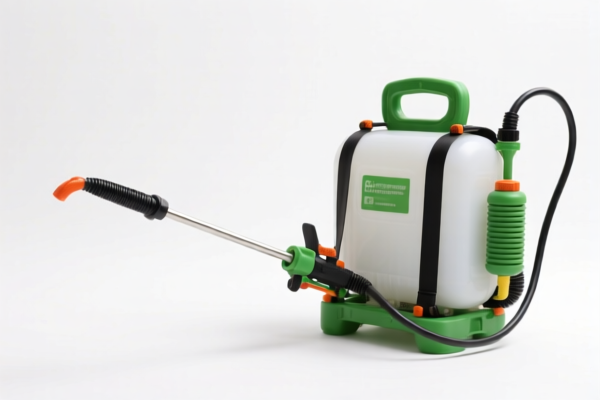
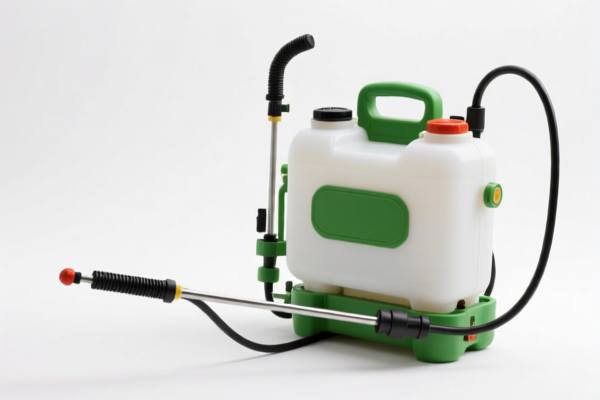
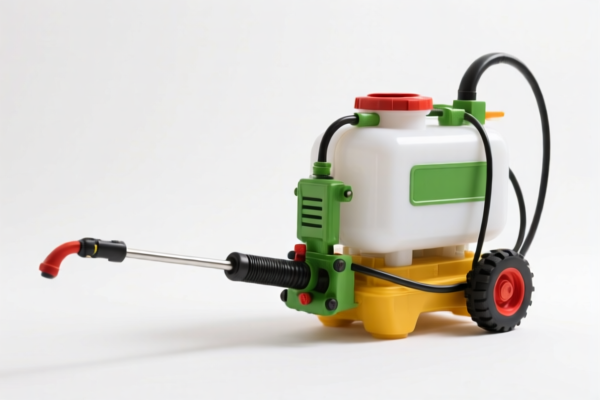

AI Analysis
💦 Spray Disinfectant (消毒剂喷雾)
🌐 HS Code Reference & Customs Clearance Guide | 2026 Latest Tariff Analysis | Professional Clearance Strategy
📌 I. Product Definition & Classification: What is "Spray Disinfectant"?
Spray Disinfectants are liquid or aerosol preparations used to destroy, neutralize, or inhibit the growth of harmful microorganisms on surfaces, in the air, or on objects. In international trade, they are classified based on their chemical composition, active ingredients, and primary function (disinfection vs. cleaning/deodorizing).
⚠️ Key Classification Differentiators:
- Active Disinfectant Ingredients (e.g., Alcohols, Quaternary Ammonium Compounds, Phenols) → Typically fall under Chapter 38 (Chemical Products).
- Cleaning/Deodorizing Agents with Incidental Disinfection → May fall under Chapter 33 (Essential Oils/Perfumes) or Chapter 34 (Soap/Cleaning Preparations).
- Plastic Containers Only → If imported empty, falls under Chapter 39 (Plastics).
📦 II. HS Code Classification Details (2026 Latest Tariff Authority Comparison)
| HS Code | Product Description | Applicability | Key Characteristics |
|---|---|---|---|
3808.94.10.00 |
Disinfectant sprays, primarily for disinfection, possibly containing aromatic components | Commercial/Industrial/Personal disinfection | Contains aromatic substances; specific disinfectant formulation |
3808.59.40.00 |
Disinfectant sprays, for disinfection, no material conflict | General-purpose disinfection | Standard disinfectant spray, no conflicting material composition |
3307.90.00.00 |
Disinfectant spray, classified as toiletries/personal or environmental cleaning preparations | Personal care, room freshening, deodorizing | Fits deodorizing or cleaning category; may contain perfumes |
3402.90.50.30 |
Disinfectant spray, chemical preparation for bactericidal/disinfecting purposes | Surface cleaning & disinfection | Broad "chemical preparation" category for cleaning/disinfecting |
3808.94.50.95 |
Disinfectant spray, for disinfection, other disinfectants, inferred as liquid preparation | Other liquid disinfectants | General "other disinfectants" category, likely liquid base |
3924.10.40.00 |
Disinfectant spray, inferred material is plastic container, used for household hygiene | Empty Plastic Containers | Applies ONLY if the product is the empty plastic bottle/spray mechanism, not the liquid |
🔍 Critical Note:
- Do not confuse the liquid product with the packaging. If you are importing the liquid disinfectant, do NOT use3924.10.40.00. This code is only for the empty plastic spray bottles. - The choice between3808.xx(Disinfectants),3307.xx(Perfumes/Cleaning), and3402.xx(Chemical Cleaning Prep) depends on the primary declared purpose and ingredient list.
💰 III. 2026 Latest Tariff Rate Details (Including Surcharges & Policy Add-ons)
✅ Applicable Country: United States (US)
✅ Origin: China (CN)
✅ Effective Date: From November 10, 2025 (and subsequent imports)
🎯 1. 3808.94.10.00 – Disinfectant Spray (Aromatic/Specific)
| Item | Content |
|---|---|
| Base Tariff | 6.5% (ad valorem) |
| Section 301 Surcharge | +25.0% |
| Section 122 Tariff | +10.0% |
| Total Tax Rate | 41.5% |
| Tax Calculation | CIF Value × 41.5% |
| De Minimis Exemption | ❌ Not Applicable (deny_de_minimis) |
| Legal Authority Path | USITC:3808.94.10.00 → Section 301: 25% → Section 122: 10% |
📌 Explanation:
- The 6.5% is the standard MFN tariff.
- The 25% is the Section 301 tariff (trade war surcharge on Chinese goods).
- The 10% is the Section 122 tariff (national security/emergency powers).
- Total: 41.5%. This is a high-cost category.
🎯 2. 3808.59.40.00 – Disinfectant Spray (Standard)
| Item | Content |
|---|---|
| Base Tariff | 5.0% (ad valorem) |
| Section 301 Surcharge | +25.0% |
| Section 122 Tariff | +10.0% |
| Total Tax Rate | 40.0% |
| Tax Calculation | CIF Value × 40.0% |
| De Minimis Exemption | ❌ Not Applicable (deny_de_minimis) |
| Legal Authority Path | USITC:3808.59.40.00 → Section 301: 25% → Section 122: 10% |
📌 Note:
- Slightly cheaper base rate than3808.94.10.00(5% vs 6.5%), but still very high total burden.
- Suitable for standard industrial or household disinfectants without aromatic additives.
🎯 3. 3307.90.00.00 – Disinfectant Spray (Toiletries/Cleaning)
| Item | Content |
|---|---|
| Base Tariff | 5.4% (ad valorem) |
| Section 301 Surcharge | +25.0% |
| Section 122 Tariff | +10.0% |
| Total Tax Rate | 40.4% |
| Tax Calculation | CIF Value × 40.4% |
| De Minimis Exemption | ❌ Not Applicable (deny_de_minimis) |
| Legal Authority Path | USITC:3307.90.00.00 → Section 301: 25% → Section 122: 10% |
📌 Note:
- If the product is marketed as a "room spray" or "deodorizer" with disinfecting properties, it may fall here.
- Base rate is 5.4%, leading to a total of 40.4%.
🎯 4. 3402.90.50.30 – Disinfectant Spray (Chemical Cleaning Prep)
| Item | Content |
|---|---|
| Base Tariff | 3.7% (ad valorem) |
| Section 301 Surcharge | +25.0% |
| Section 122 Tariff | +10.0% |
| Total Tax Rate | 38.7% |
| Tax Calculation | CIF Value × 38.7% |
| De Minimis Exemption | ❌ Not Applicable (deny_de_minimis) |
| Legal Authority Path | USITC:3402.90.50.30 → Section 301: 25% → Section 122: 10% |
📌 Note:
- Lowest base tariff (3.7%) among the disinfectant categories.
- Suitable if the product is primarily a "cleaning preparation" with disinfectant capabilities.
🎯 5. 3808.94.50.95 – Disinfectant Spray (Other)
| Item | Content |
|---|---|
| Base Tariff | 5.0% (ad valorem) |
| Section 301 Surcharge | +25.0% |
| Section 122 Tariff | +10.0% |
| Total Tax Rate | 40.0% |
| Tax Calculation | CIF Value × 40.0% |
| De Minimis Exemption | ❌ Not Applicable (deny_de_minimis) |
| Legal Authority Path | USITC:3808.94.50.95 → Section 301: 25% → Section 122: 10% |
📌 Note:
- Similar to3808.59.40.00, total rate is 40.0%.
- Used for liquid disinfectants not specifically listed elsewhere in Chapter 38.
🎯 6. 3924.10.40.00 – Plastic Container (Empty)
| Item | Content |
|---|---|
| Base Tariff | 3.4% (ad valorem) |
| Section 301 Surcharge | 0.0% |
| Section 122 Tariff | +10.0% |
| Total Tax Rate | 13.4% |
| Tax Calculation | CIF Value × 13.4% |
| De Minimis Exemption | ❌ Not Applicable (deny_de_minimis) |
| Legal Authority Path | USITC:3924.10.40.00 → Section 122: 10% |
📌 Warning:
- THIS CODE IS ONLY FOR EMPTY PLASTIC BOTTLES/SPRAY HEADS.
- Do NOT use this for the disinfectant liquid itself. Using this code for liquid products constitutes misdeclaration, leading to severe penalties, seizure, and fraud charges.
- Lowest total rate (13.4%) but only applicable to packaging.
🛠️ IV. Customs Clearance Practical Advice (Real-World Pitfall Avoidance)
✅ 1. Document Checklist (Mandatory)
| Document | Required | Description |
|---|---|---|
| ✅ Product Specification Sheet | ✔️ | Active ingredients, concentration, pH, usage instructions |
| ✅ Safety Data Sheet (SDS) | ✔️ | Essential for hazardous chemicals; determines transport class (e.g., UN3082) |
| ✅ Product Photos | ✔️ | Clear label showing "Disinfectant," "Active Ingredients," and "Manufacture Date" |
| ✅ Commercial Invoice | ✔️ | Must clearly state "Liquid Disinfectant Spray" and HS Code |
| ✅ Packing List | ✔️ | Net weight, gross weight, volume |
| ✅ Fumigation Certificate (if wooden packaging) | ✔️ | Required if pallets/wood are used |
| ✅ EPA Registration Number (US) | ✔️ | CRITICAL: Disinfectants in the US are regulated by EPA. Must have an EPA Registration Number on the label. |
✅ 2. Declaration Tips (Key Mnemonics)
🔥 “Label Clear, Ingredients True, EPA Reg, No Smuggling!”
| Scenario | Correct Declaration | Wrong Practice |
|---|---|---|
| Liquid Disinfectant | 3808.59.40.00 or 3808.94.10.00 |
Declaring as "Perfume" (3307) to avoid taxes |
| Empty Plastic Bottle | 3924.10.40.00 |
Declaring as "Disinfectant" → 40%+ tax vs 13.4% |
| Combined Shipment | Separate HS Codes for Liquid vs. Bottle | Mixing them → Customs delay or rejection |
| Aromatic Disinfectant | 3808.94.10.00 |
Using 3808.59.40.00 → Under-declaration risk |
✅ 3. Special Cases
| Situation | Handling Advice |
|---|---|
| EPA Registration Missing | Shipment will be denied entry. Ensure the product has a valid EPA Registration Number for the US market. |
| Hazardous Materials (HazMat) | Must declare as such (e.g., Flammable Liquid, Corrosive). Requires special shipping labels and carriers. |
| Gift/Small Quantity | No De Minimis Exemption. Even small samples are subject to the full tax rate and inspection. |
| OEM/White Label | Provide the same EPA Registration Number as the brand owner. |
🌍 V. Global Market Customs Comparison (2026 Latest)
| Country/Region | Recommended HS Code | Tariff (China Origin) | Certification Required | Notes |
|---|---|---|---|---|
| 🇺🇸 USA | 3808.59.40.00 / 3808.94.10.00 |
40.0% - 41.5% | EPA Registration, SDS | High tariff, strict EPA rules |
| 🇨🇳 China | 3808.94.90.00 (Import) |
~5-10% | MSRA Registration | Domestic production is common |
| 🇪🇺 EU | 3808.94.90 |
6.5% (BIM) | Biocidal Products Regulation (BPR) | No Section 301/122 taxes |
| 🇬🇧 UK | 3808.94.90 |
6.5% | GB Biocides Regulation | Post-Brexit rules apply |
| 🇦🇺 Australia | 3808.94.90 |
5% | APVMA Registration | No Section 301/122 taxes |
📌 Conclusion:
- USA is the most expensive market for Chinese disinfectants due to Section 301 and Section 122 tariffs.
- EPA Registration is non-negotiable in the US.
- Consider tariff engineering (e.g., separating bottle and liquid) only if legally compliant and shipped separately.
📌 VI. Common Errors & Pitfall Guide (Lessons Learned)
❌ Error 1: Using 3924.10.40.00 for liquid disinfectant
👉 Consequence: Tax evasion accusation. Fine + Seizure + Back Taxes.
❌ Error 2: Missing EPA Registration Number on the label
👉 Consequence: Refusal of Entry. Product destroyed or re-exported.
❌ Error 3: Declaring "Cleaning Spray" without disclosing disinfectant claims
👉 Consequence: Customs reclassifies to 3808, charges 40%+ tax + penalties.
❌ Error 4: Ignoring HazMat classification (Flammable/Corrosive)
👉 Consequence: Shipping delay, carrier rejection, or safety violations.
✅ Correct Practice:
"EPA Registered Liquid Disinfectant Spray, Contains 70% Ethanol, UN3082, HS Code: 3808.59.40.00"
🎯 VII. Conclusion: Professional Declaration, Save Time & Money!
🎯 Remember the Mantra:
🔹 "EPA Reg First, HS Code Precise, Tariff High, Declare True!"
🔹 "HS Code decides the tax, 40% is standard, false declaration ends in shame!"
📌 Pro Tip:
If your disinfectant is essential medical supply, check for Section 301 Exclusions (though many have expired).
Recommend Advance Ruling from US Customs and Border Protection (CBP) if the classification is ambiguous.
📣 Take Action Now:
📞 Contact a licensed customs broker + Provide EPA Registration + Prepare SDS
🚀 Ensure smooth clearance, avoid seizures, and protect your supply chain!
✨ Professional clearance starts with accurate classification!
💼 Every cent of cost deserves precise calculation!
Customer Reviews
About HS Code Classification
The Harmonized System (HS) is an internationally standardized nomenclature developed by the World Customs Organization (WCO) to classify traded products. Over 200 countries use the HS system as the basis for customs tariffs, trade statistics, and import/export regulations.
Each HS code follows a hierarchical structure:
- Chapter (2 digits) — Broad category of goods (e.g., Chapter 84: Machinery and Mechanical Appliances)
- Heading (4 digits) — More specific grouping within the chapter
- Subheading (6 digits) — Internationally standardized breakdown, used by all WCO member countries
- National subdivisions (8-10 digits) — Country-specific extensions for further classification, such as US HTSUS 10-digit codes
Correct HS code classification is essential for smooth customs clearance, accurate duty payment, and compliance with trade regulations. Misclassification can lead to customs delays, overpayment of duties, or penalties.
When importing from CN to US, the applicable tariff rates may include:
- Most-Favored-Nation (MFN) rate — The standard duty rate applied to WTO members
- General rate — Applied to countries without trade agreements
- Trade remedy duties — Additional tariffs such as Section 301 (anti-dumping), Section 232 (national security), or countervailing duties
The information provided on this page is for reference purposes only. For official classification, please consult with your local customs authority or a licensed customs broker.