Spray Gun
CN → US| HS Code | Tariff Rate | Origin | Destination | Doc |
|---|---|---|---|---|
| 8424201000 | 37.9% | CN | US | Official Doc |
| 8424209000 | 35.0% | CN | US | Official Doc |
| 8515800080 | 35.0% | CN | US | Official Doc |
| 8515902000 | 86.6% | CN | US | Official Doc |
Product Images
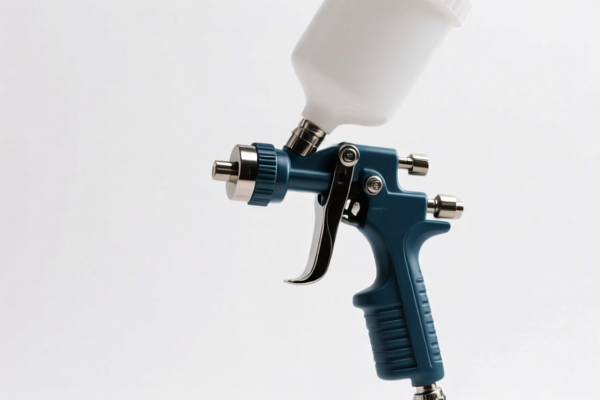
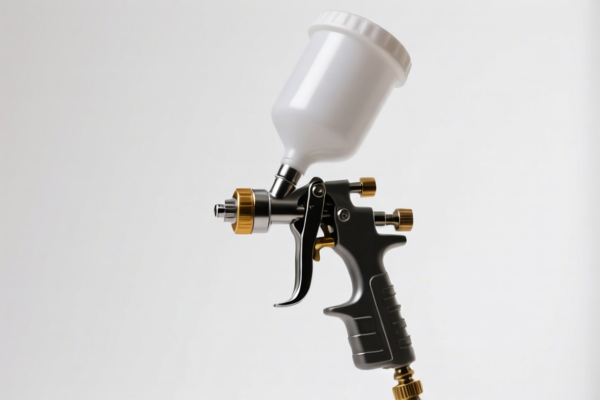
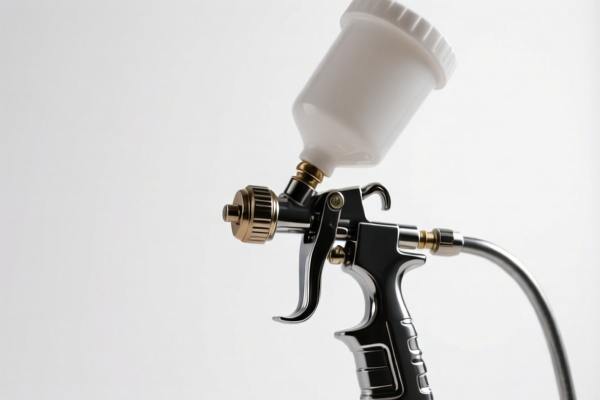
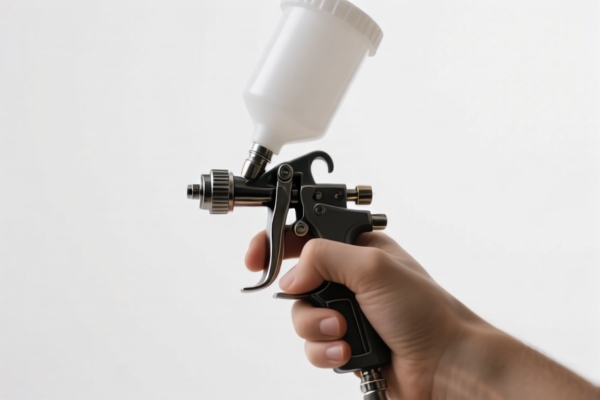
AI Analysis
🔫 Spray Guns (Spray Guns and Similar Appliances)
🌐 HS Code Reference & Customs Clearance Guide | 2026 Latest Tariff Analysis | Professional Entry Strategy
📌 I. Product Definition & Classification: Do You Really Understand "Spray Guns"?
In international trade, Spray Guns are broadly defined as apparatus designed to project liquids or powders in the form of a spray. They are primarily used in industrial coating, automotive painting, agricultural application, and cleaning processes.
The classification depends heavily on the power source and the specific mechanism: * Pneumatic/Manual Spray Guns: Operate via compressed air or manual pressure. These fall under Chapter 84 (Nuclear reactors, boilers, machinery). * Electrostatic/Thermal Spray Guns: Operate via electricity or heat, often integrated into welding or complex industrial systems. These may fall under Chapter 85 (Electrical machinery).
⚠️ Key Distinction Point:
- If the device is a standalone pneumatic or manual spraying tool → It is classified under HS 8424.
- If the device is an electrical welding/spattering apparatus or part of an electrostatic welding system → It may be classified under HS 8515.
- Do not confuse "Spray Guns" (painting/coating) with "Sprinkler Heads" (fire suppression), which have different codes.
📦 II. HS Code Classification Details (2026 Authoritative Cross-Reference)
Based on the provided data, there are two main categories for Spray Guns: Mechanical/Pneumatic and Electrical/Welding-related.
| HS Code | Product Description | Applicable Scenario | Tax Rate (Total) |
|---|---|---|---|
8424.20.10.00 |
Spray guns and similar appliances, consistent in use and form | Standard pneumatic paint sprayers, manual airless sprayers, cleaning nozzles | 37.9% |
8424.20.90.00 |
Spray guns and similar devices, consistent in use and category | Other spray appliances not specifically listed elsewhere (e.g., specialized industrial misters) | 35.0% |
8515.80.00.80 |
Devices for soldering/welding, belonging to the "Other" category of electrical welding machines | Electrostatic spray guns integrated into welding systems, or thermal spraying tools used in metal joining | 35.0% |
8515.90.20.00 |
Key components in welding, cutting, or spraying processes, fitting the "Parts" definition for welding machines | Nozzles, tips, or specific parts for electrical welding/spraying systems | 86.6% |
🔍 Critical Alert:
- Items8424.xxare considered main articles (finished goods).
- Item8515.90.20.00is classified as a Part/Component. If you are shipping a complete spray gun but label it as a "part," it triggers a significantly higher tariff due to specific metal surcharges.
- Material Matters: The8515.90.20.00code includes a 50% additional tariff for Steel, Aluminum, or Copper products. This is a "death trap" for customs valuation if not declared correctly!
💰 III. 2026 Latest Tariff Rate Breakdown (Including Surcharges & Policy Add-ons)
✅ Applicable Country: United States (US)
✅ Country of Origin: China (CN)
✅ Effective Date: 2025-11-10 onwards (including subsequent imports)
🎯 1. 8424.20.10.00 — Spray Guns and Similar Appliances (Specific)
This is the most common code for standard pneumatic or manual spray guns.
| Item | Details |
|---|---|
| Base Tariff | 2.9% (ad valorem) |
| Section 301 Tariff | +25.0% (USITC Footnote 9903.88.01) |
| Section 122 Tariff | +10.0% (Executive Order on National Emergency) |
| Total Tariff | 37.9% |
| Tax Calculation | CIF Value × 37.9% |
| De Minimis Eligibility | ❌ Not Eligible (deny_de_minimis) |
| Legal Path | IEEPA:9903.01.24 → USITC:8424.20.10.00 → SECTION 122: EO 13936 |
📌 Explanation:
- The 2.9% is the standard MFN (Most Favored Nation) duty.
- The 25% is the standard Section 301 tariff on Chinese goods in this chapter.
- The 10% is the specific "Section 122" tariff targeting certain industrial supplies.
- Total: 37.9%. This is a high-cost item for importers.
🎯 2. 8424.20.90.00 — Spray Guns (Other)
For spray devices that do not fit the specific "form and use" of 8424.20.10.
| Item | Details |
|---|---|
| Base Tariff | 0.0% |
| Section 301 Tariff | +25.0% |
| Section 122 Tariff | +10.0% |
| Total Tariff | 35.0% |
| Tax Calculation | CIF Value × 35.0% |
| De Minimis Eligibility | ❌ Not Eligible |
| Legal Path | IEEPA:9903.01.24 → USITC:8424.20.90.00 → SECTION 122 |
📌 Note:
- Although the base tariff is 0%, the surcharges remain the same.
- This code is often used for agricultural sprayers or non-pneumatic devices if they don't fit the "standard spray gun" definition.
- Savings: 2.9% lower than the specific code, but documentation must be precise to avoid rejection.
🎯 3. 8515.80.00.80 — Electrical Welding/Spraying Apparatus (Other)
If the spray gun is electrostatic and used in a welding context, or part of an automated welding cell.
| Item | Details |
|---|---|
| Base Tariff | 0.0% |
| Section 301 Tariff | +25.0% |
| Section 122 Tariff | +10.0% |
| Total Tariff | 35.0% |
| Tax Calculation | CIF Value × 35.0% |
| De Minimis Eligibility | ❌ Not Eligible |
📌 Note:
- Requires proof that the device is electrical and used for welding/soldering applications.
- Do not use this for painting spray guns unless explicitly part of an electrostatic welding line.
🎯 4. 8515.90.20.00 — Parts for Welding Machines (Steel/Aluminum/Copper)
⚠️ HIGH RISK CODE ⚠️
| Item | Details |
|---|---|
| Base Tariff | 1.6% |
| Section 301 Tariff | +25.0% |
| Section 122 Tariff | +10.0% |
| Material Surcharge | +50.0% (Specific to Steel, Aluminum, Copper) |
| Total Tariff | 86.6% |
| Tax Calculation | CIF Value × 86.6% |
| De Minimis Eligibility | ❌ Not Eligible |
📌 Critical Warning:
- This code applies to components/parts made of Steel, Aluminum, or Copper used in welding systems.
- If you are shipping a complete spray gun, do NOT use this code. Misclassifying a finished good as a "part" can lead to audits, penalties, and the application of this exorbitant 86.6% rate.
- Only use this if you are importing replacement nozzles/tips made of metal for a welding system.
🛠️ IV. Customs Clearance Practical Advice (Battle-Tested Pitfall Guide)
✅ 1. Preparation Checklist (Non-Negotiable)
| Document | Required | Notes |
|---|---|---|
| ✅ Product Specification Sheet | ✔️ | Must detail: Air pressure, fluid capacity, material (Aluminum/Steel/Plastic), and power type (Pneumatic/Electrical). |
| ✅ Technical Diagram | ✔️ | Show internal structure to prove it's a "spray appliance" (HS 8424) and not a "welding part" (HS 8515). |
| ✅ Commercial Invoice | ✔️ | Description: "Pneumatic Spray Gun for Industrial Painting, Model XYZ." Avoid vague terms like "Nozzle." |
| ✅ Material Declaration | ✔️ | If using 8515.90.20.00 (Parts), explicitly state material (Steel/Aluminum) to justify the 50% surcharge. |
| ✅ Country of Origin | ✔️ | Must be China (CN) to trigger the specific surcharges discussed. |
✅ 2. Declaration Tips (The Golden Rules)
🔥 "Finish Goods Go to 8424, Parts Go to 8515, Metal Parts Cost Double!"
| Scenario | Correct Declaration | Wrong Action |
|---|---|---|
| Complete Pneumatic Spray Gun | 8424.20.10.00 or 8424.20.90.00 |
Mislabeling as "Nozzle" → Risk of 86.6% audit |
| Electrostatic Spray Gun (Painting) | 8424.20.10.00 (if standalone) |
Mislabeling as "Welding Part" → Unjustified 86.6% |
| Replacement Metal Tip/Nozzle | 8515.90.20.00 (if for welding) |
Labeling as "Spray Gun" → Wrong code, potential penalty |
| Plastic Spray Gun Accessories | Check 8424.90 (Parts of 8424) |
Using 8515 codes → Invalid |
✅ 3. Special Cases
| Scenario | Handling Advice |
|---|---|
| Electrostatic Spray Guns for Metal Finishing | If not part of a welding system, still generally HS 8424. Do not jump to 8515 unless it's a welding application. |
| Multi-Function Tools (Cut + Spray) | Classify based on essential character. If spraying is primary, use 8424. |
| OEM Custom Sprayers | Provide the original manufacturer's catalog. If it matches 8424.20.10.00 description, use it. |
🌍 V. Global Market Comparison (2026 Latest)
| Country/Region | Recommended HS Code | Tariff (China Origin) | Certification | Notes |
|---|---|---|---|---|
| 🇺🇸 USA | 8424.20.10.00 |
37.9% | No specific FDA, but safety certs recommended | High tariffs due to Sec 301 + Sec 122 |
| 🇨🇳 China | 8424.20.10.00 |
~10-15% (Import) | CCC (if electrical) | Lower entry barrier |
| 🇪🇺 EU | 8424.20 |
~4-5% | CE, RoHS | No Section 301 surcharges |
| 🇦🇺 Australia | 8424.20 |
~5% | RCM (if electrical) | Standard MFN rates |
📌 Conclusion:
- USA is the most expensive market for spray guns due to Section 122 and 301 tariffs.
- Total Cost Impact: A $1,000 shipment could incur $379–$866 in duties alone.
- Supply Chain Strategy: Consider sourcing from Vietnam/Mexico for US markets to avoid these surcharges (if rules of origin are met).
📌 VI. Common Errors & Pitfalls (Lessons Learned)
❌ Error 1: Calling a complete spray gun a "Welding Part" to hide it
👉 Consequence: If caught, customs will reclassify and apply the 86.6% rate, plus penalties.
❌ Error 2: Using 8515.90.20.00 for plastic spray gun parts
👉 Consequence: The 50% metal surcharge doesn't apply, but the base code is wrong. Risk of audit.
❌ Error 3: Ignoring Section 122 (10%)
👉 Consequence: Under-declaring duties. The 10% is mandatory for most industrial goods from China.
❌ Error 4: Confusing "Spray Gun" with "Fire Sprinkler"
👉 Consequence: Fire sprinklers are 8424.30. Using the wrong code delays clearance.
✅ Correct Declaration Example:
"Industrial Pneumatic Spray Gun, Aluminum Body, For Automotive Painting, Model SP-200, Made in China"
🎯 VII. Conclusion: Precision Declares Profits!
🎯 Remember the Formula:
🔹 Pneumatic/Electric Spray Gun →
8424.20.10.00/8424.20.90.00→ 35.0% - 37.9%
🔹 Welding System Part (Metal) →8515.90.20.00→ 86.6% (AVOID unless absolutely necessary)
🔹 Section 122 (10%) is always added on top.
📌 Pro Tip:
If your product is electrostatic but not for welding, stick to HS 8424. The "Welding" codes are a trap for non-welding equipment.
📣 Immediate Action:
📞 Request a Pre-Ruling: Send specs to your customs broker.
📊 Calculate Landed Cost: Include 37.9% (or 35%) in your margin analysis.
🚀 Diversify: If margins are thin, explore non-China origins to escape the 35%+ surcharge burden.
✨ Smart Classification, Higher Margins!
💼 Don't let customs duties eat your profit!
Customer Reviews
About HS Code Classification
The Harmonized System (HS) is an internationally standardized nomenclature developed by the World Customs Organization (WCO) to classify traded products. Over 200 countries use the HS system as the basis for customs tariffs, trade statistics, and import/export regulations.
Each HS code follows a hierarchical structure:
- Chapter (2 digits) — Broad category of goods (e.g., Chapter 84: Machinery and Mechanical Appliances)
- Heading (4 digits) — More specific grouping within the chapter
- Subheading (6 digits) — Internationally standardized breakdown, used by all WCO member countries
- National subdivisions (8-10 digits) — Country-specific extensions for further classification, such as US HTSUS 10-digit codes
Correct HS code classification is essential for smooth customs clearance, accurate duty payment, and compliance with trade regulations. Misclassification can lead to customs delays, overpayment of duties, or penalties.
When importing from CN to US, the applicable tariff rates may include:
- Most-Favored-Nation (MFN) rate — The standard duty rate applied to WTO members
- General rate — Applied to countries without trade agreements
- Trade remedy duties — Additional tariffs such as Section 301 (anti-dumping), Section 232 (national security), or countervailing duties
The information provided on this page is for reference purposes only. For official classification, please consult with your local customs authority or a licensed customs broker.