Spray Gun for Agricultural or Horticultural Use
CN → US| HS Code | Tariff Rate | Origin | Destination | Doc |
|---|---|---|---|---|
| 8424411000 | 35.0% | CN | US | Official Doc |
| 8424419000 | 37.4% | CN | US | Official Doc |
| 8201906000 | 35.0% | CN | US | Official Doc |
| 3926909989 | 22.8% | CN | US | Official Doc |
| 3926909910 | 22.8% | CN | US | Official Doc |
Product Images
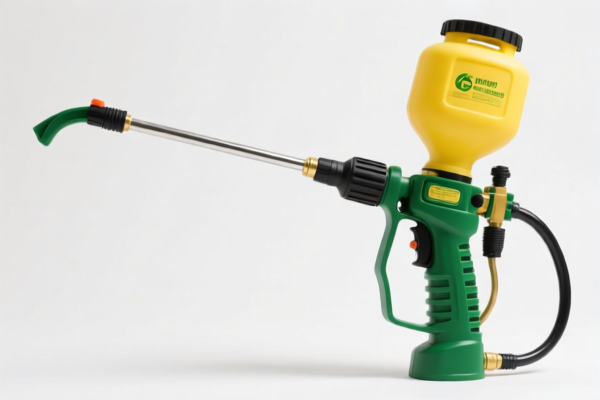
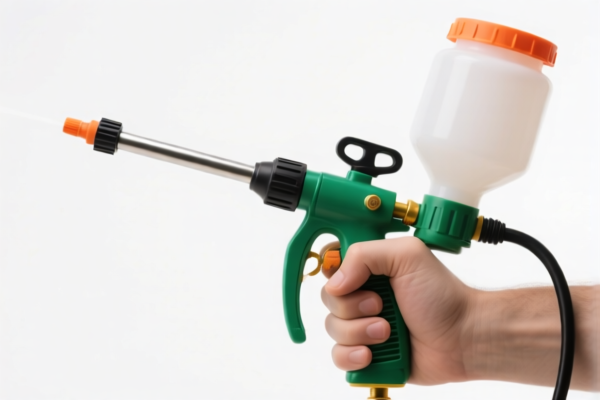
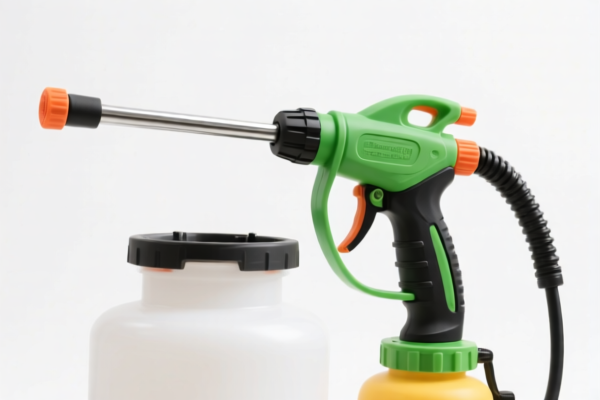
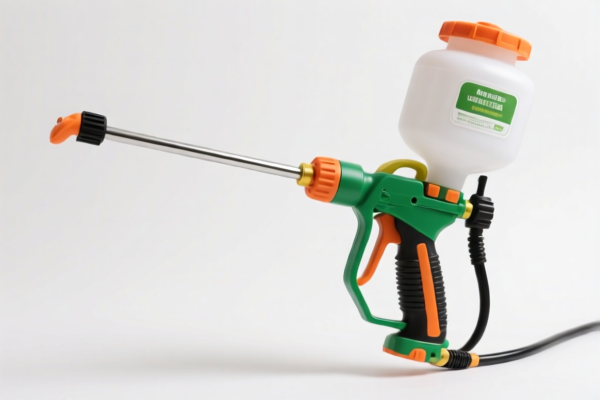
AI Analysis
🌿 Garden Sprayers (For Agricultural or Horticultural Use)
🌐 HS Code Reference & Customs Clearance Guide | 2026 Latest Tariff Analysis | Professional Clearance Strategy
📌 1. Product Definition & Classification: Do You Really Understand "Garden Sprayers"?
A garden sprayer, technically classified as a portable mechanical sprayer, is a hand-operated device used to distribute liquids (pesticides, fertilizers, water) over plants. In international trade, the classification hinges on two factors: 1. Material: Is it primarily metal, plastic, or a composite? 2. Function: Is it classified as a specific agricultural implement or a general-purpose tool/device?
⚠️ Critical Distinction:
- If the sprayer is viewed as a mechanical appliance (Chapter 84), it falls under headings 8424.
- If viewed as a hand tool (Chapter 82), it may fall under 8201.
- If viewed primarily as a plastic article (Chapter 39), it may fall under 3926.
The choice drastically affects the tax rate.
📦 2. HS Code Classification Matrix (2026 Latest Tariff Reference)
Based on the provided data, here are the valid HS Codes and their corresponding justifications:
| HS Code | Product Description | Justification for Classification | Key Characteristic |
|---|---|---|---|
| 8424.41.10.00 | Portable sprayer for horticultural use | Matches purpose (horticulture) with form (sprayer); no material conflict assumed. | Function-first classification. |
| 8424.41.90.00 | Other portable mechanical sprayers | Fits requirements for agricultural/horticultural portable sprayers generally. | General category for Chapter 84. |
| 8201.90.60.00 | Hand tools, horticultural | Classified as a hand tool for horticulture; material inferred as plastic or metal. | Tool-first classification. |
| 3926.90.99.89 | Other articles of plastic | Classified as a finished tool made of plastic; falls under "other plastic articles." | Material-first classification. |
| 3926.90.99.10 | Other plastic articles | Based on name, inferred as a plastic gardening tool; falls under "other plastic articles." | Material-first classification. |
🔍 Key Insight:
- Chapter 84 (8424) is often preferred for functional machinery/appliances, but may attract higher Section 301/IEEPA tariffs depending on the specific subheading.
- Chapter 39 (3926) focuses on the material (plastic). This often results in a lower base tariff but still incurs additional duties.
- Chapter 82 (8201) views it as a simple hand tool, which can also carry significant additional duties.
💰 3. 2026 Latest Tariff Rate Breakdown (Including Additional Taxes)
✅ Applicable Country: United States (US)
✅ Country of Origin: China (CN)
✅ Effective Date: Post-2025 (including subsequent imports)
🎯 1. 8424.41.10.00 – Horticultural Sprayer (Mechanical)
| Item | Details |
|---|---|
| Base Tariff | 0.0% |
| Section 301 Additional Tariff | 25.0% |
| IEEPA Section 122 Tariff | 10.0% |
| Total Tax Rate | 35.0% |
| Tax Calculation | CIF Value × 35% |
| De Minimis Eligibility | ❌ No (Subject to high duties) |
| Legal Path | Base 0% → Sec 301: 25% → IEEPA: 10% → 35% Total |
📌 Analysis:
- Although the base tariff is 0%, the additional duties are high (35% total).
- This code treats the sprayer as a mechanical appliance. Even though it's simple, it falls under "machinery" which is heavily scrutinized.
🎯 2. 8424.41.90.00 – Other Portable Sprayers
| Item | Details |
|---|---|
| Base Tariff | 2.4% |
| Section 301 Additional Tariff | 25.0% |
| IEEPA Section 122 Tariff | 10.0% |
| Total Tax Rate | 37.4% |
| Tax Calculation | CIF Value × 37.4% |
| De Minimis Eligibility | ❌ No |
| Legal Path | Base 2.4% → Sec 301: 25% → IEEPA: 10% → 37.4% Total |
📌 Analysis:
- This is the "catch-all" for Chapter 84 sprayers.
- Higher than 8424.41.10.00 because it has a non-zero base rate (2.4%).
- Avoid if possible; 8424.41.10.00 is more favorable.
🎯 3. 8201.90.60.00 – Hand Tools (Horticultural)
| Item | Details |
|---|---|
| Base Tariff | 0.0% |
| Section 301 Additional Tariff | 25.0% |
| IEEPA Section 122 Tariff | 10.0% |
| Total Tax Rate | 35.0% |
| Tax Calculation | CIF Value × 35% |
| De Minimis Eligibility | ❌ No |
| Legal Path | Base 0% → Sec 301: 25% → IEEPA: 10% → 35% Total |
📌 Analysis:
- Classified as a hand tool.
- Same total rate as 8424.41.10.00 (35%).
- Risk: Customs may challenge if the sprayer is complex or has mechanical parts (pump mechanism) that push it back to Chapter 84.
🎯 4. 3926.90.99.89 – Plastic Articles (Finished Tool)
| Item | Details |
|---|---|
| Base Tariff | 5.3% |
| Section 301 Additional Tariff | 7.5% |
| IEEPA Section 122 Tariff | 10.0% |
| Total Tax Rate | 22.8% |
| Tax Calculation | CIF Value × 22.8% |
| De Minimis Eligibility | ❌ No |
| Legal Path | Base 5.3% → Sec 301: 7.5% → IEEPA: 10% → 22.8% Total |
📌 Analysis:
- LOWEST TOTAL TAX RATE (22.8%).
- Classification relies on the product being primarily made of plastic.
- Risk: Must prove it is a "finished article" and not a "machine" (Chapter 84) or "tool" (Chapter 82). If it has metal nozzles or pumps, customs may dispute the plastic classification.
🎯 5. 3926.90.99.10 – Plastic Articles (Gardening Tool)
| Item | Details |
|---|---|
| Base Tariff | 5.3% |
| Section 301 Additional Tariff | 7.5% |
| > IEEPA Section 122 Tariff | 10.0% |
| Total Tax Rate | 22.8% |
| Tax Calculation | CIF Value × 22.8% |
| De Minimis Eligibility | ❌ No |
| Legal Path | Base 5.3% → Sec 301: 7.5% → IEEPA: 10% → 22.8% Total |
📌 Analysis:
- Same rate as 3926.90.99.89 (22.8%).
- Slightly more specific to "gardening tools" made of plastic.
- Recommendation: If the sprayer is >90% plastic, this is the most cost-effective classification.
🛠️ 4. Customs Clearance Practical Advice (Avoiding Pitfalls)
✅ 1. Document Checklist (Mandatory)
| Document | Required | Purpose |
|---|---|---|
| ✅ Product Specification Sheet | ✔️ | Define material composition (e.g., "95% HDPE Plastic, 5% Stainless Steel Nozzle"). |
| ✅ Photos | ✔️ | Show the entire product, focusing on material texture. |
| ✅ Bill of Materials (BOM) | ✔️ | Crucial for proving 3926 classification. |
| ✅ Commercial Invoice | ✔️ | Clearly state "Plastic Garden Sprayer" if aiming for 3926. |
| ✅ Packing List | ✔️ | Ensure weights and dimensions match the invoice. |
✅ 2. Classification Strategy: How to Choose?
🔥 "Material Matters! Plastic Wins on Cost, Function Wins on Compliance."
| Scenario | Recommended HS Code | Total Tax | Why? |
|---|---|---|---|
| 100% Plastic (no metal parts) | 3926.90.99.89 / 10 | 22.8% | Best Option. Low base + low Sec 301. |
| Plastic + Small Metal Nozzle | 3926.90.99.89 / 10 | 22.8% | Acceptable if metal is minor. |
| Complex Mechanical Pump (Chapter 84 risk) | 8424.41.10.00 | 35.0% | Safer from a functional perspective, but higher tax. |
| Simple Hand Tool (no pump, just wand?) | 8201.90.60.00 | 35.0% | Only if it truly qualifies as a simple hand tool. |
📌 Warning:
- Do NOT misdeclare a mechanical sprayer as a plastic article if it has a significant metal pump mechanism. Customs may reclassify it under 8424, leading to back taxes + penalties.
- If the sprayer is hand-pumped, argue for 3926 if the plastic component is the main body and value driver.
✅ 3. Special Considerations
| Situation | Advice |
|---|---|
| Mixed Materials | If >50% value is plastic, 3926 is defensible. If >50% value is metal/mechanical, 8424/8201 is required. |
| Battery-Powered Sprayers | Different HS Code! (Likely 8543 or 8424.90). This data is for mechanical/hand-operated sprayers only. |
| Pre-Clearance | Apply for an Advance Ruling if the product is borderline. Saves time and avoids seizures. |
🌍 5. Market Comparison (2026 Outlook)
| Market | Preferred HS Code | Total Tax (China Origin) | Notes |
|---|---|---|---|
| 🇺🇸 USA | 3926.90.99.10/89 | 22.8% | Cheapest. Avoid 8424 if possible. |
| 🇺🇸 USA | 8424.41.10.00 | 35.0% | Higher cost, but functionally accurate. |
| 🇪🇺 EU | 8424.30.00 | ~0-6.5% | No US-style Section 301/IEEPA. Lower overall burden. |
| 🇨🇳 China | 8424.41.90 | 10-14% | Domestic import may have different rules. |
📌 Conclusion:
- For US imports, 3926.90.99.10 or 3926.90.99.89 offers the lowest total duty (22.8%).
- Ensure your product is primarily plastic to justify this classification.
- If the product is heavily mechanical, accept the 35% tax under 8424.41.10.00 for compliance safety.
📌 6. Common Mistakes & Pitfalls
❌ Mistake 1: Declaring a complex mechanical sprayer as "Plastic Toy" or "Plastic Tool" to avoid 35%.
👉 Result: Customs reclassification → Back taxes + 25% penalty.
❌ Mistake 2: Using 8424.41.90.00 when 8424.41.10.00 is more specific.
👉 Result: Higher tax (37.4% vs 35%). Always use the most specific code.
❌ Mistake 3: Ignoring IEEPA Section 122 Tariffs.
👉 Result: Underpayment by 10%. All these codes incur a 10% IEEPA duty.
✅ Best Practice:
"Plastic Garden Sprayer, Hand-Operated, No Metal Pump Mechanism, Model XYZ, Made in China"
🎯 7. Conclusion: Save Money, Clear Smoothly!
🎯 Remember the Golden Rule:
🔹 "Plastic Body = 22.8% Tax"
🔹 "Mechanical Function = 35% Tax"
🔹 "Don't Guess, Prove Your Material Composition!"
📌 Pro Tip:
If you are importing large volumes, consider negotiating with suppliers to minimize metal parts (e.g., use plastic nozzles) to firmly qualify for 3926.90.99.10/89. This saves 12.2% in taxes per unit.
📣 Immediate Action:
📞 Contact a licensed customs broker
📄 Submit product photos & material specs
🚀 Apply for Advance Ruling if unsure
✨ Precise Classification is Your Best Cost-Saving Tool!
💼 Don't let 12% tax difference eat your margins!
Customer Reviews
About HS Code Classification
The Harmonized System (HS) is an internationally standardized nomenclature developed by the World Customs Organization (WCO) to classify traded products. Over 200 countries use the HS system as the basis for customs tariffs, trade statistics, and import/export regulations.
Each HS code follows a hierarchical structure:
- Chapter (2 digits) — Broad category of goods (e.g., Chapter 84: Machinery and Mechanical Appliances)
- Heading (4 digits) — More specific grouping within the chapter
- Subheading (6 digits) — Internationally standardized breakdown, used by all WCO member countries
- National subdivisions (8-10 digits) — Country-specific extensions for further classification, such as US HTSUS 10-digit codes
Correct HS code classification is essential for smooth customs clearance, accurate duty payment, and compliance with trade regulations. Misclassification can lead to customs delays, overpayment of duties, or penalties.
When importing from CN to US, the applicable tariff rates may include:
- Most-Favored-Nation (MFN) rate — The standard duty rate applied to WTO members
- General rate — Applied to countries without trade agreements
- Trade remedy duties — Additional tariffs such as Section 301 (anti-dumping), Section 232 (national security), or countervailing duties
The information provided on this page is for reference purposes only. For official classification, please consult with your local customs authority or a licensed customs broker.