Spray Guns
CN → US| HS Code | Tariff Rate | Origin | Destination | Doc |
|---|---|---|---|---|
| 8424209000 | 35.0% | CN | US | Official Doc |
| 8424201000 | 37.9% | CN | US | Official Doc |
| 8515800080 | 35.0% | CN | US | Official Doc |
| 8515902000 | 86.6% | CN | US | Official Doc |
| 8479909596 | 85.0% | CN | US | Official Doc |
| 8424909080 | 85.0% | CN | US | Official Doc |
Product Images
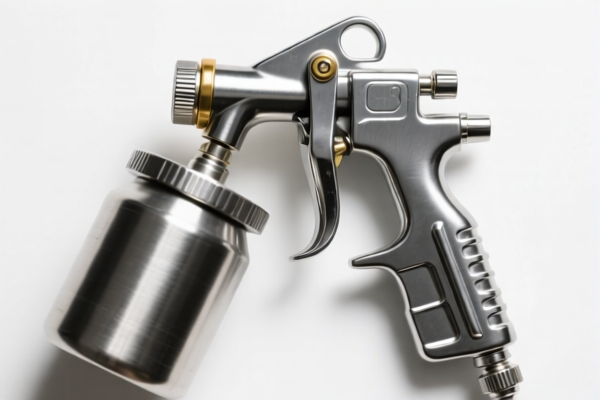
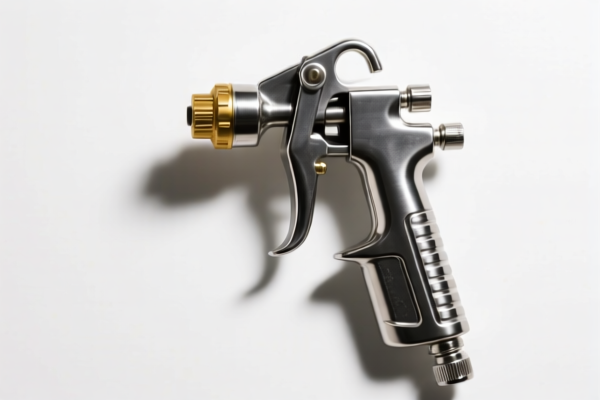
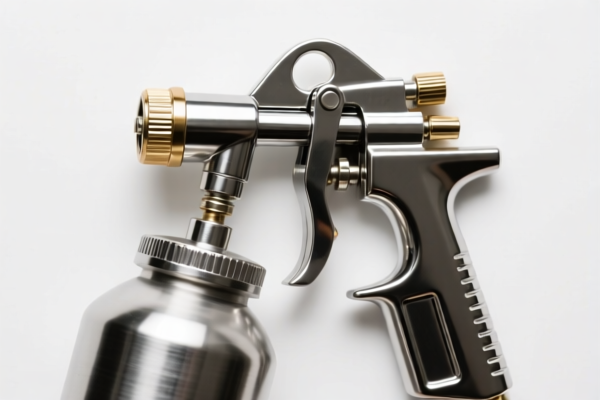
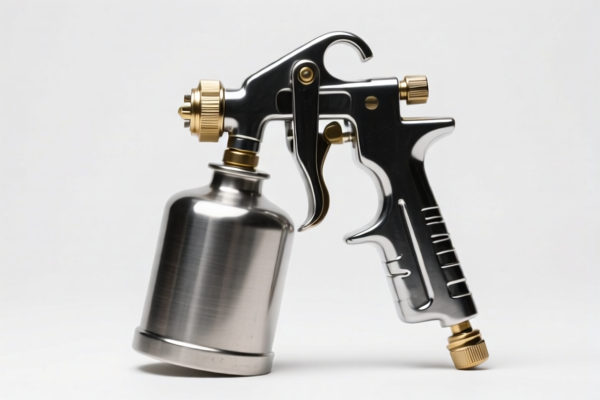
AI Analysis
🔫 Spray Guns & Related Apparatus (Industrial & Professional Applications)
🌐 HS Code Reference & Customs Clearance Guide | 2026 Latest Tariff Analysis | Professional-Level Strategy
📌 I. Product Definition & Classification: Do You Really Understand "Spray Guns"?
Spray guns are versatile devices used for applying liquids (paint, coating, adhesive) or gases in industrial, automotive, and construction sectors. In international trade, classification depends heavily on the specific application, mechanism, and accessory nature.
Key Categories Identified in Data:
1. General Spray Guns (8424 Series): Used for spraying liquid or powder substances (e.g., paint, insecticides).
2. Welding/Soldering Spray Guns (8515 Series): Specifically designed for welding, soldering, or brazing processes.
3. Accessories/Parts (8479/8424 Series): Independent functional parts or general machine accessories.
⚠️ Critical Distinction Point:
- If the device is primarily for paint/coating application → Group 8424.
- If the device is primarily for welding/brazing → Group 8515.
- If it is a part/component without independent function as a main tool → Check 8479 or 8424.90.
📦 II. HS Code Classification Details (2026 Latest Tariff Authority Comparison)
| HS Code | Product Description | Applicable Scenario | Key Feature |
|---|---|---|---|
8424.20.90.00 |
Spray guns and similar apparatus; similar applicators, whether or not powered | General purpose spraying (paint, pesticide, cleaning) | Non-powered or generic powered spray devices. |
8424.20.10.00 |
Spray guns and similar apparatus; similar applicators, whether or not powered | Specialized or specific form factor spray guns | Slightly different classification from .90, often based on specific form or usage nuances. |
8515.80.00.80 |
Other welding, brazing or soldering machines and apparatus | Welding/Soldering specific spray guns or gas torches | Core function is thermal joining, not painting. |
8515.90.20.00 |
Parts suitable for use solely or principally with the machinery of heading 8515 | Parts for welding/cutting/spraying machines | Accessories for welding equipment. High Tariff Trap! |
8479.90.95.96 |
Parts of machines and mechanical appliances having individual functions | Independent functional parts of other machinery | General machinery parts, not specific to 8424 or 8515. |
8424.90.90.80 |
Parts of mechanical appliances for projecting, dispersing or spraying liquids or powders | Specific accessories for spray guns (8424 group) | Parts exclusively for 8424 spray devices. |
🔍 Key Reminder:
- Welding guns are NOT classified under 8424. They belong to 8515. Misclassification leads to 86.6% tax vs 35%.
- Parts are taxed significantly higher (85%-86.6%) than the main tool (35%-37.9%). Always declare the main unit if possible.
- Steel/Aluminum/Copper content triggers an additional 50% tariff under Section 122 for some part codes.
💰 III. 2026 Latest Tariff Rate Breakdown (Including Additional Taxes & Policy Surcharges)
✅ Applicable Country: United States (US)
✅ Origin: China (CN)
✅ Effective Time: Current enforcement of Section 301 & IEEPA measures
🎯 1. 8424.20.90.00 —— General Spray Guns (Most Common)
| Item | Details |
|---|---|
| Base Tariff | 0.0% |
| Section 301 (Add-on) | +25.0% |
| Section 122 (IEEPA) | +10.0% |
| Total Rate | 35.0% |
| Tax Calculation | CIF Value × 35% |
| De Minimis Exemption | ❌ Not Applicable (High tariff items excluded) |
| Legal Basis Path | IEEPA:9903.01.24 → USITC:8424.20.90.00 → SECTION_122:10% |
📌 Explanation:
- This is the most common classification for industrial paint spray guns.
- The total burden is 35%, which is manageable but significant.
- No steel/aluminum surcharge applies here because it is classified as an apparatus, not a raw material part under the specific high-tariff clauses.
🎯 2. 8424.20.10.00 —— Specific Form Spray Guns
| Item | Details |
|---|---|
| Base Tariff | 2.9% |
| Section 301 (Add-on) | +25.0% |
| Section 122 (IEEPA) | +10.0% |
| Total Rate | 37.9% |
| Tax Calculation | CIF Value × 37.9% |
| De Minimis Exemption | ❌ Not Applicable |
| Legal Basis Path | IEEPA:9903.01.24 → USITC:8424.20.10.00 → SECTION_122:10% |
📌 Note:
- Slightly higher than.90due to the 2.9% base duty.
- Verify if your product truly fits.10(specific form) or if it fits.90(general) to save 2.9%.
🎯 3. 8515.80.00.80 —— Welding/Brazing Spray Guns
| Item | Details |
|---|---|
| Base Tariff | 0.0% |
| Section 301 (Add-on) | +25.0% |
| Section 122 (IEEPA) | +10.0% |
| Total Rate | 35.0% |
| Tax Calculation | CIF Value × 35% |
| De Minimis Exemption | ❌ Not Applicable |
| Legal Basis Path | IEEPA:9903.01.24 → USITC:8515.80.00.80 → SECTION_122:10% |
📌 Explanation:
- Crucial: If you import a welding torch/spray gun, use this code.
- Tax is 35%, same as general spray guns, but different category.
- Misclassifying a welding gun as a paint gun (8424) is risky if the product clearly shows welding features.
🎯 4. 8515.90.20.00 —— Parts for Welding Machines (HIGH RISK)
| Item | Details |
|---|---|
| Base Tariff | 1.6% |
| Section 301 (Add-on) | +25.0% |
| Section 122 (IEEPA) | +10.0% |
| Steel/Al/Cu Surcharge | +50.0% (If made of Steel, Aluminum, Copper) |
| Total Rate | 86.6% (Base case) Up to 136.6% (If Metal) |
| Tax Calculation | CIF Value × (86.6% or 136.6%) |
| De Minimis Exemption | ❌ Not Applicable |
| Legal Basis Path | IEEPA:9903.01.24 → USITC:8515.90.20.00 → SECTION_122:50% |
📌 WARNING:
- This is the most expensive category.
- If the part is made of steel, aluminum, or copper, the 50% surcharge applies on top of the 36.6% base, leading to 86.6% total (or higher if base is calculated differently, but data states 86.6% with the note on metals).
- Strategy: Avoid importing parts separately if possible. Ship as complete units.
🎯 5. 8479.90.95.96 & 8424.90.90.80 —— General/Specific Parts (HIGH RISK)
| Item | Details |
|---|---|
| Base Tariff | 0.0% |
| Section 301 (Add-on) | +25.0% |
| Section 122 (IEEPA) | +10.0% |
| Steel/Al/Cu Surcharge | +50.0% (If made of Steel, Aluminum, Copper) |
| Total Rate | 85.0% (Base case) Up to 135.0% (If Metal) |
| Tax Calculation | CIF Value × (85.0% or 135.0%) |
| De Minimis Exemption | ❌ Not Applicable |
| Legal Basis Path | IEEPA:9903.01.24 → USITC:8479.90.95.96 / 8424.90.90.80 → SECTION_122:50% |
📌 WARNING:
- Like welding parts, these generic parts attract the 50% metal surcharge.
- 8424.90.90.80 is for parts of spray guns (8424), but still hits the 85% floor.
- 8479.90.95.96 is for other machine parts, also 85%.
🛠️ IV. Customs Clearance Practical Advice (Battle-Tested Pitfall Avoidance)
✅ 1. Document Checklist (Non-Negotiable)
| Document | Must Provide | Description |
|---|---|---|
| ✅ Product Specifications | ✔️ | Detailed technical sheet: Type of gun, power source, material (Steel/Al/Plastic). |
| ✅ Product Photos | ✔️ | Clear images of the nozzle, handle, trigger, and any labels. Must show if it’s for paint or welding. |
| ✅ Commercial Invoice | ✔️ | Clearly state "Spray Gun for Paint Application" or "Welding Torch". Avoid vague terms like "Tool". |
| ✅ Material Composition Statement | ✔️ | Explicitly state if the nozzle/handle is made of Steel, Aluminum, or Copper. Critical for the 50% surcharge. |
| ✅ Packing List | ✔️ | Ensure parts are not listed separately if shipped as a complete unit. |
✅ 2. Declaration Tips (Golden Rules)
🔥 “Complete Units Save Money, Parts Cost Double!”
| Scenario | Correct Declaration | Incorrect Practice | Consequence |
|---|---|---|---|
| Paint Spray Gun | 8424.20.90.00 |
Misdeclare as Part | Tax jumps from 35% to 85% |
| Welding Torch | 8515.80.00.80 |
Misdeclare as Paint Gun | Audit risk + 35% vs 35% (but wrong code) |
| Spray Gun Nozzle (Steel) | Ship as part of Gun | Ship separately | Tax jumps from 35% to 85%+50% surcharge |
| Plastic Spray Gun Handle | Include in Gun | Ship separately | Tax jumps from 35% to 85% (No metal surcharge if plastic, but still high) |
✅ 3. Special Cases Handling
| Situation | Handling Advice |
|---|---|
| Hybrid Guns (Airless + Welding) | Classify based on primary function. If primarily for paint, use 8424. If for welding, use 8515. |
| Plastic Nozzles | Parts made of plastic do NOT trigger the 50% steel/aluminum surcharge. Tax is 85%, not 135%. |
| Steel Nozzles | Parts made of steel trigger the 50% surcharge. Total tax 85% (base 0+25+10+50). |
| OEM Custom Guns | Provide design drawings to prove it is a finished good, not a part. |
🌍 V. Global Main Market Customs Comparison (2026 Latest)
| Country/Region | Recommended HS Code | Tariff Rate (China Origin) | Certification Requirements | Notes |
|---|---|---|---|---|
| 🇺🇸 USA | 8424.20.90.00 |
35.0% | None specific, but prove non-welding | Avoid Parts due to 85%+ rates |
| 🇪🇺 EU | 8424.20.00 |
~6.5% (General) | CE Mark | No Section 122/301 |
| 🇨🇳 China | 8424.20.00 |
~7-12% | CCC (if applicable) | Lower base duty |
| 🇦🇺 Australia | 8424.20.00 |
~5% | RCM | No high add-ons |
📌 Conclusion:
- USA is the most challenging market due to Section 301 (25%) and IEEPA (10%).
- Parts are a financial trap in the US. Always ship complete units if possible.
- For welding guns, ensure the classification is 8515, not 8424, to avoid misdeclaration penalties.
📌 VI. Common Errors & Pitfall Guide (Lessons Learned)
❌ Error 1: Shipping spray gun nozzles separately
👉 Consequence: Tax increases from 35% to 85% (and +50% if steel). Huge loss!
❌ Error 2: Mislabeling a Welding Torch as a Paint Spray Gun
👉 Consequence: While both are 35%, it may trigger CBP audit for misclassification. Use correct code 8515.80.00.80 for compliance.
❌ Error 3: Vague Description: "Spray Tool"
👉 Consequence: Customs will reclassify. If they suspect it’s a part, they apply 85%.
✅ Correct: "Airless Paint Spray Gun, Model XYZ, Electric, Plastic Body"
❌ Error 4: Ignoring Material Composition for Parts
👉 Consequence: If parts are steel and declared as general parts, the 50% surcharge is applied retroactively.
✅ Correct: Clearly state "Plastic Nozzle" or "Steel Nozzle".
🎯 VII. Conclusion: Precise Classification Saves Millions!
🎯 Remember the Mantra:
🔹 “Full Unit is 35%, Part is 85%+! Don’t Ship Parts to USA!”
🔹 “Paint = 8424, Weld = 8515. Get it Wrong, Pay the Price!”📌 Pro Tip:
If your spray guns are made of plastic components, the part tariff is 85% (no 50% metal surcharge).
If made of steel/aluminum, the part tariff is 85% + 50% = 135% (or 86.6% depending on base calculation, but data indicates high penalty).
Strategy: Bundle parts with the main gun in one shipment under the main gun’s HS Code (35%) whenever possible.
📣 Immediate Action:
📞 Consult a licensed customs broker
📄 Prepare detailed Bill of Materials (BOM) and Photos
🚀 Ship Complete Units to avoid part tariffs
✨ Professional Clearance Starts with Accurate Classification!
💼 Every Percent Matters in US Import Duties!
Customer Reviews
About HS Code Classification
The Harmonized System (HS) is an internationally standardized nomenclature developed by the World Customs Organization (WCO) to classify traded products. Over 200 countries use the HS system as the basis for customs tariffs, trade statistics, and import/export regulations.
Each HS code follows a hierarchical structure:
- Chapter (2 digits) — Broad category of goods (e.g., Chapter 84: Machinery and Mechanical Appliances)
- Heading (4 digits) — More specific grouping within the chapter
- Subheading (6 digits) — Internationally standardized breakdown, used by all WCO member countries
- National subdivisions (8-10 digits) — Country-specific extensions for further classification, such as US HTSUS 10-digit codes
Correct HS code classification is essential for smooth customs clearance, accurate duty payment, and compliance with trade regulations. Misclassification can lead to customs delays, overpayment of duties, or penalties.
When importing from CN to US, the applicable tariff rates may include:
- Most-Favored-Nation (MFN) rate — The standard duty rate applied to WTO members
- General rate — Applied to countries without trade agreements
- Trade remedy duties — Additional tariffs such as Section 301 (anti-dumping), Section 232 (national security), or countervailing duties
The information provided on this page is for reference purposes only. For official classification, please consult with your local customs authority or a licensed customs broker.