Spray Painting Machine
CN → US| HS Code | Tariff Rate | Origin | Destination | Doc |
|---|---|---|---|---|
| 8424309000 | 35.0% | CN | US | Official Doc |
| 8479899599 | 87.5% | CN | US | Official Doc |
| 8467891000 | 17.5% | CN | US | Official Doc |
| 8424209000 | 35.0% | CN | US | Official Doc |
| 8479896500 | 20.3% | CN | US | Official Doc |
Product Images
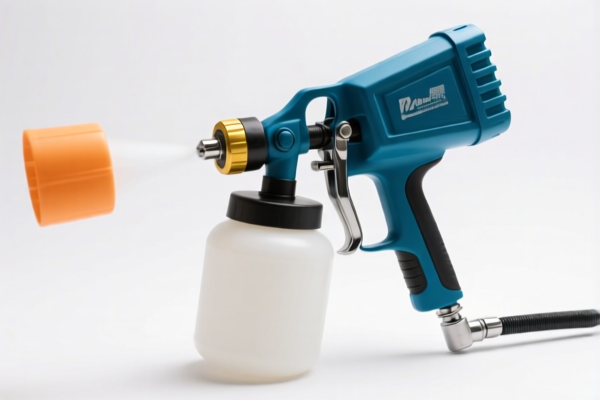


AI Analysis
🎨 Spray Painting Machine (Spray Guns/Coating Equipment)
🌐 HS Code Reference & Customs Clearance Guide | 2026 Latest Tariff Analysis | Professional Entry Strategy
📌 I. Product Definition & Classification: Do You Really Understand "Spray Painting Machines"?
A Spray Painting Machine is a versatile industrial tool used to apply liquid coatings, paints, powders, or other materials onto surfaces. In international trade, its classification depends heavily on its driving mechanism, functional independence, and structural composition. It is not a single commodity but falls into different categories based on technical specifications:
Mechanical Sprayers (8424 Series): Devices primarily designed for jetting, projecting, or dispersing liquids or powders, often hand-held or mounted. Independent Machinery (8479 Series): Complex machines with self-contained functions, motors, and control systems that operate independently. Power Tools (8467 Series): Hand-held or guided tools driven by electric or pneumatic power sources.
⚠️ Key Distinction Point: - If it is a simple pneumatic or electric tool without complex standalone processing logic → Likely 8467 or 8424. - If it is a fully automated, independent industrial unit with complex controls → Likely 8479. - The material composition (steel/aluminum vs. copper) can significantly impact additional tariffs under specific trade clauses.
📦 II. HS Code Classification Details (2026 Latest Tariff Authority Comparison)
| HS Code | Product Description | Application Scenario | Key Characteristics |
|---|---|---|---|
8424.30.90.00 |
Mechanical appliances for projecting, dispersing or spraying liquids or powders | Industrial spray booths, automatic coating lines | Fallback logic: Other machinery not elsewhere specified. Focuses on the "spraying" function. |
8479.89.95.99 |
Machines and mechanical appliances having individual functions, not specified or included elsewhere | Large, independent industrial coating robots or complex systems | Complex Machinery: Metal/composite material, independent function. Subject to material-specific surcharges. |
8467.89.10.00 |
Other tools for working in the direction or in depth of metal | Hand-held spray guns, pneumatic/electric sprayers | Power Tools: Core components involve metal processing. Driven by electricity or pneumatics. |
8424.20.90.00 |
Hand operated spray guns and similar apparatus | Automotive touch-ups, small-scale industrial spraying | Handheld/Similar: Functionally identical to spray guns. Focus on liquid dispersion. |
8479.89.65.00 |
Machines and mechanical appliances having individual functions... including motor-driven | Self-contained motor-driven spraying units | Motor-Driven Independent Machine: Contains self-contained electric motor. Complex functionality. |
🔍 Key Reminder: - Simple Handheld Guns: Often fall under 8424.20 or 8467.89. - Large Industrial Robots: Fall under 8479 due to independence and complexity. - Material Matters: Steel/Aluminum/Copper components may trigger specific "122 Clause" surcharges depending on the exact HS subheading.
💰 III. 2026 Latest Tariff Rate Breakdown (Including Additional Taxes & Policy Surcharges)
✅ Applicable Country: United States (US)
✅ Origin: China (CN)
✅ Effective Date: November 10, 2025 onwards (including subsequent imports)
🎯 1. 8424.30.90.00 & 8424.20.90.00 —— Mechanical Sprayers / Hand Operated Spray Guns
| Item | Content |
|---|---|
| Base Tariff | 0.0% (ad valorem) |
| USITC Additional Tax (Section 301) | +25.0% |
| IEEPA Additional Tax (Clause 122) | +10.0% |
| Total Tariff Rate | 35.0% |
| Tax Calculation | CIF Value × 35% |
| De Minimis Exemption | ❌ Not Available (deny_de_minimis) |
| Legal Basis Path | USITC:8424.20.90.00 / USITC:8424.30.90.00 → FOOTNOTE:301 → IEEPA:122 |
📌 Explanation: - These codes are classified as simple mechanical spraying devices. - The 0% base rate is offset by 25% Section 301 duties and 10% IEEPA duties. - Total effective duty is 35%. This is a standard high-risk category for Chinese-manufactured spraying equipment.
🎯 2. 8479.89.95.99 —— Independent Machinery (Metal/Composite)
| Item | Content |
|---|---|
| Base Tariff | 2.5% |
| USITC Additional Tax (Section 301) | +25.0% |
| IEEPA Additional Tax (Clause 122) | +10.0% |
| Steel/Aluminum/Copper Surcharge | +50.0% |
| Total Tariff Rate | 87.5% |
| Tax Calculation | CIF Value × 87.5% |
| De Minimis Exemption | ❌ Not Available |
| Legal Basis Path | USITC:8479.89.95.99 → FOOTNOTE:301 → IEEPA:122 → Steel/Alu/Cu Surcharge |
📌 Warning: - This code applies to complex, independent machines. - If the machine contains steel, aluminum, or copper components, an additional 50% tariff is applied! - Total rate hits 87.5% — this is an extremely high barrier. Proper material declaration is critical. Misclassification here can lead to massive penalties.
🎯 3. 8467.89.10.00 —— Power Tools (Metal Processing Components)
| Item | Content |
|---|---|
| Base Tariff | 0.0% |
| USITC Additional Tax (Section 301) | +7.5% |
| IEEPA Additional Tax (Clause 122) | +10.0% |
| Total Tariff Rate | 17.5% |
| Tax Calculation | CIF Value × 17.5% |
| De Minimis Exemption | ❌ Not Available |
| Legal Basis Path | USITC:8467.89.10.00 → FOOTNOTE:301 → IEEPA:122 |
📌 Advantage: - Classified as "Other Tools" for working in the direction/depth of metal. - Lowest total rate among complex codes: Only 17.5%. - Suitable for hand-held electric/pneumatic sprayers where the primary function is viewed as a "tool" rather than an "independent machine."
🎯 4. 8479.89.65.00 —— Motor-Driven Independent Machinery
| Item | Content |
|---|---|
| Base Tariff | 2.8% |
| USITC Additional Tax (Section 301) | +7.5% |
| IEEPA Additional Tax (Clause 122) | +10.0% |
| Total Tariff Rate | 20.3% |
| Tax Calculation | CIF Value × 20.3% |
| De Minimis Exemption | ❌ Not Available |
| Legal Basis Path | USITC:8479.89.65.00 → FOOTNOTE:301 → IEEPA:122 |
📌 Context: - For machines that are motor-driven but do not fall under the high-surcharge metal categories or are classified differently. - Rate is 20.3%, making it a moderate option for independent machinery if material surcharges can be avoided or if the classification is more favorable.
🛠️ IV. Customs Clearance Practical Advice (Battle-Tested Pitfall Avoidance)
✅ 1. Required Documentation Checklist (Non-negotiable)
| Document | Must Provide | Notes |
|---|---|---|
| ✅ Product Specification Sheet | ✔️ | Must detail power source (pneumatic/electric), capacity, material composition. |
| ✅ Technical Diagrams | ✔️ | Show internal structure to prove "Tool" vs. "Independent Machine." |
| ✅ Product Photos (with Nameplate) | ✔️ | Clear view of model, brand, input voltage, and pressure ratings. |
| ✅ Third-Party Test Reports | ✔️ | UL, CE, RoHS, OSHA compliance (critical for power tools). |
| ✅ Commercial Invoice | ✔️ | Describe as "Spray Gun," "Paint Sprayer," or "Coating Machine" accurately. |
| ✅ Bill of Lading | ✔️ | Ensure weight and dimensions match the declaration. |
✅ 2. Declaration Strategies (Key Mantras)
🔥 "Define Function, Not Just Name. Tool vs. Machine Changes the Rate!"
| Scenario | Correct Declaration | Risk of Error |
|---|---|---|
| Hand-held electric spray gun | 8467.89.10.00 (Tool) |
Declaring as 8479 → Rate jumps to 20.3%+ |
| Large automated spray booth robot | 8479.89.95.99 (Independent Machine) |
Declaring as 8467 → High risk of audit/classification error |
| Simple pneumatic spray gun | 8424.20.90.00 (Hand Operated) |
Declaring as 8424.30 → Similar rate, but accuracy matters for audits |
| Machine with Steel/Aluminum parts | Verify 8479.89.95.99 surcharge |
Hidden 50% tax! If missed, penalty applies. |
✅ 3. Special Cases Handling
| Situation | Handling Advice |
|---|---|
| OEM Custom Sprayers | Provide client contracts and design specs. Proves specific "individual function" if claiming 8479. |
| Mixed Materials | If the machine has steel frames but plastic bodies, clarify if it triggers the 50% surcharge under 8479.89.95.99. |
| Kit Packaging | If sold as "Spray Gun + Hose + Nozzle," declare as a single unit under the gun's HS code. Do not split unless necessary for lower duty. |
| Pneumatic vs. Electric | Pneumatic tools often fit better in 8467 or 8424. Electric motors may push classification toward 8479 if complex. |
🌍 V. Global Market Comparison (2026 Latest)
| Country/Region | Recommended HS Code | Tariff (China Origin) | Certification Requirements | Notes |
|---|---|---|---|---|
| 🇺🇸 USA | 8467.89.10.00 / 8424.20.90.00 |
17.5% - 35.0% | UL, ETL, FCC (if electric) | Highest risk zone due to Section 301 + IEEPA. |
| 🇪🇺 EU | 8424.30 / 8467.89 |
0% - 4.7% | CE, RoHS | No additional tariffs. Low barrier. |
| 🇨🇳 China | 8424.30 / 8467.89 |
0% - 5% | CCC (if applicable) | Domestic consumption or re-export friendly. |
| 🇲🇽 Mexico | Varies by NAFTA/USMCA | 0% (if compliant) | NOM Certifications | Potential duty-free access if USMCA rules met. |
| 🇻🇳 Vietnam | Varies | Low (0-5%) | QCVN Standards | Often used for transshipment to avoid US tariffs. |
📌 Conclusion: - USA is the most expensive market due to layered tariffs. - EU and China are cost-effective for entry. - Supply Chain Strategy: Many exporters route high-value spray equipment through Vietnam or Mexico to mitigate US tariffs, provided rules of origin are strictly met.
📌 VI. Common Errors & Pitfall Guide (Lessons Learned)
❌ Mistake 1: Classifying a complex industrial robot as a simple tool (8467)
👉 Consequence: Customs audit, penalty, and potential retroactive duty of 87.5% if reclassified to 8479 with surcharges.
❌ Mistake 2: Ignoring the 50% Steel/Aluminum Surcharge on 8479.89.95.99
👉 Consequence: Underpayment of duties, seizure of goods, or forced repatriation.
❌ Mistake 3: Declaring "Spray Machine" without specifying power source
👉 Consequence: Customs assigns a conservative HS code with higher duties. Always specify "Pneumatic" or "Electric."
✅ Correct Practice:
"Electric Spray Gun, Model XYZ, 240V, 1000W, for Industrial Coating, UL Certified"
Why? Precise description supports classification as a tool (8467) or handheld sprayer (8424), avoiding the "Independent Machine" trap.
🎯 VII. Conclusion: Smart Classification Saves Money!
🎯 Remember the Mantra:
🔹 "Is it a Tool or a Machine? Tool = 17.5%, Machine = 35-87.5%."
🔹 "Check the Material: Steel/Alu = 50% Extra on8479!"
🔹 "HS Code Determines Your Profit Margin."
📌 Pro Tip:
If your spray painting machine is originally from Vietnam, Mexico, or Thailand, you may qualify for lower or zero tariffs under preferential trade agreements (e.g., USMCA, Vietnam-US Trade).
Recommendation: Apply for an Advance Ruling from US Customs and Border Protection (CBP) before shipment to secure classification certainty.
📣 Immediate Action:
📞 Consult a Licensed Customs Broker
📦 Prepare Technical Datasheets & Material Declarations
🚀 Secure Your Supply Chain, Avoid Surprises, Maximize Profits!
✨ Professional Clearance Starts with Accurate Classification!
💼 Every Percent Saved is Pure Profit!
Customer Reviews
About HS Code Classification
The Harmonized System (HS) is an internationally standardized nomenclature developed by the World Customs Organization (WCO) to classify traded products. Over 200 countries use the HS system as the basis for customs tariffs, trade statistics, and import/export regulations.
Each HS code follows a hierarchical structure:
- Chapter (2 digits) — Broad category of goods (e.g., Chapter 84: Machinery and Mechanical Appliances)
- Heading (4 digits) — More specific grouping within the chapter
- Subheading (6 digits) — Internationally standardized breakdown, used by all WCO member countries
- National subdivisions (8-10 digits) — Country-specific extensions for further classification, such as US HTSUS 10-digit codes
Correct HS code classification is essential for smooth customs clearance, accurate duty payment, and compliance with trade regulations. Misclassification can lead to customs delays, overpayment of duties, or penalties.
When importing from CN to US, the applicable tariff rates may include:
- Most-Favored-Nation (MFN) rate — The standard duty rate applied to WTO members
- General rate — Applied to countries without trade agreements
- Trade remedy duties — Additional tariffs such as Section 301 (anti-dumping), Section 232 (national security), or countervailing duties
The information provided on this page is for reference purposes only. For official classification, please consult with your local customs authority or a licensed customs broker.